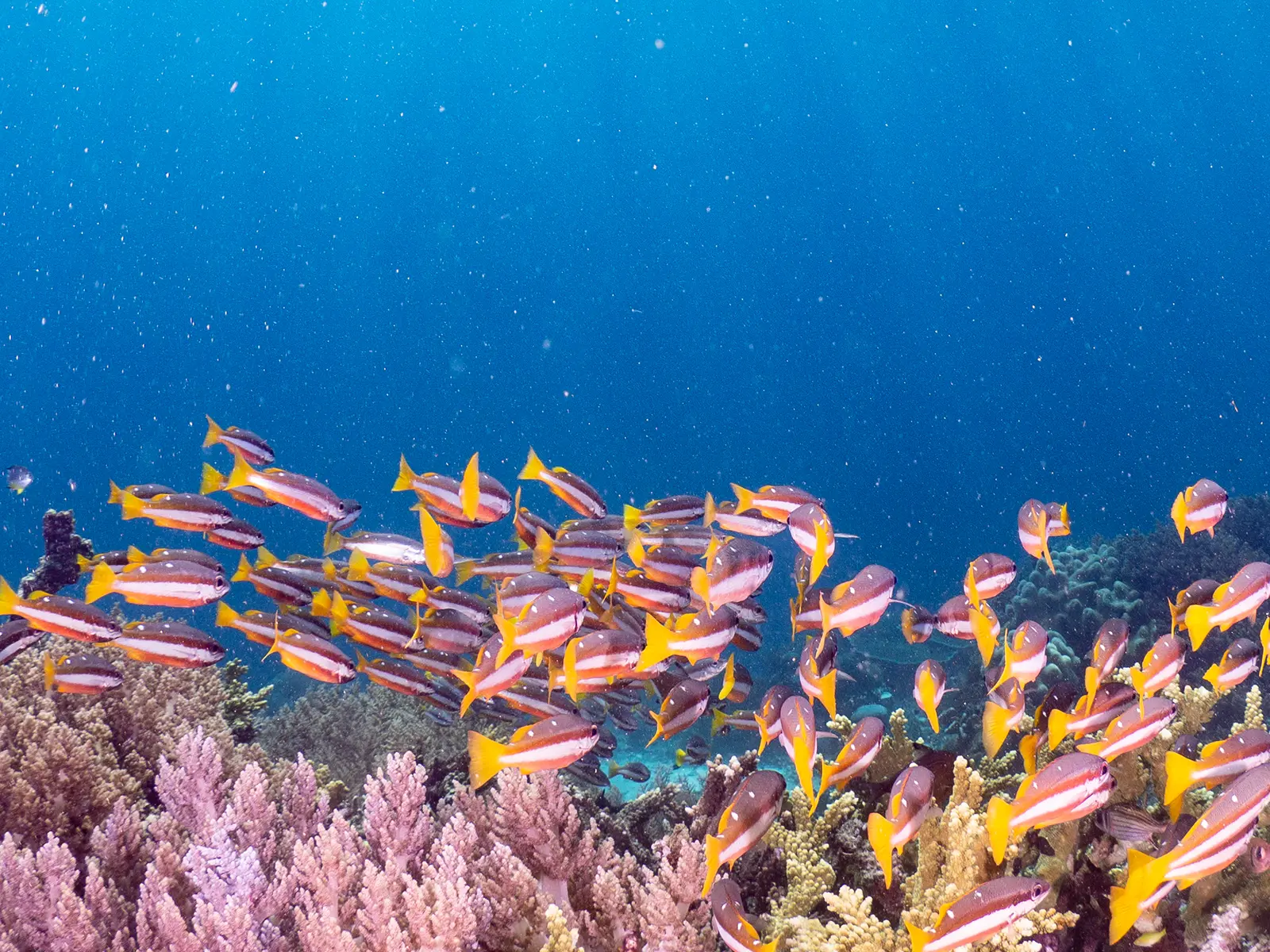
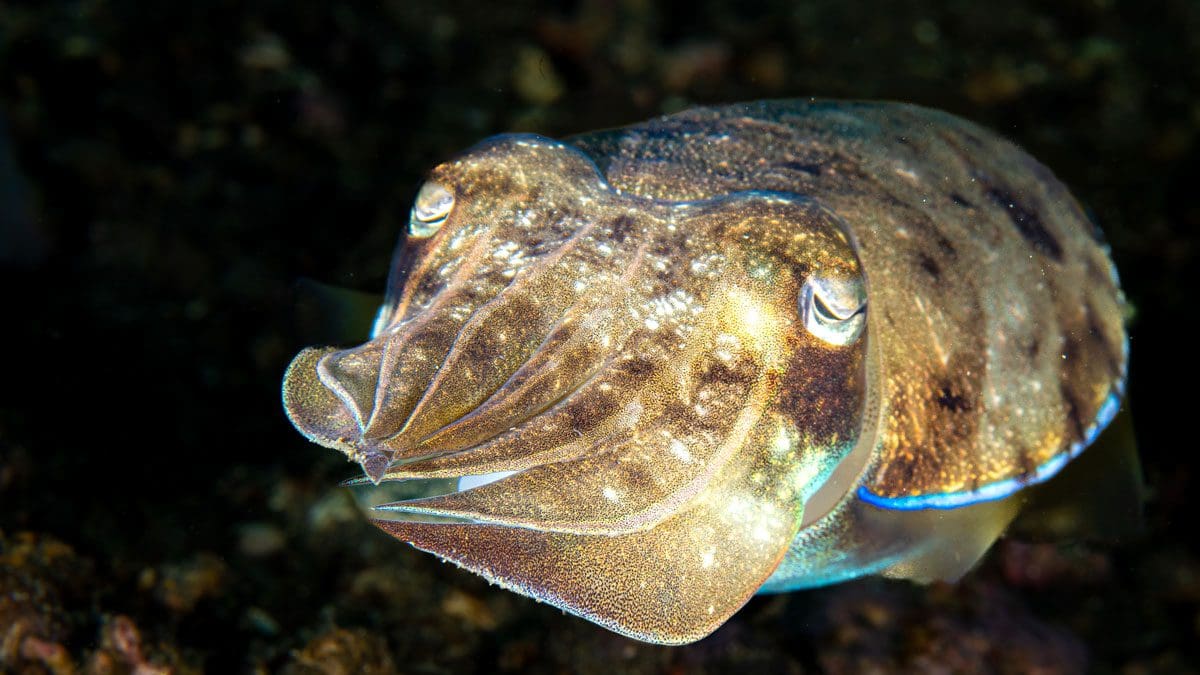
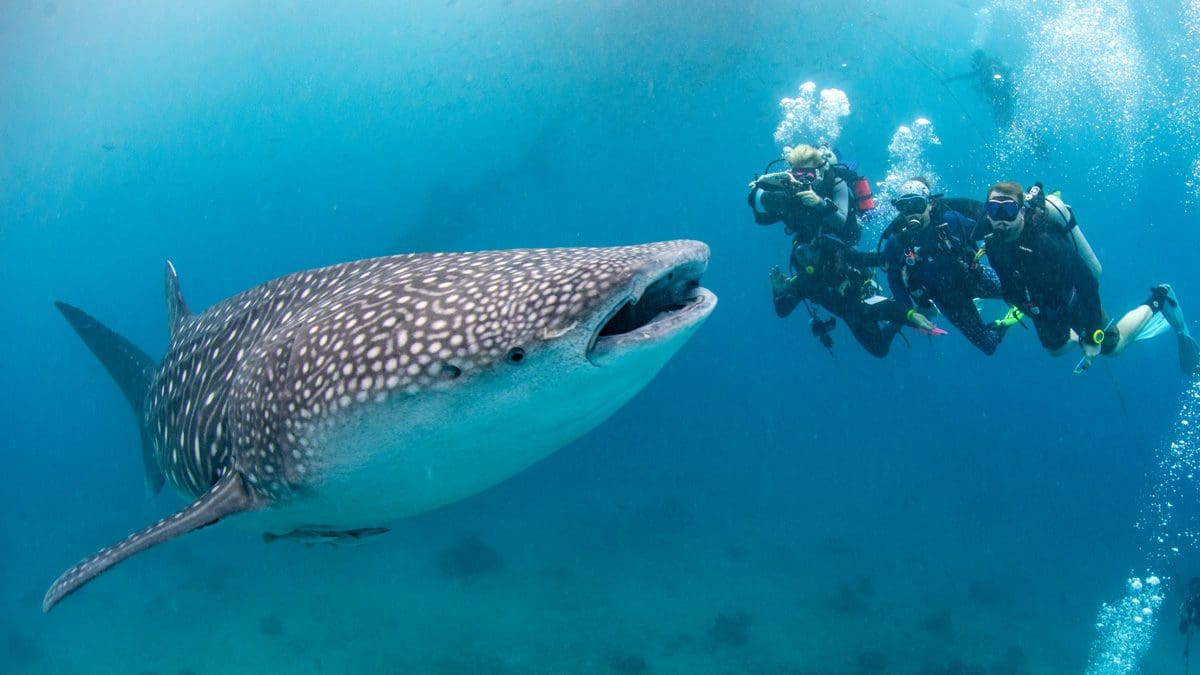
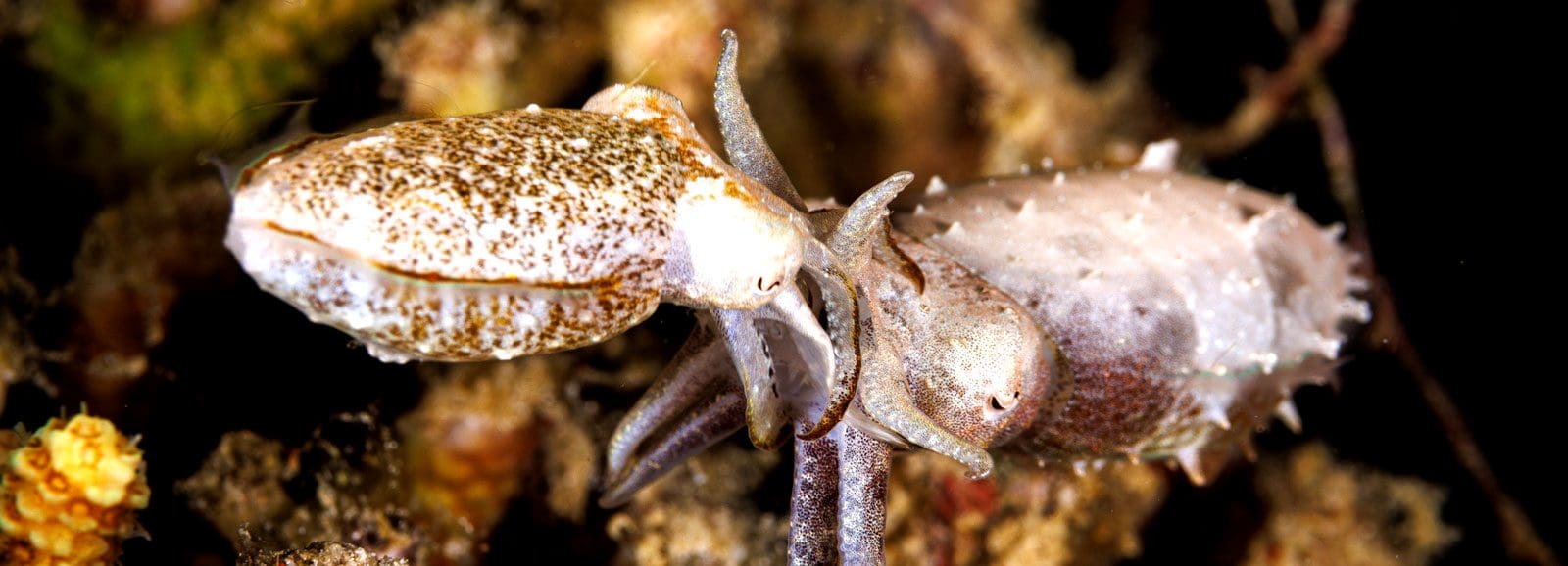
Sebayur Island: This island has a white sandy slope that turns into a mini wall. At the edge of the reef, look for leaf fish, ghost pipefish, and a variety of nudes. Various nudibranchs, lionfish, and moray eels make the wall their home. In the shallows, the hard corals are decorated with anthias, and we often find large cuttlefish and juvenile bicolor parrotfish. On the night dive, look for Spanish dancers, crocodile fish, and bobtail squid.
Tatawa Besar: This is a thrilling drift dive, starting at the north-western tip of Tatawa and continuing down the western side, reaching about 15 to 20 meters of depth. The fish life here is abundant, and you will see an endless field of stunning orange soft corals as you glide along. Swim past coral heads inhabited by schools of sweetlips and batfish and look for turtles feeding on the reef. Mantas have been encountered here as well.
Tatawa Kecil: The West side of this small rocky outcrop presents a fantastic underwater terrain with enormous slabs of rock that have been worn down to form channels, canyons, caves, and swim-throughs. On the north plateau, crocodile fish lies on the scenic reef among a host of reef fish and schooling fusiliers.
Siaba Kecil: Here at Siaba Kecil, we have a magnificent formation of hard coral from the island’s shallows to 20m/60ft depth. The current running from the south to the north is the best way to dive into this site. During the drift and at the end of the drift we have a great chance to see green and hawksbill turtles feeding on the formation of hard coral, white tip reef sharks also can be seen here. Reef manta rays can occasionally swim in the coral garden at this site.
Batu Bolong: Underwater, this rock is covered in a huge number of soft and hard corals and is full of fish life. In the shallows, watch anemone fish and look out for turtles munching on the corals. Giant trevally, white-tip reef sharks, snappers, and emperor fish tend to congregate here. This site presents particularly good opportunities for both macro and wide-angle photography.
Batu Tengah: This dive site is in the middle of the Komodo National Park, with 12 nautical miles to the north and 12 nautical miles to the south. The translation of Batu = Rock, Tengah = Middle. With a slope to the east of the site and a coral garden to the west, Batu Tengah is a beautiful site where we often get to see turtles, cuttlefish, and juvenile white-tip reef sharks that hide under the table corals among the hard coral garden. Napoleon wrasse and big groups of snapper swimming on the slope with all the colorful decorations of the soft coral make Batu Tengah a high-quality dive site.
Wainilo: This afternoon and night dive is situated off the north of Rinca Island. The hard coral reef is home to many different critters in the shallows, including juvenile harlequin sweetlips and batfish. Away from the reef, the sandy slope is scattered with pulsing soft corals that hide demon stingers, starry night octopuses, and a moray eel, which has not yet been classified by scientists and is only found here in Wainilo.
Day 3 Walk with dragons / Padar Island (2 dives)
Loh Buaya (walk with dragons)
Your day will begin with an exciting visit to Komodo National Park, where you can stroll with the famous dragon! Please take a look at our Komodo Dragon photo album here. As you walk along the paths, stay on the lookout for deer, wild boar, birds, and giant lizards. After the walk, we move to Padar Island for two dives.
The water temperature here and in the southern dive sites over the next few days can be a little cooler, dropping from the normal 28/29 degrees Celsius (82-84 Fahrenheit) to a possible 20 Celsius (68 Fahrenheit). Also, due to the infinite nutrients in the water that create amazing biodiversity in this area, the visibility can sometimes be a bit greener. Neither one of these factors can spoil the amazing diving to be had in these areas.
After the second dive, we visit one of the most incredible beaches in the Komodo National Park. A short walk brings us to the pink sandy beach. During this walk, we also have the opportunity to enjoy incredible views of the National Park with the sunset.
Three Sisters: The site here is full of exciting and beautiful features, such as massive steps and huge stone towers, all wrapped in hard and soft corals, and dotted with nudibranchs, small caves, and overhangs. Reef sharks and Humphead parrotfish are among the bigger creatures we see in this area. There is also a towering coral spire with a small cave at the bottom, where huge lobsters are often found hiding. Look for the tiny ladybugs on the soft corals and the resident frogfish sitting in the sponges.
Secret Garden: This is one of the top dive sites on Padar Island. As the name suggests, it has a beautiful black coral garden along a mini-wall covered with soft corals. A resident school of mobula rays seems to like swimming through the dive site, giving divers good opportunities to see them. Nudibranchs, leaf fish, frogfish, and incredible sea apples can also be seen here.
Day 4 Rinca Island (4 dives)
Horseshoe Bay is south of Rinca Island, and we spend the whole day here. Here, we dive into the famous Cannibal Rock, one of the top ten dive sites in the world, according to some diving publications. We watch dragons, wild pigs, deer, and monkeys roam the beach and take a tender ride or kayak to get a closer look.
Cannibal Rock: This outstanding dive site covers a large area with sandy slopes in the north, deep mini walls in the east, a plateau full of life in the south, and rocky regions in the west. The nutrient-rich bay creates the most spectacular congregation of hard and soft corals in all parts of the dive site. Sponges, ascidians, sea squirts, and tube anemones are abundant. A great diversity of nudibranchs can be seen here, along with frogfish, turtles, cuttlefish, and other reef fish.
Yellow Wall of Texas: As the name suggests, this wall at the southern entrance to Horseshoe Bay is covered in yellow and orange soft corals. A tiny critter, the ladybug, comes in multitudes here. Nudibranchs decorate the wall, which usually has a slight current, enabling you to drift along slowly and enjoy the view.
The Boulders: Inside the bay and opposite the Yellow Wall of Texas, there are large rocks that continue underwater to create places for large rays to rest, and even sometimes, nurse sharks hide in these underwater crevices. The boulders are covered in corals, which have become a paradise for marine life. The elusive Rhinopias have been found here before.
Torpedo Alley: A marvelous night dive named after the pancake-sized torpedo rays that can be found here. Coconut octopus, seahorses, colorful squid, and the bizarre Bobbit worm live in the black volcanic sand. A very shallow dive with a maximum depth of 10m/30ft, spend time looking for all the strange inhabitants among the rocks, soft corals, and sand.
Day 5 Manta Alley / Pink Beach (4 dives)
Manta Alley is located on the south end of Komodo Island. After two dives looking for manta rays, we head to the Pink Beach area in the middle of Komodo Island.
Manta Alley: Manta Alley is located in Tora Langkoi Bay along the south coast of Komodo. The dive site, in fact, barely pierces the ocean’s surface at the end of a line of rock islets. As can be guessed from its name, many manta rays are known to frequent this site, and it is the most popular one in Komodo for spotting them. The area can be described as a deep gully that works as a funnel when the tide changes, causing the water to rush through at speeds of up to three to four knots with the fall and rise of the tides and up to one knot even during “slack water” periods. Watch the mantas being cleaned on the Northside or enter the ‘Alley’ to see them hover effortlessly in the current.
Pink Beach: The simple topography makes this site an ideal afternoon dive. A mini wall can be found in the middle of the reef, where clouds of glassfish swarm in the cracks and crevices. Many fish life and unusual critters are home here, including leaf scorpionfish, crocodile fish, nudibranchs, and frogfish. A sloping coral reef full of life is on one side of the wall. On the other is a sandy area with healthy staghorn corals growing and providing shelter for juvenile harlequin sweetlips and mandarin fish.
Loh Liang Bay: This white sand muck dive is around the corner from Pink Beach inside Loh Liang Bay on Komodo Island. Search for all sorts of critters here – bobtail squid, flamboyant cuttlefish, frogfish, nudibranchs, Ambon scorpionfish, cockatoo wasp fish, and large moray eels living in the shallow rocks.
Day 6 Komodo-Flores Channel (4 dives)
Today, you will have another chance to dive into the brilliant sites on the Komodo-Flores Channel, including Karang Makassar. We will dive here for one or two dives, plus another channel dive, before heading into Gili Lawa Darat Bay for a night dive. The healthy hard coral reef is a great spot to look, at Spanish Dancers.
Karang Makassar: This is an exhilarating drift dive along the shallow flat bottom interspersed with patches of coral reef teeming with life. There are chances to see turtles, eagle rays, and white-tip and black-tip reef sharks. But the main reason we dive here is to hopefully see manta rays. Reef mantas come here to visit the cleaning stations, but they can also be spotted, mouth wide open, feeding on the surface. This area can also be a very good snorkeling spot.
Day 7: Gili Lawa Laut / Komodo (4 dives)
Two celebrated dive sites await you just north of Gili Lawa Laut Island. Crystal Rock and Castle Rock are both incredible locations, boasting the key elements for an impressive dive site: a wide variety of healthy corals covering the reef, plus tons of fish – big and small and all sizes in between. Between the dives, there may be a chance, depending on the tide, to visit Gili Lawa Laut Island and take a short trek to the top of the hill for a beautiful view of the Komodo-Flores channel.
Crystal Rock: The rock jutting out of the surrounding crystal clear waters explains how this site got its name. But what is truly memorable here are the large schools of fusiliers and anthias flitting over the gorgeous, soft, and impressive table corals. In the deep blue, you can also see large tuna, mackerel, and other fish schooling around a small mound to the northwest. A lone eagle ray is often spotted here cruising in the currents.
Castle Rock: Castle Rock is a submerged pinnacle situated a kilometer further north of Crystal Rock. Its exposed location means strong currents but experienced divers will love the thrills on this dive. The main action comes from watching the staggering amount of fish, such as batfish, groupers, midnight snappers, and impressive schools of fusiliers and surgeons whipping past. Of course, divers aren’t the only ones interested in the huge amount of fish here, which explains the giant trevally and whitetips, blacktips, and grey reef sharks hunting around for their next meal.
We will do two dives at Castle and Crystal Rock before going to Batu Montjo on Komodo Island for the third and night dive.
Batu Montjo: In the northwest of Komodo Island, Batu Montjo is a perfect site to dive into as a third dive, with an amazing formation of hard corals in the shallows. Many boulders covered with gorgonian sea fans lie between the white sandy slopes. This combination of hard corals and gorgonian sea fans with all the fish swimming between the coral garden makes for a perfectly relaxing afternoon dive. Pygmy seahorses, leaffish, jawfish, and turtles are often seen at this site. We have even seen manta rays passing by. The night dive is on the sandy slope at Batu Montejo. Elusive stargazers hide in the sand, with only their big eyes and toothy snarl, looking up into the stars. White V octopus, bobtail squid, and ghost pipefish can also be found here.
Day 8: Sangeang Island (4 dives)
The island of Sangeang is located northeast of Sumbawa. It’s a fairly small island, but you’ll notice it immediately since most of its landscape is Gunung Api, an active volcano. This natural phenomenon has made for some amazing topography, such as steep ridges dripping with hardened lava. There are several excellent dive sites here, all with good visibility, allowing you to truly appreciate the healthy reefs of soft and hard corals and different types of anemones.
Hot Rocks: Here, the volcano has also left its mark below the surface. In the shallows, observe volcanic bubbles escaping from the seabed through air vents. Put your hands close to the ‘hot rocks’ and feel the heat from the sulfur-covered rocks. In addition to the usual tropical reef species, ribbon eels, cowries, and Bargibanti pygmy seahorses can also be seen here.
Lighthouse Reef: This site presents many contrasts regarding natural features and marine life. Strong currents can prevail in the exposed areas, but there are also sheltered spots. Down around 20 meters, macro lovers will be delighted, as the base of the wall and large black sand slope are excellent for spotting countless nudibranchs and other colorful critters. Black coral bushes hide ghost pipefish and saw blade shrimp.
Black Diamond: The rocky formation up in the shallows with fingers of coral going to the deep is covered with black coral and crinoids in any color you can imagine. The black sand acts as a background to all the colors of this dive site, and the corals will stand out in a way you’ve never seen before. Among the black coral, we often see one of the most incredible masters of camouflage, the ornate ghost pipefish, and as the name suggests, any ghost pipefish is a plus for divers. Giant reef octopus, peacock mantis shrimps, and nudibranchs are also seen here.
Bontoh Reef is located in the west part of Sangeang volcano, where we have incredible sunsets. For this reason, Bontoh Reef is a perfect place to dive as a third dive and night dive. With a very shallow area of black sand and small rocks covered with algae that gently slope down, Bontoh offers one of the most significant populations of spaghetti garden eels coming out from the sand. Among the small stones is the perfect place for creatures to hide from predators and photographers. Critters spotted here include painted frogfish, juvenile angelfish, and mantis shrimps, and while we are swimming out in the sand, we have the chance to see the wonderous or mimic octopus.
In between the third dive and the night dive, there may be an opportunity to visit the small village of Bontoh. Here, they are building a boat right there on the beach!
Day 9: Satonda / Moyo Island (1-2 dives)
On the last full day of the cruise, we will do one or two dives, depending on the weather conditions and the flight times out of Bali the next day. After the dives, we will travel over 150 nautical miles back to Bali.
Satonda Reef: Underwater, the sloping reef and sandy bottom hide many critters. An early morning dive provides a great opportunity to search for giant frogfish nestled in the sponges or mushroom coral pipefish snaking among the fronds of the mushroom coral. Nudibranchs, pipefish, ghost pipefish, and Bargibanti pygmy seahorses are regularly seen here.
Moyo is a small island, inhabited by around 6,000 people, located in the West Nusa Tenggara province off the northern coast of Sumbawa. There are spectacular coral formations and crystal clear waters that make for great diving.
Angel Reef: This site lies off the west coast of Moyo and consists of a healthy coral reef with a vertical wall dropping to over 40 meters / 120 feet in depth. Angel Reef has a huge elephant ear and barrel sponges along the wall. It is teeming with longfin bannerfish and red tooth triggerfish. Search the sea fans here for a chance to see the Denise pygmy seahorse.
Panjang Reef: Located just north of Angel Reef is the submerged coral reef of Panjang Reef – the ‘long reef’. The huge coral garden plateau is covered with pulsing soft corals, surrounded by a sloping reef full of big sponges and healthy hard corals. Bargibanti pygmy seahorses, leaf scorpionfish, ribbon eels, and sea snakes can all be seen here.