
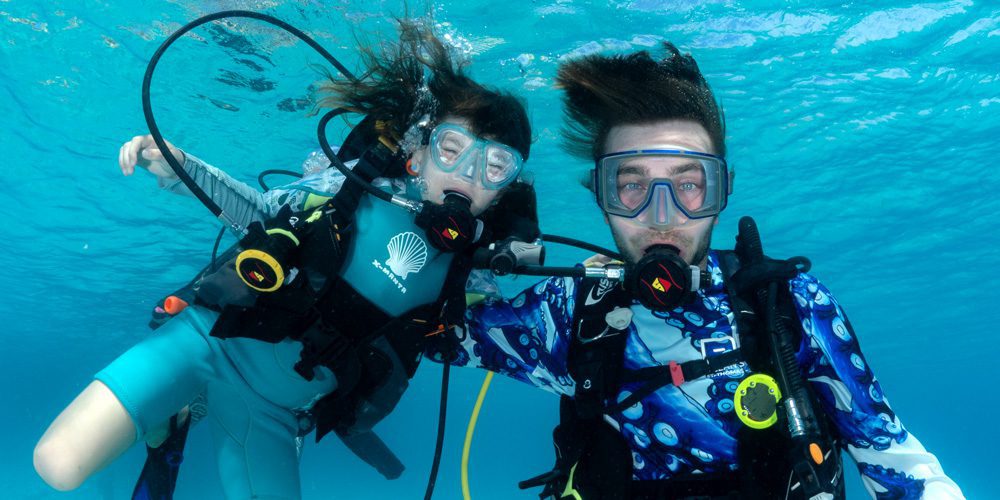
Tips for Dive Shop Owners: Training Your Staff to Safely and Effectively Teach Kids to Dive
By Margo Peyton, PADI Instructor #57474, President, Kids Sea Camp Inc.
As dive shop owners and managers, if you’re looking to expand your offerings with kids’ scuba diving programs, you’re tapping into a vibrant market that can build lifelong customers and strengthen family bonds in your community. With 36 years in the dive industry, traveling and diving, and 25 years specializing in youth diving through Kids Sea Camp, where I’ve contributed to over 8,100 youth certifications, I’ll share practical tips for training your staff for this rewarding endeavor.
Teaching kids to dive isn’t just about adding a new revenue stream—it’s about creating safe, engaging experiences that nurture the next generation of divers while keeping safety front and center. I love teaching kids, and this passion is essential if you want your instructors to work effectively with youth.
25 Years of Experience
My experience has taught me that if you want to build an instructor training team for teaching kids, they need that desire and hands-on experience with children. Children are the heartbeat of our diving industry, full of wonder and excitement; it is our privilege to introduce them to diving with confident, experienced, and well-trained instructors in a safe setting with strict ratios. They are naturally little explorers who want to learn and become part of their family’s diving community. Many kids listen to their parents’ adventures and look forward to the day they are old enough to join those adventures. Some kids arrive nervous or even a little scared, not wanting to let their family members down, and they can sometimes put pressure on themselves to perform for their parents rather than for their own enjoyment. As a mother of two, I made it a priority not to add any extra pressure, and I’ve spent the last 25 years with children in the ocean—it’s been humbling, inspiring, and a dream job.
For dive shop owners training staff to run youth programs, start with the basics: Kids aren’t the same as adults. Train your instructors to use a 1:2 or 1:1 ratio—one instructor to two kids or one to one—based on the child’s age, the instructor’s experience, and the student’s mental and physical health. For special-needs kids, it’s always 1:1. These ratios aren’t arbitrary; they allow the close supervision needed to catch subtle cues and ensure every child feels supported. Emphasize in your training that agency guidelines like PADI’s are minimums — encourage your staff to be more conservative when conditions or instincts dictate.
Safety must be the cornerstone of your youth programs—no compromises, ever. Train your staff to verify that kids have properly fitting gear, are comfortable and ready, and that instructors are fully prepared, too. Safety means reviewing every sign of a student’s physical and mental readiness, checking medical conditions and ensuring you’re working with a bright-eyed, eager-to-learn child. Sessions should occur in controlled environments: a clean, spacious pool for confined-water skills and calm oceans with over 40 feet of visibility for open-water skills.
Train your staff differently
Teach your instructors that these are little people requiring hand-holding, nurturing, and 100% attention. Hand-holding can be literal during initial descents or buoyancy practice, providing physical reassurance, but it’s also about emotional guidance—listening to fears, offering encouragement, and building trust. Nurturing involves creating a judgment-free space where kids can voice concerns, turning potential setbacks into growth opportunities. Give them a wonderful first experience that makes them feel comfortable and aware of the trust they’re placing in their instructor.
For me, I take seriously the possibility of shaping a life path—many of my students have become Divemasters, instructors, or pursued careers in marine science. As a mom, when parents entrust their kids to me, I treat each like my own, and I recommend instilling this mindset in your staff to heighten their vigilance.
Not all instructors are suited to kids, so during training assess for key traits: patience with repetitive questions (kids love to ask “why” endlessly), a gentleness beyond adult teaching, and kindness that slows everything down. Make learning fun—turn skills into games, hold hands through anxieties, wipe tears after challenging moments, calm fears with stories, and always make them feel heard. Know when to call a dive if something feels off. As a mom, I can tell — even with a regulator in their mouth and a mask on — if a child is smiling, happy, sad, or frightened—train your staff to read these underwater cues through their eyes and body language. Never push beyond readiness; kids get cold, tired, and hungry faster, so mandate shade, breaks, snacks, and hydration in your protocols.
When I started 25 years ago, safe, kid-friendly programs were scarce, so I created Kids Sea Camp as a “bunny slope” for gentle introductions. For your shop, this could mean designing progressive courses that ease kids in, sparking interest in non-diving parents—especially moms who feel intimidated by the “dive ninja” style but see family fun through their children’s success. Train staff to assess students like dive conditions: Ask “How are you feeling today? Excited to dive?” before and after sessions, and check readiness for each skill. For fears like mask removal (scary for kids and adults), offer tips: Practice snorkel breathing in the pool without a mask. Slow pace is key—make it fun and engaging through repetition and praise.
Engage Parents in Your Programs
Many are seasoned divers but unfamiliar with supervising kids underwater. Recommend refreshers or Reactivation courses to update skills and signals. Suggest family AOW or Rescue Diver—kids can start Junior Rescue at 12 with Junior AOW. I’ve trained hundreds; it builds confident family buddies. Review standards with parents: 40 ft limit for 10-11-year-olds, 60 ft for 12-14-year-olds.My personal rule at Kids Sea Camp: Confirm ages with IDs, not just applications; ask kids directly if they’re excited, feeling well, and not recently sick. Speak up about discrepancies—I’ve spotted paperwork mismatches countless times. Agency ratios are guidelines; be conservative—I’m comfortable with 1:2 for under-12s and 1:4 for experienced teens. Train staff to call dives, halt classes, or decline students if they’re uncomfortable or if maturity is lacking—I’ve advised many parents to wait a year, gently explaining that rushing could diminish the joy and safety of the experience. By training your staff this way, dive shops can create heartwarming family programs that foster a strong community and drive repeat business through trust, bonds, and a safety-first approach. Follow rules with good judgment, stay focused without distractions, check waivers/forms, vigilantly ask probing questions, and treat all kids like your own. This expertise-driven approach not only ensures safety but cultivates passionate divers, securing your shop’s future.
Kids aren’t just smaller adults; they need specialized care, stricter instructor-to-student ratios (like your 1:1 or 1:2 emphasis), nurturing instructors who excel with youth, and programs that prioritize long-term passion over short-term profits. Parents deserve reliable guidance on what to expect, questions to ask (e.g., about instructor experience with kids, emergency protocols, and gear fitting.
Margo Peyton is the founder and President of Kids Sea Camp Inc., and in the Women Divers Hall of Fame, International Scuba Divers Hall of Fame, PADI Ambassadiver, and PADI Elite MSDT instructor, the DEMA Hall of Fame/Reaching Out Award. Plus numerous other awards.