Training and Travel Tips
From High School Dreams to a Life in the Ocean
Advice on dive careers certifications and Volunteer Opportunities for Young Ocean Lovers
By Margo Peyton
Every year, I speak at trade shows, on trips, and at school Career Days with bright, energetic young adults graduating from high school who feel that irresistible pull toward the sea. They love the ocean, crave adventure, and dream of a life filled with travel, discovery, and meaningful experiences, rather than staring out an office window from 9 to 5, doing the same thing day after day. This spring, Bella—a high school senior who is already a certified Rescue Diver—called me about volunteer opportunities to become a PADI Divemaster. Like so many others I’ve mentored, she loves travel, meeting fascinating people from all walks of life, and exploring the underwater world. But she was still unsure exactly how to turn that deep passion into a real, sustainable career or if it was even a possibility.
How was I going to pay bills?
Her parents, like so many well-meaning families, expressed the same concern I hear over and over: “Marine biology sounds amazing, but is that really a job that’s going to pay the bills? You won’t be able to make a living on that.” It’s a valid worry. Traditional marine biology roles often require advanced degrees and can start at around $47,000 per year in the U.S., with highly competitive entry-level positions. Yet the wonderful truth I shared with Bella—and want to share with every young person reading this—is that a marine-oriented career path is far broader, more accessible, and more rewarding than most families realize. Diving instruction, ecotourism, marine education, conservation guiding, family adventure travel programs, international dive operations, underwater photography, and many related fields offer genuinely fulfilling ways to live your passion while building a sustainable livelihood.
I told Bella my own story because I was exactly like her at her age. I loved the ocean, animals, travel, chocolate, ice cream, horses, airplanes, fast driving cars and music.
No clear roadmap for my future
My passions were scattered in every direction, and I had no clear roadmap. What I discovered—and what I hope every young ocean lover hears—is that the path to a fulfilling career doesn’t have to be a straight line. It is built one step at a time by trying new things, volunteering, staying open to unexpected opportunities, and relentlessly following what lights you up inside. My journey began with a simple volunteer position at the Provincetown Sea Aquarium. I walked in and asked the owner, Jackie Gleason, if I could volunteer for the summer. She said yes. That one decision opened my eyes and my heart to so many possibilities. I cleaned penguin tanks, fed two rescued wolves, cared for injured harbor seals and sea lions recovering from shark bites or propeller strikes, worked the ticket booth, learned customer service, and taught children about local marine life in the tidal pool area. I absorbed lessons in geography, marine science, animal care, and the pure joy of sharing the ocean with kids. It was messy, hands-on, and unforgettable.
My curiosity led me
I followed my curiosity wherever it led. I became the “cotton candy girl” at the local Penny Patch candy store because I loved chocolate fudge and wanted to learn how to make cotton candy. The job wasn’t résumé gold, but it taught me how to connect with the public, make people smile, and spark excitement in children who watched me whip up cotton candy sticks the way I once watched the girl twist saltwater taffy. I worked two jobs, night and day, in fine jewelry stores, Thunder Road & Galadriel’s Mirror, learned about and sold Lalique crystal and rare gems, and I became a top salesperson at both. Those experiences helped me master the art of sales and customer service. I was able to buy my first car, so I could then travel for school and work.
Tourism and Psychology degrees
I studied travel and tourism and Psychology in college. I use parts of those degrees in my work today. College mostly gave me precious time to mature, make lifelong friends, build character, learn geography, and even pick up skiing. After graduating from college, I worked as a travel agent, quickly becoming the most productive ticketing agent at Timbuktu Travel—a role that inspired my interest in Africa and Australia.
Journey of Tourism
In The Fall and winter of 1986-1987, Qantas Airlines, the oldest airline still in existence today in Australia, offered a contest to Travel Agents selling tickets for the America’s Cup races, being held in Australia.I booked a record number of tickets on Qantas Airlines for the event. The American challenger Stars & Stripes (skippered by Dennis Conner) defeated the Australian defender Kookaburra III (skippered by Iain Murray). I earned free round-trip tickets to Australia and used them to attend the 1988 World Expo. Out of that came opportunities to skydive, hang-glide, learn to surf, and camel-trek. I met incredible adventurers, built character and courage, and discovered that endless possibilities exist if you just work hard and stay focused.
Relationships matter
managed a Travel Network agency office on Cape Cod and built client relationships that remain strong friendships to this day. Then I took the leap on a FAM Trip to the Cayman Islands and decided to stay. I started by working at a Home Depot as a Point-of-Sale Supervisor to earn my work permit in my first foreign country. It was incredibly hard. I cried some days as an “expat” outsider who wasn’t immediately trusted by the local Caymanian staff. But I worked diligently, respected their culture, and eventually earned their friendship and trust. That single lesson in cultural humility and perseverance became foundational to every international success that followed. Once I received my permit, I opened an international travel agency there and truly began expanding my career in ways I had never imagined.
Nothing stopped me
While living in Grand Cayman, I got married, and my son Robbie was born there. We later moved back to the United States, where my daughter Jen was born in Florida. Life changed dramatically when my then-husband left us. As a determined single mother, I created Kids Sea Camp Inc. out of pure passion and necessity. I wanted to spend real, quality time with my children and share the underwater world I loved so much. That decision turned family diving into my life’s work. What started as a way to keep my kids close grew into a very successful family adventure travel company that has now been running strong for more than 26 years.
Tom Peyton enters my life
Continuing on that same joyful path, I never stopped following what brought me happiness. In 2005, through a connection with the Hollywood, Florida Tourism Board, I met my now-husband of 20 years, Tom Peyton, at the Chocolate Mouse Coffee House during an open-mic night. Music, coffee, and chocolate—three of my all-time favorite things—led me straight to him. Together, we run amazing family adventures around the world and recently launched our newest venture, Empty Nester Travelers—traveling the globe, connecting the dots of opportunity, friendships, and shared interests while celebrating the next chapter of life after the kids have grown.
Following my passions worked
The common thread through every single chapter of my life? Adventure, travel, learning from every person and every job, and doing what genuinely made me happy—even when it didn’t look like traditional “career building” on paper. My grandmother, Priscilla Salvador, still echoes in my mind: “Margo, what doesn’t kill you will make you stronger.” I stayed strong, followed my passions, worked hard, stayed true to my moral compass, and remained respectful of all people along the way.
The Careers That Grew from One Passion-Filled Journey
When I talked with Bella, I pointed out how many different professional skills and careers had grown naturally from that same love of the ocean and travel she feels today. My non-linear path gave me real-world proficiency in family dynamics and creating meaningful experiences for parents and children, international contracts and negotiations, dive safety and training standards, travel expertise and consulting, ocean advocacy, dive operation consulting for kids programs, underwater photography, event planning, airline representation, travel writing, and so many more areas. None of these were planned from the beginning. They emerged organically because I kept saying “yes” to opportunities that aligned with what I loved.
Practical Steps for Young Ocean Lovers Like Bella
If you’re a high school senior or recent graduate who dreams of a life connected to the marine world without the 9-to-5 grind, here’s exactly what I shared with Bella—and what has worked for so many others:
- Start with volunteering and entry-level experiences to get your foot in the door with some of the highly sought after jobs.
- Try short-term jobs and side gigs in marine tourism, aquariums, or dive shops to help you find your passion and gain experience.
- Build certifications and hands-on experience with becoming a PADI Jr. Dive master age 15-17 or PADI Divemaster age 18+ (more on Divemaster below).
- Combine your passions creatively, start early so you can do what you love and love what you do.
- Network relentlessly and stay open, maintain relationships, build contacts and stay in touch.
- Address the money question head-on—many marine careers pay well once you gain experience and build a reputation. That includes Kids Sea Camp, we provide Divemaster and instructor courses, internships and hire.
Underwater Photography as a Marine-Oriented Career Path
Underwater photography is one of the most rewarding ways to combine a passion for the ocean, adventure, travel, and creativity into a real career. It’s especially appealing for young adults like Bella who are already Rescue Divers. As someone who has built a 26+ year career around family diving, I’ve seen underwater photography open incredible doors: from documenting Kids Sea Camp trips to creating content for travel writing, event promotion, and ocean advocacy. For me its been a growing passion and all started with my PADI photo specialty and a Sealife Camera and grew to a professional with Olympus and Nauticam. Learning from other divers, taking courses and following my passion. Check out our Photo Gallery
Getting Started: Master diving first, Get certified, and gain your PADI PPB certification as Buoyancy is key when it comes to underwater photography. Nitrox for longer diving capability, Advanced open water for more experience and confidence as a diver. You can build your way up to PADI (Divemaster), a PADI pro level for more value as a hire, then take a PADI Digital Underwater Photographer course. Practice on land before buying expensive gear.
Main Career Paths:
- Liveaboard/Resort Photographer
- Freelance/Stock & Editorial (magazines, National Geographic, NGOs)
- Dive Industry Hybrid (instructor + photographer)
- Commercial/Film & TV
- Scientific/Conservation
- Workshop Leader/Educator
- Niche specialties (family diving, wrecks, macro)
- Magazine, travel writer
- Social media
- Dive Travel Blogger
- Educator and teacher of photography
- Photo equipment specialist and critic
- Underwater weddings
- Documentary
Most successful pros use a hybrid model. Entry-level pay is modest but the lifestyle—daily diving in beautiful places—is exactly what many young ocean lovers crave. With experience, many earn $80k–$150k+.
PADI Divemaster Certification: Your First Step into a Professional Scuba Career
PADI Divemaster is the first professional-level certification in the PADI system and the most popular pro credential worldwide. It turns passionate recreational divers into leaders who can guide dives, assist instructors, and begin building a career in the dive industry.
Prerequisites (as of 2026):
- Age 18+
- Advanced Open Water + Rescue Diver
- 40 logged dives to start (60 to certify)
- Current EFR/CPR
- Medical clearance
Course Includes: Knowledge development, water skills & stamina tests, 24 dive skills at demonstration quality, and practical leadership applications. Duration: 2–8 weeks depending on format. With Kids Sea Camp $900. Others, Cost: $900–$3,500 (cheaper in Southeast Asia or with internships).
Once certified, you can lead dives, assist instructors, teach Discover Scuba Diving, and work at dive centers, resorts, and liveaboards worldwide. It’s the required stepping stone to Assistant Instructor and Open Water Scuba Instructor.
Marine Conservation Volunteer Programs: A Perfect Launchpad
These programs let you dive almost every day, contribute real science, gain professional skills, and explore stunning destinations. Many are designed for recent grads and lead directly to Divemaster training or paid roles.
Top Scuba-Focused Programs
- Bonaire Reef Renewal Foundation (RRFB) – Bonaire, Dutch Caribbean – www.reefrenewalbonaire.org – Coral nurseries, outplanting, and restoration dives. Email volunteering@reefrenewalbonaire.org. Rescue Diver level is a huge plus.
- International SeaKeepers Society – Multiple locations – www.seakeepers.org
- Dive Against Debris cleanups and community events.
Shark Conservation & Advocacy
- PangeaSeed Foundation – pangeaseed.org – Art, science, and shark protection projects.
- Shark Angels – sharkangels.org/volunteer – Mentorship, writing, photography, advocacy, and outreach.
Domestic & Education Opportunities
- Ocean Institute – Dana Point, California – oceaninstitute.org/volunteer-opportunities – Tidepool interpretation and marine education.
Scholarships & Funding
- Women Divers Hall of Fame (WDHOF) – www.wdhof.org/scholarships
20+ categories of scholarships and training grants (including dive training and marine conservation). 2027 applications open September 1–October 31, 2026.
How to Get Started
Match your level, check budgets, and reach out directly. A summer in one of these programs can give you logged dives, credentials, experience, and references that open doors everywhere.
Life is short. Follow your passion. Try new things. Volunteer for jobs simply to see what they feel like. Some experiences won’t go on your résumé, but they build character, confidence, and unexpected connections that can change your life. Stay safe, keep your moral compass pointed true, and trust that the dots will eventually connect.
Bella left our conversation excited about possibilities she hadn’t even considered before. If you’re reading this and feeling that same magnetic pull toward the ocean, know that you don’t need all the answers right now. You only need the courage to take that first step—just like I did when I nervously walked into the Provincetown Sea Aquarium as a teenager.
The underwater world desperately needs passionate, respectful, adventurous people who are willing to show up, work hard, and share their joy. Your journey can start this summer. Dive in.
Attend Scuba Diving Trade shows! They are the best to meet the people in your career path. Talk to your local dive shop and contact me.
If you want to talk more about this or another marine career, give me a shout
Margo Peyton
Why Peak Performance Buoyancy Is the Most Important Skill You’ll Ever Learn Underwater
By Robert Peyton, PADI Staff Instructor — Kids Sea Camp
Ask any experienced diver what separates a good diver from a great one, and the answer is almost always the same: buoyancy. Not the gear they’re wearing. Not how many dives are in their logbook. Not even where in the world they’ve been. It comes down to buoyancy — specifically, perfect buoyancy. And that’s exactly what PADI’s Peak Performance Buoyancy (PPB) specialty is designed to teach.
I’ve had the privilege of teaching diving to hundreds of students over the years, from wide-eyed kids taking their first breaths underwater to seasoned adults looking to sharpen skills they thought they already had. And without fail, PPB is the course that produces the most dramatic transformation — often in a single session.
Here’s why I think every diver, at every level, should make PPB a priority.
What Is Peak Performance Buoyancy?
Before we get into the why, let’s quickly cover the what. Buoyancy control is your ability to hover effortlessly in the water — not sinking, not floating up, just suspended. The PADI Peak Performance Buoyancy course takes that fundamental skill and refines it. You’ll learn to fine-tune your weighting so you’re not carrying too much or too little lead, how to use your breath as a buoyancy tool, and how to maintain a streamlined position that puts the least drag on your body as you move through the water.
It sounds simple. It is not — at first. But once it clicks, everything about diving changes.
The Diver Who Destroys the Reef Without Knowing It
Let me paint a picture. You’re diving a beautiful coral wall. The colors are stunning, the fish are everywhere, and you’re excited. You kick a little too hard, drift a little too low, and — crunch. A branch of coral that took 20 years to grow is gone in a second.
It happens constantly, and most divers who do it don’t even realize it. Poor buoyancy is one of the leading causes of accidental reef damage around the world. When divers are overweighted, they tend to fin furiously to stay off the bottom, kicking up sediment, disturbing marine life, and crashing into corals. When they’re underweighted, they fight to stay down, constantly disrupting the water column around them.
PPB fixes this. A diver with peak buoyancy control barely disturbs the water. They glide. They hover. They observe. They’re not fighting the ocean — they’re with it. The environmental impact of a well-trained diver versus a poorly buoyant one is genuinely night and day.
Air Consumption: Your Underwater Fuel Economy
Here’s something most new divers don’t immediately connect: buoyancy and air consumption are deeply linked.
When you’re fighting to maintain depth — constantly finning up, inflating your BCD, then overinflating, then dumping air, then sinking again — your body is working hard. Hard work means faster breathing. Faster breathing means you burn through your tank quickly and the dive ends sooner.
A diver who has mastered PPB uses far less energy. They breathe slowly and deliberately, and those breaths serve double duty — controlling both oxygen intake and buoyancy simultaneously. I’ve seen students go from 45-minute dives to 70-minute dives on the same tank size after completing PPB. That’s not an exaggeration. More time underwater means more of everything you came to see.
Safety First — Always
Beyond the environmental and experiential benefits, buoyancy is a genuine safety issue. Uncontrolled ascents — caused by a diver becoming too positively buoyant and rocketing toward the surface — are one of the most serious risks in recreational diving. Ascending too fast doesn’t allow nitrogen to safely leave your body, which can lead to decompression sickness. In severe cases, this is life-altering or fatal.
PPB teaches divers to stay in control at all times, to recognize when they’re beginning to ascend unintentionally, and to respond with calm, deliberate corrections rather than panic. That calm is everything. Underwater, panic leads to bad decisions. Solid buoyancy skills are one of the best defenses against panic, because you’re not constantly fighting your environment — you feel at home in it.
Why It Matters Even More for Kids
At Kids Sea Camp, buoyancy is something we talk about constantly. Kids are natural movers — they want to touch things, dart around, and explore. Teaching them PPB early gives them the discipline to channel that energy without causing harm to themselves or the reef.
Kids who learn proper buoyancy from the start build habits that stay with them for life. They become the adults who don’t drag their gauges across the coral, who help protect dive sites rather than degrade them. In a sport where we’re asking the ocean to share its beauty with us, that stewardship matters enormously.
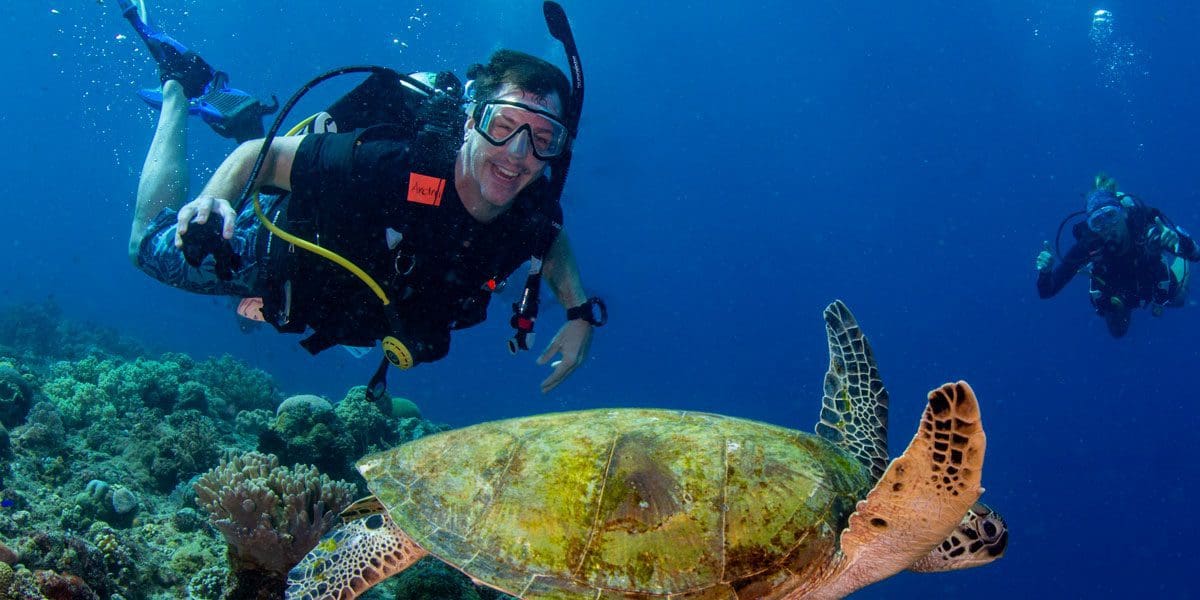
For parents diving alongside their children, PPB helps them stay at the same depth, move at the same pace, and share the experience together. There’s something really special about watching a parent and child hover side by side over a coral garden, completely still, watching a sea turtle sleep.
Underwater Photography: You Can't Shoot What You Can't Hover For
If you’ve ever tried to photograph a nudibranch, a seahorse, or a shy pufferfish, you already know the frustration: the moment you get close, you drift, you fin to correct, and the subject is gone — or worse, you’ve spooked it entirely. Underwater photography is one of the fastest-growing parts of recreational diving, and buoyancy is the invisible foundation beneath every great shot. A photographer who can hold a perfect hover — motionless, at the exact right depth, without touching anything — can take their time, frame the shot, adjust the lighting, and wait for the animal to relax. A photographer who is fighting their buoyancy is always rushing, always compensating, and the images show it. Beyond the creative benefits, good buoyancy also protects the subjects you’re trying to capture. Getting close to a coral-encrusted wall for a macro shot with poor buoyancy control means fins churning up sediment, hands reaching out for balance, and delicate organisms getting disturbed or crushed. PPB teaches you to be still, and stillness is the single most valuable skill an underwater photographer can have.
For the Experienced Diver: You're Not Too Advanced for This
I’ve met 200-dive divers who are still overweighted by six pounds and don’t know it. Log count is not the same as skill level. Habits get ingrained, and not all of them are good ones.
PPB is not just a beginner course — it’s a tune-up that benefits everyone. Many instructors and divemasters I know will quietly admit that taking PPB was one of their biggest “a-ha” moments, even after years in the water. There’s always something to refine, and the difference between good buoyancy and great buoyancy is the difference between a diver people enjoy following and one they dread getting in the water with.
The Bottom Line
Diving is a privilege. The ocean lets us in, and we owe it our best behavior while we’re guests. Peak Performance Buoyancy isn’t just a specialty certification — it’s a commitment to diving with intention, care, and skill.
Whether you’re a brand-new diver who wants to get the most out of every dive from day one, a parent hoping to share the underwater world safely with your kids, or an experienced diver who wants to genuinely level up — PPB is the course I recommend above all others.
It will change how you dive. It might even change how you see yourself as a diver.
And that’s worth every minute spent perfecting that hover.
Outfitting your Kids dive gear for Summer
Get ready for summer diving with your kids!
Many families are choosing to stay closer to home trips this summer and are actively looking for fun, meaningful programs to enroll their kids in — or even join them for family dive vacations in well established, PADI 5 star resorts with the safety of a fully escorted and tried and true hosted group trip with Kids Sea Camp in the Caribbean. Bonaire, St. Eustatius, St. Lucia, and Cayman Brac are top choices this summer!
Easy and quick to get to with multiple flights each week. Prices are finally lowering on round-trip air, and packages are all-inclusive, making it more affordable for families to travel with Kids Sea Camp. So let’s get you ready to go diving.
Parents are more than willing to invest in proper scuba gear for their children, just like they do with ski equipment during ski season.
So let’s get you prepared
First, I’ll be upfront: I personally am a SCUBAPRO fan, and that is my personal choice for my own diving. But I’m going to be very fair in my suggestions for kids because the supply is quite limited these days.
Support your reps and support your local dive shops. This is super important.
We are all frustrated when people walk into their dive shop to try on a bunch of equipment and uttilize local experties and then buy from an unproven online source. When I sell them gear, I service that gear when needed, I assist when something needs to be adjusted or upgraded, and I build a relationship and trust that lasts.
When people buy online or purchase second-hand gear, you never know exactly what you’re getting or if it even works as it should. Dive gear is life-saving equipment — it’s no joke to discover on a dive that something doesn’t function properly. Your local dive shop is the trusted, true source to make sure everything is ready to go and safe to use.
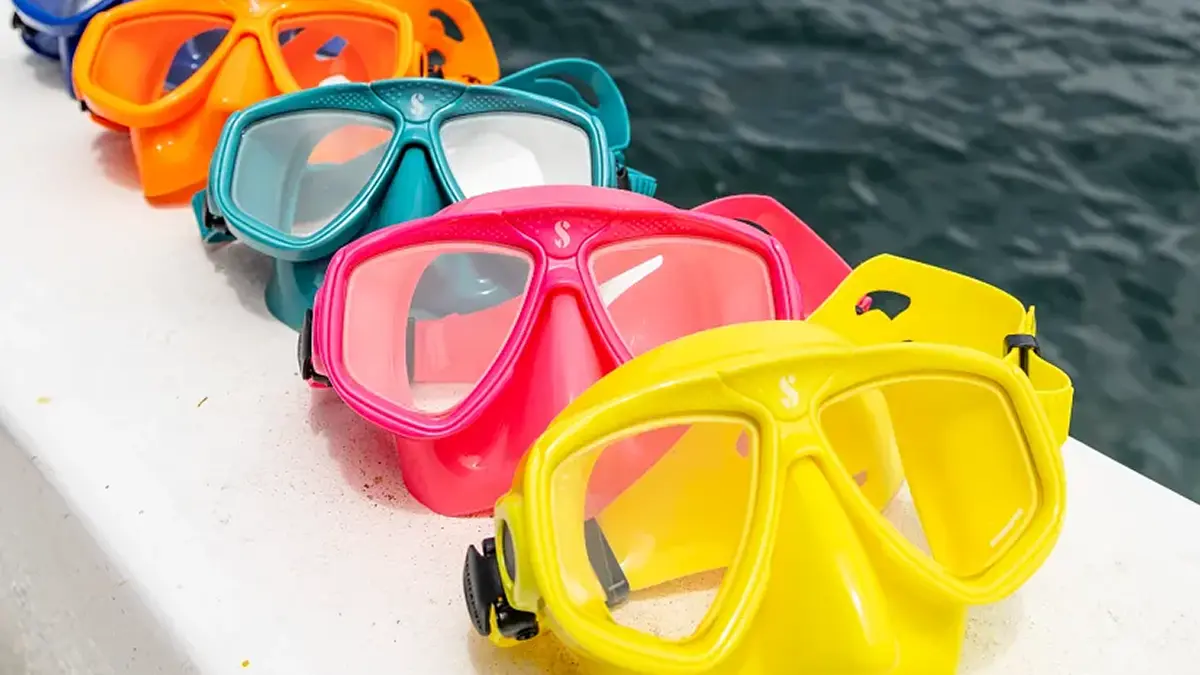
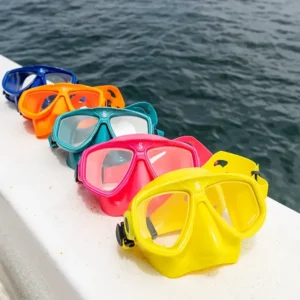
I Go for color! Kids love blue, red, yellow, aqua, purple, and green. Scuba Pro and Seac have fun colors to offer families who want to color coordinate.
Masks
I absolutely recommend soft silicone skirts and a neoprene strap. Little kids’ faces need soft skirts that press lightly against their skin so they won’t leak or hurt from being too tight. Neoprene straps — or even your store-logoed mask straps — are a huge hit. Consider giving one free with every full gear set purchase.
- For SASY kids ages 3–7, Seac has one of the smallest and most comfortable masks on the market: the BAIA KID. It runs about $30 and comes in blue or pink.
- For older kids (12+), SCUBAPRO’s Zoom mask line is ultra-lightweight with soft silicone and comes in fun colors, starting around $99.
- In my opinion the most comfortable dive mask on the market, you have to only try on a Synergy 2 Twin Trufit to feel the difference. Its Trufit Technology design incorporates not one but two separate silicone skirts -a reliable watertight seal on virtually all face shapes.
Bundling a fins-mask-snorkel set gives parents easy choices and a slight discount on the full package — they love that.
Fins
Many parents like strap fins because they feel the kids can grow into them and get more years of use. However, after 26 years of outfitting thousands of children through Kids Sea Camp, I can tell you that kids themselves prefer full-foot fins. Strap fins require booties, which keep little feet hot and soggy — and that means an extra, unnecessary purchase. Full-foot fins are soft and comfortable, and they pair beautifully with fun dive socks.
Scuba Socks and Rash Guards
Scuba socks are flying off the shelves right now — the fun colors and patterns sell themselves.
Rash guards are a must!
Long-sleeve rash guards help with sun protection and jellyfish stings — two things parents and kids worry about most, not to mention a layer of warmth.
Bundle a BCD and regulator system

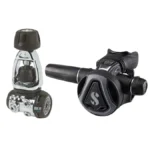
I make it easy for moms and dads. Most parents don’t want to learn that a regulator includes a first stage, second stage, octopus, gauges, and a computer. Have complete, ready-to-go bundles displayed and priced.
For little ones in Seal Team or Rangers programs (ages 8–10), my top two choices are:
- The Seac Ego — available in sizes XXXS to S. It’s perfect for the littlest divers and gives them room to grow. $450
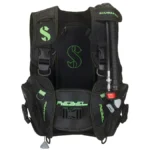
- The SCUBAPRO Rebel at $500 — a higher price point, but the best quality and longest-lasting with proper care.
A good-fitting BCD is so important. It gives kids confidence because it’s their own gear with their own weight system, releases, and comfort. The regulator’s second stage should be ultra-lightweight with the smallest mouthpiece available for maximum comfort.
We at Kids Sea Camp put the whole kit together in a nice mesh bag.
We help families to ensure a perfect fit on little faces, and check that fins are not too small or too big so they’ll actually last through the summer. Parents truly appreciate the guidance. Consider special Mother’s Day and Father’s Day gifts. Im sure mom could use a new mask or BCD maybe dad is ready too.
We offer multiple gear manufacturers. Seac, and Scubapro. I’d love to hear how these suggestions work for you this season — drop me a note or tag Kids Sea Camp on social media with your best kids’ gear needs or purchases.
Kids Sea Camp is number 1 when it comes to outfitting kids. Give us a call to outfit your family this summer. Regardless if it’s one item or a full set, our expertise is available to you any time. We are a certified SCUBAPRO, SEAC, and SEALIFE dealer. Always make your dive shop your first choice, and if Kids Sea Camp is your dive shop, we appreciate your loyalty and trust. Supporting small businesses whenever possible.
We look forward to diving with you.
Margo Peyton
The new PADI Seal Team program 2026
This program is a game-changer
AquaMissions are awesome
The refreshed PADI Seal Team program for kids aged 8-10
Is an ideal summer saver for dive shops and parents in 2026. It’s a low-barrier, high-fun, pool-only introductory experience designed specifically for kids ages 8 and up—no open water required, minimal equipment overhead, and maximum engagement that gets entire families through your door. This program positions your shop as the go-to spot for family-friendly summer activities while planting the seeds for lifelong divers (and repeat customers).
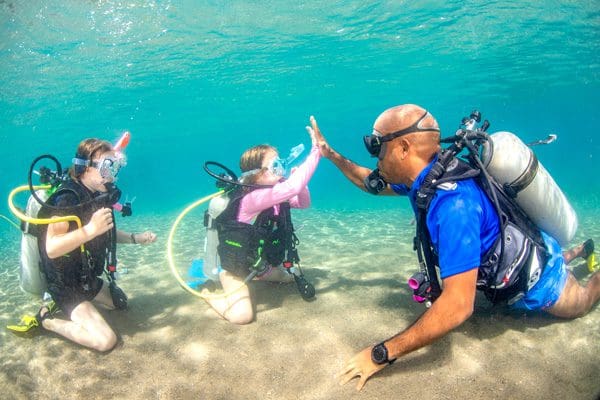
Kids build real scuba skills in a safe, supervised confined-water setting, earn official PADI recognition, and often beg to come back for more missions or graduate to Junior Open Water later when they turn 10. The PADI Seal Team is a fun-first, skill-building scuba program that feels like an underwater adventure camp—exactly what keeps 8- and 9-year-olds hooked and brings parents and grandparents returning to your store.
The program is all conducted in a pool (max depth typically around 4 m / 12 ft for safety and comfort)
- AquaMissions 1–5 (Core Seal Team): Kids master the fundamentals—breathing underwater, mask clearing, regulator recovery, buoyancy control, and swimming weightlessly. After these five missions, they officially become PADI Seal Team members and receive a certificate, membership card, and logbook.
- 15 Specialty AquaMissions (Path to Master Seal Team): Once they have the basics, kids can continue with exciting add-on missions (no particular order or timeframe). Completing 10 additional ones earns Master Seal status.
Each mission lasts about an hour and feels like a game or mission rather than a “class.” Instructors supervise directly, I personally recommend a 1:2 ratio, and everything stays in the controlled pool environment—making it one of the safest ways to introduce scuba to kids this summer. What’s Brand-New in the Refreshed 2025/2026 Seal Team Program?PADI completely refreshed the program to better match today’s kids.
Here are the standout upgrades versus the previous version:
Feature |
Old Program |
New/Refreshed Program (2025/2026) |
|---|---|---|
|
eLearning
|
Minimal or none
|
New interactive eLearning with digital challenges and an all-new embedded video (video is required; eLearning optional and flexible—kids can do it before, during, or after sessions)
|
|
Visuals & Design
|
Older imagery
|
Modern, colorful, kid-grabbing graphics and revised videos
|
|
Logbook
|
Standard
|
Simplified, focused on key points + fun puzzles and blank pages for custom missions
|
|
Instructor Materials
|
Separate guides
|
Fully integrated Instructor Guide + Guide to Teaching pages in the PADI Learning Portal—easier prep and delivery
|
|
Specialty AquaMissions
|
10 classic options
|
Expanded to 15 specialties, now including brand-new ones: Mermaid, Freediving, Adaptive Support (great for inclusivity), plus refreshed classics like wreck diving, navigation, buoyancy, underwater photography, environmental awareness, creature ID, night diving sim, search & recovery, and more
|
|
Marketing Support
|
Limited
|
Brand-new Marketing Toolkit with ready-to-use social graphics, email templates, digital certificates, photos, and promo assets
|
|
Language Support
|
Primarily English
|
Now in English, Arabic, Italian, French, Spanish, Malay, Portuguese (more coming soon)
|
These changes make the program more engaging, easier to teach, and far more marketable. Kids stay excited because it feels fresh and game-like.
Why This Is a Summer Saver + Future-Diver Pipeline for Dive Shops
- Low cost for families and something new and exciting for kids who love to dive. Customer pricing typically runs $400 -$500 for a 1-week program at a local dive shop. Check with Kids Sea Camp, as our prices are for the entire 7-night/6-day family dive vacation package, which includes the PADI Seal Team daily program. The core 5 AquaMissions (including gear rental and materials), depending on your shop and whether you bundle it as a half- or full-day camp. (Kids Sea Camp is 6 full days)Master Seal add-ons are easy. (At Kids Sea Camp, the Master Seal Program is included) It’s one of the most exciting “try scuba” options for kids out there—perfect for families testing the waters without a huge commitment.
- Pool-only = easy scheduling. No boat, confined conditions, no weather worries. Run morning or afternoon sessions, full-day camps, or weekly programs as we do.
- Family magnet: Parents love watching (or even become inspired to try themselves with DSDs), The Seal Team program often leads to sibling sign-ups or family tries scuba experiences. One child who becomes inspired can reinvigorate → whole family. This is fun for Grandparents who dive, as they enjoy watching their grandkids embark on scuba dives and share their joy.
- Long-term: Seal Team grads are primed for Junior Open Water at age 10. Many shops, like Kids Sea Camp, report that these kids return year after year, and many families become full-family dive customers. Kids keep diving as much as teens/adults do. It’s the ultimate “future diver” pipeline.
- Marketing made simple: New PADI Seal Team: Mermaid Missions, Freediving Fun & More! Watch inquiries roll in.
Safety-first, fun-first philosophy
Everything happens under direct PADI Pro supervision in shallow, controlled water. Kids build real confidence and responsibility while having a blast—exactly the positive first experience that turns “maybe someday” into “I want to dive forever.”Dive shops that run this program this summer are seeing it as a game-changer: summer camps, full pools, happy families, and a steady stream of future certified divers.
The new AquaMissions (especially Mermaid and Freediving) give kids stories they’ll tell all their friends. Kids Sea Camp includes free fins, masks, and snorkel sets. Scubapro or Seac BCD. We include all rental gear for kids and even have a Seal Team Family Dive schedule with instructors to share with parents all that their little ones have learned.
This refreshed Seal Team program isn’t just an update—it’s a smart, fun, safe way to share parents and grandparents love of diving with their kids and grandkids.
Kids Sea Camp is a big fan of this program, and we have been teaching it for over 25 years. Our staff is experienced, kid-friendly, and dive-ready.
Mastering your Buoyancy
Mastering Buoyancy: The Foundation of Safe, Sustainable, and Spectacular Diving
Robert Peyton is a master Buoyancy expert, PADI Staff Instructor, underwater photographer, and travel liaison for Kids Sea Camp and Family Dive Adventures. I have spent more than a decade guiding families—kids as young as four and adults of every experience level—through the underwater world. From the turquoise shallows of the Cayman Islands to vibrant reefs in Roatan and the calm waters of Bonaire, one skill stands above all others: buoyancy control. It is not merely a technique; it is the difference between a diver who fights the ocean and one who dances with it.
Fine-tuning buoyancy turns every dive into an effortless glide, conserves air, protects fragile ecosystems, and unlocks the full potential of underwater photography. In my roles at Kids Sea Camp, where we have certified thousands of young divers and created lifelong family memories across the Caribbean, mastering buoyancy is the thread that weaves safety, environmental stewardship, and joy into every adventure we lead.
The Open Water course improves buoyancy
In the PADI Open Water Diver course—the gateway certification for millions worldwide—students learn buoyancy control as a core skill, practicing it from confined-water sessions through open-water dives. Students learn to perform a proper buoyancy check at the surface, ensuring they are weighted so that they float at eye level with an empty BCD and a full breath.
Underwater, they master the fin pivot: lying flat on the bottom and using lung volume alone to pivot up and down like a see-saw, demonstrating neutral buoyancy without relying on the BCD. They practice hovering motionless at any depth, ascending and descending hands-free by controlling their breathing, and maintaining trim—horizontal body position—to minimize drag. Instructors emphasize that the BCD handles gross adjustments, while breath control provides the fine-tuning that separates novice flailing from graceful movement.
Instructors drill these fundamentals repeatedly because poor buoyancy early on can lead to uncontrolled descents, rapid ascents, or constant finning that stirs sediment and drains air supplies. At Kids Sea Camp, we see this progression daily: a nervous eight-year-old Seal Team diver in the Cayman Islands who starts by kicking wildly eventually hovers like a tiny astronaut, eyes wide with wonder behind the mask.
Why is mastering buoyancy one of the most important skills?
The reasons span safety, efficiency, conservation, and pure enjoyment. From a safety perspective, neutral buoyancy prevents the most common precursors to diving incidents: rapid, uncontrolled ascents that risk decompression illness or lung over-expansion, and crashes into the reef that can cause barotrauma or panic. Dive-medicine experts consistently rank buoyancy issues among the top contributors to diver fatalities and injuries. Energy conservation follows closely; a diver with refined control uses far less air and experiences less fatigue, extending bottom time by 20–30 percent or more. Environmentally, it is non-negotiable.
A single careless fin kick can break centuries-old coral or blanket delicate organisms in silt. In an era of reef stress from climate change and tourism pressure, every diver who hovers effortlessly becomes an ambassador for conservation rather than an accidental destroyer. Nuances matter: weighting changes with wetsuit thickness, tank size, salinity differences across Caribbean sites, or even slight current variations in places like St. Lucia or Belize. These are not one-time lessons but lifelong refinements. Even experienced divers revisit them after gear changes or long lay-offs.
PADI’s curriculum progressively builds on these foundations.
The Advanced Open Water Diver course refines buoyancy through adventure dives—often including deeper profiles, navigation, or night diving—where students must maintain precise depth control without visual references. Many choose the Peak Performance Buoyancy specialty as one of their five required dives, earning credit toward the certification while focusing exclusively on mastery. The Peak Performance Buoyancy course, open to Junior Open Water Divers age 10 and up, dramatically elevates skills. Divers learn to fine-tune their weighting to the ounce, perfect their trim and streamlining to reduce drag, and use breathing and subtle body position to control a hover that feels almost weightless.
The Helicopter Turn
They practice techniques such as the “hovering helicopter turn” and precise ascents without inflating their BCDs. At Kids Sea Camp, we integrate PPB into family programs in destinations like Roatan and Bonaire because it delivers immediate, visible results: parents and kids alike finish the day hovering side by side, laughing as they photograph each other in perfect suspension. The course is fun, practical, and often completed in a single day, making it ideal for our all-inclusive family vacations across the Caribbean. To be honest, mastering buoyancy is the goal of all dive training.
Why is mastering buoyancy essential at every level and every age?
For children in our SASY (Snorkel Adventure for Youngsters) and Seal Team programs in the Cayman Islands or Belize, early exposure builds confidence and muscle memory before they even strap on a tank. Teenagers progressing to full Open Water carry these habits into advanced training, while adult guests—many returning after years away—rediscover the skill and immediately notice longer, calmer dives. The stakes are highest, however, for underwater photography. As the official photographer for Kids Sea Camp, I see this daily.
A camera housing adds weight and changes trim; without perfect buoyancy, every shot is compromised by movement, backscatter from kicked-up sand, or accidental reef contact that damages both the environment and the image. Good buoyancy allows me to hover inches from a nudibranch or colorful sponge without disturbing a single polyp, hold rock-steady for macro shots, or glide alongside a sea turtle while framing family portraits against the reef walls of Little Cayman or Roatan. Poor control leads to blurred images, less bottom time, and ethical compromises. I have watched novice photographers transform after a PPB session: their photos shift from chaotic snapshots to gallery-worthy art.
Get in the ocean and practice
Personal experiences drive home these lessons more powerfully than any textbook. I remember a ten-year-old girl on our trip to the Cayman Islands who struggled during her first Open Water dives, constantly crashing into the sand and exhausting her air. After focused buoyancy drills—fin pivots, breath control games, and a mini-PPB session—she spent her final dive hovering motionless beside a cleaning station, watching wrasses work on a grouper while her parents beamed through their masks. She later told me, “I felt like I belonged down there.”
On the adult side, a father on a Family Dive Adventures trip to Roatan arrived overweight and vertical, stirring clouds of silt that ruined group photos and stressed the reef. Two days of targeted coaching turned him into the family’s buoyancy ambassador; by week’s end, he was leading relaxed drifts, camera in hand, capturing images he still shares proudly.
As a travel liaison, I see buoyancy’s impact on group dynamics.
When families arrive with varying skill levels for trips to Bonaire, St. Lucia, or Belize, strong buoyancy control keeps everyone together, reduces stress, and maximizes shared joy. On one Cayman Islands itinerary, a grandfather with decades of diving experience quietly mentored his teenage granddaughter through weighting adjustments; their tandem photos of vibrant reef life became the trip’s highlight. These moments reinforce why I emphasize buoyancy in every role: instructor, photographer, and liaison. It is the skill that turns strangers into dive buddies and kids into lifelong ocean stewards.
Respecting the ocean with your buoyancy
Ultimately, mastering buoyancy is more than technique—it is respect for the ocean, our equipment, and the families we serve at Kids Sea Camp. Whether a child is earning their first certification in the warm waters of the Caribbean or a seasoned diver is chasing the perfect reef shot in Roatan or Bonaire, fine-tuning this skill unlocks freedom, safety, and wonder. I invite every diver—young or old, novice or expert—to treat buoyancy as a lifelong pursuit. The reef will thank you; your air will last longer; your photos will shine brighter; and the memories you create with family will be weightless and unforgettable.

International Travel Check list and Safety Tips
International Travel Checklist and Safety Tips
- Learn about your travel destination
- Double-check your checklist
- Sign up for alerts through the Smart Traveler Enrollment Program (STEP)
- Organize your required travel documents
- Review your personal travel needs and safety tips for activities
- Consider buying travel insurance
For your own safety:
- Have your passport or identity document at all times.
- Follow local news sources during your stay to stay abreast of any potential concerns, including areas, dates, or times.
- Exercise caution and good judgment, keep a low profile, and maintain a high level of vigilance.
- Avoid demonstrations, which may become violent and unpredictable.
- Obey the instructions of security personnel at all times.
Gather your required travel documents and make multiple copies. These copies will help you replace your originals if they are stolen or lost while traveling.
- Give a set of copies to a trusted friend or family member.
- Keep a set of copies with you, separate from your originals.
- Take photos of your travel documents using your mobile phone.
- Get CFAR travel Insurance
Getting prepared for international travel may include considerations such as lodging, medical services, import restrictions, and more. Your preparations may vary depending on the country you are planning to visit. You can access these best practices to guide you in your plans:
- Crisis Response and Evacuations
- DHS Trusted Traveler Programs
- Medicine and Health
- Laws Abroad
- Lodging Safety
- Travel Insurance
- U.S. Travelers in Europe
- U.S. Centers for Disease Control travel advice
- Country overviews from the World Health Organization
Certain types of travelers have personal needs or participate in activities while traveling abroad. Check the list of personal needs and safety tips for activities to find the planning information for your trip.
Be alert
Always remain alert and prepared to reduce your risk of becoming a victim of crime while traveling. Following these crime prevention tips can make a difference when traveling internationally.
- Don’t wear expensive jewelry or carry valuable items.
- Trust your instincts. Plan ahead and have a safety strategy.
- Have a personal alarm or whistle to scare off attackers.
- Consider taking a self-defense class before you travel.
- Know where local police stations and hospitals are located.
- Don’t share detailed travel plans online until you return home.
- Use a “Find My Phone” GPS tracker on your devices. Share your location with someone trusted at home.
- Download offline map apps so you can navigate without an internet connection.
- Keep your phone charged and carry a portable battery.
- Tell someone at home your travel itinerary. Share hotel names, locations you will visit, U.S. embassy or consulate information, and your emergency contacts while abroad.
What is STEP?
Are you traveling outside the United States? You should enroll in our Smart Traveler Enrollment Program (STEP). It is a free service that sends you email updates and alerts from U.S. embassies and consulates abroad. The U.S. embassy and consulate updates in your inbox when you’re abroad. Join our Smart Traveler Enrollment Program (STEP) today.
Tips for teaching diving to teens
10 tips I learned from teaching JOW’s(Jr. Open Water kids age 10-14)
By Holly Wakely, PADI OWIS Instructor
In February 2021, I became a PADI dive instructor with Kids Sea Camp at Buddy Dive in Bonaire. This has been a dream of mine since I became a Jr. rescue diver 6 years ago. Thanks to Margo’s dive leader internship programs, I was able to gain experience this spring break in Belize as a fresh-minted PADI Instructor. The ability to intern and gain teaching tips experience before becoming an instructor is invaluable. Margo paired me each week with highly experienced KSC instructors so I could learn and gain confidence. In the first week, I assisted as part of the team with four students: Izabell, a 10-year-old; Natalia, an adult mom with her two sons, Daniel, age 14, and Alex, age 11. In the second week, I was the lead instructor, with assistance for 2 kids: 10-year-old Macello and 13-year-old Brooklyn. In the third and final week, I worked with 10-year-old Logan and his mom, Bailey.
The diving tips I learned in Belize!
My PADI Course Director, Lars at Buddy Dive, prepared me well with tons of dive training tips. He made sure, knowing I was becoming a Kids Sea Camp instructor, to drill me on the best and most effective ways to teach, both adults and kids. However, real-life teaching poses obstacles you don’t encounter in the book. So many tips, from cuts and scrapes to tired, hungry, chatty kids, and boat rides through rough water, or getting them through some of the more difficult skills. Boy, did I learn a lot more than I now anticipate!
Each of the three weeks had a 10-year-old Junior open-water diver as a teacher; some people argue that 10 is too young to dive. I know that it’s because I was certified at 10 at Kids Sea Camp. I know it is entirely possible for a young diver to join the underwater world with the right kid-friendly instructor. Luckily for me, each of my students had participated in either SASY or SEAL team with Kids Sea Camp over the years, so they were already comfortable with a regulator in their mouths and with swimming and snorkeling in open water. Each student came with their own unique set of fears and stresses. So are 10 slightly random things I learned to overcome real-life Jr. open-water obstacles and encourage each of my students to complete their training and become certified.
Ten tips for Instructors
- Sunscreen is useful for more than just sun protection- it’s jellyfish sting-proof as well as pre-existing cuts, scrapes, or bug bites that can sting in salt water. Lather them in skin-sensitive waterproof sunscreen (bonus points if it’s reef safe) and let the kids know that, like magic, no stings in salt water anymore
- Sometimes you have to negotiate class time and training. Kids want to play, but you have confined water sessions to do? Make it fun and create playtime after classes are finished for the day. Some water volleyball or paddleboarding, crab races, or even a smoothie is a great reward.
- Food is fuel! This one I kind of taught myself. I think I got hungrier than the kids did, even in the hot sun. Frequent snacks and water breaks are important for keeping energy up and making the course less daunting for little ones.
- Everything is bigger for kids because they’re small. Forty feet may only be 7 times your height, but it can be 10 times their height. This can make the ocean seem really intimidating. It helps a lot if they can see the bottom and have clear, calm water to begin in. Stay shallow, I find 20ft the perfect depth for the first 10 dives.
- The scariest skill is the full mask removal and replacement. Salt water burns their little eyes and scares them. Practice this repeatedly in fresh water during the confined sessions. Let them know they can keep their eyes closed, and you can hold on to them. Let them practice in salt water without dive gear while snorkeling, and then complete the course in class with an open-water dive.
- Kids learn by watching you, so they copy what you do and how you do it. So make sure you are your best diver self when diving or teaching with them.
- Keep things fun. Acronyms are boring, until they’re not. BWRAF, the buddy check. You may know it as “Begin With Review And Friend”; at least, that’s how it’s taught in the book. At 10, I would never remember this, make it Big White Rabbits Are Fluffy or Burger With Relish And Fries, and suddenly it’s glued into not only my short-term memory but my long-term memory too.
- As soon as their internal timer hits 25 minutes, they’re freezing. Layering wetsuits or skins helps, but they’re naturally going to get colder than we do, faster than we do. Unless you show them something crazy cool (this could be just a turtle to us, but they’ve never seen a real live sea turtle before), they suddenly get distracted from the slight cold and get excited about diving.
- Mask flap straps are the most helpful piece of equipment they could own, no joke. For some reason, their hair gets everywhere, and the rubber strap is sticky and hurts. Flap straps make it easy to put masks on and off. They look cool too (especially if it says Kids Sea Camp on it!)
- Pee schedules. Big tips alert! OMG, little kids have to go to the bathroom all the time. They have small bladders and are drinking lots of water to stay hydrated. So be prepared to take a lot of bathroom breaks. A two-piece wetsuit comes in much more handy than a one-piece. And NO, they will not pee in their suit or the pool, so make sure the toilet is close by.
Holly Wakely is now a PADI course director and a shining star in the diving industry. She currently works with Blue Horizons Diving and continues to create the next generation of divers with the utmost care. Kids Sea Camp is incredibly proud of her and her accomplishments.
What career path is safe from AI job replacement?
Adventure travel may be a great job in the future
I’ve had a number of my scuba-diving students talk to me about their career paths and life objectives. Many wonder what will survive the AI job-replacement problem that is quickly arising? Which jobs are safe? What jobs are not? Considering what jobs to pursue?
Jobs Likely to Be Displaced or Transformed by AI in the Next 5-10 Years. As AI advances rapidly, many routine, data-driven, or repetitive roles are at high risk of automation or significant change. By 2030, AI could displace or transform up to 300 million full-time jobs globally, with manufacturing alone losing 2 million by 2025. In the US, 41% of employers plan to reduce their workforce due to AI over the next five years.
Here’s a breakdown of vulnerable jobs, based on 2025 trends:
- Data Entry and Administrative Roles: Highly automatable with AI tools like OCR and bots. Risk: 80-90% automation potential. Average salary: $35,000-$45,000.
- Telemarketing and Basic Customer Service: Chatbots and voice AI (e.g., advanced versions of ChatGPT) handle inquiries 24/7. Entry-level reps could see 50-70% displacement. Average salary: $30,000-$50,000.
- Retail Cashiers and Warehouse Workers: Self-checkout, inventory bots, and robotics (e.g., Amazon’s warehouses) accelerate this. 2 million US manufacturing/warehouse jobs at risk by 2025. Average salary: $25,000-$40,000.
- Entry-Level Software Engineering and Analysts: AI code generators (e.g., GitHub Copilot) and data analytics tools automate coding and debugging, as well as basic financial/business analysis. Up to 50% of such roles could shift by 2030. Average salary: $60,000-$100,000.
- Other High-Risk Areas: Manufacturing assembly, basic legal research, content moderation, and transportation (e.g., autonomous vehicles displacing drivers by 2030-35). Discussions on X highlight fears in low-income sectors, with reporters noting “large-scale displacement is inevitable.”
Human-centric jobs
Not all jobs vanish—many evolve into hybrid roles requiring human oversight, creativity, or ethics. AI boosts productivity by 40-50% in some fields but displaces routine tasks. Career Directions for College Students or Displaced Workers. In the AI era, focus on “human-centric” skills, such as critical thinking, emotional intelligence, and adaptability, which AI can’t replicate well. College students should pursue hybrid education that blends technology with soft skills; displaced workers can upskill through short courses (e.g., Coursera). Key directions:
- AI-Related Roles: Become AI enablers, not victims. Study AI ethics, prompt engineering, or machine learning. Emerging jobs: AI trainers, ethicists, or integration specialists. Advice: Take free courses on edX or Khan Academy; hybrid degrees in AI + business/humanities.
- Healthcare and Human Services: AI-proof due to empathy needs. Roles like nurse practitioners, physical therapists, or mental health counselors grow 22%+ by 2030. For displaced: Certify in therapy or home healthcare (6-12 months training). Travel guides, Adventure Travel, and Scuba Travel require human interactions even into the future (2-4 years of training).
- Renewable Energy/Tech Trades: Wind turbine techs, solar installers—growth 45-60% by 2030. No college needed; vocational training (e.g., 6 months for windtech).
- Creative/Strategic Fields: Roles needing innovation, like content creators or strategists, evolve with AI tools. Advice: Learn AI collaboration (e.g., use for brainstorming).
- General Tips: Upskill in AI literacy (e.g., Microsoft’s free courses); focus on “superagency” (human-AI teamwork). For students: diverse portfolios; for displaced: bootcamps like General Assembly (3-6 months). X users emphasize reskilling in AI-resistant trades to counter displacement.
Expected Salaries for Available Jobs.
Salaries vary by location/experience, but 2025 US averages for future-proof roles are strong, often $60K+ with growth. AI boosts demand in these areas, resulting in annual wage increases of 5-10%.
- AI/Tech Roles: AI Engineer: $202K base (up to $451K total); Machine Learning Engineer: $440K. Prompt Engineer: $150K-250K.
- Healthcare: Nurse Practitioner: $130K; Physical Therapist: $95K; Mental Health Counselor: $57K-$87K.
- Renewables/Trades: Wind Turbine Tech: $70K-$90K; Solar Installer: $50K-$70K.
- Other AI-Resistant: Athletic Trainer: $50K; Home Healthcare Worker: $50K-$70K (growing demand). High-innovation roles (e.g., cybersecurity): $110K+.
- AI-Resistant Travel jobs: Dive Instructors, Adventure Travel guides, Luxury Travel Experts, Luxury and Adventure Travel Coordinators and Organizers, and Group leaders. $40K-$90K
Global averages are lower (e.g., 20-40% in Europe/Asia), but remote work boosts earning potential. Promising Startup Ideas and Industries for 2025-2035: AI and sustainability drive opportunities. Start small (under $10K) with your skills; focus on niches + AI.
- Top Industries: AI/SaaS (enterprise tools), Fintech (personalized finance), Healthtech (AI diagnostics), Logistics (autonomous supply), Life Sciences (biotech), Renewables (solar/wind install), Edtech (AI learning), 3D Printing (custom goods), Online Education (upskilling).
Startup Ideas
- AI Upskilling Platforms: Bootcamps for AI-resistant skills (e.g., hybrid trades).
- Personalized Health AI: Apps for mental health coaching.
- Sustainable Travel Tech: AI-planned eco-dive trips (leverage your skills).
- Renewable Energy Services: Solar installation with AI optimization.
- Virtual Reality Training: For dive instruction or trades.
- Success factors: Low overhead (online-first), AI integration for efficiency, niche focus (e.g., family AI tools). Bootstrapping or grants (e.g., SBA for women-owned businesses) keep risk low.
The future in Dive Travel, Family Travel, Adventure Travel, and Luxury Dive Travel is bright, vibrant, and ready for you.
By Margo Peyton (see link)
Finding the Balance: Why Real Conservation Includes the People Who Know the Sea Best
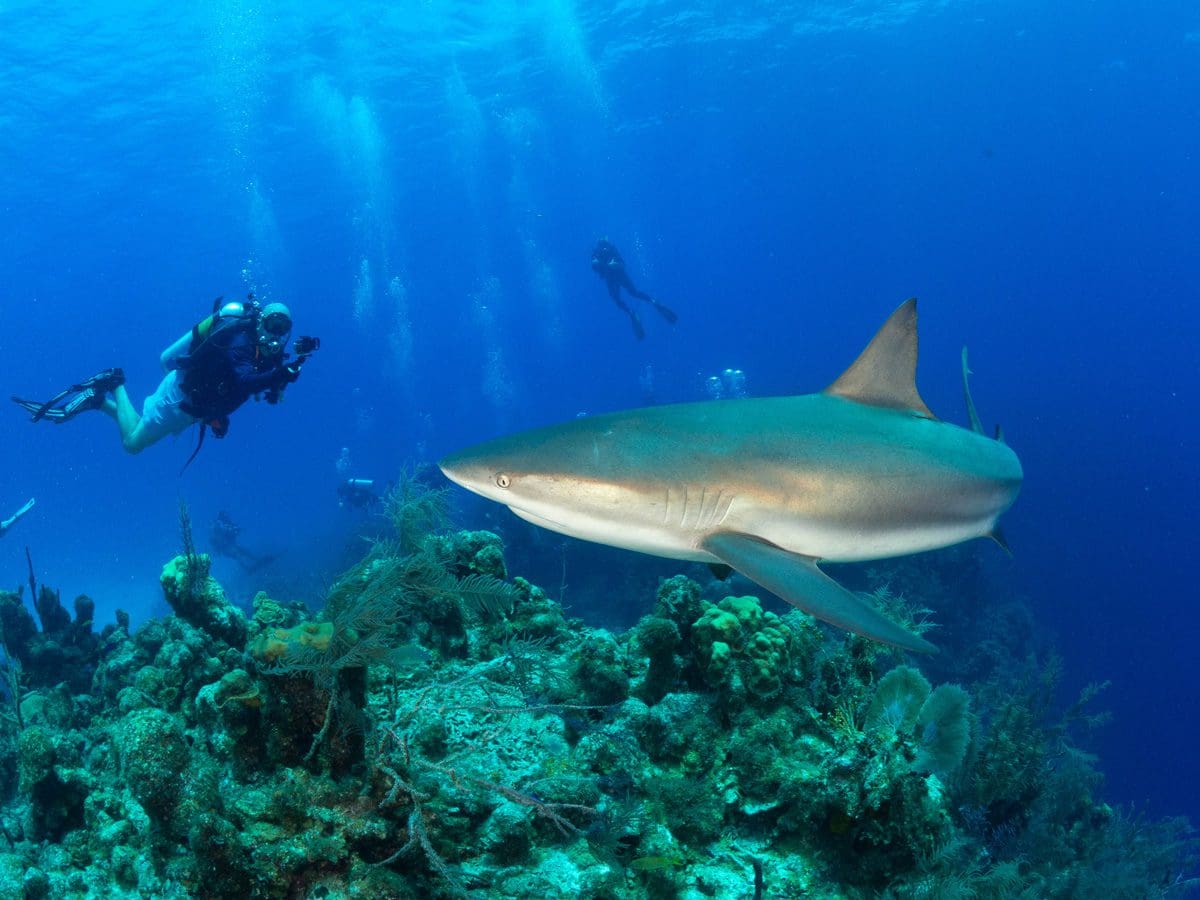
Belize sharks protection
TASA teaches sustainable practices
Proud support of sharks
https://www.turneffeatoll.org or the Belize Fisheries Department website.From Belize with a very grateful heart—Happy Thanksgiving.
Proud supporter of TASA; Margo Peyton, founder of Kids Sea Camp & Family Dive Adventures. Proud supporter of TASA