
By Robert Peyton, PADI Staff Instructor — Kids Sea Camp
Ask any experienced diver what separates a good diver from a great one, and the answer is almost always the same: buoyancy. Not the gear they’re wearing. Not how many dives are in their logbook. Not even where in the world they’ve been. It comes down to buoyancy — specifically, perfect buoyancy. And that’s exactly what PADI’s Peak Performance Buoyancy (PPB) specialty is designed to teach.
I’ve had the privilege of teaching diving to hundreds of students over the years, from wide-eyed kids taking their first breaths underwater to seasoned adults looking to sharpen skills they thought they already had. And without fail, PPB is the course that produces the most dramatic transformation — often in a single session.
Here’s why I think every diver, at every level, should make PPB a priority.
What Is Peak Performance Buoyancy?
Before we get into the why, let’s quickly cover the what. Buoyancy control is your ability to hover effortlessly in the water — not sinking, not floating up, just suspended. The PADI Peak Performance Buoyancy course takes that fundamental skill and refines it. You’ll learn to fine-tune your weighting so you’re not carrying too much or too little lead, how to use your breath as a buoyancy tool, and how to maintain a streamlined position that puts the least drag on your body as you move through the water.
It sounds simple. It is not — at first. But once it clicks, everything about diving changes.
The Diver Who Destroys the Reef Without Knowing It
Let me paint a picture. You’re diving a beautiful coral wall. The colors are stunning, the fish are everywhere, and you’re excited. You kick a little too hard, drift a little too low, and — crunch. A branch of coral that took 20 years to grow is gone in a second.
It happens constantly, and most divers who do it don’t even realize it. Poor buoyancy is one of the leading causes of accidental reef damage around the world. When divers are overweighted, they tend to fin furiously to stay off the bottom, kicking up sediment, disturbing marine life, and crashing into corals. When they’re underweighted, they fight to stay down, constantly disrupting the water column around them.
PPB fixes this. A diver with peak buoyancy control barely disturbs the water. They glide. They hover. They observe. They’re not fighting the ocean — they’re with it. The environmental impact of a well-trained diver versus a poorly buoyant one is genuinely night and day.
Air Consumption: Your Underwater Fuel Economy
Here’s something most new divers don’t immediately connect: buoyancy and air consumption are deeply linked.
When you’re fighting to maintain depth — constantly finning up, inflating your BCD, then overinflating, then dumping air, then sinking again — your body is working hard. Hard work means faster breathing. Faster breathing means you burn through your tank quickly and the dive ends sooner.
A diver who has mastered PPB uses far less energy. They breathe slowly and deliberately, and those breaths serve double duty — controlling both oxygen intake and buoyancy simultaneously. I’ve seen students go from 45-minute dives to 70-minute dives on the same tank size after completing PPB. That’s not an exaggeration. More time underwater means more of everything you came to see.
Safety First — Always
Beyond the environmental and experiential benefits, buoyancy is a genuine safety issue. Uncontrolled ascents — caused by a diver becoming too positively buoyant and rocketing toward the surface — are one of the most serious risks in recreational diving. Ascending too fast doesn’t allow nitrogen to safely leave your body, which can lead to decompression sickness. In severe cases, this is life-altering or fatal.
PPB teaches divers to stay in control at all times, to recognize when they’re beginning to ascend unintentionally, and to respond with calm, deliberate corrections rather than panic. That calm is everything. Underwater, panic leads to bad decisions. Solid buoyancy skills are one of the best defenses against panic, because you’re not constantly fighting your environment — you feel at home in it.
Why It Matters Even More for Kids
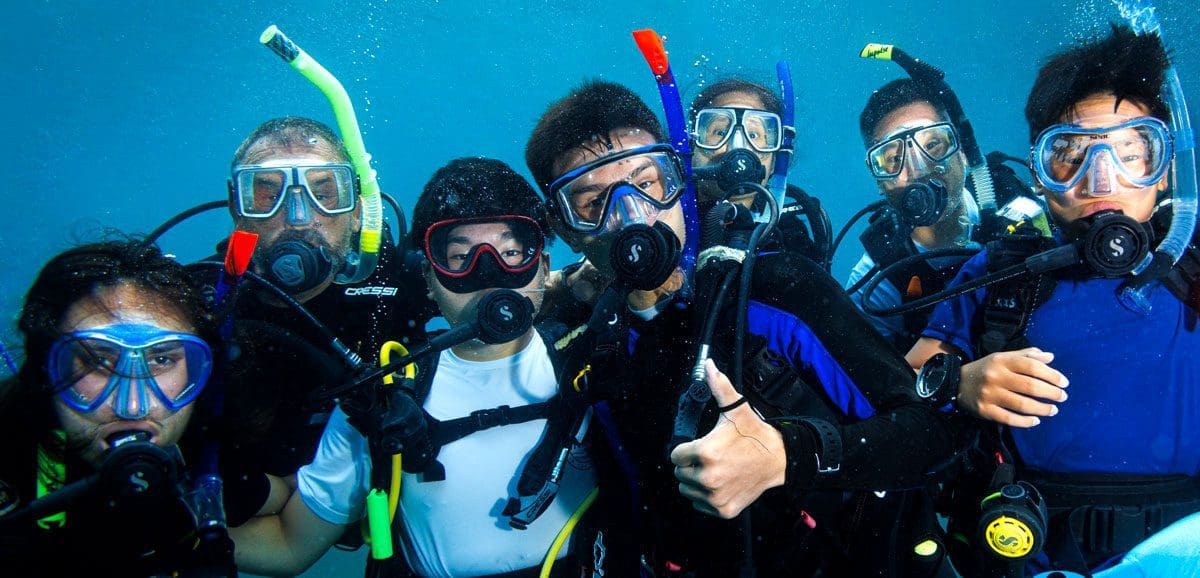
At Kids Sea Camp, buoyancy is something we talk about constantly. Kids are natural movers — they want to touch things, dart around, and explore. Teaching them PPB early gives them the discipline to channel that energy without causing harm to themselves or the reef.
Kids who learn proper buoyancy from the start build habits that stay with them for life. They become the adults who don’t drag their gauges across the coral, who help protect dive sites rather than degrade them. In a sport where we’re asking the ocean to share its beauty with us, that stewardship matters enormously.
For parents diving alongside their children, PPB helps them stay at the same depth, move at the same pace, and share the experience together. There’s something really special about watching a parent and child hover side by side over a coral garden, completely still, watching a sea turtle sleep.
Underwater Photography: You Can't Shoot What You Can't Hover For
If you’ve ever tried to photograph a nudibranch, a seahorse, or a shy pufferfish, you already know the frustration: the moment you get close, you drift, you fin to correct, and the subject is gone — or worse, you’ve spooked it entirely. Underwater photography is one of the fastest-growing parts of recreational diving, and buoyancy is the invisible foundation beneath every great shot. A photographer who can hold a perfect hover — motionless, at the exact right depth, without touching anything — can take their time, frame the shot, adjust the lighting, and wait for the animal to relax. A photographer who is fighting their buoyancy is always rushing, always compensating, and the images show it. Beyond the creative benefits, good buoyancy also protects the subjects you’re trying to capture. Getting close to a coral-encrusted wall for a macro shot with poor buoyancy control means fins churning up sediment, hands reaching out for balance, and delicate organisms getting disturbed or crushed. PPB teaches you to be still, and stillness is the single most valuable skill an underwater photographer can have.
For the Experienced Diver: You're Not Too Advanced for This
I’ve met 200-dive divers who are still overweighted by six pounds and don’t know it. Log count is not the same as skill level. Habits get ingrained, and not all of them are good ones.
PPB is not just a beginner course — it’s a tune-up that benefits everyone. Many instructors and divemasters I know will quietly admit that taking PPB was one of their biggest “a-ha” moments, even after years in the water. There’s always something to refine, and the difference between good buoyancy and great buoyancy is the difference between a diver people enjoy following and one they dread getting in the water with.
The Bottom Line
Diving is a privilege. The ocean lets us in, and we owe it our best behavior while we’re guests. Peak Performance Buoyancy isn’t just a specialty certification — it’s a commitment to diving with intention, care, and skill.
Whether you’re a brand-new diver who wants to get the most out of every dive from day one, a parent hoping to share the underwater world safely with your kids, or an experienced diver who wants to genuinely level up — PPB is the course I recommend above all others.
It will change how you dive. It might even change how you see yourself as a diver.
And that’s worth every minute spent perfecting that hover.