From High School Dreams to a Life in the Ocean

Our Blog, Margo Peyton, Kids Sea Camp Blog

Advice on dive careers certifications and Volunteer Opportunities for Young Ocean Lovers

By Margo Peyton

Every year, I speak at trade shows, on trips, and at school Career Days with bright, energetic young adults graduating from high school who feel that irresistible pull toward the sea. They love the ocean, crave adventure, and dream of a life filled with travel, discovery, and meaningful experiences, rather than staring out an office window from 9 to 5, doing the same thing day after day. This spring, Bella—a high school senior who is already a certified Rescue Diver—called me about volunteer opportunities to become a PADI Divemaster. Like so many others I’ve mentored, she loves travel, meeting fascinating people from all walks of life, and exploring the underwater world. But she was still unsure exactly how to turn that deep passion into a real, sustainable career or if it was even a possibility.

How was I going to pay bills?

Her parents, like so many well-meaning families, expressed the same concern I hear over and over: “Marine biology sounds amazing, but is that really a job that’s going to pay the bills? You won’t be able to make a living on that.” It’s a valid worry. Traditional marine biology roles often require advanced degrees and can start at around $47,000 per year in the U.S., with highly competitive entry-level positions. Yet the wonderful truth I shared with Bella—and want to share with every young person reading this—is that a marine-oriented career path is far broader, more accessible, and more rewarding than most families realize. Diving instruction, ecotourism, marine education, conservation guiding, family adventure travel programs, international dive operations, underwater photography, and many related fields offer genuinely fulfilling ways to live your passion while building a sustainable livelihood.
I told Bella my own story because I was exactly like her at her age. I loved the ocean, animals, travel, chocolate, ice cream, horses, airplanes, fast driving cars and music.

No clear roadmap for my future

My passions were scattered in every direction, and I had no clear roadmap. What I discovered—and what I hope every young ocean lover hears—is that the path to a fulfilling career doesn’t have to be a straight line. It is built one step at a time by trying new things, volunteering, staying open to unexpected opportunities, and relentlessly following what lights you up inside. My journey began with a simple volunteer position at the Provincetown Sea Aquarium. I walked in and asked the owner, Jackie Gleason, if I could volunteer for the summer. She said yes. That one decision opened my eyes and my heart to so many possibilities. I cleaned penguin tanks, fed two rescued wolves, cared for injured harbor seals and sea lions recovering from shark bites or propeller strikes, worked the ticket booth, learned customer service, and taught children about local marine life in the tidal pool area. I absorbed lessons in geography, marine science, animal care, and the pure joy of sharing the ocean with kids. It was messy, hands-on, and unforgettable.

My curiosity led me

I followed my curiosity wherever it led. I became the “cotton candy girl” at the local Penny Patch candy store because I loved chocolate fudge and wanted to learn how to make cotton candy. The job wasn’t résumé gold, but it taught me how to connect with the public, make people smile, and spark excitement in children who watched me whip up cotton candy sticks the way I once watched the girl twist saltwater taffy. I worked two jobs, night and day, in fine jewelry stores, Thunder Road & Galadriel’s Mirror, learned about and sold Lalique crystal and rare gems, and I became a top salesperson at both. Those experiences helped me master the art of sales and customer service. I was able to buy my first car, so I could then travel for school and work.

Tourism and Psychology degrees

I studied travel and tourism and Psychology in college. I use parts of those degrees in my work today. College mostly gave me precious time to mature, make lifelong friends, build character, learn geography, and even pick up skiing. After graduating from college, I worked as a travel agent, quickly becoming the most productive ticketing agent at Timbuktu Travel—a role that inspired my interest in Africa and Australia.

Journey of Tourism 

In The Fall and winter of 1986-1987, Qantas Airlines, the oldest airline still in existence today in Australia, offered a contest to Travel Agents selling tickets for the America’s Cup races, being held in Australia.I booked a record number of tickets on Qantas Airlines for the event. The American challenger Stars & Stripes (skippered by Dennis Conner) defeated the Australian defender Kookaburra III (skippered by Iain Murray). I earned free round-trip tickets to Australia and used them to attend the 1988 World Expo. Out of that came opportunities to skydive, hang-glide, learn to surf, and camel-trek. I met incredible adventurers, built character and courage, and discovered that endless possibilities exist if you just work hard and stay focused.

Relationships matter

managed a Travel Network agency office on Cape Cod and built client relationships that remain strong friendships to this day. Then I took the leap on a FAM Trip to the Cayman Islands and decided to stay. I started by working at a Home Depot as a Point-of-Sale Supervisor to earn my work permit in my first foreign country. It was incredibly hard. I cried some days as an “expat” outsider who wasn’t immediately trusted by the local Caymanian staff. But I worked diligently, respected their culture, and eventually earned their friendship and trust. That single lesson in cultural humility and perseverance became foundational to every international success that followed. Once I received my permit, I opened an international travel agency there and truly began expanding my career in ways I had never imagined.

Nothing stopped me

While living in Grand Cayman, I got married, and my son Robbie was born there. We later moved back to the United States, where my daughter Jen was born in Florida. Life changed dramatically when my then-husband left us. As a determined single mother, I created Kids Sea Camp Inc. out of pure passion and necessity. I wanted to spend real, quality time with my children and share the underwater world I loved so much. That decision turned family diving into my life’s work. What started as a way to keep my kids close grew into a very successful family adventure travel company that has now been running strong for more than 26 years.

Tom Peyton enters my life

Continuing on that same joyful path, I never stopped following what brought me happiness. In 2005, through a connection with the Hollywood, Florida Tourism Board, I met my now-husband of 20 years, Tom Peyton, at the Chocolate Mouse Coffee House during an open-mic night. Music, coffee, and chocolate—three of my all-time favorite things—led me straight to him. Together, we run amazing family adventures around the world and recently launched our newest venture, Empty Nester Travelers—traveling the globe, connecting the dots of opportunity, friendships, and shared interests while celebrating the next chapter of life after the kids have grown.

Following my passions worked

The common thread through every single chapter of my life? Adventure, travel, learning from every person and every job, and doing what genuinely made me happy—even when it didn’t look like traditional “career building” on paper. My grandmother, Priscilla Salvador, still echoes in my mind: “Margo, what doesn’t kill you will make you stronger.” I stayed strong, followed my passions, worked hard, stayed true to my moral compass, and remained respectful of all people along the way.

The Careers That Grew from One Passion-Filled Journey

When I talked with Bella, I pointed out how many different professional skills and careers had grown naturally from that same love of the ocean and travel she feels today. My non-linear path gave me real-world proficiency in family dynamics and creating meaningful experiences for parents and children, international contracts and negotiations, dive safety and training standards, travel expertise and consulting, ocean advocacy, dive operation consulting for kids programs, underwater photography, event planning, airline representation, travel writing, and so many more areas. None of these were planned from the beginning. They emerged organically because I kept saying “yes” to opportunities that aligned with what I loved.

Practical Steps for Young Ocean Lovers Like Bella

If you’re a high school senior or recent graduate who dreams of a life connected to the marine world without the 9-to-5 grind, here’s exactly what I shared with Bella—and what has worked for so many others:

  1. Start with volunteering and entry-level experiences to get your foot in the door with some of the highly sought after jobs.
  2. Try short-term jobs and side gigs in marine tourism, aquariums, or dive shops to help you find your passion and gain experience.
  3. Build certifications and hands-on experience with becoming a PADI Jr. Dive master age 15-17 or PADI Divemaster age 18+ (more on Divemaster below).
  4. Combine your passions creatively, start early so you can do what you love and love what you do.
  5. Network relentlessly and stay open, maintain relationships, build contacts and stay in touch.
  6. Address the money question head-on—many marine careers pay well once you gain experience and build a reputation. That includes Kids Sea Camp, we provide Divemaster and instructor courses, internships and hire.

Underwater Photography as a Marine-Oriented Career Path

Underwater photography is one of the most rewarding ways to combine a passion for the ocean, adventure, travel, and creativity into a real career. It’s especially appealing for young adults like Bella who are already Rescue Divers. As someone who has built a 26+ year career around family diving, I’ve seen underwater photography open incredible doors: from documenting Kids Sea Camp trips to creating content for travel writing, event promotion, and ocean advocacy. For me its been a growing passion and all started with my PADI photo specialty and a Sealife Camera and grew to a professional with Olympus and Nauticam. Learning from other divers, taking courses and following my passion. Check out our Photo Gallery
Getting Started: Master diving first, Get certified, and gain your PADI PPB certification as Buoyancy is key when it comes to underwater photography. Nitrox for longer diving capability, Advanced open water for more experience and confidence as a diver. You can build your way up to PADI (Divemaster), a PADI pro level for more value as a hire, then take a PADI Digital Underwater Photographer course. Practice on land before buying expensive gear.

Main Career Paths:

  • Liveaboard/Resort Photographer
  • Freelance/Stock & Editorial (magazines, National Geographic, NGOs)
  • Dive Industry Hybrid (instructor + photographer)
  • Commercial/Film & TV
  • Scientific/Conservation
  • Workshop Leader/Educator
  • Niche specialties (family diving, wrecks, macro)
  • Magazine, travel writer
  • Social media
  • Dive Travel Blogger
  • Educator and teacher of photography
  • Photo equipment specialist and critic
  • Underwater weddings
  • Documentary

Most successful pros use a hybrid model. Entry-level pay is modest but the lifestyle—daily diving in beautiful places—is exactly what many young ocean lovers crave. With experience, many earn $80k–$150k+.

PADI Divemaster Certification: Your First Step into a Professional Scuba Career

PADI Divemaster is the first professional-level certification in the PADI system and the most popular pro credential worldwide. It turns passionate recreational divers into leaders who can guide dives, assist instructors, and begin building a career in the dive industry.

Prerequisites (as of 2026):

  • Age 18+
  • Advanced Open Water + Rescue Diver
  • 40 logged dives to start (60 to certify)
  • Current EFR/CPR
  • Medical clearance

Course Includes: Knowledge development, water skills & stamina tests, 24 dive skills at demonstration quality, and practical leadership applications. Duration: 2–8 weeks depending on format. With Kids Sea Camp $900. Others, Cost: $900–$3,500 (cheaper in Southeast Asia or with internships).
Once certified, you can lead dives, assist instructors, teach Discover Scuba Diving, and work at dive centers, resorts, and liveaboards worldwide. It’s the required stepping stone to Assistant Instructor and Open Water Scuba Instructor.

Marine Conservation Volunteer Programs: A Perfect Launchpad

These programs let you dive almost every day, contribute real science, gain professional skills, and explore stunning destinations. Many are designed for recent grads and lead directly to Divemaster training or paid roles.

Top Scuba-Focused Programs

Shark Conservation & Advocacy

  • PangeaSeed Foundation – pangeaseed.org – Art, science, and shark protection projects.
  • Shark Angels – sharkangels.org/volunteer – Mentorship, writing, photography, advocacy, and outreach.

Domestic & Education Opportunities

  • Ocean Institute – Dana Point, California – oceaninstitute.org/volunteer-opportunities – Tidepool interpretation and marine education.

Scholarships & Funding

20+ categories of scholarships and training grants (including dive training and marine conservation). 2027 applications open September 1–October 31, 2026.

How to Get Started

Match your level, check budgets, and reach out directly. A summer in one of these programs can give you logged dives, credentials, experience, and references that open doors everywhere.
Life is short. Follow your passion. Try new things. Volunteer for jobs simply to see what they feel like. Some experiences won’t go on your résumé, but they build character, confidence, and unexpected connections that can change your life. Stay safe, keep your moral compass pointed true, and trust that the dots will eventually connect.
Bella left our conversation excited about possibilities she hadn’t even considered before. If you’re reading this and feeling that same magnetic pull toward the ocean, know that you don’t need all the answers right now. You only need the courage to take that first step—just like I did when I nervously walked into the Provincetown Sea Aquarium as a teenager.
The underwater world desperately needs passionate, respectful, adventurous people who are willing to show up, work hard, and share their joy. Your journey can start this summer. Dive in.
Attend Scuba Diving Trade shows! They are the best to meet the people in your career path. Talk to your local dive shop and contact me.

If you want to talk more about this or another marine career, give me a shout
Margo Peyton
Why Peak Performance Buoyancy Is the Most Important Skill You’ll Ever Learn Underwater

Perfect dive trip, Palau, Kids Sea Camp

By Robert Peyton, PADI Staff Instructor — Kids Sea Camp

Ask any experienced diver what separates a good diver from a great one, and the answer is almost always the same: buoyancy. Not the gear they’re wearing. Not how many dives are in their logbook. Not even where in the world they’ve been. It comes down to buoyancy — specifically, perfect buoyancy. And that’s exactly what PADI’s Peak Performance Buoyancy (PPB) specialty is designed to teach.

I’ve had the privilege of teaching diving to hundreds of students over the years, from wide-eyed kids taking their first breaths underwater to seasoned adults looking to sharpen skills they thought they already had. And without fail, PPB is the course that produces the most dramatic transformation — often in a single session.

Here’s why I think every diver, at every level, should make PPB a priority.

What Is Peak Performance Buoyancy?

Before we get into the why, let’s quickly cover the what. Buoyancy control is your ability to hover effortlessly in the water — not sinking, not floating up, just suspended. The PADI Peak Performance Buoyancy course takes that fundamental skill and refines it. You’ll learn to fine-tune your weighting so you’re not carrying too much or too little lead, how to use your breath as a buoyancy tool, and how to maintain a streamlined position that puts the least drag on your body as you move through the water.

It sounds simple. It is not — at first. But once it clicks, everything about diving changes.

The Diver Who Destroys the Reef Without Knowing It

Let me paint a picture. You’re diving a beautiful coral wall. The colors are stunning, the fish are everywhere, and you’re excited. You kick a little too hard, drift a little too low, and — crunch. A branch of coral that took 20 years to grow is gone in a second.

It happens constantly, and most divers who do it don’t even realize it. Poor buoyancy is one of the leading causes of accidental reef damage around the world. When divers are overweighted, they tend to fin furiously to stay off the bottom, kicking up sediment, disturbing marine life, and crashing into corals. When they’re underweighted, they fight to stay down, constantly disrupting the water column around them.

PPB fixes this. A diver with peak buoyancy control barely disturbs the water. They glide. They hover. They observe. They’re not fighting the ocean — they’re with it. The environmental impact of a well-trained diver versus a poorly buoyant one is genuinely night and day.

Air Consumption: Your Underwater Fuel Economy

Here’s something most new divers don’t immediately connect: buoyancy and air consumption are deeply linked.

When you’re fighting to maintain depth — constantly finning up, inflating your BCD, then overinflating, then dumping air, then sinking again — your body is working hard. Hard work means faster breathing. Faster breathing means you burn through your tank quickly and the dive ends sooner.

A diver who has mastered PPB uses far less energy. They breathe slowly and deliberately, and those breaths serve double duty — controlling both oxygen intake and buoyancy simultaneously. I’ve seen students go from 45-minute dives to 70-minute dives on the same tank size after completing PPB. That’s not an exaggeration. More time underwater means more of everything you came to see.

Safety First — Always

Beyond the environmental and experiential benefits, buoyancy is a genuine safety issue. Uncontrolled ascents — caused by a diver becoming too positively buoyant and rocketing toward the surface — are one of the most serious risks in recreational diving. Ascending too fast doesn’t allow nitrogen to safely leave your body, which can lead to decompression sickness. In severe cases, this is life-altering or fatal.

PPB teaches divers to stay in control at all times, to recognize when they’re beginning to ascend unintentionally, and to respond with calm, deliberate corrections rather than panic. That calm is everything. Underwater, panic leads to bad decisions. Solid buoyancy skills are one of the best defenses against panic, because you’re not constantly fighting your environment — you feel at home in it.

Why It Matters Even More for Kids

At Kids Sea Camp, buoyancy is something we talk about constantly. Kids are natural movers — they want to touch things, dart around, and explore. Teaching them PPB early gives them the discipline to channel that energy without causing harm to themselves or the reef.

Kids who learn proper buoyancy from the start build habits that stay with them for life. They become the adults who don’t drag their gauges across the coral, who help protect dive sites rather than degrade them. In a sport where we’re asking the ocean to share its beauty with us, that stewardship matters enormously.

For parents diving alongside their children, PPB helps them stay at the same depth, move at the same pace, and share the experience together. There’s something really special about watching a parent and child hover side by side over a coral garden, completely still, watching a sea turtle sleep.

Underwater Photography: You Can't Shoot What You Can't Hover For

If you’ve ever tried to photograph a nudibranch, a seahorse, or a shy pufferfish, you already know the frustration: the moment you get close, you drift, you fin to correct, and the subject is gone — or worse, you’ve spooked it entirely. Underwater photography is one of the fastest-growing parts of recreational diving, and buoyancy is the invisible foundation beneath every great shot. A photographer who can hold a perfect hover — motionless, at the exact right depth, without touching anything — can take their time, frame the shot, adjust the lighting, and wait for the animal to relax. A photographer who is fighting their buoyancy is always rushing, always compensating, and the images show it. Beyond the creative benefits, good buoyancy also protects the subjects you’re trying to capture. Getting close to a coral-encrusted wall for a macro shot with poor buoyancy control means fins churning up sediment, hands reaching out for balance, and delicate organisms getting disturbed or crushed. PPB teaches you to be still, and stillness is the single most valuable skill an underwater photographer can have.

For the Experienced Diver: You're Not Too Advanced for This

I’ve met 200-dive divers who are still overweighted by six pounds and don’t know it. Log count is not the same as skill level. Habits get ingrained, and not all of them are good ones.

PPB is not just a beginner course — it’s a tune-up that benefits everyone. Many instructors and divemasters I know will quietly admit that taking PPB was one of their biggest “a-ha” moments, even after years in the water. There’s always something to refine, and the difference between good buoyancy and great buoyancy is the difference between a diver people enjoy following and one they dread getting in the water with.

The Bottom Line

Diving is a privilege. The ocean lets us in, and we owe it our best behavior while we’re guests. Peak Performance Buoyancy isn’t just a specialty certification — it’s a commitment to diving with intention, care, and skill.

Whether you’re a brand-new diver who wants to get the most out of every dive from day one, a parent hoping to share the underwater world safely with your kids, or an experienced diver who wants to genuinely level up — PPB is the course I recommend above all others.

It will change how you dive. It might even change how you see yourself as a diver.

And that’s worth every minute spent perfecting that hover.

The Ultimate Family Diving Vacation in St. Lucia

ST. Lucia, Kids and diving, scuba diving with kids, kids sea camp

A Luxurious Legacy of Love, Now Shared with the Next Generation

Imagine this: Years ago, you and your beloved escaped to the emerald shores of St. Lucia, where the majestic Pitons framed your honeymoon at Anse Chastanet Resort—a four-diamond utopia renowned worldwide for its romantic allure. Whispered vows, sunset toasts, and the gentle rhythm of the Caribbean Sea created memories etched in eternity. Now, fast-forward to today: That same paradise beckons once more, not just for you, but for the beautiful family born from that union. For two enchanting weeks each summer, Kids Sea Camp charters this luxurious haven exclusively for families, transforming it into a decadent playground where parents and children dive into adventure together. It’s a rare opportunity to celebrate life’s greatest gifts—love, legacy, and laughter—amidst the island’s timeless beauty.

From July 25 to August 1 and August 1 to 8, 2026, families from around the globe converge on Anse Chastanet for an irresistible blend of opulence and exploration. Whether your little ones are wide-eyed beginners or your teens are seasoned underwater enthusiasts, this event promises transformative moments that bind generations. Learn to scuba dive side by side, capture stunning underwater photography, and forge memories that will echo through lifetimes. Dive into the details and secure your slice of paradise.

Underwater Wonders: Where Novices Become Explorers and Experts Soar

St. Lucia, Kids and sciba diving, Anse chastanet, Kids Sea Camp, Family Dive Adventures, Scuba DivingSt. Lucia’s crystalline waters are the ultimate classroom for family diving, and Anse Chastanet’s house reef marine park is your private gateway. For budding divers, gentle shallows teem with vibrant coral gardens and friendly marine life, making it the perfect spot for kids and parents to earn certifications together under expert guidance. Seasoned families will thrill to world-class sites: Plunge beneath the iconic Pitons for dramatic wall dives like Superman’s Flight, explore historic wrecks shrouded in mystery, and encounter schools of tropical fish dancing in the currents.

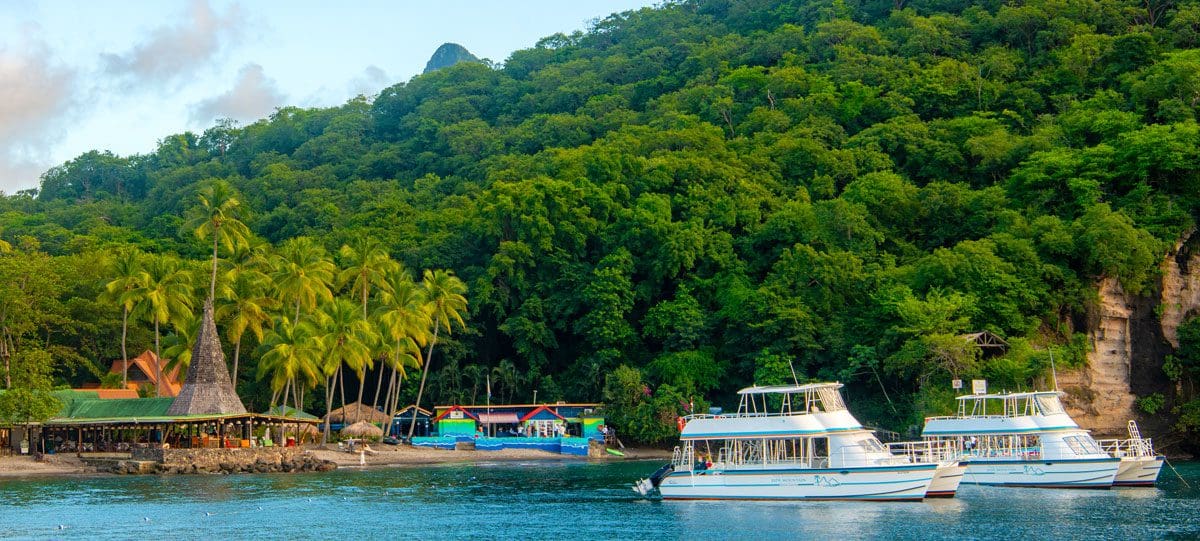
Young adventurers get the royal treatment with their own double-decker private boat, staffed by dedicated instructors from Scuba St. Lucia—the Caribbean’s premier team for family diving. With unmatched expertise, warm hearts, and infectious smiles, they ensure every child feels safe, empowered, and exhilarated. No heavy lifting here: Valet diving means your gear is handled with effortless courtesy, leaving you free to relax and revel in the adventure. Black-sand beaches offer effortless shore dives, where families might witness turtle hatchlings emerge under starlit skies or embark on mesmerizing night dives. Come discover the best of St. Lucia underwater—a symphony of turtles, trumpetfish, queen angels, eagle rays, and iridescent parrotfish that will leave you breathless.

Above the Waves: Indulgent Activities for Every Soul

ST. LUCIA, KIDS SEA CAMP, SCUBA AND KIDS, night diving, Family Scuba Diving Vacations, Family Dive Adventures, Scuba Diving, Kids and scubaAnse Chastanet isn’t just a dive resort; it’s a decadent sanctuary where land-based luxuries rival the sea’s splendor. Stroll volcanic black sand beaches, where the earth’s warmth meets the ocean’s embrace. Families bond over jungle biking through lush trails, paddleboarding across serene bays, or kayaking at dawn. Sunrise and sunset yoga sessions on the shore restore the spirit, while culinary delights await: Dive into chocolate labs for hands-on truffle-making or cupcake decorating classes that turn sweet treats into family masterpieces.
Thrill-seekers can conquer Piton hikes for panoramic views that steal your breath, while relaxed afternoons unfold with tennis matches, beach volleyball, art classes inspired by the island’s vibrant palette, or simply lounging in hammocks. The world-renowned spa offers rejuvenating treatments infused with local botanicals—perfect for parents seeking a moment of bliss amid the excitement.

Dining is an epicurean journey across four exquisite restaurants: Savor plant-based innovations at the vegetarian haven, spice up your evening with authentic Indian flavors, ascend to the romantic Tree House for elevated Caribbean fusion, or unwind at the Beach Grill with toes-in-the-sand grilled specialties. Each meal is a tantalizing delight, crafted from fresh, global-inspired ingredients that cater to every palate, ensuring no one leaves the table unsatisfied.

Elegant Escapes: Rooms That Whisper Luxury

Perched on lush hillsides with open-air designs, Anse Chastanet’s accommodations are among the most breathtaking in the Caribbean—and the world. Wake to uninterrupted vistas of the Pitons piercing the sky and the endless turquoise ocean below. Some suites feature whimsical swings or living trees integrated into the architecture, blending nature’s artistry with sophisticated elegance. Spacious, airy, and infused with island charm, these rooms offer a decadent retreat where families unwind in style after days of adventure.

For families with older children, elevate the experience further: Parents can retreat to the celestial heights of sister property Jade Mountain, a sanctuary of infinity pools and star-gazing sanctuaries, while young adults savor Anse Chastanet’s vibrant energy. Dine and dive together by day, then retire to your respective havens—creating the perfect balance of family connection and personal indulgence.

Why Resist? This is the Family Vacation of a Lifetime

In a world of ordinary getaways, Anse Chastanet’s Family Diving Takeover with Kids Sea Camp stands as an unparalleled masterpiece—decadent, transformative, and utterly irresistible. Here, honeymoon dreams evolve into family legacies, where the magic of St. Lucia unites generations in joy and discovery. With Scuba St. Lucia’s professional team leading the way, every moment is safe, seamless, and spectacular. Don’t miss this exclusive event—spaces fill quickly. Book now with us and let the adventure begin. Your family’s story awaits beneath the waves and beyond.

Outfitting your Kids dive gear for Summer

Outfitting Kids for Summer-1

Get ready for summer diving with your kids!

Many families are choosing to stay closer to home trips this summer and are actively looking for fun, meaningful programs to enroll their kids in — or even join them for family dive vacations in well established, PADI 5 star resorts with the safety of a fully escorted and tried and true hosted group trip with Kids Sea Camp in the Caribbean. Bonaire, St. Eustatius, St. Lucia, and Cayman Brac are top choices this summer!

Easy and quick to get to with multiple flights each week. Prices are finally lowering on round-trip air, and packages are all-inclusive, making it more affordable for families to travel with Kids Sea Camp. So let’s get you ready to go diving.

Parents are more than willing to invest in proper scuba gear for their children, just like they do with ski equipment during ski season.

So let’s get you prepared

First, I’ll be upfront: I personally am a SCUBAPRO fan, and that is my personal choice for my own diving. But I’m going to be very fair in my suggestions for kids because the supply is quite limited these days.

Support your reps and support your local dive shops. This is super important.

We are all frustrated when people walk into their dive shop to try on a bunch of equipment and uttilize local experties and then buy from an unproven online source. When I sell them gear, I service that gear when needed, I assist when something needs to be adjusted or upgraded, and I build a relationship and trust that lasts.

When people buy online or purchase second-hand gear, you never know exactly what you’re getting or if it even works as it should. Dive gear is life-saving equipment — it’s no joke to discover on a dive that something doesn’t function properly. Your local dive shop is the trusted, true source to make sure everything is ready to go and safe to use.

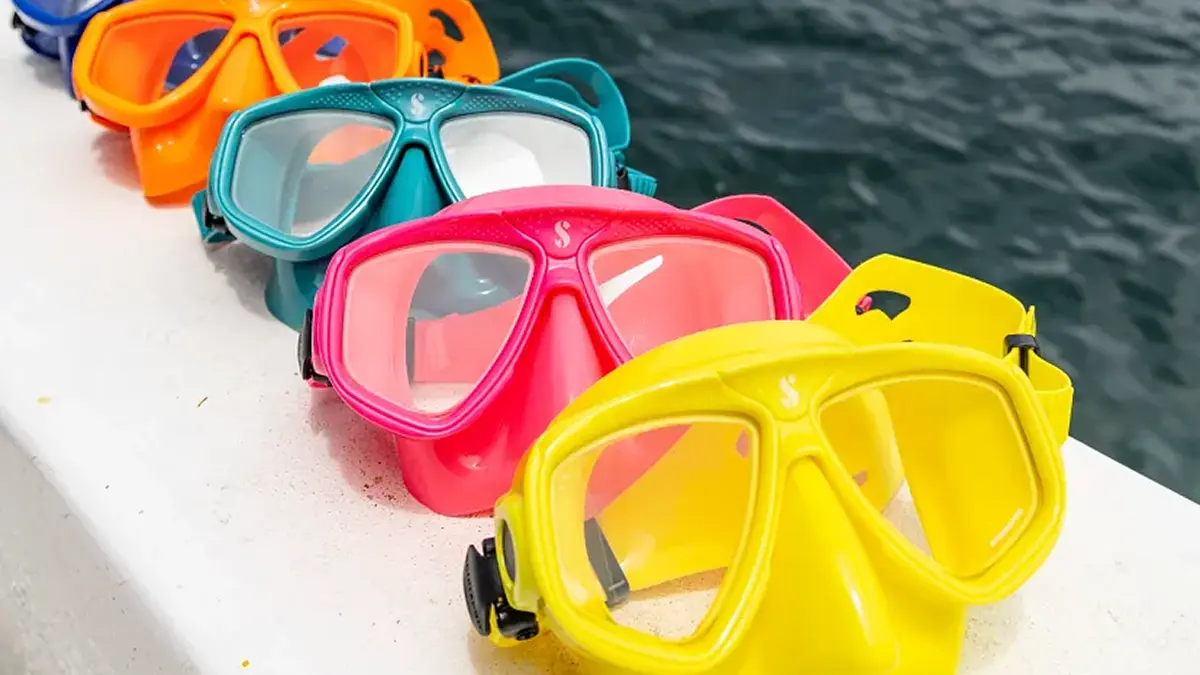
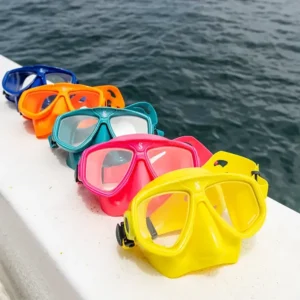
I Go for color! Kids love blue, red, yellow, aqua, purple, and green. Scuba Pro and Seac have fun colors to offer families who want to color coordinate.

Masks

Outfitting Kids for Summer-4I absolutely recommend soft silicone skirts and a neoprene strap. Little kids’ faces need soft skirts that press lightly against their skin so they won’t leak or hurt from being too tight. Neoprene straps — or even your store-logoed mask straps — are a huge hit. Consider giving one free with every full gear set purchase.
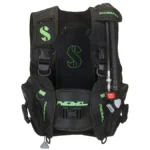
  • For SASY kids ages 3–7, Seac has one of the smallest and most comfortable masks on the market: the BAIA KID. It runs about $30 and comes in blue or pink.
  • For older kids (12+), SCUBAPRO’s Zoom mask line is ultra-lightweight with soft silicone and comes in fun colors, starting around $99.
  • In my opinion the most comfortable dive mask on the market, you have to only try on a Synergy 2 Twin Trufit to feel the difference. Its Trufit Technology design incorporates not one but two separate silicone skirts -a reliable watertight seal on virtually all face shapes.

Bundling a fins-mask-snorkel set gives parents easy choices and a slight discount on the full package — they love that.

Fins

Many parents like strap fins because they feel the kids can grow into them and get more years of use. However, after 26 years of outfitting thousands of children through Kids Sea Camp, I can tell you that kids themselves prefer full-foot fins. Strap fins require booties, which keep little feet hot and soggy — and that means an extra, unnecessary purchase. Full-foot fins are soft and comfortable, and they pair beautifully with fun dive socks.

Scuba Socks and Rash Guards

Scuba socks are flying off the shelves right now — the fun colors and patterns sell themselves.
Rash guards are a must!

Long-sleeve rash guards help with sun protection and jellyfish stings — two things parents and kids worry about most, not to mention a layer of warmth.

Bundle a BCD and regulator system

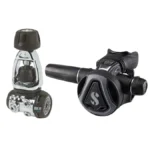
Outfitting Kids for Summer-2Outfitting Kids for Summer-3I make it easy for moms and dads. Most parents don’t want to learn that a regulator includes a first stage, second stage, octopus, gauges, and a computer. Have complete, ready-to-go bundles displayed and priced.
For little ones in Seal Team or Rangers programs (ages 8–10), my top two choices are:

  • The Seac Ego — available in sizes XXXS to S. It’s perfect for the littlest divers and gives them room to grow. $450
  • The SCUBAPRO Rebel at $500 — a higher price point, but the best quality and longest-lasting with proper care.

A good-fitting BCD is so important. It gives kids confidence because it’s their own gear with their own weight system, releases, and comfort. The regulator’s second stage should be ultra-lightweight with the smallest mouthpiece available for maximum comfort.

We at Kids Sea Camp put the whole kit together in a nice mesh bag.

We help families to ensure a perfect fit on little faces, and check that fins are not too small or too big so they’ll actually last through the summer. Parents truly appreciate the guidance. Consider special Mother’s Day and Father’s Day gifts. Im sure mom could use a new mask or BCD maybe dad is ready too.

We offer multiple gear manufacturers. Seac, and Scubapro. I’d love to hear how these suggestions work for you this season — drop me a note or tag Kids Sea Camp on social media with your best kids’ gear needs or purchases.

Kids Sea Camp is number 1 when it comes to outfitting kids. Give us a call to outfit your family this summer. Regardless if it’s one item or a full set, our expertise is available to you any time. We are a certified SCUBAPRO, SEAC, and SEALIFE dealer. Always make your dive shop your first choice, and if Kids Sea Camp is your dive shop, we appreciate your loyalty and trust. Supporting small businesses whenever possible.

We look forward to diving with you.
Margo Peyton

Restoring Hope Beneath the Waves: How RRFB Is Reviving Bonaire’s Reefs

Reef Renewal Bonaire

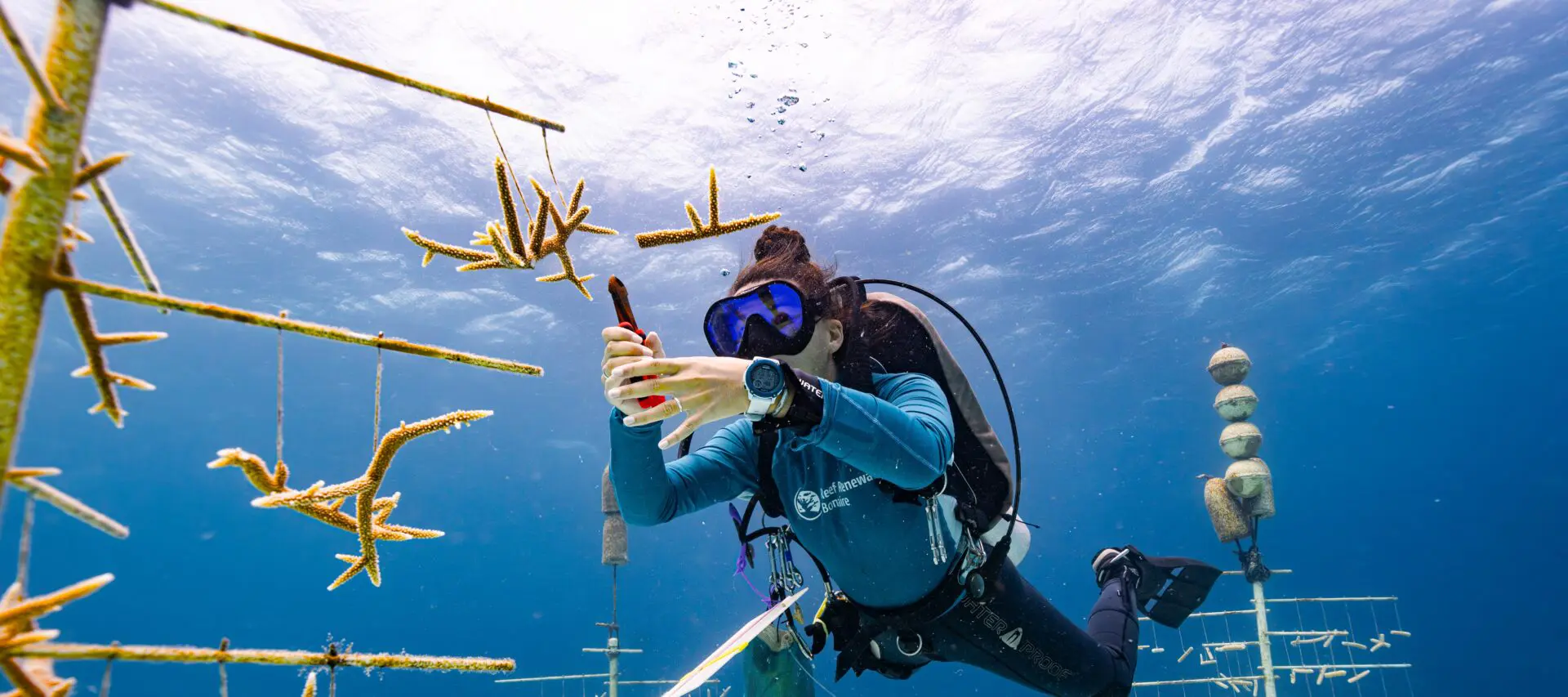
Reef Renewal Foundation Bonaire (RRFB) is a nonprofit organization dedicated to restoring and protecting Bonaire’s coral reefs since 2012. Our work focuses on comprehensive coral restoration, combining fragmentation and outplanting, breeding, monitoring, research, and community engagement to support healthier and more resilient reef ecosystems for the future.

Education and outreach are also a huge part of our mission. Through presentations, training programs, school partnerships, and community outreach, our goal is to help people better understand the importance of coral reefs and how they can have a positive impact on them!

Over the years, Kids Sea Camp and Ocean Wishes have supported RRFB by helping introduce visiting families and young divers to coral restoration efforts in Bonaire. Through countless presentations and participating in our coral adoption program, they have helped facilitate more than $13,000 in donations to RRFB!

At a time when coral reefs are declining here in the Caribbean and around the world, donations help us adapt and scale our work in real-time, allowing us to respond to a rapidly changing environment. Support is crucial to our core mission of strengthening Bonaire’s reefs and empowering more people to have a real impact on the ocean. (See more about Ocean Wishes)

From Thanksgiving in St. Eustatius…

From Thanksgiving in St. Eustatius

On a moonlit night off Statia’s shore,
We slipped below where the light’s no more,
Where flashlights carve thin blades of light,
And shadows learn to breathe at night.

A basket star unfurled its lace,
Unknown to the human race.
It reached and curled with ghostly grace,
A tangle of arms and a very pale face.

We hovered close, our bubbles slow,
What else did the darkness choose to show?
For in the daylight’s fading wreck,
Where rust eats steel and time breaks neck,

A grappling hook with coral slunk,
With something pale beneath the gunk.
Not coral, not bone of fish or beast,
But a human pelvis, claimed by the deep.

We stared. It grinned. The sea stood still.
The wreck exhaled a colder chill.
Two divers rising, hearts turned quick.
Statia keeps secrets as thick as silt.

So mind the dark, and hold your light tight.
Not everything on Statia sleeps at night.

by Amanda N. Smith at Golden Rock Nature Resort in St. Eustatius during Thanksgiving