
Tips for better buoyancy and air consumption

Buoyancy, Kids Sea camp, scuba training for kids

Keys to better diving

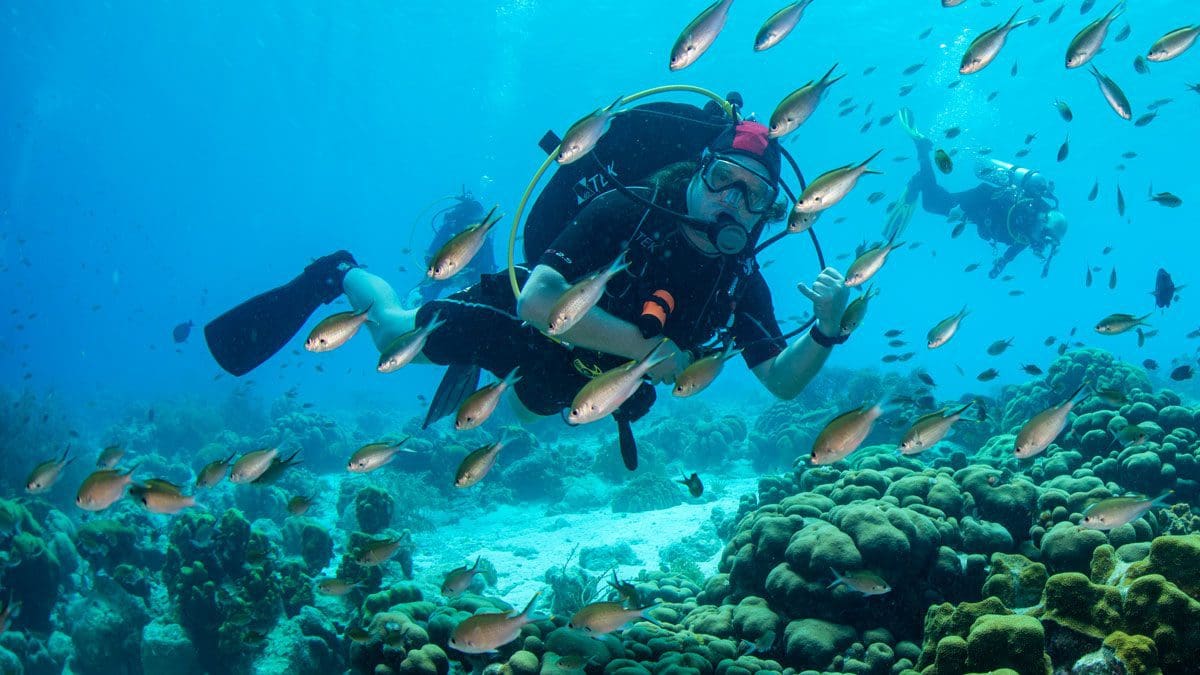
  • Good buoyancy is key. Make sure you are neutrally buoyant, trim your gear so nothing is hanging or dragging below you, and try to evenly distribute your weights. 4lb on the left, then 4lb on the right. Move them around, ankle weights are also used, I use 1lb on each ankle when diving with my camera. Some BC’s, like my ScubaPro Lady Hawk, have pockets up high in the back. I often put a 1 lb in each of those pockets. A Peak performance buoyancy class will be a fun continuing education class, as it will teach you more about good buoyancy control.
  • Breathe slowly and deeply when you’re diving; don’t ever hold your breath. Short and shallow breaths can be dangerous and create dead air spaces.

Gear is important

  • Streamline your gear and have property-fitting equipment, nothing dangling or dragging. Make sure your equipment is in good working order and has been serviced regularly by your local dive shop.
  • Use proper kick cycles and don’t swim while diving (no hands needed). Make sure you’re using Scuba fins, not snorkel fins. Dive fins should be longer and fit comfortably. Go to your local dive shop and try on a few pairs. Some adults like me prefer full-foot fins; for kids, I recommend fins with straps for growing feet.
  • Make sure to be suited up as conditions dictate. Stay warm, choices of a shorty or long wet-suit, 2 mm, 3 mm, 5 mml and more are available depending on the temperature of the water your diving. In the Galapagos, I use a 5- or 7-mm long suit; in Bonaire, I use a 2-mm shorty. New wetsuits are more buoyant than older ones, and thickness makes a big difference as well. The thicker the suit, the more weight is needed. Long suits will require more weight than a shorty.

Be in good condition

  • Be in good physical health, and never dive when you’re not feeling well. Always consult your doctor about any medications you’re taking, as they could have different effects while diving. Make sure to fill out waivers truthfully so that, if something does happen, it will be easier to determine what is going on and to provide help faster and more efficiently.
  • Dive often. The more you dive, the more confident and comfortable you will become, and buoyancy will become easier.

Be a good buddy

  • Stay close to your buddy. Constantly chasing your buddy can use up more air on a dive and create stress.
  • Dive into a current at the start of a dive when you are not tired, so you can then dive with the current returning at the end of your dive. Make sure not to dive in strong currents. Check with your local dive shop or dive professional before entering the water to determine safe dive conditions. Always let someone know you are going diving, and never dive alone.

Relax, it’s just diving

  • Relax, enjoy your dive. Take only photos, leave only bubbles. Observe marine life and don’t touch anything living.
  • Take an advanced open water class, which covers a navigation dive, a deep dive, a buoyancy dive, a night dive, a photography dive, and a Fish ID dive. All of which will make you feel more confident in your direction, buoyancy, and knowledge of marine life, allowing you to feel more comfortable diving. There are other specialty dives you can take in an Advanced Open Water Class, such as Underwater Naturalist, Wreck, or even zombie dives. Visit www.padi.com for more information about courses.
  • Don’t overthink air consumption; the more you think about it, the more anxious you become, and the fewer chances there are for relaxation.
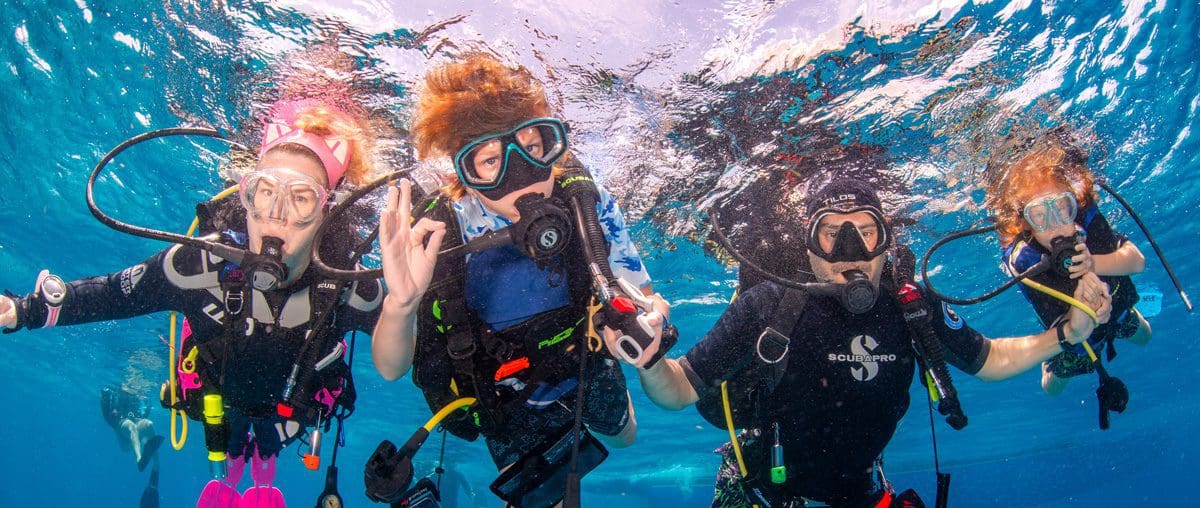
  • Take your family diving and enjoy diving with your kids. They will look to you as role models and strive to dive as you do. Be a good role model.
Have fun and be safe! I look forward to diving with you.
by Margo Peyton, President of Kids Sea Camp, PADI Instructor #57474

The New Kids Sea Camp Diver!

The Kids Sea Camp diver, PADI, kids sea camp

Big news for our company: The Kids Sea Camp Diver!

PADI has approved its first Kids Sea Diver Specialty course. This certification, developed by PADI and KSC founder Margo Peyton, is designed to help families who dive together become better dive buddies.

Kids Sea Camp, Kids Sea Camp diverThe certification is to assist parents and other adult family members who want to update and refresh some of the basic skills learned during previous dive training. Also, part of the program is education and becoming more aware of the environmental issues and concerns affecting the regions they are currently diving in.

Upon completing the KSC reboot, a new Kids Sea Camp Diver will demonstrate mastery in both diving and being a well-trained, confident parent-child buddy team. Divers will have training and education in environmental stewardship and watermanship. Throughout the course, emphasis will be placed on safety, teamwork, and conservation.

The goals of the Kids Sea camp Diver distinctive specialty training

  • Reinforcement of the “Good Buddy” principles and practices.
  • Refresh basic signs and skills learned in their open-water courses.
  • Educate students about the benefits of continuing education.
  • Encourage interest in leadership roles that promote responsible diving.
  • Discuss local eco-issues and concerns, customs and traditions, and how this has impacted the environment.
  • Identify local environmental issues, discuss solutions, and create awareness.

PADI has recognized the value of our Kids Sea Camp families for more than two decades.

Creating Tomorrow’s Memories at Kids Sea Camp

Grandmother, kids and diving family diving

Publisher, a mother, and now a grandmother, reflects on generations of her family growing up in Kids Sea Camp

I felt compelled to come up with a good reason for my grandson Austin, now 14, to be Ok with posing for yet another picture with his ‘mimi’.  So I explained that when I am 90, he will be 45, and I want to be able to look back on us diving, hiking, zip lining, horseback riding, whitewater rafting, and marvel at how we did all that together in just one very special week at Kids Sea Camp, Costa Rica!

Over the past 14 years, I have experienced dozens of Kids Sea Camp adventures with my daughter Melissa, my husband, my brother and his family, various old and new friends, and my grandson Austin. He started traveling with me to Kids Sea Camps when he was 8 and joined the Seal Team program. He was PADI Jr. open water certified at age 10 and received his advanced certification at 13. It is no longer a matter of if we will make the time to do it again, but where we will go and what we will do next.

In Costa Rica, I was reminded that we are not alone in our special family tradition. We were surrounded by other families who also cracked the Kids Sea Camp Code for keeping their growing kids close. Not only are they learning to love diving and the underwater world, but they are absorbing so many life lessons in nature, protecting the environment, being safe and having fun at the very same time. They hang with kids from all over the world, on boats, underwater, at the pool, and at their very own group table at mealtime. But at the end of an action-packed day, families retreat together, exhausted and happy, with electronic devices firmly set to OFF.

Our days were numbered

I used to think that our days were numbered, with teens being way too cool to want to travel with us for very much longer. Now I realize that since they have literally grown up with these Kids Sea Camp memories forming an important part of who they are, the age barriers disappear and the experience prevails. One day, I do believe that my daughter Melissa, now a summer counselor for Kids Sea Camp and a PADI Dive Master, will be planning my dive adventures rather than the other way around.

The younger kids are enrolled in PADI SASY and Seal Team programs that engage them with learning the important scuba skills they will enjoy for decades to come. Once they earn their PADI Jr. Open Water certification at around age 10, they follow up with specialty certifications that cover everything from underwater photography to fish identification, navigation, and an Advanced Open Water Certification.

Something for everyone

Adult divers depart on the morning dives, confident that their kids are in great hands and that they will reconnect with great stories to share. Non-divers use the opportunity to do exactly as they please. At the El Ocotal Dive Resort in Costa Rica, that entailed earning a dip in the Cliffside pool after hiking up the stunning property from the beach. The natural beauty is intoxicating, and the relaxed conversation always turns to what other kids’ Sea Camp trips we have done and what’s next. I dodge the question on what my favorite one might be, as I love the tried and true destinations as much as I am tempted by the new ones that are added every year.

Diving with Buddy

Year after year, Buddy Dive Resort in Bonaire continues to serve up a magic combination of top-notch PADI dive training in the perfect environment for all age groups, with exceptionally easy boat and shore diving. The most comfortable, casual, and welcoming atmosphere makes you want to return year after year.

Also in the tried-and-true category, Cobalt Coast and Dive Tech in Grand Cayman never cease to deliver exceptional dive training and legendary dive experiences with stingrays, turtles, tarpon, and more. Here we experience the thrill of scooter diving and can explore other specialties such as deep diving and even free diving.

On to Palau

When it comes to the search for the world’s ultimate diving, Kids Sea Camp nailed it by offering Yap with Manta Ray Bay Resort. The expectations are very high when you ask American families to travel halfway around the world for any reason at all, but between the amazing giant mantas, the diversity of wild shark experiences, and incredible WW11 wreck dives, all set among the incomparable rock islands, I promise it is well worth the journey.

Utila’s Laguna Beach Resort is definitely on my ‘Must Do’ list. Judging by the rave reviews of eagle rays, pods of dolphins, whale sharks, seahorses, and an idyllic beach setting, I can understand why this little piece of heaven has been added to the Kids Sea Camp schedule, but of course, I must judge for myself!

I have enjoyed the ‘undiscovered’ nature of St. Vincent and its exciting diving opportunities many times in the past, but not yet with Indigo Divers and Buccament Bay Resort, the Caribbean’s newest 5-star all-inclusive hotel. The combination of ‘off the beaten path’ great diving and a luxury Kids Sea Camp experience is just too much to resist!

Amazing Galapagos

Limited space may still be available for just one more season in the legendary Galapagos Islands aboard the luxury Buddy dive live-aboard. This once-in-a-lifetime trip makes it possible to access whale sharks, historic reptiles, birds, and 300 species of fish in a truly elegant adventure.

And other grand options are being added in 2014. The famous walls of Little Cayman are now accessible from the charm and comfort of The Southern Cross Club. Long weekend getaways in the Florida Keys are also something that owners Margo and Tom Peyton have been working on for the coming season. Always committed to keeping it interesting for both repeat visitors and newcomers, they deliver the kind of experiences they themselves want to enjoy with their growing family.

Before Austin’s 15th birthday, I will have to make the tough decision on where it will be in 2014. But wherever we go, I know we will connect with the familiar from years past, with a new twist that ensures we will continue to ‘give them a week they will remember forever’. Visit familydivers.com or call 803-419-2556.

By Carolyn Pascal Guarino