Welcome to the jewel of the Philippines
Our children’s world has become much larger as today’s technology helps us to engage “virtually” in ways we never dreamed possible. However, beyond our smartphones, there is still a big, beautiful, real world out there. It’s filled with the kind of learning and adventure that expands our hearts and minds in a way technology cannot. The adventure in the Philippines is a jewel of a diving vacation.
When we travel with our children, we provide them with personal experiences that they’ll carry with them for the rest of their lives. If you’re eager to plan your next scuba diving adventure as a family, here is the latest off-the-beaten-path treasure that Tom and I have just explored and that Kids Sea Camp has approved.
Islands in the Visayas Sea
Upon landing on the main island, Cebu, we were met with friendly smiles and helpful hands. Biggs Eggert with Sea Explorers provided us cool face cloths, bottled water, and hugs. We quickly headed to board a Banca boat, which reminded me of a giant bamboo water spider; it was spacious and smooth sailing, like a mystical chariot to our first dive location.
Malapascua has become well known as a premier dive destination fairly recently
This tiny island, just a little more than a mile long, is home to several villages that exist either directly or indirectly to support the growing dive tourism industry.
I have read that Malapascua is the only known place on Earth where one can dive with the endangered thresher sharks and, as I prefer, in a natural setting on seamount cleaning stations at Monad Shoal. Biggs said we would dive with the sharks at sunrise, and as crazy as that sounds, it was not hard at all. Jet lag combined well with the time lag, and we were wide awake and ready to dive at 5 A.M.!
Thresher sharks
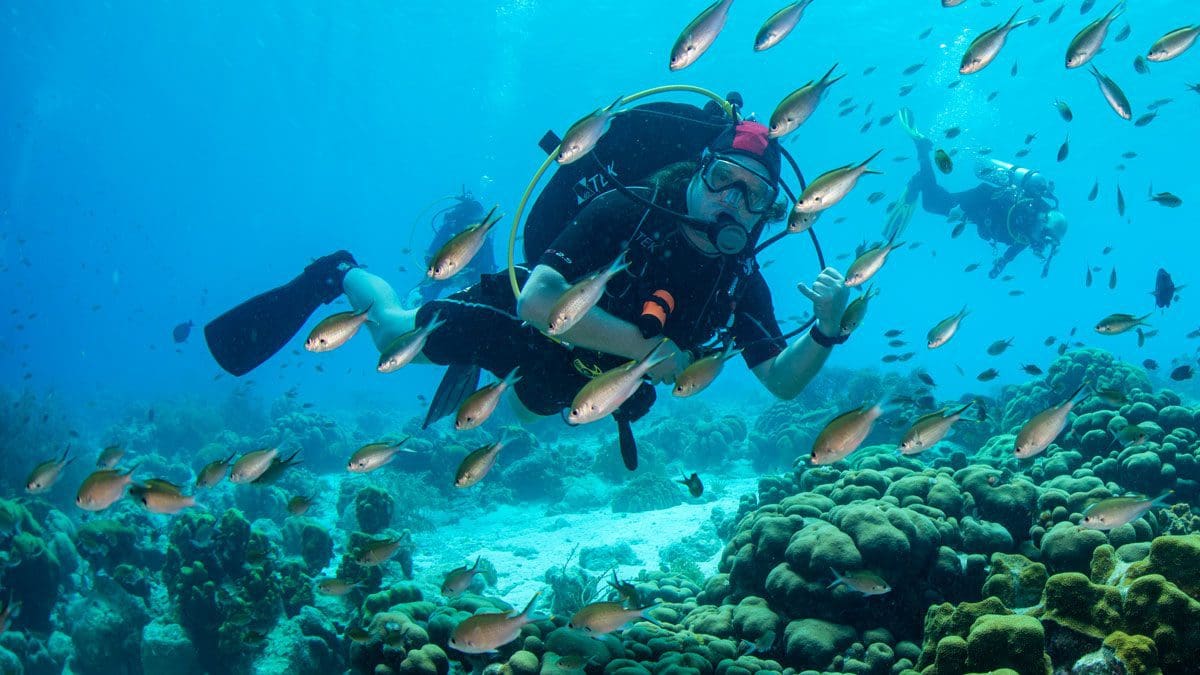
Thresher sharks have been on my wishlist for many years, and seeing them on every dive far exceeded my expectations. The shoals also attract devil rays, pelagic fish, and hammerheads; more than enough to thrill any diver. Families can enjoy diving the coral gardens, coral walls as well as further-out sites including Gato Island and Kemod Shoal.
Malapascua has at least 20 dive operations and hotels situated along Bounty Beach; however, Tom and I found only two properties we would deem as family-friendly. Ocean Vida and Buena Vida both have connecting rooms, family-friendly food, and kid-friendly staff. Ocean Vida is oceanfront, and Buena Vida is right in the middle of the local village, hosting an amazing spa and restaurant that would please any palette. Gourmet breakfasts, vegan and vegetarian dishes and fresh seafood are featured.
Sea Explorers a PADI five-star IDC
Sea Explorers, a PADI five-star IDC, is our No. 1 pick for diving and island hopping throughout the islands of the Visayas Sea. Exceptional service and knowledge, smaller dive gear, tanks sized for kids, and a well-trained staff for all levels of divers. They easily accommodate big-rig photographers, single families, and large groups like ours. Each Banca boat offered hot coffee or tea, warm face cloths, fresh fruit, and baked bread upon returning from our dives. To top it all off, I never touched my gear; it was rinsed and set up perfectly adorned atop my nitrox tank, awaiting my return. Heaven! I have to say, nothing made the staff happier than to see the smile on our faces, and I guess that’s why the Sea Explorers’ tagline is “Dive with a smile,” because we certainly did.
Negros Island was our next stop
We were beyond surprised when we arrived at Pura Vida Homes. Fourteen luxurious two-bedroom villas are handcrafted with rich hardwoods and have breathtaking views of the mountains and sea. The resort sits on a beautiful beach with three infinity pools, a restaurant, a gym, a spa, and a wedding chapel.
Being that it was our 10th wedding anniversary, we could not resist the opportunity to renew our vows at sunrise. Owner Chris Heim was delighted to give me away. Biggs accepted as my maid of honor, and the local pastor presided, as his lovely daughter sang. I have no words for how special Sea Explorers made us feel throughout our trip. They treat everyone like family.
There were mountain villages to explore, and infinite pristine reefs teeming with fish to dive, like Apo Island, which provided endless views of colorful soft corals, punctuated with my favorite, turtles! We could have stayed a month and not been bored.
Whale sharks
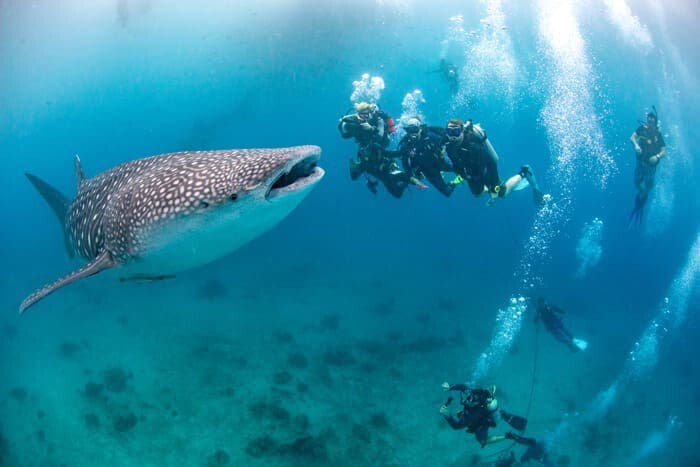
On our way to Bohol aboard our Banca boat, Dako, we were able to dive in 35 feet of warm, clear water and observe these gentle giants feeding on krill. I had only been diving with whale sharks in the Galapagos, and it was fabulous in these much warmer waters. Kids and families can snorkel or dive anytime during their stay.
Amun Ini is a small 16-room, five-star dive resort and the most luxurious little gem we found yet. Family-owned and family-run. Amun Ini means “This is mine,” and I can understand why, as anyone would want to claim it for themselves. A beautiful, private white sand beach, infinity pool, and large, spacious rooms greeted us at this eco-friendly, holistic, and organic scuba retreat.
Did I mention it’s kid-friendly?
The owner’s daughter and her husband are the gourmet chefs, who create local dishes that will tantalize your taste buds and make you feel like you’re dining in one of the top 10 restaurants in the world. Did I mention it’s kid-friendly? The chef’s two little girls, ages 3 and 5, joined us each day. I loved seeing the smiles on their faces when I told them about Kids Sea Camp and all the kids we would return with to play together in the ocean.
Beyond diving, I must mention the things Tom thought were more than noteworthy. Everyone in the Philippines plays basketball, and they are really good at it too! Tom played a few games after diving with the dive team, and it was almost as good as the diving.
In addition, there are sunset massages, culinary classes, yoga, and kayaking. We also enjoyed the many hugs from some of the happiest children we encountered throughout our trip. These are humble people who prize family and each other above all things.
The diving had the most incredible, healthy, and vibrant reefs I have ever seen. Biggs asked me if I wanted to do some muck diving. I had read about this type of addictive diving, hunting for the tiniest of critters on the sandy bottom. I found tiger shrimp the size of a grain of rice, multicolored frogfish the size of a gumball, and pygmy seahorses, all well camouflaged to the eyes of any would-be predators.
Cabilao Island, our next stop via the Chocolate Hills
The hanging bridge and a zip line to stay at Pura Vida Cabilao. Another spectacular Sea Explorer resort with 2O spacious oceanfront suites, more breathtaking views, and completely surrounded by endless coral walls. The unlimited shore diving offered many opportunities to encounter a wide range of tiny critters, turtles, rays, sharks, and even schools of wild dolphins.
This boutique island resort offers a personal closeness that is perfect for small groups and the Kids Sea Camp. The dining offers a personalized touch with a menu prepared to please.
A welcoming, safe, and smile-driven island
All in all, we have given a good chunk of our hearts to the Philippines, as we found it to be one of the most welcoming, safe, and smile-driven places we have encountered to date. If you’re ready to take a break from your virtual world, I invite you to taste experience to the utmost, to teach your children to reach out without fear to explore a world that will bring their imagination to life.
Join us for an extraordinary journey to the Philippines. I encourage you to open your children’s eyes to humility, happiness, and a new way of looking at life that they will remember forever.
By Margo Peyton, President of Kids Sea Camp Inc.
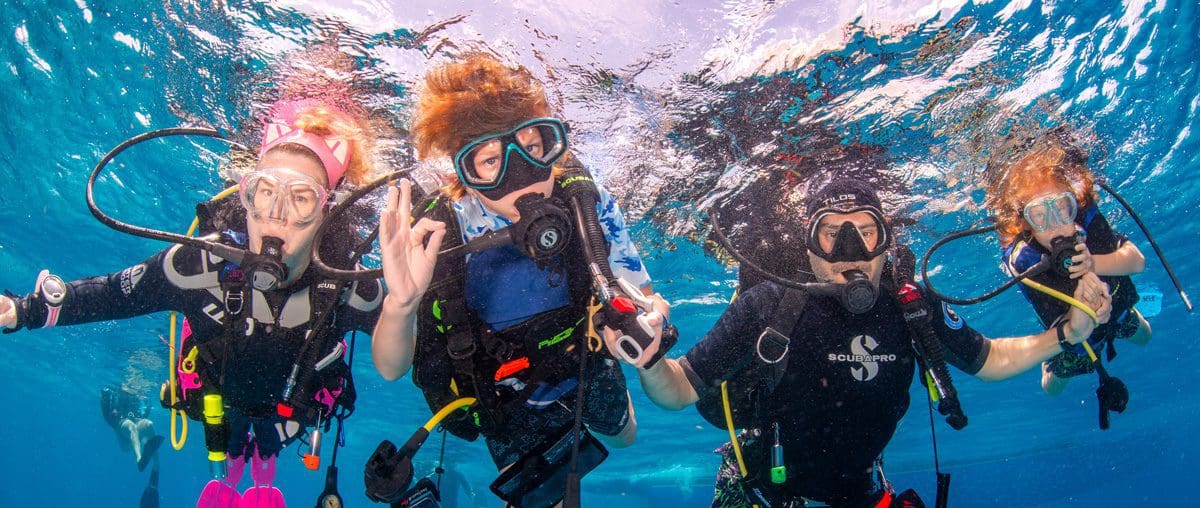
 The certification is to assist parents and other adult family members who want to update and refresh some of the basic skills learned during previous dive training. Also, part of the program is education and becoming more aware of the environmental issues and concerns affecting the regions they are currently diving in.