Family Trippin in Micronesia with Kids Sea Camp

Yap, whale sharks, Kids Scuba, Family Scuba Diving Adventures, Kids Sea Camp, Family Scuba Diving Vacations, Family Dive Adventures, Scuba Diving, Manta Ray Bay

A Divers paradise and whole-family eco-adventures

Manta Ray Bay Resort, Yap. 2016: Yap and Palau have the strongest cultural bonds in Micronesia, are geographically next door to each other, and both offer unique family travel opportunities. Come here for the natural beauty, island culture, and iconic diving in marine sanctuaries on an eco-adventure. The Micronesia experience is embodied in nature, culture, and conservation. Yap and Palau put an exclamation point on your family’s trip for divers and non-divers alike.

These destinations have a lot of advanced diver allure; they come with special cultural and land-based opportunities for every traveler. Nothing says to bring the whole family more than non-diver adventures that rival the experiences of Vertigo, Blue Corner, or an Oolong Channel drift.

Each day of a Family Divers package includes eco-activities for small children, teens, and non-diving adults. In Yap and Palau, that means kayaking through the rock islands or a rich mangrove forest. Or taking a WWII history tour or visiting a traditional village, being “local” for a day, learning about village life or traditional skills and engaging people on a unique cultural excursion. Enjoy a private beach, snorkeling with manta rays, reef sharks, chambered nautilus, and giant clams.

Unplugging in Yap

Yap will help you forget about bling and the busy world. Here you’ll find a mix of fellow adventure travelers relaxing in the natural energy that comes from an undeveloped island. Your world shrinks down to 38 square miles of mangroves and gold sand beaches. A rainforest backdrop speckled with coconut trees, and your front yard is a glassy lagoon. It won’t take long until nature’s rhythm dominates. And you’ll notice your body feeling the tide changes and the afternoon sun falling behind the island.

Yap and Palau offer our modern lifestyle some counterbalance – busyness and our multi-tasking, the world gives way to the moment, and you might find yourself feeling and trying something new to you – after all, that’s why we travel, to learn something, engage ourselves, and embrace the world we live in.

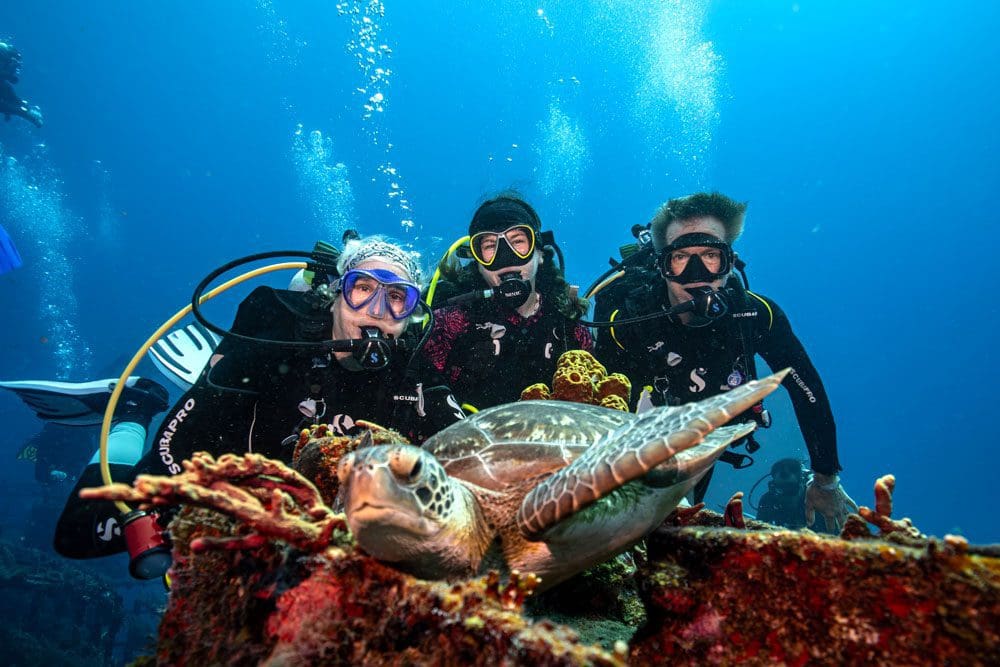
This is where family time includes understanding our ecosystem, what threatens it, and what we can do to change that – then diving or snorkeling with protected animals. Yap and Palau have taken big steps in marine conservation through locally grown island initiatives. Yap established the world’s first government-backed manta ray sanctuary, which now includes shark and turtle protection, and legislation that allows these animals to safely interact with divers in ultra-close proximity every day.

The blue water classroom

Kids Sea Camp safely pairs kids with sharks through education and adventure. Led by local marine mammal experts and professional dive guides in Yap. “Vertigo” is a blue water classroom where divers of all levels safely interact with schools of reef sharks. Before entering the water, divers and snorkelers learn about the site, shark behavior, and how to safely observe these animals as a family.

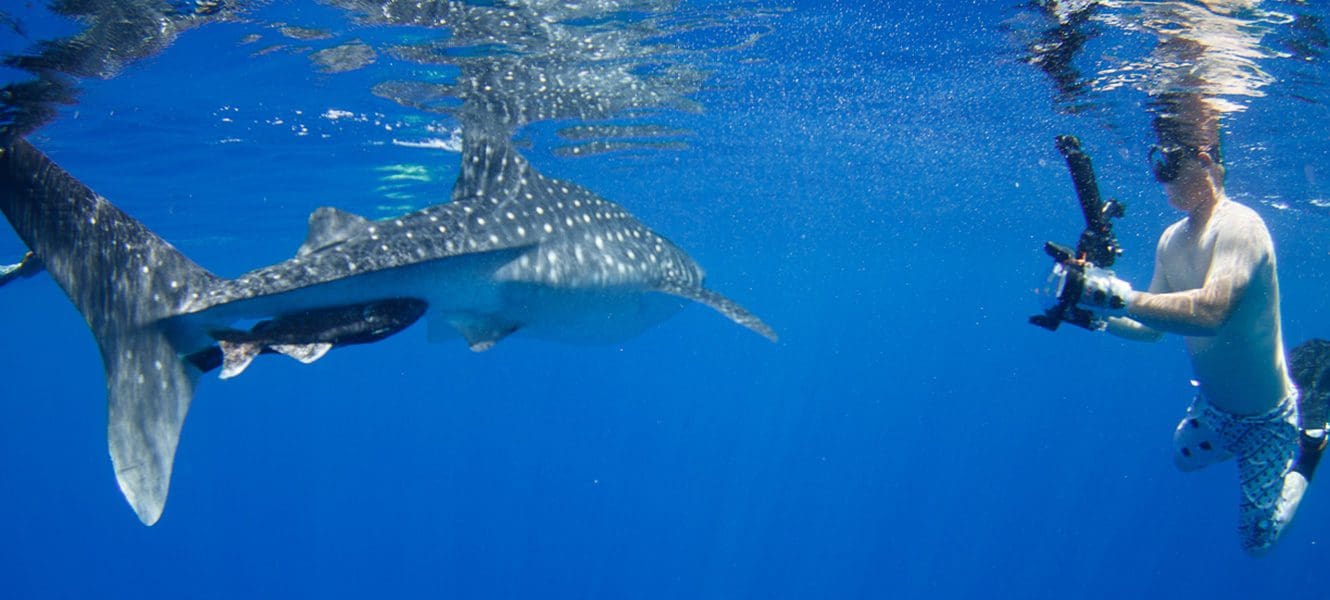
Get some blue sky and clear water “me time” through careful activity planning. Parents dive on a private boat and a dive plan. Kids dive with extra guides on their own boats at different sites. Non-divers begin their adventure right after breakfast. Mixing it up brings the family together in the middle of the adventure. See your kids in a village on their surface interval. They might tell you that they just swam with a whale shark.

At the end of the day, photography lights up the dinner table with SeaLife cameras, smartphones with GoPro footage, or tablets being passed around. While fragments of the stories can be heard amid the excitement. Parents, kids, divers, non-divers, everyone gets their adventure. Whether you went to the reef, eco-touring, fishing, or getting your zen on at the spa. Yap and Palau; do them both and get two countries, two islands, two cultures. . . in one vacation.

Story  by Brad Holland
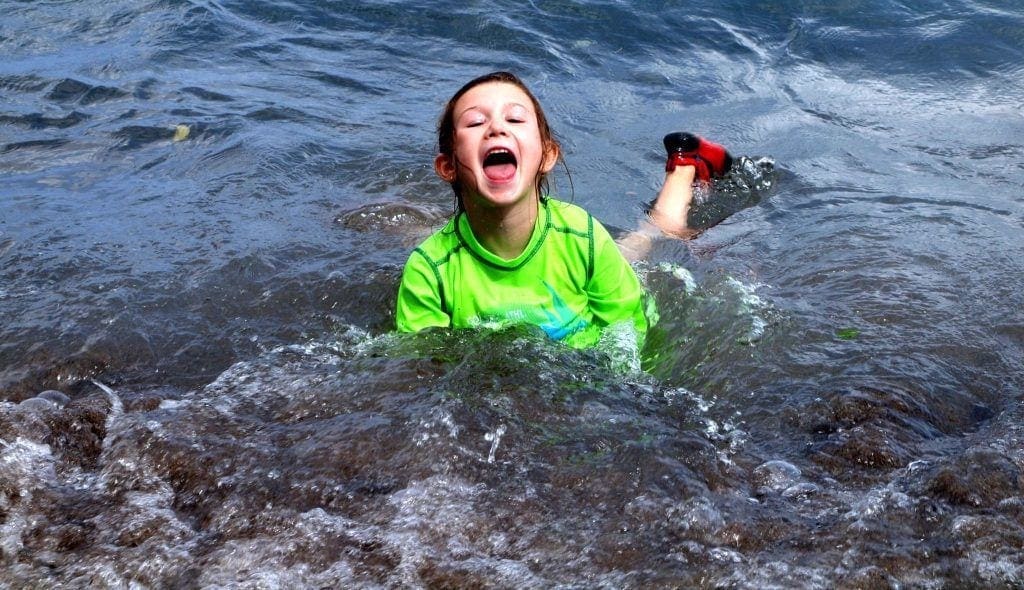
 

Mother loves the Peace of Kids Sea Camp

non-divers, kids sea camp, kids and scuba, family dive vacations

Even a non-diving mom loves Kids Sea Camp all year round

By Janet Martin, a non-diving mom

So, I wanted to tell you about two things that happened today that reminded me of Kids Sea Camp. To be truthful, not a day goes by that someone in our family doesn’t speak of Kids Sea Camp.

It is now August 15. This morning, when I woke up and went downstairs to the kitchen to make coffee, I looked out the window and saw the subtle changes of the season. The color of the water was different, the wind was blowing the trees differently, and when I opened the door, the air had a crispness to it, and it smelled different — it smelled like fall! Ahh! I love fall, but it means winter is just around the corner. I am not a fan of winter. I try to embrace it but my thoughts always return to Kids Sea Camp. I think of Kids Sea Camp and I’m a non-diver, that’s how amazing the weeks are.

The second thing that happened was with my son. We went to get the mail and he received an envelope from PADI! He was beyond excited. Enclosed was his PADI Seal Team card. His smile will be in my memories forever. He is a PADI Seal because of Kids Sea Camp. Kids Sea Camp is unique to us. Perhaps that is why we think of it often. Our children can now explore and experience things in life that before they would not have had the opportunity to do.

My name is Janet Martin, my husband Tim and our two children Isaac (8) and Allie (5) would like to tell you about our experience with Kids Sea Camp. It has taken me a long time to focus and figure out what Kids Sea Camp means to me. I have had a lot of thoughts go through my head, but I keep coming back to the word Peace. Kids Sea Camp means Peace to me. Sort of silly I know, because you would not naturally put these two things together.

Our journey with Kids Sea Camp began with a desire to get back into traveling. After the long winters everyone has endured on the Northeast Coast, we were looking for a vacation that would make us happy, comfortable, accommodating, and, of course, Tim has to dive.

Kids Sea Camp, Kids and diving

I will often read my husband’s dive magazines (being a non-diver) to see what is happening in the dive world. I saw a Kids Sea Camp advertisement and asked Tim, “What do you think about this? Should we call and see what this is about?” (Remember, this is not something we would ever do.) Curious and desperate to find a solution, he called (I believe several times!). We had a lot of questions. The Martins are thoughtful and practical decision makers; we fail horribly in the “quick decision maker” department.

So, in July 2013, the Martins did something they have a hard time doing—we took a leap of faith and went to Grand Cayman at Cobalt Coast for the Kids Sea Camp experience. In return, we got Peace. We finally got Peace. Kids Sea Camp literally changed our lives forever. It was one of those “Ah Ha” moments, or for some, one of those handfuls of moments that have affected them. Corny, I know, but it’s true.

When I arrived in Grand Cayman for the first time, I still remember the feelings I had on the first morning. I was amazed and in awe. All that was going through my head was the fact that all of these kids do this with their families. They are happy, they get along, and these kids can dive! I want this for my children. I want Tim to dive with Isaac and Allie. I was getting more excited by the moment.

It amazes me still that kids can dive! I wanted this for my children so badly, I was somewhat obsessed with it. I spoke to Tim about diving and Kids Sea Camp all year. I know he was tired of me talking about it. But, I felt Isaac and Allie had found their “thing”. Really, I was so happy. We live in a small rural area with limited opportunities. We must create opportunities for our children, and I am glad we chose this opportunity.

Kids Sea Camp’s goal is to take care of you and everything was taken care of. They provide a safe diving haven for families. Everyone at Kids Sea Camp had the same goal for their families, this is something that we really appreciated. We were so happy about this vacation that went back in 2014 and again to St Lucia in 2015. Tom and Margo Peyton secured the worries, which ultimately led to peace.

Kids Sea Camp was run like a well-rehearsed orchestra. I don’t know how else to describe it. It was a beautiful weeklong masterpiece. Everything just worked. Every beat and note were perfectly in place. Tom and Margo are constantly making sure everything is perfect.

At the end of Kids Sea Camp in St Lucia at Anse Chastanet, Isaac, only eight, was able to have his first 12-foot dive with his instructor and his father. WOW! The thought makes me speechless and happy tears come to my eyes. Allie was in the SASY unit looking and swimming with the resident reef fish. Her week in St Lucia allowed her to find her “inner fish” and become even more passionate about animals and sea life. Her happiness gives us peace.

Kids Sea Camp has become (in our lives) what you do every year. People need to go to the dentist, eye doctor, hairdresser, get new shoes, the Martins need to go to Kids Sea Camp.

For us, like everyone, time is precious. Vacation time is hard for us, so planning a vacation with our precious time is stressful. Kids Sea Camp has given us peace about our time. Peace, for our family, has come on many different levels. Tim can go diving and not have the worry of me or the kids — I’m at peace. He is under the water to escape from his mind and responsibilities — he’s at peace. I know where my kids are and who they are with. Tim is diving, food and the place are great — I’m at peace. The kids can come and go, eat, drink, meet new friends, dive, play, and learn — we are all at peace.

Sometimes, big moments change our lives—births, deaths, and marriages. Sometimes, it is people, whether or situations. I can honestly say Kids Sea Camp is one of those moments for us. The people we have met and the experiences all have contributed to the Peace we desired for our precious time. Peace…it’s important, it will change your life…, and it’s good for you.

Fiji time and Kids Sea Camp magic

Tom Peyton, Margo Peyton, Kids Sea Camp

Fiji: The reunion tour 2015!

It has been a while since Margo and I were in Fiji. We were there in 2009 at the wonderful Castaway Island resort on the Island of Malolo. Fiji was the start of this grand Kids Sea Camp adventure, Margo, and I have been on since we met ten years ago this coming February. It is our honeymoon island.

Margo and Tom Peyton celebrated their first year in Fiji in 2007 at the Castaway Resort. For Tom, a lot fewer gray hairs and wrinkles eight years ago. Margo, an amazing ageless wonder still looks gorgeous today.

Fiji is a cherished place for us. A place of deep connectivity to the vast blue vistas and complete centering silence of the islands. It is, indeed,  a special trip for the Peytons. It is a place where time seems to slow way down, you stop worrying, you ponder the distant future far less, you enjoy the sunset just a little bit more, and you can feel the stress of our normal, crazy everyday life leaving your body. Margo and I call this phenomenon “Fiji Time.”

Margo has also called it “kava time” but that a whole different story.

Fiji is also a smile factory — as the Fijians always seem to be happy, so helpful and incredibly gracious to the visitors that travel to their stunning country. In fact, “welcome home” is a common phrase the Islanders use in their first greetings to tourists.

“Welcome Home,” how many times have you used that phrase when strangers arrive in your abode — probably very not often. And like a “home away from home,” it has a habit of creating connecting points that change the “vacation” to something much larger — something deeper. I have lost track how many Kids Sea Camp families have left Fiji with tears in their eyes. Tears of joy of being so welcomed by the Fijian people. Tears of a remembering of how good we all can be — if we try — just a little. It is a special place for our KSC families.

And as the countdown in the office starts for the new Fiji week at Beqa Lagoon Resort this year. I can’t stop myself from hoping and wondering if “Fiji Time” will sweep over the two KSC weeks and make some more Kids Sea Camp magic. I know I’m looking forward to it.

Tom Peyton, Vice President of Kids Sea Camp

Tips for better buoyancy and air consumption

Buoyancy, Kids Sea camp, scuba training for kids

Keys to better diving

  • Good buoyancy is key. Make sure you are neutrally buoyant, trim your gear so nothing is hanging or dragging below you, and try to evenly distribute your weights. 4lb on the left, then 4lb on the right. Move them around, ankle weights are also used, I use 1lb on each ankle when diving with my camera. Some BC’s, like my ScubaPro Lady Hawk, have pockets up high in the back. I often put a 1 lb in each of those pockets. A Peak performance buoyancy class will be a fun continuing education class, as it will teach you more about good buoyancy control.
  • Breathe slowly and deeply when you’re diving; don’t ever hold your breath. Short and shallow breaths can be dangerous and create dead air spaces.

Gear is important

  • Streamline your gear and have property-fitting equipment, nothing dangling or dragging. Make sure your equipment is in good working order and has been serviced regularly by your local dive shop.
  • Use proper kick cycles and don’t swim while diving (no hands needed). Make sure you’re using Scuba fins, not snorkel fins. Dive fins should be longer and fit comfortably. Go to your local dive shop and try on a few pairs. Some adults like me prefer full-foot fins; for kids, I recommend fins with straps for growing feet.
  • Make sure to be suited up as conditions dictate. Stay warm, choices of a shorty or long wet-suit, 2 mm, 3 mm, 5 mml and more are available depending on the temperature of the water your diving. In the Galapagos, I use a 5- or 7-mm long suit; in Bonaire, I use a 2-mm shorty. New wetsuits are more buoyant than older ones, and thickness makes a big difference as well. The thicker the suit, the more weight is needed. Long suits will require more weight than a shorty.

Be in good condition

  • Be in good physical health, and never dive when you’re not feeling well. Always consult your doctor about any medications you’re taking, as they could have different effects while diving. Make sure to fill out waivers truthfully so that, if something does happen, it will be easier to determine what is going on and to provide help faster and more efficiently.
  • Dive often. The more you dive, the more confident and comfortable you will become, and buoyancy will become easier.

Be a good buddy

  • Stay close to your buddy. Constantly chasing your buddy can use up more air on a dive and create stress.
  • Dive into a current at the start of a dive when you are not tired, so you can then dive with the current returning at the end of your dive. Make sure not to dive in strong currents. Check with your local dive shop or dive professional before entering the water to determine safe dive conditions. Always let someone know you are going diving, and never dive alone.

Relax, it’s just diving

  • Relax, enjoy your dive. Take only photos, leave only bubbles. Observe marine life and don’t touch anything living.
  • Take an advanced open water class, which covers a navigation dive, a deep dive, a buoyancy dive, a night dive, a photography dive, and a Fish ID dive. All of which will make you feel more confident in your direction, buoyancy, and knowledge of marine life, allowing you to feel more comfortable diving. There are other specialty dives you can take in an Advanced Open Water Class, such as Underwater Naturalist, Wreck, or even zombie dives. Visit www.padi.com for more information about courses.
  • Don’t overthink air consumption; the more you think about it, the more anxious you become, and the fewer chances there are for relaxation.
  • Take your family diving and enjoy diving with your kids. They will look to you as role models and strive to dive as you do. Be a good role model.
Have fun and be safe! I look forward to diving with you.
by Margo Peyton, President of Kids Sea Camp, PADI Instructor #57474

The New Kids Sea Camp Diver!

The Kids Sea Camp diver, PADI, kids sea camp

Big news for our company: The Kids Sea Camp Diver!

PADI has approved its first Kids Sea Diver Specialty course. This certification, developed by PADI and KSC founder Margo Peyton, is designed to help families who dive together become better dive buddies.

Kids Sea Camp, Kids Sea Camp diverThe certification is to assist parents and other adult family members who want to update and refresh some of the basic skills learned during previous dive training. Also, part of the program is education and becoming more aware of the environmental issues and concerns affecting the regions they are currently diving in.

Upon completing the KSC reboot, a new Kids Sea Camp Diver will demonstrate mastery in both diving and being a well-trained, confident parent-child buddy team. Divers will have training and education in environmental stewardship and watermanship. Throughout the course, emphasis will be placed on safety, teamwork, and conservation.

The goals of the Kids Sea camp Diver distinctive specialty training

  • Reinforcement of the “Good Buddy” principles and practices.
  • Refresh basic signs and skills learned in their open-water courses.
  • Educate students about the benefits of continuing education.
  • Encourage interest in leadership roles that promote responsible diving.
  • Discuss local eco-issues and concerns, customs and traditions, and how this has impacted the environment.
  • Identify local environmental issues, discuss solutions, and create awareness.

PADI has recognized the value of our Kids Sea Camp families for more than two decades.

Travel Channel loves Kids Sea Camp

Kids and scuba, best dive vacations, kids sea camp, travel channel

Travel Channel: Kids Sea Camp is one of the best adventures in the world.

Kids Sea Camp at Anse Chastanet in St. Lucia was named one of the “best family adventures” in 2015 by the Travel Channel. Kids Sea Camp is not only for divers. Our week is just a great family vacation.

The Travel Channel: Families from around the world who share a love for the ocean should head to St. Lucia for an unforgettable vacation at Kids Sea Camp. Family Dive Adventures offers this 6-day/7-night itinerary, hosted by the top-ranked resort Anse Chastanet, which provides the best accommodations, fine dining, and activities on the island.

“That’s as young as 10 years old can acquire certification to scuba dive. Even Four-year-olds can get in the water at Kids Sea Camp,” says Rainer Jenss, president and founder of the Family Travel Association.

“That’s great news for parents who thought they’d have to give up diving when the kids were born.” In between dives, guests can hike through an 18th-century ruin of an old sugar plantation or take a ride on a mountain bike through the rainforest.

Kids Sea Camp is Elite!

Kids Sea Camp, Margo Peyton

. . .and so is Margo Peyton

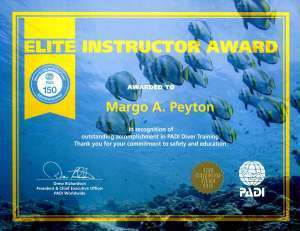
Margo Peyton has been awarded a PADI Elite Instructor award for 2014. To receive the award, an instructor must have over 150 certifications during the calendar year. PADI’s award is in recognition of outstanding accomplishment in PADI Diver Training. The number of certifications attained by Margo during the Kids Sea Camp training weeks was 282 in 2014. Kids Sea Camp contributed 402 new certifications in 2014, bringing the running 14-year total to 5402. That’s a lot of new divers!

elite, kids and diving, Kids Sea Camp, Margo Peyton

“I’m honored that PADI is seeing all the wonderful work we are doing, getting children and their families diving together. It’s a personal joy of mine. I would love to get everyone I meet under the water and experience diving. I can honestly say I think everyone would be a happier and healthier person if they all learned to dive.

Margo Peyton is awarded her first PADI Elite Dive Instructor award.

I also want to thank PADI for all the support since the very beginning of Kids Sea Camp, some 15 years ago. They have also been there for me and my little company, helping us in any way they can.” 

Margo Peyton, founder and owner of Kids Sea Camp and Family Dive Adventures 

Kids Sea Camp in the Top 10!

Sea turtles, kids sea camp

Kids Sea Camp in USA Today’s 10 best!

KSC is ranked number #2 in a recent USA Today poll of the most thrilling camps in the world! We are ranked among the best adventures for the tiniest travelers. From the offices of Kids Sea Camp, we would add that the biggest travelers also enjoy the camps.

Tiny kids, Family vacations, USA today, World's best, Top 10, Kids Sea CampBecause we’re all kids at a Kids Sea Camp week! The online article mentions Bonaire, Buddy Dive only — but we all know how many weeks and the islands we go to over the course of the year. All the weeks are great for the diving family on holiday.
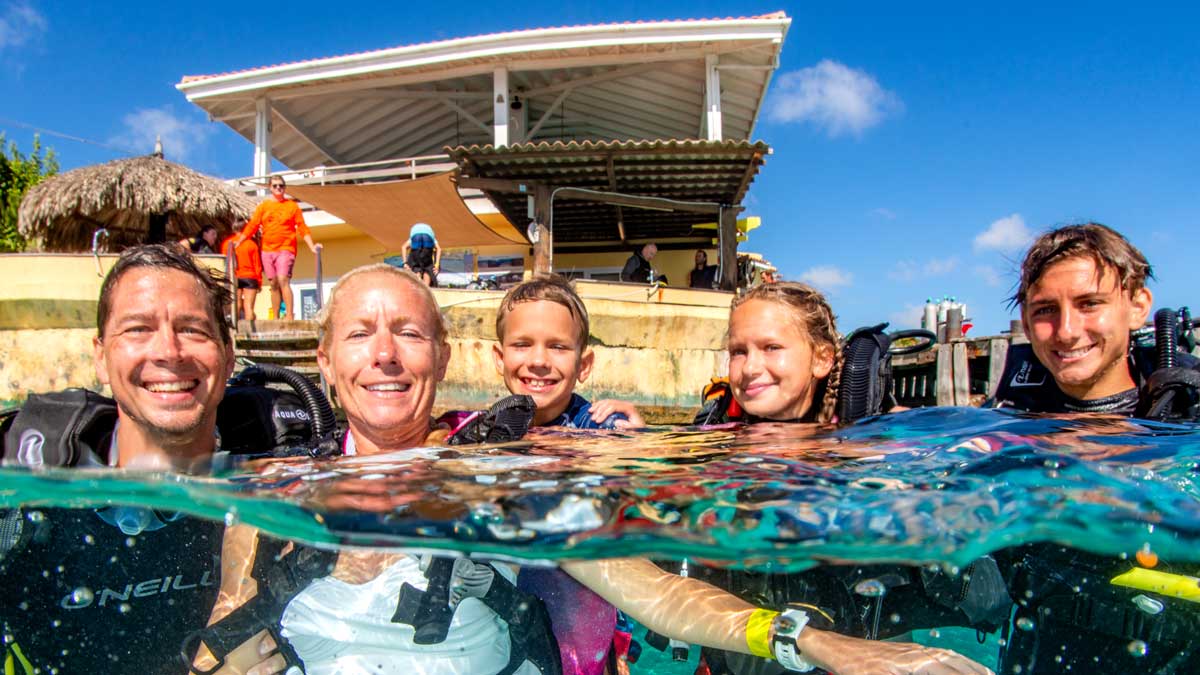
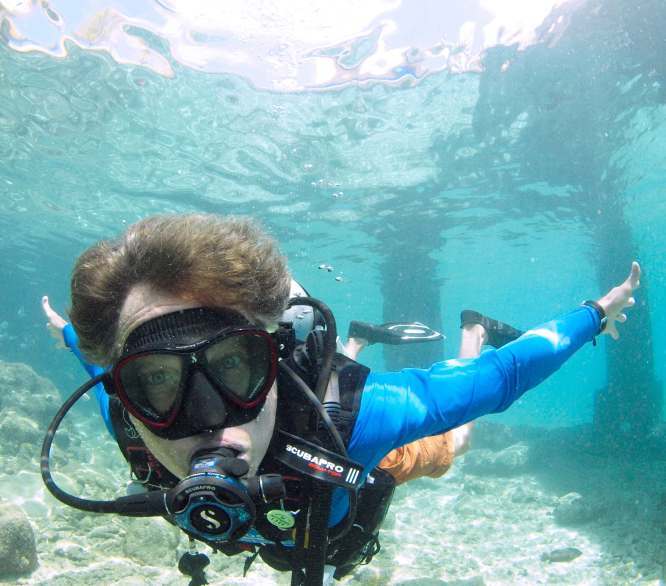
Our families have always known KSC as the best-kept secret in the world, but no more. The public has voted! Kids Sea Camp is a perfect vacation you can take your family!

Kids Sea Camp was also named one of the “Top 10 in the world for families” by the Travel Channel in 2015.

See what NBC had to say about us! (See link)

Kids Sea Camp Dive Vacation tips

Buddy Dive, Bonaire, Kids Sea Camp

Tips for a better dive vacation!

It’s time — you have been waiting all year for the summer dive vacation. You’re so excited, so pumped up to head to your tropical vacation that you forget the sunscreen or worse, the passport. We have had families forget: Dive computers, cameras, passport and yes even the dates they are traveling. But you may be a bit rusty here are some vacation tips for diving this summer.

So take your time and prepare for your dive vacation. Plan a day to pack and make a list of all the important items you need to bring to make your holiday easy and fun. Over the years, Margo and I have noticed there are a few things to remember for a better dive vacation. Some of the items are easy to remember — some are less obvious.

Get ready for the adventure of the Kids Sea Camp summer!

  • Check your equipment! Make sure you have it all! We’ve never had anyone forget all their equipment, but a mask, their fins, a dive computer or even their BC. It happens.
  •  Make your equipment yours: Mark your equipment with your name or symbol before you’re on the boat. It all sorts of looks the same once you’re on the boat, and it helps the dive shop to organize your equipment.
  • Don’t forget toothpaste for your mask.
  • Bring a spare dive computer: All the resorts have dive computers, but they may not match your equipment.  So if you have an extra computer — bring it. It is the number one issue we find with our equipment — most of the time it’s a failing battery. But the dive show may not service your brand equipment.
  • Defog: And just in case, get your defog before heading to the island. All the dive boats have some, but we always make sure to have the defog with us. A clear mask is a good choice for a dive mask.
  • Pack your Certification Card and logbook.
  • Bring your boat items, like sunglasses, rain gear, and comfortable boat shoes.
  • Dive insurance: Margo and I carry Dan dive insurance all year round. Diving is a very safe recreational sport — but sometimes you just never know. And when it comes to our kids in a foreign country, we want the DAN protection.
  • Bring your medical items
  • Passports (Duh — right?) Well, Margo and I once got in such a hurry that we forgot our passports.
  • Check your flights the day before. We have a couple of families who have forgotten their flight dates. The story to get them to the airport is worth a beer or two.
  • Credit cards: Call before you leave and tell the company that you will be in a foreign country.
  • Ziploc bags
  • Baggage limits: Most airlines have a 50-pound weight limit for coach and one bag per person. First class normally weighs 70 pounds and includes two bags per person. We’re divers, so bringing our equipment is important. Just double-check the weight; the surcharge can run into the hundreds of dollars.
  • Passports (in case you have forgotten already)
  • Pack your patience: Expect delays —traveling to any island really is a delay waiting to happen. So have fun, be patient, and enjoy your Kids Sea Camp summer.
  • Buy travel insurance: Kids Sea Camp buys DAN travel insurance on every one of our trips. Margo and I both know we have been lucky with great weather over the years —but we also know we don’t control it. Things happen; it’s just that simple. Be prepare. Please note: Some credit cards offer very good travel insurance as part of the card membership.

Toothpaste and new dive mask

Bonaire, Diving with Kids, Tom Peyton

Preparing a new dive mask

The foggy mask: I had a client buy a new dive mask this week, and I told him to make sure to rub toothpaste on both sides of the mask lens before jumping into the water. It will help prevent the lens from fogging up.

He then asked a very simple question, “Why?”

I had no answer for him—I said it was tradition. He then asked, “But why is it the tradition?

I smiled and thought to myself how living with a Hall of Famer who really is a diving professor, Professor Margo of the department of Oceanic Adventures at Kids Sea Camp, makes me a little dumb at times. I have watched Margo put toothpaste in our new dive masks for years — she even puts it in the old ones at the beginning of the summer. And the dumb part  — I never once asked why. Not once did I ask why we are putting something I put on my teeth every day on an item that has no teeth? I just knew that when she didn’t use the toothpaste, my mask would fog up — very quickly — and I hate a foggy mask.

One good thing about myself is that once I realize just how stupid I’m acting or thinking, I tend correct my behavior, and I do this by gathering information. So here’s why my Oceanic Professor puts toothpaste on the lens of our mask almost every year, at the beginning of our diving season— new or not.

Toothpaste is a mild abrasive

Most newer masks, frames, skirts, and straps are made of silicone, which creates a film on the mask’s lens. The film on the lens blocks the defog from working properly. In fact, if the silicone residue is not removed, any amount of defogging work on the lens.

After the toothpaste

After you have cleaned off the toothpaste and you are heading to the boat, make sure to have some defog. There are many brands, and with the silicon residue removed, most of them will work. The fact of the matter is, all the dive boats have some form of defog, though most use a watered-down J&J baby shampoo.

Other forms of defogging

Spit: Real divers don’t use defog; they spend a lot of time draining their mouths, building up a large quantity of saliva, and projecting it into their masks. Many divers say this is the best form of defog, but the idea of my eyes breathing in all the wonderful germs from my mouth — just doesn’t work for me.

SeaDrops: Clean, quick, and easy to use — a few drops on the inside and the outside of the mask has gotten me close to a decade of “no fog” mask. Just remember to wash the drops out right before you jump off the boat. If you don’t clean the drops out of the mask properly, you could experience a severe burning sensation in your eyes — and the eye burn can really ruin a great dive. Why? Because all defog is a form of soap. That’s why most dive boats and shops use J&J Baby Shampoo  — it’s easier on the eyes.

Burn it off: Don’t do this at home unless you know a professional mask burner who has done it many times. You are basically burning off the thin film that protects the new lens. The danger, of course, is burning the entire soft silicone that makes your new mask so darn comfortable.

After the dive

Hit the dunk tank: Make sure you use freshwater to clean off all your dive equipment. Almost all our family of divers dunk their BCs in the sweetwater tub, but I have watched numerous divers forgo a quick rinse of their fins, mask, snorkel, and wetsuit. Remember, a clean mask doesn’t fog up as much, and clean gear lasts longer.

Tom Peyton, Vice President of Kids Sea Camp and Family Dive Adventures