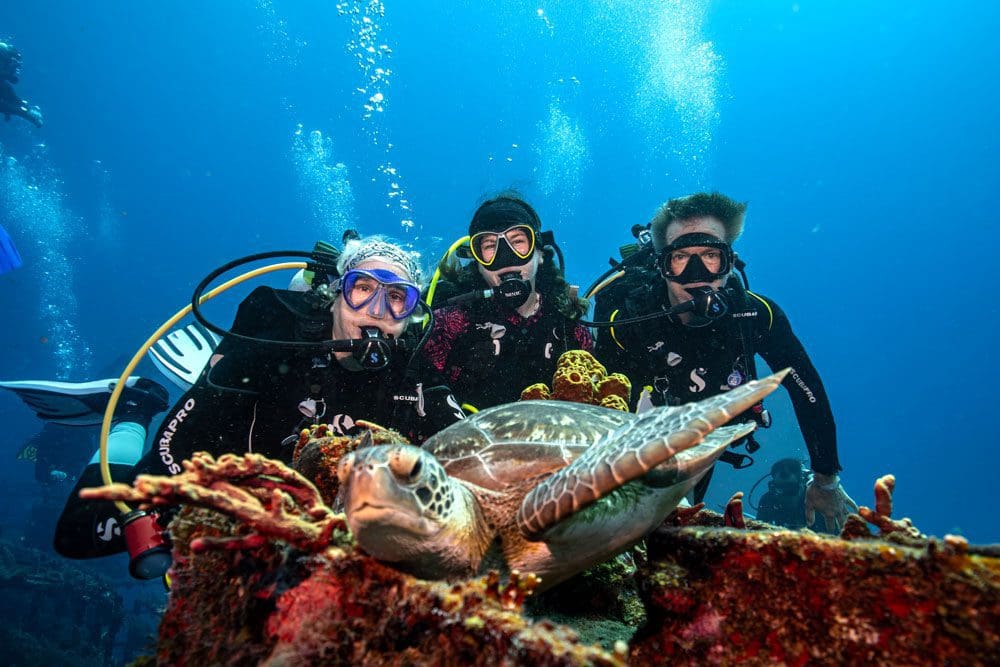
Tips for better buoyancy and air consumption

Buoyancy, Kids Sea camp, scuba training for kids

Keys to better diving

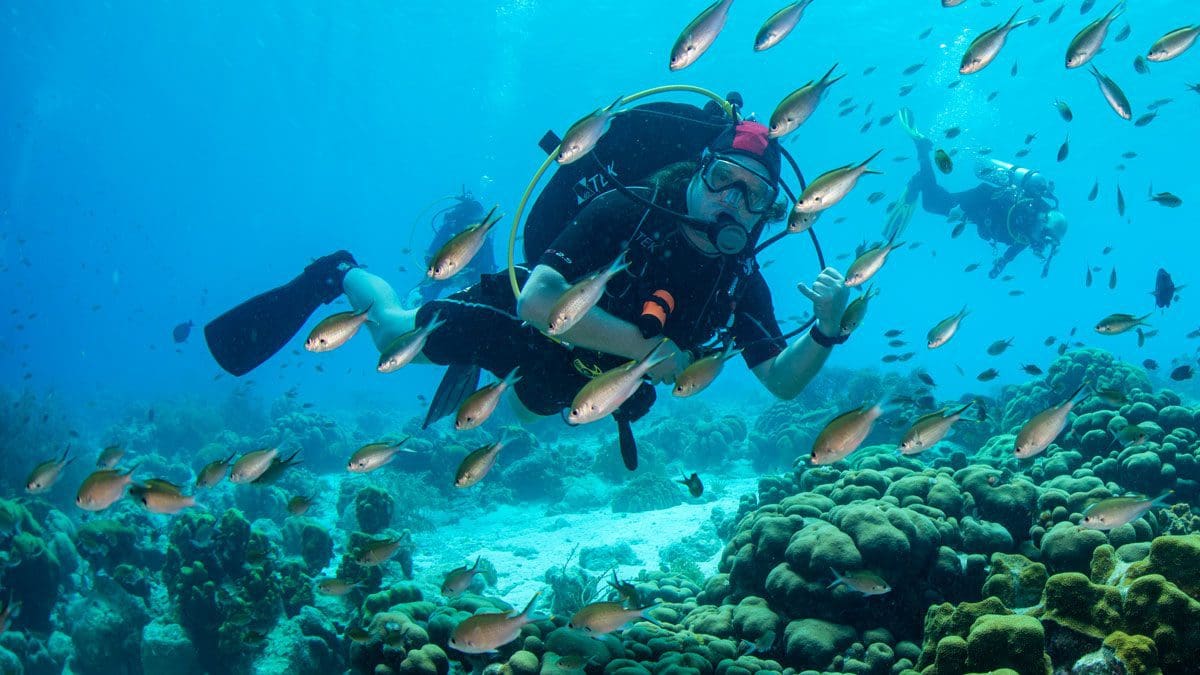
  • Good buoyancy is key. Make sure you are neutrally buoyant, trim your gear so nothing is hanging or dragging below you, and try to evenly distribute your weights. 4lb on the left, then 4lb on the right. Move them around, ankle weights are also used, I use 1lb on each ankle when diving with my camera. Some BC’s, like my ScubaPro Lady Hawk, have pockets up high in the back. I often put a 1 lb in each of those pockets. A Peak performance buoyancy class will be a fun continuing education class, as it will teach you more about good buoyancy control.
  • Breathe slowly and deeply when you’re diving; don’t ever hold your breath. Short and shallow breaths can be dangerous and create dead air spaces.

Gear is important

  • Streamline your gear and have property-fitting equipment, nothing dangling or dragging. Make sure your equipment is in good working order and has been serviced regularly by your local dive shop.
  • Use proper kick cycles and don’t swim while diving (no hands needed). Make sure you’re using Scuba fins, not snorkel fins. Dive fins should be longer and fit comfortably. Go to your local dive shop and try on a few pairs. Some adults like me prefer full-foot fins; for kids, I recommend fins with straps for growing feet.
  • Make sure to be suited up as conditions dictate. Stay warm, choices of a shorty or long wet-suit, 2 mm, 3 mm, 5 mml and more are available depending on the temperature of the water your diving. In the Galapagos, I use a 5- or 7-mm long suit; in Bonaire, I use a 2-mm shorty. New wetsuits are more buoyant than older ones, and thickness makes a big difference as well. The thicker the suit, the more weight is needed. Long suits will require more weight than a shorty.

Be in good condition

  • Be in good physical health, and never dive when you’re not feeling well. Always consult your doctor about any medications you’re taking, as they could have different effects while diving. Make sure to fill out waivers truthfully so that, if something does happen, it will be easier to determine what is going on and to provide help faster and more efficiently.
  • Dive often. The more you dive, the more confident and comfortable you will become, and buoyancy will become easier.

Be a good buddy

  • Stay close to your buddy. Constantly chasing your buddy can use up more air on a dive and create stress.
  • Dive into a current at the start of a dive when you are not tired, so you can then dive with the current returning at the end of your dive. Make sure not to dive in strong currents. Check with your local dive shop or dive professional before entering the water to determine safe dive conditions. Always let someone know you are going diving, and never dive alone.

Relax, it’s just diving

  • Relax, enjoy your dive. Take only photos, leave only bubbles. Observe marine life and don’t touch anything living.
  • Take an advanced open water class, which covers a navigation dive, a deep dive, a buoyancy dive, a night dive, a photography dive, and a Fish ID dive. All of which will make you feel more confident in your direction, buoyancy, and knowledge of marine life, allowing you to feel more comfortable diving. There are other specialty dives you can take in an Advanced Open Water Class, such as Underwater Naturalist, Wreck, or even zombie dives. Visit www.padi.com for more information about courses.
  • Don’t overthink air consumption; the more you think about it, the more anxious you become, and the fewer chances there are for relaxation.
  • Take your family diving and enjoy diving with your kids. They will look to you as role models and strive to dive as you do. Be a good role model.
Have fun and be safe! I look forward to diving with you.
by Margo Peyton, President of Kids Sea Camp, PADI Instructor #57474

Travel Channel loves Kids Sea Camp

Kids and scuba, best dive vacations, kids sea camp, travel channel

Travel Channel: Kids Sea Camp is one of the best adventures in the world.

Kids Sea Camp at Anse Chastanet in St. Lucia was named one of the “best family adventures” in 2015 by the Travel Channel. Kids Sea Camp is not only for divers. Our week is just a great family vacation.

The Travel Channel: Families from around the world who share a love for the ocean should head to St. Lucia for an unforgettable vacation at Kids Sea Camp. Family Dive Adventures offers this 6-day/7-night itinerary, hosted by the top-ranked resort Anse Chastanet, which provides the best accommodations, fine dining, and activities on the island.

“That’s as young as 10 years old can acquire certification to scuba dive. Even Four-year-olds can get in the water at Kids Sea Camp,” says Rainer Jenss, president and founder of the Family Travel Association.

“That’s great news for parents who thought they’d have to give up diving when the kids were born.” In between dives, guests can hike through an 18th-century ruin of an old sugar plantation or take a ride on a mountain bike through the rainforest.

Kids Sea Camp is Elite!

Kids Sea Camp, Margo Peyton

. . .and so is Margo Peyton

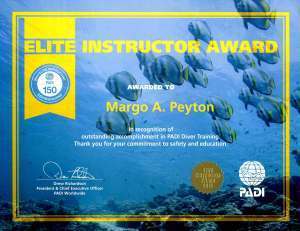
Margo Peyton has been awarded a PADI Elite Instructor award for 2014. To receive the award, an instructor must have over 150 certifications during the calendar year. PADI’s award is in recognition of outstanding accomplishment in PADI Diver Training. The number of certifications attained by Margo during the Kids Sea Camp training weeks was 282 in 2014. Kids Sea Camp contributed 402 new certifications in 2014, bringing the running 14-year total to 5402. That’s a lot of new divers!

elite, kids and diving, Kids Sea Camp, Margo Peyton

“I’m honored that PADI is seeing all the wonderful work we are doing, getting children and their families diving together. It’s a personal joy of mine. I would love to get everyone I meet under the water and experience diving. I can honestly say I think everyone would be a happier and healthier person if they all learned to dive.

Margo Peyton is awarded her first PADI Elite Dive Instructor award.

I also want to thank PADI for all the support since the very beginning of Kids Sea Camp, some 15 years ago. They have also been there for me and my little company, helping us in any way they can.” 

Margo Peyton, founder and owner of Kids Sea Camp and Family Dive Adventures 

Kids Sea Camp in the Top 10!

Sea turtles, kids sea camp

Kids Sea Camp in USA Today’s 10 best!

KSC is ranked number #2 in a recent USA Today poll of the most thrilling camps in the world! We are ranked among the best adventures for the tiniest travelers. From the offices of Kids Sea Camp, we would add that the biggest travelers also enjoy the camps.

Tiny kids, Family vacations, USA today, World's best, Top 10, Kids Sea CampBecause we’re all kids at a Kids Sea Camp week! The online article mentions Bonaire, Buddy Dive only — but we all know how many weeks and the islands we go to over the course of the year. All the weeks are great for the diving family on holiday.
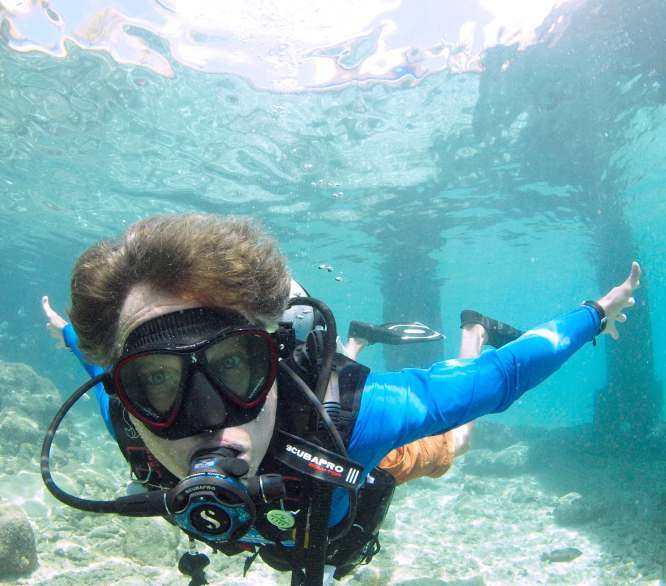
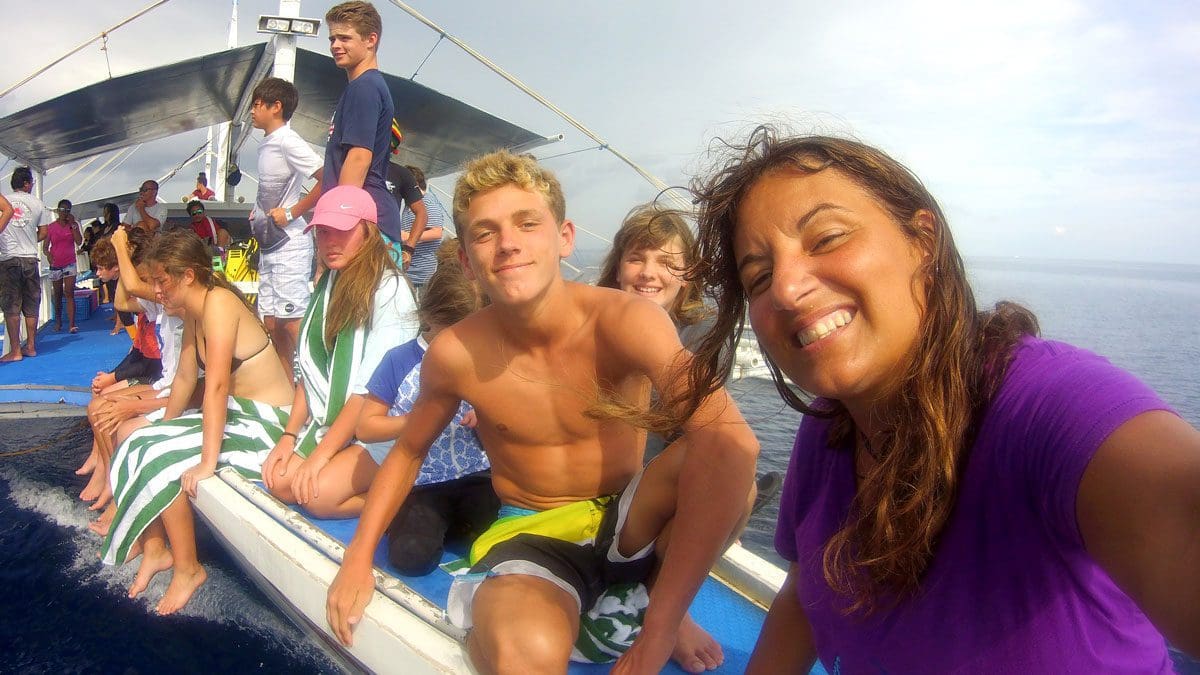
Our families have always known KSC as the best-kept secret in the world, but no more. The public has voted! Kids Sea Camp is a perfect vacation you can take your family!

Kids Sea Camp was also named one of the “Top 10 in the world for families” by the Travel Channel in 2015.

See what NBC had to say about us! (See link)

Toothpaste and new dive mask

Bonaire, Diving with Kids, Tom Peyton

Preparing a new dive mask

The foggy mask: I had a client buy a new dive mask this week, and I told him to make sure to rub toothpaste on both sides of the mask lens before jumping into the water. It will help prevent the lens from fogging up.

He then asked a very simple question, “Why?”

I had no answer for him—I said it was tradition. He then asked, “But why is it the tradition?

I smiled and thought to myself how living with a Hall of Famer who really is a diving professor, Professor Margo of the department of Oceanic Adventures at Kids Sea Camp, makes me a little dumb at times. I have watched Margo put toothpaste in our new dive masks for years — she even puts it in the old ones at the beginning of the summer. And the dumb part  — I never once asked why. Not once did I ask why we are putting something I put on my teeth every day on an item that has no teeth? I just knew that when she didn’t use the toothpaste, my mask would fog up — very quickly — and I hate a foggy mask.

One good thing about myself is that once I realize just how stupid I’m acting or thinking, I tend correct my behavior, and I do this by gathering information. So here’s why my Oceanic Professor puts toothpaste on the lens of our mask almost every year, at the beginning of our diving season— new or not.

Toothpaste is a mild abrasive

Most newer masks, frames, skirts, and straps are made of silicone, which creates a film on the mask’s lens. The film on the lens blocks the defog from working properly. In fact, if the silicone residue is not removed, any amount of defogging work on the lens.

After the toothpaste

After you have cleaned off the toothpaste and you are heading to the boat, make sure to have some defog. There are many brands, and with the silicon residue removed, most of them will work. The fact of the matter is, all the dive boats have some form of defog, though most use a watered-down J&J baby shampoo.

Other forms of defogging

Spit: Real divers don’t use defog; they spend a lot of time draining their mouths, building up a large quantity of saliva, and projecting it into their masks. Many divers say this is the best form of defog, but the idea of my eyes breathing in all the wonderful germs from my mouth — just doesn’t work for me.

SeaDrops: Clean, quick, and easy to use — a few drops on the inside and the outside of the mask has gotten me close to a decade of “no fog” mask. Just remember to wash the drops out right before you jump off the boat. If you don’t clean the drops out of the mask properly, you could experience a severe burning sensation in your eyes — and the eye burn can really ruin a great dive. Why? Because all defog is a form of soap. That’s why most dive boats and shops use J&J Baby Shampoo  — it’s easier on the eyes.

Burn it off: Don’t do this at home unless you know a professional mask burner who has done it many times. You are basically burning off the thin film that protects the new lens. The danger, of course, is burning the entire soft silicone that makes your new mask so darn comfortable.

After the dive

Hit the dunk tank: Make sure you use freshwater to clean off all your dive equipment. Almost all our family of divers dunk their BCs in the sweetwater tub, but I have watched numerous divers forgo a quick rinse of their fins, mask, snorkel, and wetsuit. Remember, a clean mask doesn’t fog up as much, and clean gear lasts longer.

Tom Peyton, Vice President of Kids Sea Camp and Family Dive Adventures

Kids Sea Camp fuels Zebee Wakely’s love of photography

Underwater photography, Kids Sea Camp

Photography: It started out as a faint dream, now it’s a full-blown passion

Article by Zebedee Wakely, Junior Master Scuba Diver, Age 13, and FDA approved.

FDA: Family Dive Adventures (not to be confused with the Food and Drug Administration)

I just don’t know where to begin with this. Kids Sea Camp is just too big and too great to even attempt to write about. But here you are now, attempting to read my jumbled mess of ideas and thoughts, so I’ll give it a go — no promises though.

I should probably start with the exciting stuff, like where I backward roll into a school of 50-plus sharks in Yap (the country, not the small annoying noise made by dogs) or when I’m charging at top speed through the current of Ulong Channel in Palau, but instead I’ll start at the beginning.

Kids Sea Camp at age five

Underwater photography, kids sea camp, margo peytonAt the age of five, I started Kids Sea Camping, and my parents signed me up in the group known as “SASY”. Little kids get to put on scuba gear, but substitute a Life Jacket for the BCD so we float on the surface while breathing through a regulator. This gave me my first experience with Scuba Diving.

Since I was already a water baby by six months and swimming by one, I thought Kids Sea Camp was created just for me. Quickly making my way through the dive ranks, I again returned for Seal Team. This was a landmark in my interest in Scuba Diving.

Seal Team is a program for eight- and nine-year-olds to learn to dive in a confined-water environment. However, with Kids Sea Camp, the Seal Team can dive in the ocean.

I just fell in love with diving

On my tenth birthday, my mom and dad chose Yap & Palau for our family adventure, and that’s where the real story begins. The experiences I had in Yap and Palau were likely some of the best I will ever have. Completing my PADI Jr. Open Water certification with manta rays overhead was surely one of the greatest moments of my life.

The feeling I had when I was diving with 15-foot mantas and some 50-plus reef sharks daily was phenomenal, too amazing to fully describe. Just the idea of going there and doing that again will excite me forever.

Learning photography

The encouragement I received from Kids Sea Camp was amazing. The families I met became, and still are, some of my best friends and assets to my life. In Yap, Manta Ray Bay was where I properly learned photography. The support from all of my friends and family is the reason I have stuck with it (unlike a lot of other things I’ve tried). I loved every aspect of Yap, from the diving to the staff and the local people. I can safely say that experience has significantly contributed to who I am today
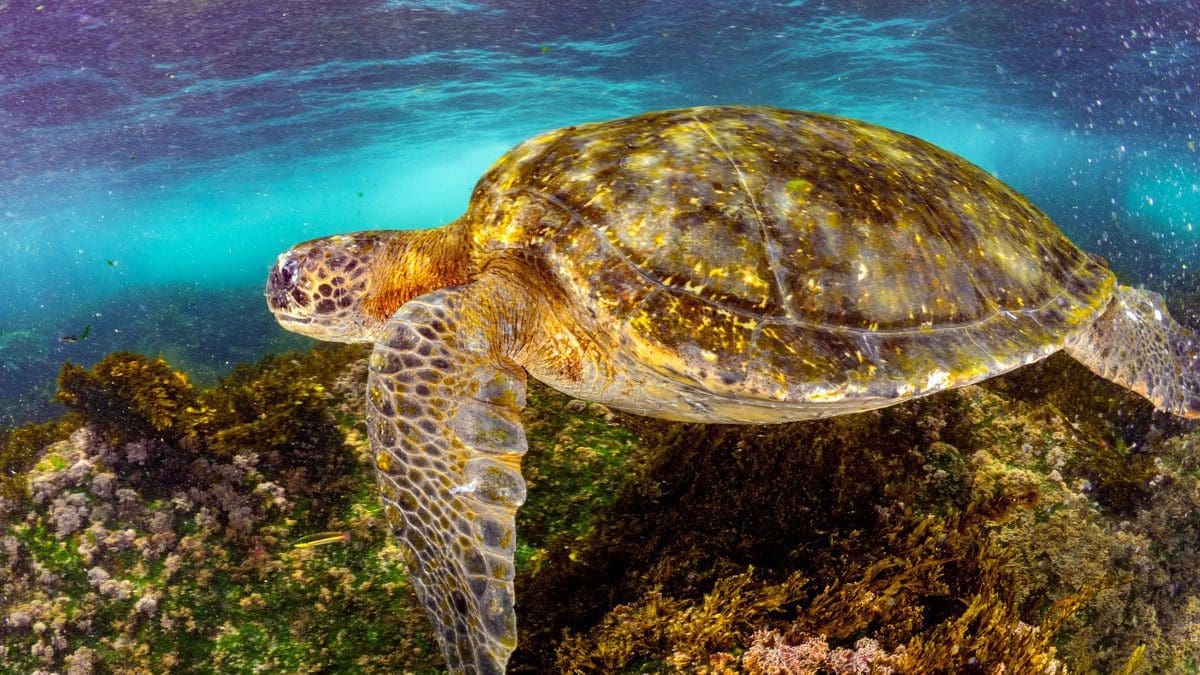
Getting back home to Bermuda, I was so passionate about saving sharks (with Palau being a shark sanctuary) that I set up a small organization called “Save Our Sharks Bermuda”. I collected over 1000 signatures and met with the Minister for the Environment to discuss and plan how best to protect our sharks. Bermuda then signed the “International Agreement on the Conservation of Pelagic Species”. I was so totally delighted about this because I had made an impact on Bermuda and the conservation of the sea.

Diving from a young age is exceptional

Having the privilege to be diving from a young age is exceptional. Through diving with Kids Sea Camp over the years, I have advanced through the PADI ranks from SASY, Seal Team, Jr. Open Water, Advanced Open Water, Rescue, and Master Scuba Diver, with over 100 dives and 7 specialties.

This feels too good to describe. Having a place like Kids Sea Camp, to go through all the ranks, all the way to the top, is what I love the most. The experience has been fantastic. I couldn’t have done what I have without it.

I have made lifelong friends and have been encouraged by Margo in a way I could never repay. So thank you, Margo.

Margo deserves a whole part of my story for herself. Mrs. Peyton created the best organization that I have ever known. She has influenced me, trusted me, and helped me in every aspect of life. Margo has guided me through diving one step at a time, and with each step

I am even more grateful for her and my family finding her. She is very focused on safety and is an inspirational teacher who is helpful no matter what. She is the heart of Kids Sea Camp!

I just don’t know how to end this. So thanks, Mom, Dad, and sister Holly, too. Our family of divers just can’t get enough. FIJI is the next Kids Sea Camp — to dive with the sharks of Beqa Lagoon.

Galapagos Turtles are everywhere at Kids Sea Camp

Galapagos, Turtle, Kids Sea Camp

Seems like a turtle on every dive

Turtles were everywhere; on every dive in the Galapagos, it seemed like we had sea turtles. Note, I said sea turtles; normally, there were at least two or three per dive. I also want to note that there were almost zero jellyfish on the dives. So were the waters too cold for the jellyfish, or were the sea turtles spending their days in the Galapagos eating jelly, I don’t know.

Here are some amazing sea turtle images Margo took, believe it or not, on a snorkel trip, at Vincent Roca Point on Isabela Island in the Galapagos. On the same snorkel trip, I saw the biggest sea turtles of my dive career resting on a sandy bottom in ten feet of water. There had to be around twenty just sleeping in the shallow, cold, and green-tinted water.

Come join us in 2027 and 2028 (See link): Kids Sea Camp has created a family-friendly dive vacation aboard the liveaboard The Tiburon Explorer in the Galapagos Islands. This unique, one-of-a-kind family dive adventure is custom-designed for divers of all levels. We have planned a milder, more family-friendly diving schedule and itinerary suited to recreational divers.

You can also see more images on our website gallery

Ear clearing techniques for divers

ears and diving, kids sea camp, clearing skills

You just can’t go diving with your ear blocked

Ear clearing and diving go hand in hand when you jump into the ocean. Here are a few ear-clearing techniques for divers that will help most divers equalize more easily.

In diving, the Valsalva maneuver is often used during descent to equalize the pressure in the middle ear with ambient pressure. Performed properly — pinching your nose shut while exhaling — most divers can descend without any problems. But for some divers, the technique doesn’t help.

You should never continue with descent if you are experiencing ear pain. But before you give up on a dive — or diving altogether — try a few of these ear-clearing techniques and suggestions.

  • Listen, you should hear a “click or pop.” Before you even board the boat, make sure that when you swallow, you hear a “click or pop” in both ears. This tells you that both Eustachian tubes are opening.
  • Start early. Several hours before the dive, begin gently equalizing your ears every few minutes. Some people can swallow or chew gum to clear their ears; this seems to help because it prompts them to swallow more often. I don’t recommend chewing gum while diving, as you may swallow it and choke.
  • Equalize at the surface. “Pre-pressurizing” at the surface helps most divers get past the critical first few feet of descent. It may also inflate your Eustachian tubes, making them slightly larger. Not all medical authorities recommend this, however. The lesson here is to pre-pressurize only if it seems to help you and to pressurize gently.
  • Descend feet first. Studies have shown a Valsalva maneuver requires 50 percent more force when you’re in a head-down position than head-up.
  • Look up. Extending your neck and wiggling your jaw tends to open your Eustachian tubes.
  • Use a descent line. Pulling yourself down on an anchor or mooring line helps control your descent rate more precisely. A line also helps you stop your descent quickly if you feel the pressure. Don’t rush just because others are faster. If you know you have trouble, let your buddy and/or the divemaster know so that someone is waiting with you. If on a recreational dive boat, the divemaster could give you a little more time by getting in first.
  • Stay ahead. Equalize often, trying to maintain a slight positive pressure in your middle ears. Don’t wait until you feel pressure or pain.
  • Stop if it hurts. Your Eustachian tubes are probably locked shut by the pressure differential. Ascend a few feet and try equalizing again.
  • Avoid milk. Some foods, including milk, can increase your mucus production.
  • Avoid tobacco and alcohol. Both tobacco smoke and alcohol irritate your mucus membranes, promoting more mucus that can block your Eustachian tubes.
  • Keep your mask clear. Water up your nose can irritate your mucous membranes, which then produce more of the stuff that clogs.

If you get congested during the dive and have trouble ascending, stop and try to clear, then ascend slowly. Use the anchor line if you need more control. Don’t dive with a cold or congestion.

Alternative Clearing Techniques

There are problems with the traditional Valsalva maneuver: It may not work if the tubes are already locked by a pressure differential, and it’s all too easy to blow hard enough to damage something. Divers who experience difficulty equalizing may find it helpful to master some alternative techniques.

  • Toynbee Maneuver. With your nostrils pinched or blocked against your mask skirt, swallow. Swallowing opens your Eustachian tubes, while the movement of your tongue, with your nose closed, compresses air against them.
  • Lowry Technique. A combination of Valsalva and Toynbee: while closing your nostrils, blow and swallow at the same time.
  • Edmonds Technique. While tensing the soft palate and throat muscles and pushing the jaw forward and down, do a Valsalva maneuver.
  • Frenzel Maneuver. Close your nostrils, and close the back of your throat as if straining to lift a weight. Then make the sound of the letter “K.” This forces the back of your tongue upwards, compressing air against the openings of your Eustachian tubes.
  • Voluntary Tubal Opening. Tense the muscles of the soft palate and the throat while pushing the jaw forward and down as if starting to yawn. These muscles pull the Eustachian tubes open. This requires a lot of practice, but some divers can learn to control those muscles and hold their tubes open for continuous equalization.

How safe is scuba diving?

Kids Scuba, Family Scuba Diving Adventures, Kids Sea Camp, Margo Peyton, Family scuba diving

Jerry Seinfeld is wrong. Scuba diving is safe.

This morning, seeking inspiration to write, I listened to Seinfeld joking about scuba diving. He observes that scuba diving is the only activity where your main goal is simply not die. You spend the whole time thinking, “Don’t die… swim and breathe because living is good.” Comedy aside, let’s look at the numbers. While Jerry is a master of comedy, his take on diving falls short. Scuba diving is, in fact, exceptionally safe—even when sharks are involved. The reality is that diving ranks among the safest activities you can choose.
Scuba diving versus other human activities

By the numbers

Scuba diving death rate: 1 out of every 211,864 dives ends in death, according to DAN (2010 workshop report). For example, with about 2,000 dives in my scuba career, my statistical risk is roughly 1 in 106,000. Margo, with 7,500 dives so far, would have a statistical risk of approximately 1 in 28,000. However, these numbers show that scuba diving remains statistically safe. In fact, a DAN study on DCS (Decompression sickness) states that from 1998 to 2004, across 105,135 dives, 95% were “uneventful.”
To clarify, this means that the vast majority of dives encountered no significant issues. Of the 5% who experienced problems, the most common, affecting 2.7% of dives, was equalization, which simply involves adjusting ear pressure to accommodate underwater changes. Buoyancy control, which is adjusting your body’s position in the water, was a problem in 0.9% of dives. The face mask was the next issue at 0.69%, with dive computer issues trailing at 0.4%. Overall, diving seems pretty darn safe.
Shark accidents: Just because it’s fun to talk about sharks and diving, and at one time, one of my biggest fears, sharks will kill me. It is simply not true. While the number of attacks fluctuates slightly year-to-year based on beach attendance and environmental factors, the overall danger remains minuscule: Average Attacks: Recent years (2020–2025) have averaged roughly 63–80 unprovoked bites per year. Fatalities: The global average for deaths remains around 5 to 6 people annually, which is incredibly low considering the millions of people who enter the water. Odds: The statistical likelihood of being killed by a shark is approximately 1 in 4.3 million.
  1. Human accidents: As far as the sharks that are reading this blog, well, our ” finned friends” need to stay away from us. Sharks vs. humans — humans win, we kill about 100 million sharks a year. Most of it is due to “finning”.
  2. Car accidents: I would advise not getting in your car today. To make this comparison fair, let’s look at it this way: for every 10 million car trips taken in the U.S., approximately 180 end in fatalities. This method makes it clear that, relative to scuba diving, the dangers of everyday car travel are notably greater.
  3. Birth: This is not the stat of the week at all, but giving birth can be risky. 1 out of every 7,692 women dies due to complications in childbirth (NCHS).
  4. Jumping out of an airplane: First, if you’re doing it, God bless you. Margo has done it, and she says she still misses skydiving. But ain’t no way I’m jumping out of a perfectly good airplane. Anyway, the rate is not as bad as I thought. 1 out of every 116,666 skydives ends in death. So I guess, keep “free falling”, without me. (United States Parachuting Association)
  5. Running: Being healthy can be dangerous. For comparison, 1 out of every 126,626 marathon runners died of sudden cardiac arrest during a run (1975-2003, NSC), highlighting how rare this event is.
  6. Falling out of bed: To put all this in a better light, falling out of bed is a real killer. In any single year, 1600 or so people will die by falling out of their beds.

The data is clear—Let’s go diving

So it seems that, based on available data, the risks associated with being underwater may be lower than those we encounter in our daily lives. All the more reason to jump on a plane and head to a Kids Sea Camp week and go diving. If you’re hesitant, why not start with a discovery dive class at a nearby dive shop? This low-commitment step provides a safe environment to experience the thrill of scuba diving without a major time or financial investment. Testing the waters can transform reassurance into enthusiastic exploration.
Being with Margo has shown me that “fear” is the real killer in life. And more than anything, it is fear that keeps us from doing what we love.
So, what do all these numbers and odds mean to me? Well, we really live in a fairly safe world. And even as we do all these fun and adventurous activities, we are more than likely going to live long and healthy lives.
If we keep living the “Kids Sea Camp” life, we’ll create stories that outlast us, and after years, you’ll see scuba diving is safe.

My Palau Kids Sea Camp family trip journal

Palau, Sharks, Kids and diving
Palau Kids Sea Camp journey

Even though it was 10 P.M. Palauan time, we were greeted by some native girls and boys dressed in native attire. They placed leaves on us made of local flowers interlaced in palm fronds. It was late at night when we arrived at The Palau Royal Resort, so I went straight to sleep.

Sunday

I woke up this morning still adjusting to the humidity and heat (82 degrees F and sunny). From the balcony, I saw a breathtaking view. For the first time, my Mom woke up early and actually wanted to stay awake. The tall limestone cliffs, each inch covered with lush, green growth, dip into crystal-clear blue water. There was no smog, so I could see to the end of the Earth. We headed down to an unusual breakfast buffet. It had a combination of American, Japanese, Korean, and Taiwanese foods. Taking snorkeling gear from the dive shop, we headed out to the dock for our boat tour of the Islands and Jelly Lake. It was amazing! The boat ride took us through more lush green islands, unspoiled by mankind, sticking up like broccoli heads.

Jellyfish Lake was incredible!

This was my first time ever touching a Jellyfish (that didn’t sting). The Jellyfish in Jelly Lake have lost their ability to sting because they have no need to. Jelly Lake is an isolated saltwater lake with no predators to eat the jellies and no fish for the jellyfish to hunt. Now they rely on internal algae for food, following the sun during the day, but at night they go down into a highly toxic (to humans) nitrogen-rich layer of water to fertilize the algae.

Palau, Kids Sea Camp, Sam's ToursLater that day, we had a BBQ lunch. I made a new friend. Her name is Callie. She is 10 years old, blonde, and energetic, and she is a certified diver like me. We all loaded back up onto the boat and headed for a snorkel at Clam City. The Clams there, Mackenzie. She is younger than me, 8, and in the Kids Sea Camp’s sassy program. From Clam City, we went back to the resort, explored a bit, and then we got ready for our welcome dinner at the Sea Passion resort.

We knew the President of Palau was coming that evening, so I put on my best dress. We had an exuberant welcome by native dancers and a native ritual of “Calling of the Canoe”. The President of Palau gave a welcoming speech in which he spoke about the islands of Palau and how much he enjoyed having us there. A week before our arrival, he had declared to the United Nations that Palau was the first and only “Shark Sanctuary” in the world. I got to shake his hand, take a picture with him, and all the kids at Kids Sea Camp.

Monday:

On the second day, we had the unusual breakfast again and headed over to Sam’s Tours for our first dive. There I was assigned to the “Whale Shark” boat, where I met some of the other Junior Open Water Divers and our Dive guides.

German Channel

Our first dive took us on a one-hour boat trip winding through the Palauan islands to a location named German Channel. We sighted a 6-foot Manta Ray, lots of corals, a porcupine fish, and lots of sharks. The German Channel is a cleaning station for all fish. In this area, fish from all over the ocean stop to let cleaner wrasses safely clean large predatory fish that would otherwise eat them. This makes the German Channel a safe and amazing place to view lots and lots of ocean creatures.

The lunch spot was awesome! We went to a private white-sand beach with the ocean on both sides and large coconut palms for shade along the edges of a dense jungle. I went swimming and shell collecting with my friend Callie.

The second dive of the day was named “Big Drop Off”. This dive is a wall drift dive. Along with wide varieties of fish, we found a lizardfish and a Nudibranch among the corals and sea fans that covered the wall.

We returned to the resort and got ready for our next evening. Dinner was served at an Indian restaurant named the Taj. They served us a delicious dinner of different and interesting Indian foods. That evening, we had interesting Indian dancers about my age. They did a bunch of dances, changing clothes between each one. Some of the dances had veils, and some had little bells all over the outfits – like belly dancers. They were quite impressive.

Tuesday

Once again, we had breakfast and headed out to the German Channel. We were met by a lot of rain coming sideways at us like bullets as we sped along in the boat. At German Channel, we saw two humongous Manta Rays, the size of cars, at the cleaning stations; 28 sharks – all different kinds – white tip, black tip, and reef – the size of surfboards; a Green Sea turtle; and some very interesting sea stars. An excellent and lucky dive!

We had another fabulous lunch – a chicken bento box. This time we had lunch at Sam’s Tours because of the rain.
The second dive took us through rough surf to the Blue Corner dive site. Since I was limited as a Junior Open Water diver to 40 feet, this dive was ok. We saw one puffer fish, two warty sea slugs, and some starfish amongst schools of triggerfish, butterflyfish, and bannerfish.

That evening, we went to the Sea Passion for another exquisite dinner. That day, we had the Polynesian dancers. There wasn’t much singing like before, but there were some instruments, like a hollowed-out gourd made into a drum and two frayed sticks that sounded like rain and thunder when put together. That night we went home (back to the hotel) and slept like rocks.

Wednesday

That day, I awoke to something very unusual – it was absolutely pouring rain. We headed down to breakfast and tried to avoid the downpour. After breakfast, we headed down to the dive shop and hopped on the boat. My guide, Alex, warned me that I still needed to put on sunscreen even if the sun wasn’t visible. Once again, the rain was coming into the boat sideways as we sped over to the German Channel. That day, I wore my wetsuit before I even got into the water.

One thing about SCUBA is that if it rains, it doesn’t matter because you are below water! That day I saw schoolmasters, horse-eyed jacks, squirrel fish – the usual hordes of schools and corals. I didn’t see much in the channel, unique or extra large, on this dive.

Blue Corner

That afternoon, we headed out to Blue Corner – also there, I didn’t see any unique fish – a large puffer, but I was told that the adults down at 70 feet saw quite a few sharks. The Teen Divers also had a painting lesson with a funny artist who travels with Kids Sea Camp around the world, teaching children how to paint.

After the painting, I did my first night dive. It was amazing, I saw several interesting Sea Cucumbers and fish. All of them were hiding. That night, we had the Yap dancers. Yap is a very small island just northeast of Palau. We were told we were going to girls dancing, but instead they sent the young men with bo staffs. As soon as our heads hit the pillow, we fell asleep.

Thursday – Thanksgiving

It was my first time celebrating Thanksgiving outside of America. I was told that the locals don’t really celebrate the holiday, other than going to church. Catholicism is the main religion. They do celebrate Halloween there.

It was a sunny day as we headed out on the Silvertip boat to our morning German Channel dive. There I saw one large Manta Ray going into the cleaning station and a couple of sharks. I was surprised that the sharks were so large.
I must say it was quite a thrill to be diving with them. My dive guide told me that in thousands of dives, there have never been any issues with the sharks. They are in the channel as part of their lifestyles and don’t bother with us divers.

Jake’s Seaplane

After a fabulous lunch on the beach, we went to Jake’s Seaplane. This dive spot features an interesting plane wreck and a lot of diverse coral. It’s down about 40 feet, so perfect for Junior Open Water Divers. There were lots of Parrotfish. Part of the plane’s right wing was missing. I found it 20 feet away, hollow and covered in corals. The plane was a WWII plane – I don’t know whose.

We did a third dive at 10 feet for 15 minutes, where I saw a puffer fish and my first Mandarin Fish. It was soooo cute. A native of this area with large yellow lips, green to its forehead, blue chin, orange body, and blue squarish circles all over its body.

We went to Sea Passion for dinner. The four turkeys were baked in four different ways, along with several other sides, including cornbread, mashed potatoes, gravy, corn, and cranberry sauce. That evening, we made a sand Manta Ray on the beach about the size of the real deal. With my guide and new best friend’s boyfriend, Paul, who made a sand shark with the boys.

Friday

Our last day diving. My first dive was the German Channel, and almost as if there was a going-away send-off, we saw a large Manta Ray, sharks, and lots of interesting Fish. After that dive, we went back to the dive shop for lunch and caught up with our parents. We went to the Light House dive site, where we dove as a family, just the four of us, with two guides. This was my father’s 100th dive, making him a century diver. My mother got her century dive in a few days before. It was a great dive with loads of fire corals, lizardfish, and bubbles.

Saturday

Today is my last day in Palau. I am not pleased to be leaving. We made a lot of friends in Palau. My guide, Alex, I will miss. I wish I could stay. I went to a beautiful waterfall with my dad. We went under two waterfalls and jumped off small ledges into a pool along the river’s path. There was a lot of mud, and one time I actually got stuck. I think my Keens were a little less pink after that hike.

We went to the stone head garden

Some looked happy, sad, or angry. There we had lunch. The usual Bento boxes, but this time we had some traditional Palauan food like candied tapioca and fresh coconut milk/meat. After that, we headed back to the hotel, stopping at the Capitol building.

When we got back, we packed up our stuff, took a shower, and headed over to Sam’s tours for the graduation ceremony. There was a whole cooked pig! There was a ceremony for each group: adults, teens, sassy/seals, and junior open waters. Then there was the poem contest. The poem that my mom and I worked on the evening before got first place (out of like 20 poems).

We won an underwater digital camera.

We then watched the video made by Nick Martirano, who followed us around all week, said our last goodbyes, and headed for the airport. I practically cried all the way there. We arrived at the airport for our treacherous flights to Colorado. I slept most of the way through it. The odd part was that it started on Saturday, then Sunday, then Saturday again, and finally, we got home on Sunday morning at 5 A.M.
Final thoughts

I think Palau is one of the best places for families to go in the entire world. Kids Sea Camp is a great place to meet new people and learn about the world’s different cultures. Palau is one of the best places to go diving. Magnificent Mantas and Sharks. Try to go there at least once in your lifetime. Thank you, Margo Peyton and Kids Sea Camp!

Jane Colon-Bonet’s Kids Sea camp Adventure, Palau trip Journal