International Travel Check list and Safety Tips

Travel checklist, International travel, Kids and diving, Kids Sea Camp

International Travel Checklist and Safety Tips

  1. Learn about your travel destination
  2. Double-check your checklist
  3. Sign up for alerts through the Smart Traveler Enrollment Program (STEP)
  4. Organize your required travel documents
  5. Review your personal travel needs and safety tips for activities
  6. Consider buying travel insurance

Get the full checklist

For your own safety:

  • Have your passport or identity document at all times.
  • Follow local news sources during your stay to stay abreast of any potential concerns, including areas, dates, or times.
  • Exercise caution and good judgment, keep a low profile, and maintain a high level of vigilance.
  • Avoid demonstrations, which may become violent and unpredictable.
  • Obey the instructions of security personnel at all times.

Gather your required travel documents and make multiple copies. These copies will help you replace your originals if they are stolen or lost while traveling.

  • Give a set of copies to a trusted friend or family member.
  • Keep a set of copies with you, separate from your originals.
  • Take photos of your travel documents using your mobile phone.
  • Get CFAR travel Insurance

Getting prepared for international travel may include considerations such as lodging, medical services, import restrictions, and more. Your preparations may vary depending on the country you are planning to visit. You can access these best practices to guide you in your plans:

Certain types of travelers have personal needs or participate in activities while traveling abroad. Check the list of personal needs and safety tips for activities to find the planning information for your trip.

Be alert

Always remain alert and prepared to reduce your risk of becoming a victim of crime while traveling. Following these crime prevention tips can make a difference when traveling internationally.

  • Don’t wear expensive jewelry or carry valuable items.
  • Trust your instincts. Plan ahead and have a safety strategy.
  • Have a personal alarm or whistle to scare off attackers.
  • Consider taking a self-defense class before you travel.
  • Know where local police stations and hospitals are located.
  • Don’t share detailed travel plans online until you return home.
  • Use a “Find My Phone” GPS tracker on your devices. Share your location with someone trusted at home.
  • Download offline map apps so you can navigate without an internet connection.
  • Keep your phone charged and carry a portable battery.
  • Tell someone at home your travel itinerary. Share hotel names, locations you will visit, U.S. embassy or consulate information, and your emergency contacts while abroad.
What is STEP?

Are you traveling outside the United States? You should enroll in our Smart Traveler Enrollment Program (STEP). It is a free service that sends you email updates and alerts from U.S. embassies and consulates abroad. The U.S. embassy and consulate updates in your inbox when you’re abroad. Join our Smart Traveler Enrollment Program (STEP) today.

Enroll in STEP

Scuba Diving resorts are making better decisions on safety when it comes to kids and family.

Kids Sea Camp, Kids and diving, family diving vacations

Keeping families and kids safe should always be the #1 priority for traveling families!

For most of my 30-year career, I had been frustrated over having to plead my case to the resort owners for better safety provisions for diving with kids. Kids’ diving safety should be common sense, but it was not. Much has changed, and many dive operators and resorts have upgraded their safety standards. I want families to understand how to choose the right resort. How to keep their families safe when booking dive trips. What is important to consider when parents want to go diving with their kids or take their kids on a dive vacation is asking the right questions. Why choose Kids Sea Camp?

I’m talking to the average family out there that goes on adventure vacations and wants to make scuba diving a part of their lifestyle with their kids or grandkids. Many recreational divers have skipped a few years of diving. They should absolutely take a refresher or complete the e-learning for the PADI Scuba Tune-up course. If you do not know the new signals or skills, and you are going to be diving with newly certified kids or grandkids, make sure you get up to date on your training beforehand. Many adult divers feel comfortable being responsible for themselves but not for another adult, especially a child. Thinking about taking a child diver underwater with no verbal communication is very intimidating to many parents or grandparents. So let’s get you ready to feel confident and have some fun with your kids, creating memories that last a lifetime.

Always have a PADI Pro in the water

At Kids Sea Camp and with Family Divers, we always have a PADI Pro in the water when teaching and training with kids. Kids’ diving safety is our primary focus. Kids are not allowed to dive with other kids, and parents are reassured by a PADI pro in the water during our Kids Sea Camp event and scheduled family dives. When families contact us to book a family dive vacation and want to get their kids or other family members certified to dive, we arrange the course, e-learning links, rental gear, and rental dive gear for students who register with Kids Sea Camp. We consider the destination, the conditions, and the student’s experience level, and we do our best to match the dive operator to their needs.

We choose kid-friendly resorts and dive operators because we know the dive staff have experience diving and teaching kids. The dive operators we choose have smaller dive gear and tanks for kids. There are many good diver resorts around the world now that I consider family-friendly, and asking the right questions is the most important thing a parent can do when researching on their own.

There should be reasonable rates for the dive instructor who is teaching your course at a vacation resort to continue to dive with the kids for the rest of their stay on the additional dives purchased after certification. Look for another operator if they do not offer a private guide.

Many dive resorts are making improvements. They understand that by creating diverse safety standards and applying common-sense principles, they have repeat clients. These clients will grow to trust them and remain loyal. They see that contributing to growing our dive industry by making better choices for families is the wise decision for the future.

Over 8,100 new kids’ certifications

Our family company specializes in kids’ diving safety, with over 8,100 youth certs and no accidents, and I have a growing, successful business that prioritizes safety. With a 75% repeat client base and 3 generations of travelers on any given trip. Kids Sea Camp caters to more grandparents sharing amazing adventures with their grandkids because I make it safe, easy, and fun for all family members to enjoy the ocean together. Diving creates memories to last a lifetime.

Think of this average scenario, NOT at Kids Sea Camp, but with any dive operations around the globe, you may choose:  You’re a certified parent. You are on a family vacation and have signed your spouse and two children up for an open-water diver course. One instructor will teach all three of your loved ones to dive over the 3 days of your family vacation. Then, at the end of those 3 days, after 5 confined pool dives and 4 open water dives, they are certified. An open-water-certified parent is now on their own, responsible for themselves and their family in the water.

How not to teach kids scuba diving

The dive shop instructor has completed his job and moved on to another class. Dad and his family are loaded onto a boat with his wife and your 2 kids. They have had no open-water dive experience outside of the class they just completed. Your spouse is nervous about the kids. You’re going to be put on a boat with a bunch of other divers and an instructor who is in charge of everyone and will mainly point out stuff. You will need to find your own way back to the boat and manage your family’s depth and time, as well as any issues that come up. That is the norm. This is not, in my opinion, acceptable, and it is not what I suggest or provide for my clients; it’s not how I teach and work with kids.

Kids Sea Camp has no dive accidents. We have made changes to the operators we work with or have approved as family-friendly worldwide. The resort you choose to dive with, when teaching your children and family how to dive, needs to meet the highest standards available. When someone is purchasing a week’s stay with you, meals with you, diving with you, and a certification course. It should be good standard practice that the family, the child, should have their instructor with them, accompanying them on all dives, and the remainder of the dives they have booked on their vacation after getting certified.

My analogy for you is this: your child goes to driving school and completes the course on those two Saturdays. Would you be willing to hand them the keys to your car and let them go drive on I-95? It’s the same. Kids’ diving safety is training a new driver.

Kids-Friendly Dive Staff

So, with Family Dive Adventures and Kids Sea Camp, whenever we book a certification course, it is expected and mandatory for our dive pro to accompany them for the remainder of the dive days.

This is not only common sense but also common practice. Those new divers have no boat experience. They have had no experience of diving on their own. There is so much to remember for them, and they need those few days to get it. You need experience practicing. They need to remember safety stops. What to do in case of an emergency, and navigation. Oversight is a key practice that they just learned safely, so they can become more confident and better divers.

I do understand how expensive it is to assign a dive staff member. But when kids are involved, you should demand an additional dive pro in the water with them or any new divers. The best family-friendly operators have made changes to accommodate this. Meet our family-friendly KSC dive staff.

Choosing your dive resort

A dive resort you choose for your family dive vacation should offer special-needs guide pricing. If you want to add a dive pro for added safety, because kids are personal, not business. Most family-run dive operator managers and owners make sure their own kids have a private dive instructor. Kids Sea Camp treats every child like one of our own!

I thank all the great family-friendly operators I work with around the world who get this! In the Caribbean, we work with Buddy Dive Bonaire, Clearly Cayman Dive Resorts, Divetec, Blackbird Caye Resort, and Anse Chastanet, St. Lucia. In the Indo-Pacific we love, Sea Explorers Philippines, Lembeh, Manado, Bangka, with Murex divers in Indonesia. The Arenui is a wonderful liveaboard making a difference every day. The change will come if you demand it.       

By Margo Peyton, PADI MSDT Instructor

Planting the seed of our youth divers

Kids and diving, scuba and kids, margo Peyton

Margo’s journey is as deep as the ocean

By Carolyn Pascal

Margo’s journey began with a simple seed planted by her father. She grew up exploring the waters off Cape Cod, Massachusetts. From her father’s fishing boat, she learned how to swim and befriend marine life much larger than herself, nurturing her love for the ocean. Margo’s passion for travel flourished, leading her to live in Grand Cayman for several years.

Kids Scuba, Family Scuba Diving Adventures, Kids Sea Camp, Margo Peyton Hall Of Fame

As a single mom working in the travel industry, she was determined not to leave her kids behind while continuing to explore the world above and below water. “There must be other dive travelers who feel the same way,” she thought. With PADI’s SASY, Seal Team, and Junior Open Water certifications gaining momentum, Margo embraced the idea of kids learning at their own level. These engaging programs offered parents the opportunity to return to diving and make new friends.

Margo Peyton sought out PADI 5-Star Dive Resorts willing to create a new type of experience—a week where kids could learn to breathe underwater in a safe, fun environment while enjoying the island’s unique features. “Starting with just six families in Curacao in 2000, I began to envision how we could create one-of-a-kind adventures for families worldwide. We added more weeks with carefully planned itineraries every year, allowing six-year-olds and their 60-year-old grandparents to share unforgettable experiences.”

How Did the Dive Industry React?

The dive industry initially responded with skepticism regarding children diving and families participating in a traditionally male-dominated sport. However, with supportive industry partners, SCUBAPRO manufactured children’s equipment and wetsuits, and SeaLife made underwater cameras accessible. Dive magazines introduced the concept in print and encouraged families to join in. Divers who had set aside their carefree dive travels after marrying and raising families suddenly had new opportunities to consider. As interest from divers grew, Margo expanded her PADI 5-Star resorts and liveaboards network, prioritizing safety at every turn. She committed to comprehensive PADI training and became a PADI Master Scuba Diver Trainer and accomplished photographer.

How Has Kids Sea Camp Evolved Over Time?

“I wanted to ensure that, in addition to dive training, all our families would take away valuable lessons about the reefs and marine life and how to protect them for future generations.” By incorporating PADI Aware learning materials, scheduling beach clean-ups, and hosting evening talks on topics ranging from lionfish hunting to shark protection, both young and old minds opened up to new perspectives on responsible diving.

What is Ocean Wishes?

We also established the Ocean Wishes Foundation, dedicated to promoting, protecting, and preserving our underwater world for future generations. The foundation sponsors training grants for kids, supports marine life protection efforts, and facilitates reef restoration activities worldwide. Protecting our children’s future — and that of their children’s children—is essential to us.

Additionally, our Kids Sea Camp weeks and Family Dive Adventures have evolved. Our original Kids Sea Campers are over 30 years old, many have kids of their own, and their parents—now empty nesters—may not want to give up the joy and community of traveling this way. Thus, we now offer a variety of “Empty Nester” adventures for adults, while engaging extended family members, including active grandparents, has also become an increasing trend. Alongside our long-time resort partners in the Caribbean, we now provide exotic luxury liveaboards and access to more remote destinations.

What Has Been the Most Unexpected Result?

“I’ve always focused on making each day, week, and year the best possible. I haven’t taken much time to reflect on what these early experiences have meant for these children over time. Occasionally, however, a seed of an idea, an activity, or a piece of equipment I shared with a young child many years ago manifests in the most remarkable ways.

Who’s Kameron?

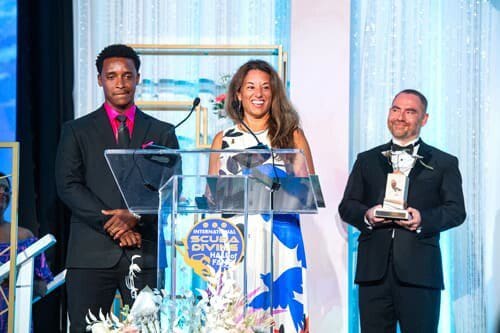
While in Grand Cayman with family and friends for my induction into the International Scuba Diving Hall of Fame, I felt nostalgic about all the years we ran Kids Sea Camp weeks at Cobalt Coast Resort and Dive Tech. I was compelled to visit and reminisce. While the resort was closed, the dive shop was open, and a young man named Kameron greeted me with a smile. I explained how I spent many years bringing families to that location. He listened politely and then mentioned that he, too, had spent time on the same dock with friends as a young boy. He recalled the groups of kids arriving every summer, although he and his friends often got shooed away when guests were around. I assured him that I would never have sent them away and that I usually brought extra masks, fins, and snorkels to local kids on the dock for them to keep.

Kameron and Margo meet again

Kameron continued to smile, and our conversation carried on from there. “I took in this moment, knowing that what I set out to do 25 years ago has had far-reaching effects beyond what I could have imagined. And, as it usually only happens in movies, Kameron was on the stage with me, as MC and Local Emerging Honoree, when I was inducted the very next night!” WOW!

What can stop Margo? Nothing.

With over 8,200 youth certifications during hundreds of Kids Sea Camp weeks over the years, there is no stopping Margo. Margo is an active member of the Women Divers’ Hall of Fame. She has received the PADI Lifetime Achievement Award and the DEMA Reaching Out Award, among others. What she values most is seeing those simple acts of kindness, smiling right back at her. One child at a time.

Traveling Internationally with kids is tricky

The Philippines, Travel tips, Kids Sea Camp

Traveling with kids’ information and documentation is needed.

Traveling internationally can be tricky. Each country has its own restrictions and mandates, so it’s essential to check the immigration website of the country you are traveling to. Your airline or the tourism board is also a great source of proper information. Check where you go this year at an International Kids Sea Camp event.

Adults traveling outside the U.S. with children age 18 or under other than their own must have a notarized “Consent to Travel” Letter from both of the minor’s parents or guardians in order to leave and return to the U.S.

A child departing the United States and traveling with only one parent, a guardian, grandparents, or other adults must have a written and notarized Permission to Travel Letter from both birth parents or legal guardians to enter many countries, even on a cruise ship’s shore excursions.

The Canadian Department of Foreign Affairs and International Trade reminds visitors, “Foreign officials and transportation companies are vigilant concerning documentation for children crossing international borders. Make sure you carry the proper identification for yourself and any children traveling with you, including any documents required by the authorities of the country you intend to visit and by U.S. and Canadian authorities on your return to the U.S. or  Canada with the child.”

Travel Documents Help Protect Kids

This requirement for an affidavit for children traveling outside their home country stems from the heightened awareness of children’s rights raised by the 1980 Hague Convention on the Civil Aspects of International Child Abduction. As of July 2011, this treaty, created to deter international child abductions, is in force between the United States and 82 other countries and territories, including Canada and Mexico.

Nevertheless, international child abduction stories are in the news all the time. To stop these tragic crimes and prevent the transport of runaways or children involved in child custody disputes, American carriers have been told to require unique documents, such as Permission to Travel Letters from adults departing the U.S. with minors.

Additionally, rising healthcare costs and legal issues have forced many medical providers to deny medical care to minors without proper Medical Authorization forms. Increasingly, written permission or affidavits from guardians who carry the minor’s insurance coverage, as well as proof of that medical insurance coverage, are required at emergency care facilities.

The same regulations apply to minors under 18 leaving the United States with school groups, teen tours, or just friends on a vacation. Sports teams and academic study programs require a similar Minor Consent to Travel form.

Read on for tips on making this paperwork less of a burden, or scroll to the bottom of this story to obtain sample forms.

Getting a U. S. Passport or Foreign Passport for a Minor

To enforce the Hague Convention provisions, the U.S. Department of State requires that every citizen, no matter the age, traveling internationally by air carry their passport and appear in person to apply for one. These very strictly enforced guidelines for obtaining a passport for a minor require the presence of both parents, with photo ID and proof of parentage, or one parent’s appearance accompanied by a notarized statement of consent from the second parent or legal guardian.

Exceptions are made if there’s documented evidence that a minor has only one guardian; for example, divorce papers, death certificates, adoption papers, or a lawyer’s letter would indicate that the presence of one legal guardian is sufficient. This complex issue is explained in more detail in the U.S. Passport Office.

Custody Issues

If child custody issues are a concern for you, the Children’s Passport Issuance Alert Program notifies parents of passport applications made on behalf of minor children and denies passport issuance if appropriate court orders are on file with the CPIAP. The Office of Children’s Issues will provide more information.

Citizens of other countries must check with their own country’s embassy, as passport issuance laws have become stricter worldwide. Michelle Higgins’s story in the New York Times Practical Traveler column should provide more information on this topic and tips for parents with children of dual nationality or different citizenships. If you’re planning your foreign vacation, start this process early. United States security and border regulations change frequently, and the increased number of passport applications means a backlog at the National Passport Center. Visas & Travel Documents for Minors

It can get complex

In an era of heightened global security, many foreign countries are revising their visa procedures as well. Contact the embassy of your destination country or study the Consular Information Sheets provided at http://travel.state.gov to find out what that country’s requirements will be in terms of documentation in order to bring a child into the country.”

US airlines have on most websites information that confirms that they enforce this during the check-in process with the posted rule: “If adult passengers do not have the proper documents, as defined by the U.S. Department of State guidelines, boarding is denied in order to comply with international regulations and the foreign immigration process.”

Some countries require a notarized original copy of the Permission to Travel Letter before even accepting a visa application for minors. Many countries also require that the authorization notes be in the country’s national language and notarized and authenticated by the country’s embassy or consulate. For information on the requirements for travel to a specific country by an American citizen, visit the US Department of State and navigate to the International Travel Information page. When in doubt about the information, it’s best to call the Visa Section of the embassy or consulate of your intended destination.

 What Permission To Travel or Consent to Travel Letters Do

A consular officer at the U.S. Office of Children’s Issues (888/407-4747) verified that many countries require a Permission to Travel letter with parents’ notarized signatures, plus identification for the child (certified birth certificate or passport), and that both are essential.

Consular Information Sheets issued by the U. S. Department of State (which does not make these regulations) often carry this warning: “In an effort to prevent international child abduction, many governments have initiated procedures at entry/exit points. These often include requiring documentary evidence of the relationship and permission for the child’s travel from the parent(s) or legal guardian if not present. Having such documentation on hand, even if not required, may facilitate entry/departure.”

U.S. Customs & Border Protection recommends that all travelers read the helpful booklet “Know Before You Go.”  Although minors under 16 may enter Canada from the U.S. by land or sea with only a photocopy of their U.S. birth certificate, the CBP notes that children under age 18 must carry notarized travel permission letters if they are traveling without their parents.

Children’s Travel Permission Letters Required for Cruises, Too

Such concerns apply not only to air and land travel but also to liveaboard cruise travel.

Obtaining a Free Permission to Travel Letter Form

We recommend that you download FTF’s sample “Permission To Travel” letter from the next page. Print it. Complete it. Have it notarized, and carry it with you on all future international travel. Is notarizing the document necessary, especially for Canadian families, who pay much higher notary fees than those in the U.S.  “It is strongly recommended that children traveling alone or with one parent carry a consent letter for every trip abroad. It is advisable to have the consent letter certified, stamped, or sealed by an official with the authority to administer an oath or solemn declaration so that the validity of the letter will not be questioned.” From the Canadian Consular Affairs Office.

Tip: Notarize several copies of the Permission to Travel Letter simultaneously if you are applying for foreign visas. Carry two copies with you on your vacation in case a border official.

When you cross a border by land, sea, or air, you will need proper identification documents for each traveler in addition to the above letters. Please see the Department of Homeland Security Website if you are unsure which ID documents you and your family need.

Travel Prepared to Avoid Confusion

For more information, contact your attorney or a professional travel agent. On vacation, travel prepared. It’s better to be safe than sorry. Get Blank Permission to Travel, Minors & Medical Authorization Forms

  • Thorough documentation is especially important in situations involving travelers or guardians with different last names or a minor. We also recommend that birth parents who have different surnames from their child carry a photocopy of the child’s birth certificate while traveling, providing legal evidence of “guardianship” in case of trouble.
  • Travel agents occasionally: the fine print in a brochure is supposed to notify families that airlines, cruise lines, and bus tours may require proper documentation—or deny boarding. The paperwork can —and often does —slip between the cracks.
  • Travel insurance, trip protection that we feel is essential (and many vacationers are reluctant to purchase), is a must to get!
  • Same-sex couples and adoptive, divorced, or widowed parents should carry certified custody or death certificates, adoption papers, or other proof of sole custody, as well as photo identification for themselves and the child.
  • Remember, having these essential documents for travel with minors could save your next vacation.

25 Years of Diving into Family Adventures

Kids and diving, kids sea camp, Family dive vacations

A 25-year celebration marks a significant milestone for me

Margo Peyton. My journey began 25 years ago as a single mom working as a dive travel agent. I yearned to share my love of the ocean with my two children. My passion was rooted in my childhood in Provincetown, MA., surrounded by the wonders of the sea—seals, whales, dolphins, sharks, turtles, and giant bluefin tuna. I grew up immersed in its rhythms. I wanted that same connection for my kids.

With a degree in travel and tourism, a lifelong love of the ocean, and a father who was a scuba diver, I embarked on a global adventure in the 1980s. I explored incredible marine environments, diving in spectacular locations. But when I became a mom, I discovered a void: there were no adventures designed for kids, no dive programs, and no family-friendly resorts. How could this be? My challenge was clear.

I set out to create what didn’t exist.

KSC in the news, Margo Peyton, Tom PeytonOne by one, I forged partnerships with family-owned and family-run resorts and liveaboards willing to cater to families: Curaçao’s ​-Ocean Encounters, Bonaire’s ​-Buddy Dive, ​Roatan with AKR, Mayan Divers, Turquoise Bay, Kimpton, Grand Cayman’s ​-DiveTech, Little Cayman​ & Cayman Brac’s ​-Reef Divers, ​Utila with Troy Bodden, St. Lucia’s ​-Anse Chastanet, Palau’s ​-Sam’s Tours, Yap’s, Manta Ray Bay, Galapagos with Explorer Ventures, Belize’s ​-Blackbird Caye, ​The Philippines with ​-Sea Explorers, Indonesia with Murex Dive Resorts, Wakatobi and The Arenui. ​St. Eustatius- Golden Rock, Fiji, Castaway Island, JMC, and many others in Costa Rica, the Maldives, St. Vincent, and Dominica. I sought safer choices, family-friendly crews, delicious food, comfortable rooms, and meticulous attention to detail.
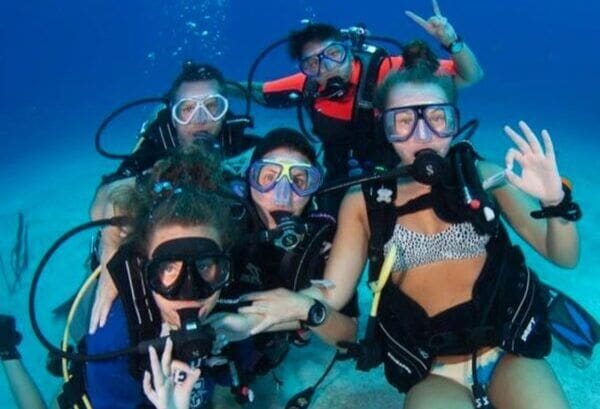
Scubapro stepped up to sponsor smaller dive gear, and Sealife sponsored underwater cameras. PADI created exceptional youth-friendly programs like SASY, SEAL Team, and Junior Diver certifications. Around the world, we grew, and like-minded families bonded, forming a thriving dive tribe. I created a legacy of unforgettable memories for my children, giving them a global perspective beyond their wildest dreams.

A living classroom

Kids Sea Camp has become a living classroom for families, often spanning three generations on any given trip. Where once there were parents like me, now grandparents join their adult children and grandchildren to share the magic of the underwater world. For 25 years, I’ve connected not only my kids to the world but families of the world.

My life has been miraculous for a little girl who grew up in a time when women rarely owned companies or traveled extensively with children, let alone negotiated international contracts and partnerships. I am grateful to all the resort owners, dive operators, equipment manufacturers, and publications that believed in and supported my vision for family growth within the dive industry.

When we work together, trust one another, and unite around shared dreams and goals, we can create something truly amazing. Kids Sea Camp is a testament to that collaborative spirit. It’s a story of shared passion, unwavering dedication, and the profound impact of diving in to connect families.

Building lasting connections

This journey has been about more than just underwater adventures; it’s about building lasting connections, fostering environmental stewardship, and empowering families to explore the world together. It’s about creating a community where shared experiences forge unbreakable bonds and where the love of the ocean unites us all.​  Because of Kids Sea Camp, my family has grown.  I met and married Tom Peyton almost 2 decades ago, and as a family, we have built bonds and lasting friendships with our operators, clients, and suppliers worldwide. Tom has contributed to expanding Kids Sea Camp trips by adding sporting events, culinary classes, and special-needs options. Now, he has developed empty-nest trips for all the parents and grandparents who have enjoyed traveling with us. I’ve expanded Family Dive Adventures to accommodate all the many individual family dive vacations to the many destinations we offer.

We are still growing

For our 25th celebration, we are looking forward to the future with excitement and anticipation. In 2026, we’ll reach another incredible milestone: the first-ever World Kids Sea Camp event in the Philippines! Participants from six countries will converge for a single, unforgettable experience, truly connecting the dots through diving.

This event represents the culmination of a dream, a celebration of the global dive family we’ve built together. It’s a testament to the power of shared passion and the enduring magic of Kids Sea Camp. Join us as we continue to dive into family adventures for generations to come! Here’s to the next 25 years of Kids Sea Camp!


Tips for Planning a Successful Family Dive Vacation:

Bonaire, Kids Sea Camp, Travel tips

Planning Your Dive Trip: Start Early!

Here are a few tips to help you plan a successful family dive vacation. The key to a smooth and stress-free dive trip? Early planning! 

  • More Research Time: Starting early gives you ample time to explore potential destinations, compare options, and find the perfect spot for your dream dive vacation.
  • Better Flight Options: Early birds get the best flight deals! You’ll have more choices and flexibility with dates, airlines, and routes. Use tools like Google Flights to research itineraries and track prices. Be sure to have your airport codes handy!
  • Accommodation Choice:  Planning ahead ensures you snag your preferred accommodations.
  • Gear Up: Don’t forget your dive gear! Starting early allows plenty of time to check your equipment, make any necessary repairs or replacements, and ensure everyone in your group has what they need.
  • Time Zone Awareness: Pay close attention to time zone changes between your departure and arrival cities.

Need Help with Flights?

We’ve got you covered! Margo Peyton has over 15 years of experience as an airline reservations agent. We also recommend Lennie, our trusted independent air consolidator with over 25years of experience.

Choosing the correct destination for your family dive vacation:

Beyond the Dive: Our destinations offer a wide range of options, from snorkeling and kayaking to land sailing, jungle biking, and even barista or cooking classes and world-class spa experiences! Choose one of our locations to keep everyone happy with exciting activities above and below the surface.

Consider Diver Skill Levels: Do you have a mix of beginners and experienced divers in your family? No problem! Destinations like Bonaire, the Cayman Islands, and Roatan offer easy diving that is suitable for all levels. For more seasoned divers, consider the Galapagos, St. Lucia, Belize, the Philippines, or one of our many live-aboard adventures.

Accessibility and Dietary Needs: We believe everyone should be able to experience the joy of diving. That’s why we offer more accessible destinations like Roatan, Fiji, Belize, and Little Cayman, catering to those with mobility challenges. We also understand the importance of dietary needs. 

Marine Life Encounters: Dreaming of swimming with whale sharks, encountering majestic manta rays, or witnessing the magic of coral spawning? Each destination has its own unique marine life and seasonal events. Let us know your preferences, and we’ll guide you to the perfect spot to fulfill your underwater wishes.

Protect Your Investment: Why Trip Insurance is a Must

Peace of Mind in Uncertain Times: Life is unpredictable. Unexpected events, such as illness, accidents, family emergencies, or even work and school commitments, can derail your travel plans. Trip insurance, especially with a “Cancel For Any Reason” (CFAR) option, provides financial protection and peace of mind, allowing you to book with confidence. CFAR insurance goes beyond typical travel policies, covering a wide range of unexpected situations, including:

  • COVID-related disruptions: Travel restrictions, positive tests, or mandatory quarantines.
  • Missed flights: Oversleeping, traffic delays, or other unforeseen circumstances.
  • Passport issues: Expired or forgotten passports.
  • And much more: Hundreds of covered reasons to cancel your trip, giving you ultimate flexibility.

A Small Price for Big Protection: For a few hundred dollars per person, you can safeguard your investment and avoid potentially losing thousands on non-refundable flights, accommodations, and dive packages. Consider it an essential part of your vacation budget.

Book Early, Insure Early: The sooner you book your trip, the sooner you should secure your trip insurance. CFAR policies can even cover trips booked up to 3 years in advance, providing long-term protection and flexibility.

Planning a family dive trip?

Here are some tips to ensure a smooth, enjoyable, and unforgettable experience:

  • Embrace Flexibility: Remember to be kind, patient, and respectful to travel professionals and dive operators. Go with the flow, embrace the unexpected, and remember that flexibility is key to a successful trip.
  • Do Your Homework: Research your destination thoroughly. 

Other Important Tips

  • Dive training and services: Ensure the destination offers appropriate training and services for your family’s skill levels.
  • Client comments: Learn from the experiences of other families who have traveled with us.
  • Photo Gallery: Get inspired and excited about your upcoming adventure!
  • Protect Yourself with Insurance: Don’t overlook the importance of travel and DAN (Diver Alert Network). Dive accident insurance.
  • Pack Smart: Keep your luggage light and manageable. Consider investing in travel-friendly dive gear, like the SCUBAPRO Lighthawk or Rebel BCDs, designed for compact travel. Kids Sea Camp is a SCUBAPRO dealer and #1 with outfitting families and kids with dive gear, computers, and many other items that make your dive vacation easy and comfortable. 

Be Prepared

  • Be Prepared: Pack a day’s worth of essentials in your carry-on to handle potential baggage delays. Keep travel documents in a separate bag for added security. Make sure to have your certification cards, medications, a day’s worth of clothes, and a swimsuit
  • Consider your family members’ ages and abilities. Not all dive sites are appropriate for all ages and abilities. Be sure to choose a destination suitable for everyone in your group. Give us a call and talk to any of our dive instructor team. 
  • Make sure everyone has the proper training and certification. Talk to your experienced dive travel professional about your choices. Our team is all PADI Pros! Tom Peyton is a Divemaster; Margo, Kiley, and Rob are all PADI instructors and seasoned travelers, and are current and up to date in their teaching status. Kids aged 5-7 can do our SASY program, and 8- 9 can participate in Seal Team. Kids as young as ten can become PADI-certified divers. 
  • Be aware of the risks involved in diving. Be sure to educate yourself about your kid’s depth limits and restrictions. Talk to your family doctor about any conditions or concerns, as well as any medications you are taking. 
  • Call Kids Sea Camp and Family Dive Adventures today to plan your next great family adventure vacation. We are #1 in the dive industry regarding kids, diving, and family dive vacations. 803-419-2556


Bound not just by blood but shared passions

Kids Sea Camp, PADI JOW, OW, Diving with kids

The joy of becoming a scuba diver and a family of scuba divers.

Not long ago (2015, to be exact), my sister, Reagan, asked me if I wanted to go scuba diving in Fiji with her and my nieces, Lauren and Lucy.

“Of course, I immediately said it’s Fiji; who wouldn’t want to do that”?

Little did I know how that trip would change my life and my views on traveling, the world, different cultures, and the beautiful people that I would meet along the way.

Kids Scuba, Family Scuba Diving Adventures, Kids Sea Camp, Margo PeytonWe arrived in Fiji, not knowing anyone else. We realized quickly that we had no clue what we had gotten ourselves into. From the moment we arrived, we were surrounded by the Kid Sea Camp Company (KSC) and a group of like-minded people who shared not just a common interest in travel and an undeniable passion for scuba diving, but also for diving with their kids. It felt as though I had stepped into a vibrant tapestry of kind, friendly, welcoming, creative, and inspiring people. Each person we met fostered a camaraderie I didn’t know we could share.
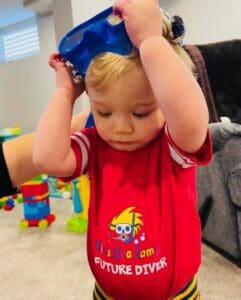
By the end of the trip, what surprised me most was how quickly I formed deep connections with the Kids Sea Camp staff and families. We talked about the next KSC trip and making sure the kids would meet regularly. The discussions were not just about pursuing our passion for diving, but nurturing the friendships we had begun to cultivate on the first trip. It was as if we had just created a new family.  But really, this new family was the KSC family. A family one bound not by blood but by shared passions.

Ten years later

Ten years later, and ten years of the world’s best family dive trips all over the world, and what I remember the most are the friends that have become family, the kids that I watched grow into beautiful, kind, caring, and generous humans, and the company that made it all possible. Diving has brought me joy. (See gallery)

You see, Kids Sea Camp is about diving, connections (karaoke, volleyball, basketball, food, volunteering, laughing, crying), cultures, and education. These kids (and adults) have emerged into cultures, people, the ocean, marine life, and different communities. It’s an education that evolves beyond the classroom, where the classroom is the ocean, the reefs, the animals, and the respect for something so powerful yet peaceful. I remember every dive and learning about the marine life, but honestly, more important to me is that I remember the before, in-between, and after every dive, when we were laughing together over shared challenges, celebrating different achievements, and even brainstorming ways to get together again. “Family” is what Kids Sea Camp has created outside our “immediate” family. I look forward to our future gatherings, knowing I have a supportive network of people who inspire and challenge me to grow.

It’s incredible how a simple passion can lead to such meaningful relationships.

As an early Kids Sea Camper, “I didn’t have my own children,” and my wife did not dive. I was learning to dive on trips with my sister and nieces, and I loved that I quickly became “Aunt Jen” to

Kids Sea Camp, Sasy, Seal, Diving with kids

most of the kids. I have genuinely enjoyed watching each of them grow and still have connections with each of them. Now that my wife and I have our child (he just turned 3), we talk all the time about the excitement of sharing our dive passion with him. It’s like holding a treasure chest, filled with all the joy and fulfillment diving has brought you, and wanting nothing more than to see your little one dive in and discover the same magic you just spent watching other kids enjoy over the last 10 years.

He is already talking about seeing sharks one day and having his cousins Lauren and Lucy, Uncle Brian, and Aunt Reagan take him underwater. I can’t help but think about these moments. The excitement that I have shared with all the other kids will now be shared with my child. To be able to take him on the Kids Sea Camp journey. A journey that is more than diving. One where he will someday be my dive buddy. One that is nurturing his curiosity. One with a company where I know he will be taught what is important, to respect the ocean and others, and taught by the safest and most respected company in the industry, working with children. It’s like he will be getting an additional education through experiences with different cultures, races, and values, which is one of the most important gifts we can give him.

Kids Sea Camp cares for and serves all types of families

I will close with this. Kids Sea Camp “gives families a week they will remember forever.It is a business that cares for and serves all types of families. This is one of the reasons my family, my wife, and our son will continue to be part of their family. The joy of diving starts and ends with Kids Sea Camp.

By Jennifer Yee


“From singing to Lip Dubs a family I never expected to be a part of”.

Kids Sea Camp, kids and diving, empty nesters, family and diving.

Our Family Under The Sea

I first fell in love with the undersea world when I was seven. OK, I am fudging that a little bit because I can’t remember exactly how young I was, only that I was very young and that it was in that kindergarten- or elementary-school-age window that I saw, on television, my first-ever Jacques Cousteau Undersea Special. I was immediately hooked on the idea of becoming a diver. From that moment on, I knew that somehow, someway, I would get certified to dive and that it would become a big part of my life.

Kids Scuba, Family Scuba Diving Adventures, Kids Sea Camp, Margo PeytonFast forward to 1994, when I finished medical school and, for the first time in my life, had a real income. I finally took the first step toward that long-held dream and became a certified open-water diver. A few years later, I got my girlfriend, Saundra, hooked on the sport. We became lifelong buddies when I proposed underwater during a dive trip in Guanaja, Honduras (we even had goldfish bowls as centerpieces instead of flowers at our wedding!). 

Married to the sea

Saundra and I dove worldwide whenever we could, and like many other couples, the undersea world became one of the most important things we did together.

In 2005, our diving careers had to pause with the arrival of our firstborn child, Sam. Then, in 2009, twins Adam and Lauren showed up, and we became a family of five. We still managed to dive every once in a while, but nowhere near as often as we had or as we wished, and we had to leave the kids at home.

Sasy and Seals

When Sam was 8, we learned about an SCUBA program for children offered by our local dive shop, and I don’t think you could have contained my excitement when I learned that kids could get certified at age 10! We immediately signed her up, and she took to it with more exuberance than I could have hoped. We later learned from Margo Peyton that Kids Sea Camp and many dive shops also offer the SASY snorkel program for kids ages 4-7 and the PADI Seal Team for kids ages 8 & 9.

However, Kids Sea Camp is one of the few in the world to take those kids to the ocean. Most dive shops offer those programs daily and in a pool. Margo has made an entire week of fun out of them for youngsters, so moms and dads can go diving while younger kids are having a blast in the undersea world.

Needless to say, as soon as Sam was 10, we got her certified, but like so many others, we quickly found that diving with kids is not as easy as getting them certified. Few operators were willing to accept the liability of diving with children, and those who did often lacked the experience or skills to make parents feel completely comfortable.

Finding Margo

And so it was in 2018 that, like so many others who came before us, Saundra and I found ourselves one evening entering that fateful combination of words into the Google search bar: ‘diving with children’. Of course, we landed immediately on the one and only Margo Peyton, and our lives were forever changed for the better.

Kids Sea Camp immediately appealed to us, but with our kids attending a private school whose holiday calendar seemed to be offset by every other school system in the country, none of the dates aligned well with our availability. Margo was undeterred. She set us up for a week at Buddy Dive in Bonaire, a location Saundra and I knew well. And so, in April of 2018, we found ourselves on our first-ever Family Dive Adventure. Sam dove with us and our private guide, arranged by Margo, while the twins took their first Seal course and took to the sport as enthusiastically as their big sister had.

More than friends

The next year, we found a KSC week that worked with our school schedule, so we jumped at the chance to attend a Cayman Islands Kids Sea Camp. There, we met three people who have become some of our closest friends: Tom, Margo, and Olivia. (See gallery)

Over the years, we have been on seven more KSC trips to the Galapagos, Cayman Islands, Bonaire, St. Lucia, Roatan, the Philippines, and the Turks & Caicos. All have been extraordinary. Over that time, our children have become exceptional divers. When we took them to the Galapagos, the dive boat staff commented privately to me on how impressed they were with Adam and Lauren, two fourteen-year-olds of small stature who could dive as well as any adult in challenging conditions. I replied that it is entirely attributable to the incredible program that Margo and Tom have developed. Without the two of them guiding and hosting us, I would never have felt comfortable letting my children dive on a liveaboard or anywhere else!

Scuba training, Kids and scuba, Kids Sea camp, Kids Sea CampThe struggle of 2020

Of course, it hasn’t all been smooth sailing with beautiful sunsets, and the year 2020 brought not only the COVID-19 pandemic. But 2020 also brought us a diagnosis of Hodgkin’s Lymphoma for Lauren at the worst possible time. The love and friendship of Margo, Tom, and Olivia during those difficult months meant the world to us and is a shining example of how they view their relationships with their customers as more than just business interactions but as real investments in people and long-lasting connections. 

What makes it so personal? Tom’s KSC karaoke, singing with Sam, and encouraging her and me to share our voices with the world. Then, the entire KSC team helped me create a surprise Lip Dub in St. Lucia for my wife on our anniversary. What a fantastic memory they left us with. We have made many new friends and enjoy reconnecting with them and meeting others on each trip. Kids Sea Camp and the undersea world have become a part of a family that was never expected. 

Empty Nesters, here we come

 We continue to travel with Kids Sea Camp as a family, Sandra and I. We also enjoyed an Empty Nester trip to Indonesia with Margo and Tom, a photo-intensive journey we both enjoyed. I’ve been exploring underwater photography, and that trip to Lembeh gave me a glimpse of our future. It will be a little while before we are empty nesters, but when we are, Margo and Tom have given us a glimpse into what it could look like. We have already booked a 2029 “Why Not” trip aboard the Arenui with them. (See Calendar)

Kids Sea Camp is very much like an extended family. “Give them a week, and they will remember forever.” Give yourself an experience you will cherish, and open your family to limitless possibilities in the undersea world.

By Jeff Sankoff

Margo Peyton’s Journey to becoming a diving pioneer

Kids Sea Camp, diving with Kids, diving with family, Margo Peyton

Her father started it all

Margo Peyton grew up in Cape Cod, Massachusetts, a coastal haven with one of the most diverse marine environments in the US. Her father, Eddie Salvador, was a diver from the 1950s who poured his own lead weights and used an old Deco regulator with a J-valve and a homemade horse-collar BCD—back when gauges weren’t commonplace. Margo recalls her dad telling her that when breathing became labored, it was time to pull the wire on the J-valve and ascend to the surface using the 300 psi reserve in his tank. “What about your safety stop, Dad?” she’d ask. “There was no knowledge of that sort of thing back then,” he’d reply.

Kids Sea Camp is celebrating its 25th anniversary of providing unique, off-the-beaten-path diving experiences for families worldwide. This year marks a truly unforgettable milestone: Margo Peyton, the heart and soul of Kids Sea Camp, was inducted into the International Scuba Divers Hall of Fame on September 28, 2024. This prestigious honor recognizes Margo’s 36 years of diving, traveling, and advocating for our underwater world.

He tried to deter her passion for diving, fearing the many things that could go wrong in the 1980s when she began. Nevertheless, he bought her a Deco regulator with a J-valve in 1988, along with an SPG and octopus, which were becoming popular at the time. Margo loved the ocean and learning about marine animals. She spent every summer as a child on the boat with her dad and brother, who hunted for giant bluefin tuna and fished for bluefish, bass, and cod. Encountering massive pods of bluefin tuna, dolphins, orcas, and humpback whales was the norm for Margo.

She learned to love and respect the sea, becoming familiar with basking sharks, great whites, mako sharks, and blue sharks, among others. Her dad instilled in her an adventurous spirit, while her mom nurtured her compassionate heart for saving and protecting animals. Margo worked at the Provincetown Sea Aquarium, where she cared for rescued sea lions, loggerhead turtles, and even a pair of orphaned coyote pups. The aquarium became a second home, and it was there that Margo’s passion for animal rescue blossomed. Over the years, this has included seagulls, kittens, puppies, snakes, pigeons, horses, whales, crabs, rays, octopuses, turtles, and countless others.

Sink or swim

When Margo was just a young child, her father threw her overboard into a school of wild dolphins to teach her how to swim. His philosophy was “sink or swim.” Margo has been a pioneer in the dive industry, encouraging everyone to embrace the family market. Her efforts have resulted in over 8,000 children becoming certified divers without a single diving accident. Her tenacity, courage, strength, and passion for her own kids and the ocean have always been her driving force.

Margo’s dedication to safety alone would merit her prestigious awards. However, her true impact lies in the countless individuals who started as junior divers and have become PADI professionals. Margo’s passion for the “living classroom” she created has resonated with like-minded families around the globe. Her love for diving has shown thousands of couples that having children doesn’t have to mean the end of their diving days. In fact, it’s just the beginning of creating amazing family memories.

Margo’s mission

The concept of bringing together like-minded families who love the ocean, adventure, and travel was unprecedented in the dive industry. Margo had to prove to dive operators in a male-dominated industry that kids had value and that educating and training them was essential. She had to convince major equipment manufacturers that making kids’ dive gear—tiny tanks and wetsuits—was not only financially beneficial but also crucial for the future of diving. She saw a need and was on a mission to fulfill it.

I have personally witnessed Margo’s hard work throughout her 35-year career, whether in the office, at a trade show, or on the island. Margo takes on multiple roles during a typical week at Kids Sea Camp: underwater photographer, artist, MC, mediator, mentor, activities director, hotel consultant, dive team organizer, advisor, events planner, celebration coordinator, presenter, and even shuttle bus driver. As a PADI professional, she often oversees kids and adults in the water.

Daily check-ins

During lunch, Margo takes the time to follow up on daily events, such as cupcake decorating, go-karting, Seal Team demonstration dives, graduation dives, birthday cakes, poetry contests, and treasure-hunt prizes. Her favorite time is spent with the kids, discussing their day, their dreams, and their diving adventures, making sure they are having fun. Margo Peyton spends most of her days in the ocean, photographing the Seal Team or SASY program. In the evenings, she ensures everyone is happy with their day in the ocean and at the beach. During dinner, she loves to walk around and listen to families sharing stories about their day.

For Margo, one indicator of a job well done is the absence of cell phones at the dinner table, with unplugged kids happily chatting and adults enjoying each other’s company. She ends each day dedicating herself to sorting through the day’s images until nearly midnight. The images ensure that all families have a visual record of the incredible day’s events. Treasure hunts, horseback riding, sunset sailing—it’s all captured for the end-of-week slideshow.

Margo’s passion

Margo’s passion, courage, and determination to establish a kid- and family-friendly dive company in a male-dominated industry are remarkable. She didn’t achieve this alone; numerous courageous and visionary women. As well as the wise men, who also played crucial roles in bringing the company to life 25 years ago. Their contributions are integral to Margo’s journey. The support has been instrumental in her success. This is a celebration of their collective efforts and the progress they have made in the industry.

Today, Kids Sea Camp is a beacon of excellence in dive safety, old-fashioned family fun, and personalized service. Margo’s moment is a tribute to all the vendors and families who believed in her vision. The beauty of her moment continues to be built upon all the moments that families have shared with Margo.

By Tom Peyton, husband and KSC Vice President

A rare experience for children to witness

Baby Turtle Hatch, Kids Sea Camp, st. lucia, kids and diving

​”A magical gift of a baby turtle hatching at Anse Chastanet during Kids Sea Camp”

​It is the first night of Kids Sea Camp under the stars of St Lucia. ​Mother Nature is giving us a magical ​welcome that night. ​It is thrilling to lead the kids through this ​rare and unique adventure. We pack the days with learning ​about the ocean and ​a list of fun Anse Chastanet activities. However, Mother Nature planned her learning and fun activity for this particular Kids Sea Camp trip, for all the kids who would become future ambassadors and protectors of her underwater world. 

​Margo and Tom, the owners of Kids Sea Camp, their photo pro, Brad, and Instructor Woody, brought their moms along on this memorable trip and sat down after introductions. I introduced the chef and GM, myself, and my dive team, and started the Q&A. Guests were excited about tomorrow’s diving and having fun with newfound friends. At Anse Chastanet, our dining is on the beach in the beautiful beach restaurant on the water’s edge. It’s lit with glimmering lanterns and shimmering light patterns along the shoreline. I heard a little girl exclaim she had found a baby turtle. I knew the nest we would be watching is close to ready, but tonight is the night, in the bright moonlight, with all the children present.

A magical night

I gathered ​all the kids and parents and spoke ​to ​them about what they would witness. “Welcome to what promises to be a ​​magical ​night of wonder ​for everyone! Tonight, a Kids Sea Camp miracle is taking place. ​We will be able to watch the baby turtles emerge from the sand and make their way to the ocean. It’s an incredible journey; it is thrilling to share it with you.”

The kids and their parents were on the edge of their seats. “What’s the most exciting part?” asked Noah.

“The most exciting part,” I replied, “is seeing how these tiny hatchlings find their way to the ocean. They face many challenges, but their determination is truly inspiring. We’ll learn about their journey tonight and see it unfold before our eyes.”

As dusk ​was not yet night, ​we ​stood ​around the nesting area, where gentle red lights lit the beach to avoid disturbing the baby turtle hatchlings. We​ waited, hoping the turtles would wait for the darkness to protect them. I explained to the kids, “Sea turtles usually hatch at night. The little ones emerged from their nests and headed toward the water, guided by the moon’s natural light.” The moon lit the beach, and there was a lot of artificial light. With her notebook ready, Ella asked, “How do the turtles know where to go?”

“Great question,” I said, “They are guided by the reflection of the moonlight on the water. The natural light helps them find their way to the ocean, away from predators and toward safety.”

We settled in, eyes scanning the sand for ​more signs of movement. The beach was quiet except for the rhythmic sound of the waves and the occasional call of a nightbird.

Baby turtles on the beach

The kids were holding their breath as tiny heads poked through the sand. It was a nest of baby ​leatherback sea turtles beginning their incredible journey. I saw the excitement on their faces and whispered, “Look, there they are!”

The hatchlings, no bigger than a child’s hand, began to wriggle and make their way across the sand. Their tiny flippers flapped and moved in unison as they instinctively followed the moonlight reflecting on the water. Ava clapped her hands softly, “They’re so tiny and determined!”

​Parents had cameras ready, capturing every moment of the baby turtle hatch. Watching ​the ​children, who had been making jokes earlier, were now wholly absorbed in the scene. “This is amazing,” ​one little boy said, his voice filled with awe.

They faced a few challenges as the ​98 hatchlings approached the ​water’s edge. ​​Gulls swooped down, and the ​children gasped. I reassured them, “Don’t worry. Despite the challenges, Nature has its way, and many of these hatchlings will make it to the water.”​ It was incredible how the birds knew what would happen in the next few moments. Their calls got louder as if they were ringing a bell.

Turtle facts

The hatchlings continued ​to push up through the sand as they began their journey, some moving faster than others. I noticed a little girl watching one particular hatchling green turtle, and Hawksbill turtles lay in June and hatch to pick it up. “Can we help it?” she asked, her concern evident.​ Leatherback turtles are endangered; generally, only one in a thousand will reach adulthood. 10-15% are eaten by crabs, birds, and reptiles on the beach, and only 25% survive their first few days in the ocean. Witnessing a baby leatherback turtle hatchling is an extremely rare moment. As adults, they can weigh up to 2,000 lb and 6.5′. In St. Lucia, as in most of the Caribbean, green turtles and Hawksbills lay in June and hatch in July & August. 

​The leatherback population has decreased worldwide by 40%. They are known to return to Grand Anse Beach in St. Lucia. But due to sand mining and poaching, they have migrated to other parts of the island, and this year. Anse Chastanet House Beach is the destination.

As ​each tiny turtle ​rose from the sand, we quickly collected them and put them in safety tubs to be released in a safer, turtle-friendly area, where they could not be poached or eaten and had a better chance of survival. 

I smiled at the kids, proud of their empathy and understanding. “You’ve all witnessed an extraordinary moment​ and participated in protecting future generations of leatherbacks. These hatchlings ​​will safely take their first ​swim into the ocean​ over the next few evenings. ​This part is just the beginning for them, and it’s a lesson to us on the importance of protecting their environment.”

Talking about turtle conservation

​During the next two days, turtle conservation was our topic. Releasing the baby turtles safely into the ocean. As each of the 98 hatchlings disappeared into the blue, we gathered to reflect on our unforgettable experience.

In closing, I shared my thoughts. “Those baby turtles have shown us the power of determination and the importance of protecting them and their habitat.”

The kids shared their thoughts and feelings, too. They each named a little turtle and wished it an easy journey and a safe return someday. ​​Sarah, still excited, said, “I can’t believe we saw them hatch and go to the sea. I want to help sea turtles and ensure they ​all have a safe place to live.”

​The other children nodded in agreement.​ At this Kids Sea Camp, as they do each year in St. Lucia, kids learn ​firsthand about ​turtle challenges, pollution, plastic, sand mining, and habitat destruction.

A​bby, usually full of jokes, was reflective. “It was amazing to see how ​hard they work just to rise out of the sand. It makes me want to do more to help ​save their habitat.”

New ocean protectors

​I listened to their comments with a smile. “I’m proud of each of you. This experience shows how important it is to care for our ocean environment. You’ve all taken a big step as future ocean protectors.”

The beach cleanup ensured that the beach is pristine and ready for next year’s hatchlings to be buried. ​Who knew the artificial lights made a difference? And how important the stars shining brightly above​ are to turtles? Anse Chastanet has always championed conservation in St. Lucia. They manage one of the first marine sanctuaries in St. Lucia.

New voices for the ocean

Tom and Margo say, “Kids Sea Camp creates memories to last a lifetime.” I do feel honored to work with such a wonderful group of kids and their parents. ​I hope that those experiences will create voices and protectors for the future, and maybe a few more baby turtles will hatch. (See calendar events)

Gigi Merlusca, PADI Staff Instructor and former manager of Scuba St. Lucia at Anse Chastanet