Margo Peyton’s Journey to becoming a diving pioneer

Kids Sea Camp, diving with Kids, diving with family, Margo Peyton

Her father started it all

Margo Peyton grew up in Cape Cod, Massachusetts, a coastal haven with one of the most diverse marine environments in the US. Her father, Eddie Salvador, was a diver from the 1950s who poured his own lead weights and used an old Deco regulator with a J-valve and a homemade horse-collar BCD—back when gauges weren’t commonplace. Margo recalls her dad telling her that when breathing became labored, it was time to pull the wire on the J-valve and ascend to the surface using the 300 psi reserve in his tank. “What about your safety stop, Dad?” she’d ask. “There was no knowledge of that sort of thing back then,” he’d reply.

Kids Sea Camp is celebrating its 25th anniversary of providing unique, off-the-beaten-path diving experiences for families worldwide. This year marks a truly unforgettable milestone: Margo Peyton, the heart and soul of Kids Sea Camp, was inducted into the International Scuba Divers Hall of Fame on September 28, 2024. This prestigious honor recognizes Margo’s 36 years of diving, traveling, and advocating for our underwater world.
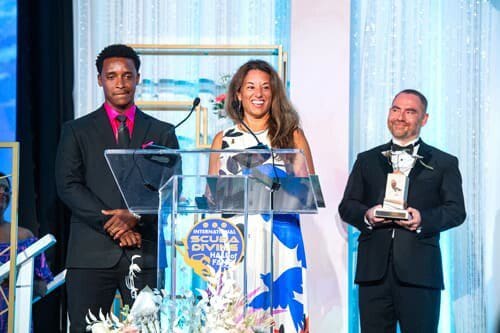
He tried to deter her passion for diving, fearing the many things that could go wrong in the 1980s when she began. Nevertheless, he bought her a Deco regulator with a J-valve in 1988, along with an SPG and octopus, which were becoming popular at the time. Margo loved the ocean and learning about marine animals. She spent every summer as a child on the boat with her dad and brother, who hunted for giant bluefin tuna and fished for bluefish, bass, and cod. Encountering massive pods of bluefin tuna, dolphins, orcas, and humpback whales was the norm for Margo.

She learned to love and respect the sea, becoming familiar with basking sharks, great whites, mako sharks, and blue sharks, among others. Her dad instilled in her an adventurous spirit, while her mom nurtured her compassionate heart for saving and protecting animals. Margo worked at the Provincetown Sea Aquarium, where she cared for rescued sea lions, loggerhead turtles, and even a pair of orphaned coyote pups. The aquarium became a second home, and it was there that Margo’s passion for animal rescue blossomed. Over the years, this has included seagulls, kittens, puppies, snakes, pigeons, horses, whales, crabs, rays, octopuses, turtles, and countless others.

Sink or swim

When Margo was just a young child, her father threw her overboard into a school of wild dolphins to teach her how to swim. His philosophy was “sink or swim.” Margo has been a pioneer in the dive industry, encouraging everyone to embrace the family market. Her efforts have resulted in over 8,000 children becoming certified divers without a single diving accident. Her tenacity, courage, strength, and passion for her own kids and the ocean have always been her driving force.

Margo’s dedication to safety alone would merit her prestigious awards. However, her true impact lies in the countless individuals who started as junior divers and have become PADI professionals. Margo’s passion for the “living classroom” she created has resonated with like-minded families around the globe. Her love for diving has shown thousands of couples that having children doesn’t have to mean the end of their diving days. In fact, it’s just the beginning of creating amazing family memories.

Margo’s mission

The concept of bringing together like-minded families who love the ocean, adventure, and travel was unprecedented in the dive industry. Margo had to prove to dive operators in a male-dominated industry that kids had value and that educating and training them was essential. She had to convince major equipment manufacturers that making kids’ dive gear—tiny tanks and wetsuits—was not only financially beneficial but also crucial for the future of diving. She saw a need and was on a mission to fulfill it.

I have personally witnessed Margo’s hard work throughout her 35-year career, whether in the office, at a trade show, or on the island. Margo takes on multiple roles during a typical week at Kids Sea Camp: underwater photographer, artist, MC, mediator, mentor, activities director, hotel consultant, dive team organizer, advisor, events planner, celebration coordinator, presenter, and even shuttle bus driver. As a PADI professional, she often oversees kids and adults in the water.

Daily check-ins

During lunch, Margo takes the time to follow up on daily events, such as cupcake decorating, go-karting, Seal Team demonstration dives, graduation dives, birthday cakes, poetry contests, and treasure-hunt prizes. Her favorite time is spent with the kids, discussing their day, their dreams, and their diving adventures, making sure they are having fun. Margo Peyton spends most of her days in the ocean, photographing the Seal Team or SASY program. In the evenings, she ensures everyone is happy with their day in the ocean and at the beach. During dinner, she loves to walk around and listen to families sharing stories about their day.

For Margo, one indicator of a job well done is the absence of cell phones at the dinner table, with unplugged kids happily chatting and adults enjoying each other’s company. She ends each day dedicating herself to sorting through the day’s images until nearly midnight. The images ensure that all families have a visual record of the incredible day’s events. Treasure hunts, horseback riding, sunset sailing—it’s all captured for the end-of-week slideshow.

Margo’s passion

Margo’s passion, courage, and determination to establish a kid- and family-friendly dive company in a male-dominated industry are remarkable. She didn’t achieve this alone; numerous courageous and visionary women. As well as the wise men, who also played crucial roles in bringing the company to life 25 years ago. Their contributions are integral to Margo’s journey. The support has been instrumental in her success. This is a celebration of their collective efforts and the progress they have made in the industry.

Today, Kids Sea Camp is a beacon of excellence in dive safety, old-fashioned family fun, and personalized service. Margo’s moment is a tribute to all the vendors and families who believed in her vision. The beauty of her moment continues to be built upon all the moments that families have shared with Margo.

By Tom Peyton, husband and KSC Vice President

A rare experience for children to witness

Baby Turtle Hatch, Kids Sea Camp, st. lucia, kids and diving

​”A magical gift of a baby turtle hatching at Anse Chastanet during Kids Sea Camp”

​It is the first night of Kids Sea Camp under the stars of St Lucia. ​Mother Nature is giving us a magical ​welcome that night. ​It is thrilling to lead the kids through this ​rare and unique adventure. We pack the days with learning ​about the ocean and ​a list of fun Anse Chastanet activities. However, Mother Nature planned her learning and fun activity for this particular Kids Sea Camp trip, for all the kids who would become future ambassadors and protectors of her underwater world. 

​Margo and Tom, the owners of Kids Sea Camp, their photo pro, Brad, and Instructor Woody, brought their moms along on this memorable trip and sat down after introductions. I introduced the chef and GM, myself, and my dive team, and started the Q&A. Guests were excited about tomorrow’s diving and having fun with newfound friends. At Anse Chastanet, our dining is on the beach in the beautiful beach restaurant on the water’s edge. It’s lit with glimmering lanterns and shimmering light patterns along the shoreline. I heard a little girl exclaim she had found a baby turtle. I knew the nest we would be watching is close to ready, but tonight is the night, in the bright moonlight, with all the children present.

A magical night

I gathered ​all the kids and parents and spoke ​to ​them about what they would witness. “Welcome to what promises to be a ​​magical ​night of wonder ​for everyone! Tonight, a Kids Sea Camp miracle is taking place. ​We will be able to watch the baby turtles emerge from the sand and make their way to the ocean. It’s an incredible journey; it is thrilling to share it with you.”

The kids and their parents were on the edge of their seats. “What’s the most exciting part?” asked Noah.

“The most exciting part,” I replied, “is seeing how these tiny hatchlings find their way to the ocean. They face many challenges, but their determination is truly inspiring. We’ll learn about their journey tonight and see it unfold before our eyes.”

As dusk ​was not yet night, ​we ​stood ​around the nesting area, where gentle red lights lit the beach to avoid disturbing the baby turtle hatchlings. We​ waited, hoping the turtles would wait for the darkness to protect them. I explained to the kids, “Sea turtles usually hatch at night. The little ones emerged from their nests and headed toward the water, guided by the moon’s natural light.” The moon lit the beach, and there was a lot of artificial light. With her notebook ready, Ella asked, “How do the turtles know where to go?”

“Great question,” I said, “They are guided by the reflection of the moonlight on the water. The natural light helps them find their way to the ocean, away from predators and toward safety.”

We settled in, eyes scanning the sand for ​more signs of movement. The beach was quiet except for the rhythmic sound of the waves and the occasional call of a nightbird.

Baby turtles on the beach

The kids were holding their breath as tiny heads poked through the sand. It was a nest of baby ​leatherback sea turtles beginning their incredible journey. I saw the excitement on their faces and whispered, “Look, there they are!”

The hatchlings, no bigger than a child’s hand, began to wriggle and make their way across the sand. Their tiny flippers flapped and moved in unison as they instinctively followed the moonlight reflecting on the water. Ava clapped her hands softly, “They’re so tiny and determined!”

​Parents had cameras ready, capturing every moment of the baby turtle hatch. Watching ​the ​children, who had been making jokes earlier, were now wholly absorbed in the scene. “This is amazing,” ​one little boy said, his voice filled with awe.

They faced a few challenges as the ​98 hatchlings approached the ​water’s edge. ​​Gulls swooped down, and the ​children gasped. I reassured them, “Don’t worry. Despite the challenges, Nature has its way, and many of these hatchlings will make it to the water.”​ It was incredible how the birds knew what would happen in the next few moments. Their calls got louder as if they were ringing a bell.

Turtle facts

The hatchlings continued ​to push up through the sand as they began their journey, some moving faster than others. I noticed a little girl watching one particular hatchling green turtle, and Hawksbill turtles lay in June and hatch to pick it up. “Can we help it?” she asked, her concern evident.​ Leatherback turtles are endangered; generally, only one in a thousand will reach adulthood. 10-15% are eaten by crabs, birds, and reptiles on the beach, and only 25% survive their first few days in the ocean. Witnessing a baby leatherback turtle hatchling is an extremely rare moment. As adults, they can weigh up to 2,000 lb and 6.5′. In St. Lucia, as in most of the Caribbean, green turtles and Hawksbills lay in June and hatch in July & August. 

​The leatherback population has decreased worldwide by 40%. They are known to return to Grand Anse Beach in St. Lucia. But due to sand mining and poaching, they have migrated to other parts of the island, and this year. Anse Chastanet House Beach is the destination.

As ​each tiny turtle ​rose from the sand, we quickly collected them and put them in safety tubs to be released in a safer, turtle-friendly area, where they could not be poached or eaten and had a better chance of survival. 

I smiled at the kids, proud of their empathy and understanding. “You’ve all witnessed an extraordinary moment​ and participated in protecting future generations of leatherbacks. These hatchlings ​​will safely take their first ​swim into the ocean​ over the next few evenings. ​This part is just the beginning for them, and it’s a lesson to us on the importance of protecting their environment.”

Talking about turtle conservation

​During the next two days, turtle conservation was our topic. Releasing the baby turtles safely into the ocean. As each of the 98 hatchlings disappeared into the blue, we gathered to reflect on our unforgettable experience.

In closing, I shared my thoughts. “Those baby turtles have shown us the power of determination and the importance of protecting them and their habitat.”

The kids shared their thoughts and feelings, too. They each named a little turtle and wished it an easy journey and a safe return someday. ​​Sarah, still excited, said, “I can’t believe we saw them hatch and go to the sea. I want to help sea turtles and ensure they ​all have a safe place to live.”

​The other children nodded in agreement.​ At this Kids Sea Camp, as they do each year in St. Lucia, kids learn ​firsthand about ​turtle challenges, pollution, plastic, sand mining, and habitat destruction.

A​bby, usually full of jokes, was reflective. “It was amazing to see how ​hard they work just to rise out of the sand. It makes me want to do more to help ​save their habitat.”

New ocean protectors

​I listened to their comments with a smile. “I’m proud of each of you. This experience shows how important it is to care for our ocean environment. You’ve all taken a big step as future ocean protectors.”

The beach cleanup ensured that the beach is pristine and ready for next year’s hatchlings to be buried. ​Who knew the artificial lights made a difference? And how important the stars shining brightly above​ are to turtles? Anse Chastanet has always championed conservation in St. Lucia. They manage one of the first marine sanctuaries in St. Lucia.

New voices for the ocean

​Tom and Margo say, “Kids Sea Camp creates memories to last a lifetime.” I do feel honored to work with such a wonderful group of kids and their parents. ​I hope that those experiences will create voices and protectors for the future, and maybe a few more baby turtles will hatch. (See calendar events)

Gigi Merlusca, PADI Staff Instructor and former manager of Scuba St. Lucia at Anse Chastanet

Scuba diving was definitely not on my list.

Kids Scuba, Family Scuba Diving Adventures, Kids Sea Camp, Margo Peyton, Family Dive Adventures, Scuba Diving, empty nester travelers

Kids Sea Camp mom learns to dive at age 61 and logs 90 dives in 6 countries in two years

By Betsy Meade

Scuba Diving, no way! My husband, Doug, and I recently retired after raising our four children. We both enjoy traveling, so we started to think about what the next stage of our lives together should look like. Doug is an active sportsperson who loves adventure, biking, and scuba diving. My travel habits favor sightseeing, beaches, and relaxing. I am willing to try new things, but scuba diving was not on my list.

I am not fond of swimming in the ocean at all. As a child, I was content to sit in the sun and play in the sand. As an adult, I occasionally ventured out into the waves, but I feared all the “creatures” I suspected would be waiting to torment me. On several trips, I attempted to snorkel but never quite got the hang of blowing water out of the snorkel and keeping water out of my mask. As an adult, I was still not interested in encountering any sea life. Scuba diving was not on my list of things to do.

Doug, on the other hand, has been scuba diving for over fifteen years. I spent many vacations happily sitting on beaches, while he scuba-dived during the day. He returned with great stories and pictures of his dives, and I was entertained by learning about his time underwater. Doug enjoyed diving but had mixed emotions, always leaving our family and me behind while on vacation. He often suggested that we get certified and join him, but I didn’t think the kids could do that. I certainly had no interest. So we remained content sitting on the beach until now.

I believed I could not enjoy scuba diving for many reasons; I am claustrophobic, and being underwater would scare me. My fear of not having immediate access to fresh air, and could not wrap my head around the idea that all I needed would be provided in a small metal capsule on my back. I was not a strong swimmer, so I thought currents and waves could be a problem, and the most significant piece of the pie was that I am afraid of sharks, fish, eels, or anything else that moves, stings, or bites.

My mentor, Margo Peyton

Margo Peyton, my neighbor and close friend, is the founder and owner of Kids Sea Camp. Mrs. Peyton would talk to me with so much passion, understanding, and determination about diving. Her beautiful pictures helped me debunk all my fears with her knowledge and experience. And she explained that having well-fitting, comfortable dive gear can make a huge difference in comfort, confidence, and the overall diving experience. She gave me a soft Scubapro mask called a Synergy TrueFit, sized just right for my small face.

Even the mask strap was necessary. She added a sports band that ensured the mask was easy to slip on, remove, and adjust—even underwater. She provided me with a smaller mouthpiece that was more comfortable. Then she outfitted me with comfortable, longer fins that prevented leg cramps and let me move through the water with scuba gear. I had no idea what a difference a fin could make. I was provided a comfy two-piece wetsuit that was easy to get in and out of, stylish, kept me warm, and protected me from stings and sunburn. The BCD was the key to my ultimate comfort. The fit was perfect and easy to use, and it supported my back as needed in the water. Having dependable, comfortable equipment I learned to use gave me so much confidence while I was scuba diving.

Facing my scuba fears

I booked my PADI Open Water class for July 2023 in Roatan, Honduras. I was still terrified of marine life when I arrived in Roatan. The night before my first class, I had tried to convince myself that scuba diving was not for me; all my troublesome thoughts, concerns, and excuses came rushing back. I didn’t want to disappoint Doug or Margo, so I got into the pool. It was my first class. Margo personally hand-picked my dive instructor to fit my needs and fears. I had the most patient, kind, and just wonderful instructor, Kiley Thueson, she was perfect for me.

Some skills were more challenging than others, but Kiley was patient, and I completed the requirements of my confined-water dives. I was excited but extremely nervous for my first open-water dive, as I would see fish. I took a giant stride into the ocean.

There was so much to think about—equalizing my ears, not holding my breath, monitoring my air, the dreaded mask removal skill, and swimming with fish. As I descended, the beauty of the corals and the blue hues of the ocean water amazed and calmed me. I was not afraid of those fish! They also seemed entirely uninterested in me.

Upon completing my first day of scuba diving, I was so proud of myself and started looking forward to the next day. However, after dinner, doubt and fear crept in again. I had to keep reminding myself, “I can do this!” Each day, I again forced myself to return to my class, determined to succeed and overcome more of my fears.

It took three days to become a PADI-certified open-water scuba diver at age 61. I was proud of myself for pushing through and enjoyed diving with Kiley and Doug for the rest of the trip. I enjoyed diving so much that five months later, we called Family Dive Adventures and went back to Roatan, this time to complete my Advanced Open Water certification with another Kids Sea Camp Instructor whom Margo hand-picked, Peter Kockisch. He is from Germany and worked with me on buoyancy, weight placement, fish identification, boat diving, navigation, and a deep dive.

Doug, my diving buddy

Then Doug and I went to St. Eustatius, and after that, we felt prepared for Indonesia. So we went to Lembeh Resort in Indonesia and then to Komodo aboard the Arenui with Margo and Tom. Again, we had private guides and learned so much. We did our first muck dives in Lembeh. Doug and I had to practice keeping our fins up, not stirring up the bottom, and destroying all visibility. And there certainly was a lot to see! We both started taking photos and having fun. In Komodo, we saw dragons on land and had private dives with whale sharks, manta rays, eagle rays, and even some reef sharks. Going on a few night dives required me to overcome a few more fears. Again, with proper equipment and planning, these were fun, too.

How’s that for overcoming fears? I am so very proud of myself. Doug and I are really enjoying this big blue new world we are exploring together. After Komodo, we went to Anse Chastanet in St. Lucia, dove wrecks, and learned to drift dive. Next, we are taking our daughter to Belize with Family Dive Adventures this spring to Blackbird Caye. I’m very excited for our daughter and looking forward to more new experiences, and I now love scuba diving.

Structure and attention to detail—particularly safety—are most important on Margo and Tom’s trips. This was a huge part of my success. Being part of that group and realizing that the instruction specifically addressed many of my concerns played a considerable role in building my comfort, confidence, and enjoyment of diving. Margo uses the same philosophy with her children’s programs.

Becoming certified scuba divers has changed our lives in so many ways. Doug and I explore the underwater world together as buddies. We have fun, travel, and meet new people.

Constantly blowing bubbles — now.

Experiencing this new world with my eyes was much better than looking at Doug’s pictures and listening to his stories. In the past year, I logged 90 dives in 6 countries and experienced a wide variety of sea life, including endless types of corals, sponges, and critters.

I am obsessed with diving now. With every dive, I am becoming a better, more confident diver. With each trip and each new experience, I learn more and overcome more fears. Having Doug as my dive buddy gives me more confidence because he always has my back.

Our calendars for 2025 and 2026 are already filling up with more Kids Sea Camp / Family Dive Adventure trips. We are off to Belize with Tom and Margo in the spring and then getting excited to be back on the Arenui with their Forgotten Islands Trip. While we regret missing out on 15 years of diving together, the last year has been so much fun, and we plan to continue to create new memories on future trips with Margo and Tom. In addition, we look forward to introducing our children and grandchildren to scuba diving with Kids Sea Camp.

I am so grateful to Margo for encouraging me to step out of my comfort zone and try something new. I never thought that at age 61, I could learn to scuba dive or that I would enjoy it so much.

Finding a perfect place to dive as a family

Kids Sea Camp, diving with Kids, diving with family

​“Our only option for getting our kids certified to scuba dive was in the dark, kelp-filled, cold water​.”

​Michael and I, both raised in scuba-diving families, could not wait until our son, Trey, and daughter, Hutton, turned 12 so we could get ​them both SCUBA certified. We didn’t realize that the certification for Junior Open Water ​with PADI had changed to age 10!

​Michael and I went to our local Dive Shop in Hermosa Beach, CA, and our son, Trey, quickly completed the e-learning, confined, and pool work. All that was left were the ​four open-water dives. Now let me explain: it would ​have to be ​done off the coast of Palos Verdes, CA, in January – in dark, kelp-filled, cold water. ​(This is not the definition of kid-friendly, and not the perfect place to learn to dive.) While Trey was very comfortable in the ocean and a strong swimmer, he would also have to wear a thick 7 mm wetsuit, a hood, booties , and a great deal of lead weight. Well, ​he was not having ​any of it! We knew right away that this wouldn’t be the ​place for either child to learn to dive. The search for our family’s dive vacation began.

We found Kids Sea Camp

Kids Sea Camp, Kids and diving

Not giving up, we decided to look into group scuba trips to help us navigate and find kid-friendly dive sites around the world that would provide a safe, comfortable, and fun option for our kids to complete Jr. open water certificationsfor ​our kids.

That’s when we found Kids Sea Camp! It was exactly what we needed. A group of top scuba instructors arranged trips for ​families who wanted to explore the ​underwater world together. As a bonus, they were focused on families and ​offered incredible youth dive training programs and continued environmental education for all. Done. Is Kids Sea Camp the perfect place?

Kids Sea Camp has exceeded all our expectations. Both of our kids ​have been successfully certified​ at Kids Sea Camp, and we have  been on two one-week-long dive trips ​to Little Cayman​ (Little Cayman Beach Resort and St. Lucia​ at Anse Chastanet Resort) 

With each trip, we all become more confident and comfortable. Our family loves the balance that these trips give us as well. We get to have quality family time together, hours of diving, great meals, getting to know other families, and stolen private moments alone. ​Margo and Tom provide professional photographers throughout the week to capture each memorable moment of our family diving and the kids’ newfound friends.

Little Kids and Big Kids are everywhere

Scattered throughout the week, everyone (both big and small, young and old – like Tom, haha) has the option to enjoy activities such as jungle biking,​ sunset cruises, chocolate tasting, paddle boarding, treasure hunts,  hiking, volleyball (a family favorite!), karaoke (start practicing your song now!), various​ culinary delights and art classes.​

There is time together and time for making new friends with other like-minded families. We are so happy that our kids love diving, and as a family. The family can unplug and reconnect by exploring the underwater world together. 

We cannot recommend Kids Sea Camp enough! It’s one of those perfect vacation gems you almost don’t want to share with others lest they take your spot! But no, all jokes aside, we were always blown away when speaking with other KSC guests regarding how many years they have been diving with Margo and Tom. Some have been with KSC for more than five years! And I know we, too, will be among them. Now we have to agree upon the next perfect place for our family!

Thank you for all the memories (and incredible photography!) Margo, Tom, and the entire Kids Sea Camp crew!

Much love, The Morris Family (Kati, Michael, Trey, and Hutton​)

By Kati Haack Morris, KSC mom

Worlds Best Family Dive Adventure Vacations

Peyton family, Kids Sea Camp, diving with Kids, diving with family

Kids Sea Camp an award-winning company

Margo Peyton created this multi-award-winning family adventure travel program, which has contributed to well over 8,100 kids’ and adults’ PADI scuba diving certifications. (see link)

Kids Sea Camp’s (KSC) motto is “Give them a week they will remember forever.” Based on the hundreds of testimonials from kids, teens, and parents who have participated in Kids Sea Camp trips. The company has created dive vacations that are memorable and magical: “Kids Sea Camp has changed my life, and I know it has done the same for others.”

“KSC holds a special place in my heart. It was my true catapult into the diving world.”

“The Kids Sea Camp team went out of their way to create memorable moments that will most certainly last a lifetime.”

Tom & Margo are great owners

Tom Peyton and Margo Peyton have hand-chosen PADI resorts and liveaboards in the Cayman Islands, Indonesia, Bonaire, Roatan, Galapagos, Red Sea, The Philippines, Fiji, Palau, Yap, St. Lucia, Dominica, Belize, Indonesia, Maldives, and more, to host their trips, while ensuring the highest level of standards and safety. Over the past 25 years, KSC has certified over 8,100 divers and has not had a single dive accident.

Staffed by highly qualified professionals. KSC is dedicated to introducing scuba diving, family vacations, and the ocean to kids, teenagers, and their parents. Depending on their age and experience, kids work on various certifications and skills, from snorkeling and SASY to Bubblemaker, SEAL Team, Junior Open Water, Open Water, Advanced Open Water, and PADI specialty and pro certifications.

KSC scuba-diving family vacations include unique activities at each destination. The program includes meals, diving, and other water and land activities such as blow-karting, jungle biking, paddle boarding, culinary classes, cultural presentations, marine presentations, and photography. Like-minded multigenerational families migrate every summer from around the globe to Kids Sea Camp Family dive vacations. These families enjoy making new friends, unplugging from everyday life, and reconnecting with each other.

A KSC dive vacation is the perfect adventure for families who love the ocean and enjoy meeting like-minded people worldwide.

Hassle-Free Trip Planning

Let Family Dive Adventures handle the logistics for your private group or family vacation. They will custom-design the vacation to meet your specific needs and trip type. The trips can include reunions, family holiday celebrations, and memorable romantic dive getaways. (See our KSC events)

The Kids Are Gone—Now What?

Have your kids flown the coop? Why not try an “Empty Nester Travel” vacation? In 2019, Margo and Tom Peyton started living their dreams out loud and put together these thrilling adult group trips. They offer high-end luxury at sumptuous resorts and luxurious liveaboards, like the Arenui. Margo and Tom take adult guests to Africa, Egypt, the Red Sea, Lembeh, Raja Ampat, the Forgotten Islands, Borneo, Komodo, Manado, Bangka, St. Eustatius, Belize, and many more advanced adult trips that tempt their travel palette. 

Contact Info: (803) 419-2556, familydivers.com, dive@familydivers.com

2024 International Scuba Diving Hall Of Fame Award. Margo Peyton (See link) will be inducted into the ISDH this September. The award is for her contributions to the future of diving through the education and dive training of over 8,100 youth divers. And for Margo’s continued commitment to safety for kids and their families.

Family Travel Tips

Kids Sea Camp, Woody Tinsley, Kids and diving

Thoughtful Family Travel Tips

By Margo Peyton

When you’re getting ready to travel this summer with your family, make the best choices for airlines that cater to family travel and will guarantee you’re seated next to your kids. Check out these best tips for ensuring your family stays together during air travel. (See link:)

Airport tips

  • Pay the higher price for assigned seats. Do not wait until airport check-in.
  • I arrive 3 hours before. Arrive at the airport at least 2.5 hours before boarding to make time for security. For international flights, 
  • Get a Global Entry for international travel.
  • Get clear for domestic travel.

Flights tips

  • Remember, all children need passports. This process can take 3-6 weeks. If you are traveling with a child with a different last name than yours, you may be required to have travel documentation and proof of guardianship. Check with your airline to find out what you need. When traveling internationally, a passport is required. Again, if you are traveling with a child who is not your own or has a different last name than you, you will most likely be required to show legal documentation for traveling out of the US. This can also be true for single parents traveling alone with a child. Check the immigration site for your destination and your airline.
  • Bring snacks on long flights. Food is rarely provided, and when it is, it may not meet your dietary needs. Pre-order meals on international flights when they are available.
  • Be vigilant about making sure you and your kids remain buckled in for your flights. Many adult and child passengers have recently been injured on flights due to turbulence and not having seatbelts securely fastened. I understand it cannot be easy to keep young kids strapped in, but good habits and consistency can help. Lead by example. Kids should be accustomed to this with cars, and flights are no different. Teach them the importance of safety.
  • Ensure kids and adult family members are using headphones and not playing their entertainment out loud. Remind kids that there are people seated in front and behind them, and their movements directly affect others.
  • Have fun and enjoy the journey. Be kind, patient, and courteous. Come travel with us this summer and create memories that will last a lifetime for your family.


Tips for planning your family dive vacation.

St. Lucia, Kids Sea Camp, family vacations, kids and diving

What to bring, what to pack, where to go, and how to plan:

Planning a dive trip can be a lot of work, so having a family travel expert like Kids Sea Camp handle it makes the process fun and incredibly rewarding. Here are a few tips to help you plan a successful family dive trip:

  1. Start by planning early. The earlier you start planning, the more time you’ll have to research destinations, book flights, and accommodation, and get everyone’s dive gear needs together.
  2. Choose the right destination. When choosing a dive destination, consider factors such as the type of diving you want to do, the time of year, and your budget.
  3. Book your flights and accommodation early. The earlier you book, the more likely you are to get the best deal and the most direct flights.
  4. Get everyone’s gear together. Ensure you have a list of what is needed and what you have. If you’re going to rent dive gear, planning early ensures sizes and needs are met. Dive gear is a very personal item, and kids should at least have a wetsuit, mask, fins, and snorkel. Kids Sea Camp is #1 in outfitting kids with scuba gear needs.
  5. To ensure everyone’s safety and comfort, talk to your dive professional about dietary needs, special needs, concerns, and expectations. The more we know, the better we can meet your needs.
  6. Be flexible. Things don’t always go according to plan, so be prepared to make changes if necessary.

Here are some additional tips that you may find helpful

  • Do your research. Before you book anything, take some time to research your destination. Read online reviews, talk to other divers, visit our website, and look at the Dive training and services offered, client comments, and the photo gallery. 
  • Get travel and dive insurance. This is always a good idea, but it’s especially important for dive trips. Travel insurance can cover you in a medical emergency, lost luggage, or other unexpected events. 
  • Pack light. Bring what you need and consider lighter bags, and more travel-friendly dive gear, such as the SCUBAPRO Lighthawk BCD or the Rebel, which are specifically made for compact and lightweight design.
  • Be prepared for the unexpected. Things don’t always go according to plan, so be ready for the unexpected. Bring 1 day’s worth of items in your carry-on in case of baggage delay.  Pack snacks and stay hydrated during travel days.  Have a second copy of your trip documents and passports in a separate carry-on. 
  • Have fun! Dive trips are a great way to see the world and connect with like-minded families. So relax, enjoy yourself, and allow us to create memories that will last a lifetime.

Additional Tips for Planning a Family Dive Vacation

When planning a family dive vacation, there are a few additional things to keep in mind:

  • Consider your family members’ ages and abilities. Not all dive sites are appropriate for all ages and abilities. Be sure to choose a destination suitable for everyone in your group. Give us a call and talk to any of our dive instructor team to answer your questions.
  • Not everyone is a certified diver. Before you book your trip, make sure everyone in your group has the proper training and certification. Kids aged 5-7 can do our SASY program, and Kids aged 8 and 9 can participate in Seal Team. Kids as young as 10 can become PADI-certified divers. 
  • Be aware of the risks involved in diving. Diving can be dangerous if safety protocols are not followed. Be sure to educate yourself about the kids’ depth limits and restrictions. Talk to your family doctor about any conditions or concerns before scuba diving. 
  • Call Kids Sea Camp and Family Dive Adventures today to start planning your next great family adventure vacation. We look forward to serving you: 25 years and over 8000 youth scuba certifications. We are #1 in the dive industry regarding kids, diving, and family dive vacations.
  • With some planning, you can easily organize a successful family dive vacation that everyone will enjoy.

By Margo Peyton (see link)

The Perfection of The Arenui

Komodo, Kids Sea Camp, Family Vacations, Sharks, Bucket list, Family Dive Adventures, Scuba Diving, The Arenui

Diving vacation perfection

“Perfection” would be the word if I had to summarize my 10-day trip to Komodo on board The Arenui in a single word. The word “perfection” is not to be used lightly. It means a lot. Let me try to explain. I’ve been diving for over 12 years with my wife, Kim, and, for the past 6 years, as a family with Kids Sea Camp. During this time, we have been fortunate to dive and visit some fantastic places with Kids Sea Camp, the Turks & Caicos, Bonaire, the Philippines, Palau, Indonesia, the Maldives, Fiji, and many more. I’m not a big Liveaboard fan. The trip to Komodo on The Arenui was only my second live-aboard trip.

Our first time was with Tom and Margo Peyton in the Maldives. My wife Kim and I avoided Liveaboards due to the kids’ young age and the great service that has spoiled us, the food, and the attention to detail that the land-based resort’s Kids Sea Camp offers. (Plan your next trip)

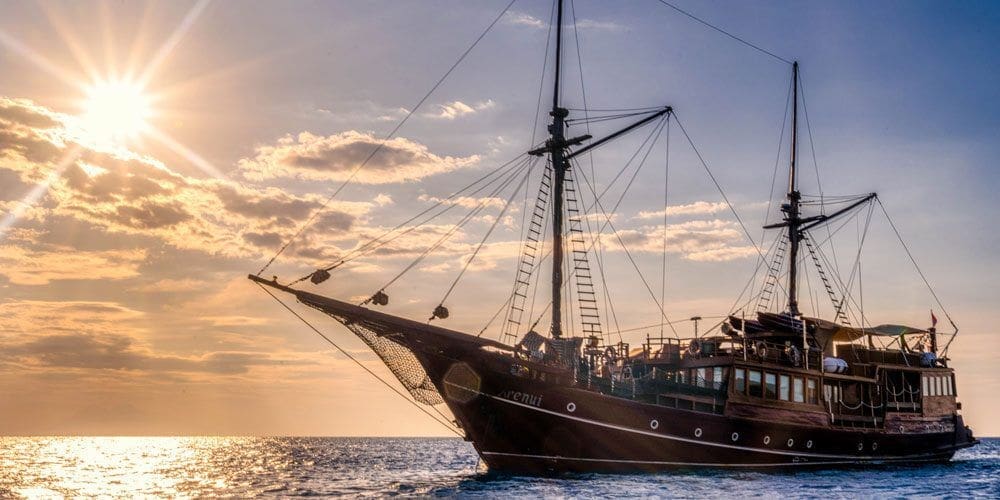
Margo and Tom have taken our family of 4 to some fantastic places over the years. But I digress. Let’s go back to the Arenui. After a flight from Detroit to San Francisco, we boarded a flight to Singapore: short layover, another flight to Bali. My first good impression was when I had to call the owner, Luigi, from the luggage desk. Yes, the airline lost our luggage. No problem. Come to the boat, where we will return your luggage. Luigi did just that! A short ride from the airport to the dock. As we boarded the tender, my wife, Kim, pointed out our first view of the Arenui. It looked special. Our kids, Andrew and Alessandra, thought it looked like something from a Pirates of the Caribbean movie.

The Arenui

As we approached, we began to recognize the intricate details. The Arenui looked brand new. The wood detail was unbelievable. As you board the ship, you realize that you are somewhere uniquely special. The crew was fantastic from the moment we boarded until we left. They made us feel appreciated and welcome in everything they do. It was like being a part of their family. Smiles were genuine and constant. They knew us by our first name. We went to see our rooms after greetings and hugs to a few of our familiar Kids Sea Camp dive buddies. These are not ordinary liveaboard rooms. You feel like you are in an art gallery. Like the rest of the boat, woodcarvings and traditional Indonesian art are everywhere. The ship was built in 2008 from repurposed wood. No efforts were spared to make this ship. It is fantastic. I’ve never seen a boat with so many windows. Our room had 8! Spacious, comfortable, well-appointed, beautiful cabins. I’m not exaggerating. The pictures don’t do justice.

The Arenui is a hand-carved work of art. The common areas are spacious, comfortable, and tastefully decorated with a historic Indonesian feel. The sundeck is a utopia, a slice of zen. We watched the sunsets and sunrises from there. (See Arenui Gallery)

Food Perfection

After a short briefing, it was time for the first meal. It was a little bit different than other trips. That brings me to the next point — the food. The owner, Luigi, is a fantastic cook who used to own high-end restaurants. That reflects the culinary experience on board The Arenui. We did not have a single bad meal. Most meals were excellent. The meals were fantastic a couple of times, specifically with butter squash ravioli and pesto pasta! They could be from a five-star Michelin restaurant in any major capital of the world. The fish was fresh and included tuna, swordfish, and barramundi. The beef, pork, and sausage were terrific.

Our 12-year-old daughter Alessandra is a vegetarian. It was no problem. Every meal made explicitly for her was also extremely good. I felt that I needed to be careful with a special request. Because they would fulfill them, I was afraid they would send somebody swimming somewhere to get something they didn’t have on board! The wine list was incredible. By the way, Luigi is also a wine expert and owns a high-end Italian wine distribution center in Asia. Every day, they take orders for breakfast, lunch, and dinner. They made this simple, easy, and rushed detail. We were never rushed to do anything. They kept telling us you’re “on holiday.” The alfresco dinners were decent and completely satisfying, leaving you wanting for nothing.

Mind-blowing Diving

The diving, after all, that’s what we’re there for. We had between three and four times a day. The dive crew was out of this world. I have experienced excellent dive service over the years, but this is out of the ballpark, from putting our fins on the tender to taking our booties and wetsuits off once back on the boat. They were washed, dried, and folded again. Unbelievable. Our gear, including my underwater camera, was handled immaculately. They would rinse, clean, and power-dry it every day — I’ve never seen that before. The crew made moving to the main ship to the tenders effortless. You walked with nothing other than your wetsuit on. They would bring everything you needed, put it on, and take it off. Just surrender and allow yourself to be served and experience perfection.

Diving in Indonesia is out of this world

Lembeh dive trips, Kids Scuba, Family Scuba Diving Adventures, Kids Sea Camp, Margo PeytonThis is my third time in Indonesia, and I am impressed again. The reefs are absolutely immaculate. The amount of fish life is tremendous, from pygmy seahorses, Mantas, and sharks to vast schools of fish. The dives are all incredible! The dive briefings were also executed with perfection. The dive maps, dive descriptions, and current checks were spot on. They would send a tender out from the dive site 15 minutes before the briefing to check the current conditions and disability. And that was rechecking on-site immediately before we dove.
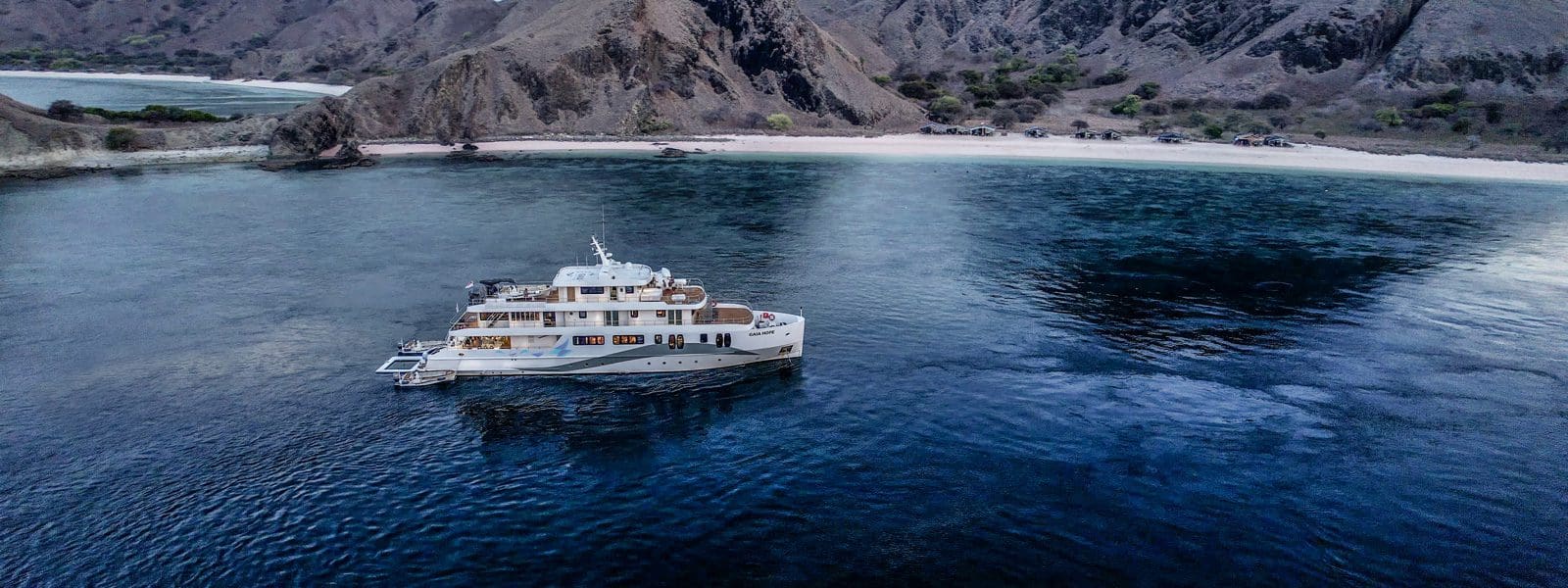
Although the crew made it seem effortless, there was constant attention to safety. Everything I just described went on for 10 days. There were no glitches. The owners, Luigi and Mei, were on board traveling with us. They were diving and enjoying the experience. They let their crew do their own thing. I do not doubt that the experience would be the same if they weren’t there. They have an incredible hand-picked staff.

So, back to my initial statement. Perfection! I’m not exaggerating. Margo and Tom have created a perfect family-diving legacy company, and their care, attention, and choices were up to par for yet another perfect Curvelo family vacation.

This ship, the culinary experience, the staff, and the diving are out of this world! I’ve experienced excellent diving, great food, perfect service, and accommodations before, but never all at once on the same trip!

The Arenui has spoiled us

I can honestly state that the Arenui has spoiled any further dive trip for our family. We have already contacted Margo and Tom and have booked four more trips. I’m going to keep coming back to Kids Sea Camp and again to Arenui to be reminded of what true perfection feels like.

We have enjoyed traveling with Kids Sea Camp and meeting like-minded families worldwide. Andrew and Alessandra completed their PADI Rescue Diver certifications this year, and we are now looking forward to bigger adventures, like Raja Ampat next year, to experience the perfection of the Arenui.

By Marcio Curvelo

Top tips for travel safety and being ready for emergencies.

Solitude, Palau, Kids and scuba diving, Family Diving vacations, Family Dive Adventures, Scuba Diving, Kids Sea Camp, Kids and scuba

Top 10 safety tips when booking a liveaboard dive trip.

Ask the tough questions when searching for your next liveaboard trip. Make sure you are qualified for the type of diving you plan to do. You should be fit and mentally prepared for liveaboard diving. Do not assume there is a single world book of mandates and laws. It is your responsibility to be a competent diver, so here are the safety tips when taking a dive trip. Why choose Kids Sea Camp?

Ask about dive gear needs, weights, types of boats, conditions, etc. Ask if the time of year you want to go is best for that destination. Make sure you are comfortable with the number of guests on board compared to the staff. I personally do not dive on liveaboards with more than 16 passengers; I do not prefer shared bathrooms; and I do not ever go on boats that don’t offer professional, active, rescue-trained, and up-to-date divemasters or instructors in the water with divers. 

I am very strict on my ratios when it comes to family and kids; my minimum is 1 DM to 5 certified divers in the water. It’s important that you feel comfortable with the conditions the liveaboard will be diving in, and that you know what they are or can be. Request a fire drill, make sure systems and alarms are working. 

Request and demand to see both sides of the emergency exits

Have the staff show you how they open by demonstrating, so you can make sure it’s not blocked or painted shut, and that it opens easily and works properly. Know where the life jackets are and know where the exits to your cabins are. Do your research on the operator you are considering to determine its reputation. Scuba board, Under Current, DAN, and Under Current are just a few good resources to look up.  Make sure you book with an experienced, trustworthy agent. I am available to my clients 24/7.  My cell is on my card, and believe it or not, I have made myself available to clients in trouble on trips that have not even been booked through me. 

Woody Tinsley: When you’re on a liveaboard, I joined a group a few years ago and got the Nautilis lifeline, and it’s on me with every boat dive, and I keep it clipped to my safety sausage, which, if I had time to grab an emergency, would be one of the only things I grab. But the lifeline broadcasts your GPS location internationally on an emergency frequency to every boat. Anyway, NOAA put it on, and it was really eye-opening. Boat drills consistently do abandon ship drills, but nobody ever talks about what you should do in the water afterward. https://shop-nautiluslifeline-com.3dcartstores.com/

Safety tips to help you be ready to travel.

  1. How many passengers and cabins are accommodated on your boats?
  2. How many crew are on the boat, and are they all rescue-trained and trained in fire drills?
  3. Do you have an emergency contingency plan in place, and may I have a copy?
  4. Are your boats inspected and up to date with all required licenses and inspections?
  5. Do you have a sprinkler system and a fire detection system on this boat?
  6. Do you allow charging devices in individual cabins?
  7. Do you have fire extinguishers and alarms in all cabins and rooms?
  8. Do you have a mandatory security night watch aboard your boats?
  9. Also, where is the emergency contact list for guests?
  10. What are your ratios of divers in the water to staff, and are the dive staff professional-certified, dive masters & instructors?

10 safety tips for an emergency when traveling

  1. Remove any second-tier verification codes from your email account.
  2. Create your own safety deposit box or emergency folder in the cloud. Put copies of your passports, dive cards, DAN insurance, or other documents, a copy of your airline itinerary, and the emergency contacts for you personally, as well as for the airline, and the liveaboard, resort, or agent you are working with.  We all live in a push-button world, and with smartphones, remembering the numbers of our family and business is a thing of the past. If you lose your phone and computer, you lose it all.
  3. Keep a small emergency dry bag with you at all times. Keep it on your nightstand at night and keep it in your dry bag on your dive boat. Keep it with you at all times. Inside.
  4. Your cell phone, your passport or copy of your passport, a copy of your airline ticket, a note with your most important numbers, a small amount of money, and 1 credit card.
  5. At night, make sure to have in your dry grab bag 1 pair of underwear, a shirt, shorts, and life-saving meds you can’t go without. This should not be large. You do not know the conditions you may be in. 5. Send a link to your emergency folder to your emergency contact at home, not traveling with you.
  6. Ensure your dive gear and camera equipment.
  7. Make sure you have DAN Dive insurance or USI (CFAR insurance). Rescue flights and chamber rides can cost tens to hundreds of thousands in a remote location to air vac you out.
  8. Make sure that the people you are traveling with have access to your emergency information.
  9. Make sure the organization you are traveling with has strong online reviews, and take the time to read them.
  10. Pay it forward. Share it with others and post on Scuba Board, The Dive Magazine websites, and your multimedia. Let other divers learn from your experience

Let’s make diving safer for divers by making more informed and educated divers

  • Check what travel insurance you have and what you need.
  • Have a list of items that you pack, even better, lay them out in the “Tetris Challenge” style. The email that picture to contact and yourself or save on the cloud.
  • Make copies of the paperwork and email them to a close friend and yourself, or store them in the cloud.
  • Have an “emergency contact form.”
  • Accordingly, know at least one phone number.

The Right Honourable Lord Woodrow F. Tinsley III D.o.D. HcLaird of Glencoe and LochaberCount of Hougun ManorBoston Sea RoversOwner of The Sharkiteuthis Diving Co., East Hartford Police #289


By Margo Peyton, Owner of Kids Sea Camp Inc., Family Dive Adventure,s PADI Instructor 57474

Take Time To Savor Life’s Treats

Kids Sea Camp, Kids and diving, family diving vacations

I never thought a company like Kids Sea Camp could exist

Taking time to savor life’s treats is not something I did on a blazing summer day in Santa Monica, at a house party with a pool, and I was a thirteen-year-old boy who had assembled my own gear. That’s how I experienced my very first dive. As I was sitting at the bottom of a pool on a J-valve tank, with a twin-hose reg that I thought I had figured out poolside, adults started jumping into the water to ‘rescue’ me. This was not the way I had planned for my own kids to learn to dive, now more than forty years and 2000 dives later.

A lifetime of diving

(From left to right) Adam and Ellie Summers prepared for a night dive at Anse Chastanet Resort, St. Lucia.

Finding a very different kind of diving has revitalized my love of blowing bubbles: diving as a family with Kids Sea Camp. Officially, I learned to dive properly while an undergraduate and progressed through the ranks to PASI OWSI at the PADI College in Sydney, Australia. After working as an instructor in Australia for several years, I returned home to the USA to become a marine biologist. Along the way, there have been many memorable dives. But those dives pale in significance to the life changes I have experienced along the way. Sharalyn and I were married in Belize. We have two children, and we moved to a small island north of Seattle to a marine station. 

A little moment, a shared sense of wonder, and an instant rapport gave me an unusual opportunity to gain a completely new and transformative perspective on diving. With my good friend Dr. Bob Rubin, I voyaged on the Quino El Guardian (Booking the trip with Family Dive Adventures) to the manta ray soup of the Revillagigedo Islands. They dropped me, Tom Peyton, and 14 other dive fanatics into the water surrounding four little volcanic specks. Steep-sided, battered by the swell, with a constant current, this dive site was not for the faint of heart. But when we dropped over the side the first time, there was a whale shark, six giant ocean mantas, a pod of dolphins, and more than 40 silky sharks, well, you get the idea.

Meeting Tom Peyton

 It was a Scuba diving paradise. I loved it, and I was getting interesting data on the mantas’ wing movements. As I stripped out of my too-thin wetsuit, I realized the guy standing next to me had paused, a silly grin on his face, wetsuit around his ankles, and his heel straps between his toes, eyes twinkling. This bearded, blissed-out guy was just dumbstruck by that dive and was taking a few moments to let it sink in. I don’t meet many people who take time to savor life’s treats as much as I do, and I was immediately drawn to this awesome dive character.  Tom Peyton is the co-owner of Kids Sea Camp and Family Dive Adventures. We developed a friendship; these dives touched him as deeply as they touched me. We shared many awesome dives, like-minded concepts about life, and a few good stories. 

Tom and I were both missing our families and wished we could share those daily adventures with them. Tom’s wish was more realistic than mine. Since his wife, Margo, is a PADI instructor and mermaid in the Women Divers Hall of Fame, and both their kids, Rob and Jen Peyton, are PADI dive instructors. This was a very doable adventure for them. At that time, my kids were five and ten. My wife was a PADI Rescue diver with 150 dives, but none since our son was born. The logistics were too crazy to figure out, diving with tiny kids, or so I thought. That’s when Tom lit up with delight and schooled me on his wife’s brilliant idea, which turned into a family business.

It really is the only family diving camp

Kids Sea Camp Inc. is the only family camp I would consider sending my kids to. Kids Sea Camp is for families who love the ocean, travel, and scuba diving. I started a family late. And I have no desire to have them hare off to neat places without me. I want to join them while experiencing the things we love. Sharing new places with my kids in entirely different ways and providing them with a unique perspective on the world through their eyes. Kids Sea Camp is designed to allow just that.

Tom explained that the kids learn about the ocean and how to dive. The older ones (age 10+) get honest with PADI dive certifications. The younger ones, ages 5-9, gain experience through fun scuba games called Aqua Missions that introduce them to the basics of the sport. Age 5-7 follows a SASY program geared toward swimming and snorkeling. Then there is the PADI Seal Team curriculum, which sets them up for certification the moment they hit that magic decade mark. 

Thanksgiving and diving?

This sounded like a fabulous idea, and a set of fortuitous circumstances combined to open up our Thanksgiving holiday and leave us with close friends looking for an adventure. Margo and Tom said they would serve a traditional turkey dinner at Buddy Dive Bonaire and all the diving we could want. So, three adults, one of whom had never put her face into saltwater, and four kids (seven, eight, twelve, and twelve) took the plunge and headed to Kids Sea Camp Bonaire to dive. My son Abel was a SASY, and his friend Henry was a SEAL. Henry’s brother, Ollie, and my daughter, Ellie, were in the PADI Jr. Open Water course. Our friend Libby completed an open-water course, and Sharalyn and I just signed up to dive. Together. What a concept. 

Kids Sea Camp idea is revolutionizing

As it turned out, the Kids Sea Camp idea revolutionized our understanding of family dive vacations. The drill is simple; the diving kids meet their friends and instructors each morning after breakfast. The diving adults are free to head off to dive with the other adults. And dive at outstanding dive sites, with top-notch guides, lovely fellow divers, and a wonderfully competent and entertaining dive boat crew. When two tanks have been sucked as dry as PADI allows, we return to the resort to eat more good food than should be legal.

Our offspring are happy to learn and play in the ocean with their friends. We don’t see the younger set until mid-afternoon; a little scheduling magic with big implications for bonding with other adults, and allowing kids to own their newfound skills. Then, tired and victorious, we get our kids back, damp and bursting with tales, in time to rest up for a siege of the dinner buffet. After dinner, there are often some presentations – a couple of times, I talked about marine research, which is my day job. Then everyone passes out in preparation for doing it all again.

Buddies at Buddy Dive

It is difficult to overstate how pleasantly unusual this family dive vacation was relative to all my other vacations. The diving was fantastic. Buddy Dive in Bonaire was a joy, but the difference here was the structure and quality of the experience that I could share with my family. I watched my daughter conquer fear and physical difficulty to become a PADI-certified diver, just like her mother. Ellie glowed with triumph when she came up from her final certification dive. She did a complicated thing with minimal support from her hovering parents. That has proved to be an accomplishment that has significantly shaped the months that followed.

It was such a simple joy to have her find me a young spotted drum and share that giggle at its silly dorsal fin again. tube across the azure waters of the Caribbean, he embraced the experience as challenging as his little arms could squeeze. And Sharalyn and I could connect underwater in ways we hadn’t since before we had kids. It was such a simple joy to have her find me a young spotted drum and share again that giggle at its silly dorsal fin. It was a reaffirming delight to watch her strap on the gear. Check it, and look out for the other divers doing the same. 

My diving daughter

My daughter left Buddy Dive Bonaire with one dive short of double digits. She made it to 18 dives on another trip. They were so impressed with Ellie’s skill and her attention to safety. The Kids Sea Camp ethos of ‘safety over all things’ is deeply embedded in her. A second Kids Sea Camp family dive trip to Anse Chastanet, St. Lucia, fell into our lap. Ellie has nearly 30 dives, and Abel has a PADI SEAL with eight dives. My wife, Sharalyn, and I have hooked up all over again on a sport that has given me everything. I love seeing their expressions when discussing where we might all dive next as a family. Roatan? The Philippines? Fiji? Time will reveal everything, but I am sure more Kids Sea Camps will be in the future.


This is an article by Dr. Adam Summers. Dr. Summers is a professor at the University of Washington in Biology and the School of Aquatic and Fisheries Sciences. He has written more than 150 scientific papers and was the fish guy for Pixar’s Finding Nemo.

Read more about Dr. Adam Summers.