Planting the seed of our youth divers

Kids and diving, scuba and kids, margo Peyton

Margo’s journey is as deep as the ocean

By Carolyn Pascal

Margo’s journey began with a simple seed planted by her father. She grew up exploring the waters off Cape Cod, Massachusetts. From her father’s fishing boat, she learned how to swim and befriend marine life much larger than herself, nurturing her love for the ocean. Margo’s passion for travel flourished, leading her to live in Grand Cayman for several years.

Kids Scuba, Family Scuba Diving Adventures, Kids Sea Camp, Margo Peyton Hall Of Fame

As a single mom working in the travel industry, she was determined not to leave her kids behind while continuing to explore the world above and below water. “There must be other dive travelers who feel the same way,” she thought. With PADI’s SASY, Seal Team, and Junior Open Water certifications gaining momentum, Margo embraced the idea of kids learning at their own level. These engaging programs offered parents the opportunity to return to diving and make new friends.

Margo Peyton sought out PADI 5-Star Dive Resorts willing to create a new type of experience—a week where kids could learn to breathe underwater in a safe, fun environment while enjoying the island’s unique features. “Starting with just six families in Curacao in 2000, I began to envision how we could create one-of-a-kind adventures for families worldwide. We added more weeks with carefully planned itineraries every year, allowing six-year-olds and their 60-year-old grandparents to share unforgettable experiences.”

How Did the Dive Industry React?

The dive industry initially responded with skepticism regarding children diving and families participating in a traditionally male-dominated sport. However, with supportive industry partners, SCUBAPRO manufactured children’s equipment and wetsuits, and SeaLife made underwater cameras accessible. Dive magazines introduced the concept in print and encouraged families to join in. Divers who had set aside their carefree dive travels after marrying and raising families suddenly had new opportunities to consider. As interest from divers grew, Margo expanded her PADI 5-Star resorts and liveaboards network, prioritizing safety at every turn. She committed to comprehensive PADI training and became a PADI Master Scuba Diver Trainer and accomplished photographer.

How Has Kids Sea Camp Evolved Over Time?

“I wanted to ensure that, in addition to dive training, all our families would take away valuable lessons about the reefs and marine life and how to protect them for future generations.” By incorporating PADI Aware learning materials, scheduling beach clean-ups, and hosting evening talks on topics ranging from lionfish hunting to shark protection, both young and old minds opened up to new perspectives on responsible diving.

What is Ocean Wishes?

We also established the Ocean Wishes Foundation, dedicated to promoting, protecting, and preserving our underwater world for future generations. The foundation sponsors training grants for kids, supports marine life protection efforts, and facilitates reef restoration activities worldwide. Protecting our children’s future — and that of their children’s children—is essential to us.

Additionally, our Kids Sea Camp weeks and Family Dive Adventures have evolved. Our original Kids Sea Campers are over 30 years old, many have kids of their own, and their parents—now empty nesters—may not want to give up the joy and community of traveling this way. Thus, we now offer a variety of “Empty Nester” adventures for adults, while engaging extended family members, including active grandparents, has also become an increasing trend. Alongside our long-time resort partners in the Caribbean, we now provide exotic luxury liveaboards and access to more remote destinations.

What Has Been the Most Unexpected Result?

“I’ve always focused on making each day, week, and year the best possible. I haven’t taken much time to reflect on what these early experiences have meant for these children over time. Occasionally, however, a seed of an idea, an activity, or a piece of equipment I shared with a young child many years ago manifests in the most remarkable ways.

Who’s Kameron?

While in Grand Cayman with family and friends for my induction into the International Scuba Diving Hall of Fame, I felt nostalgic about all the years we ran Kids Sea Camp weeks at Cobalt Coast Resort and Dive Tech. I was compelled to visit and reminisce. While the resort was closed, the dive shop was open, and a young man named Kameron greeted me with a smile. I explained how I spent many years bringing families to that location. He listened politely and then mentioned that he, too, had spent time on the same dock with friends as a young boy. He recalled the groups of kids arriving every summer, although he and his friends often got shooed away when guests were around. I assured him that I would never have sent them away and that I usually brought extra masks, fins, and snorkels to local kids on the dock for them to keep.

Kameron and Margo meet again

Kameron continued to smile, and our conversation carried on from there. “I took in this moment, knowing that what I set out to do 25 years ago has had far-reaching effects beyond what I could have imagined. And, as it usually only happens in movies, Kameron was on the stage with me, as MC and Local Emerging Honoree, when I was inducted the very next night!” WOW!

What can stop Margo? Nothing.

With over 8,200 youth certifications during hundreds of Kids Sea Camp weeks over the years, there is no stopping Margo. Margo is an active member of the Women Divers’ Hall of Fame. She has received the PADI Lifetime Achievement Award and the DEMA Reaching Out Award, among others. What she values most is seeing those simple acts of kindness, smiling right back at her. One child at a time.

Diving with kids on Liveaboards

Manta, Kids Sea Camp, Family dive vacations

Liveaboards offer one of the best ways to dive

Liveaboard travel is an excellent way for any diver to see the best dive sites a destination has to offer. It allows divers easy access to long-range dive sites and more secluded or remote areas that cannot be reached by a day boat. Some might say Liveaboards are for the dive-hards in our industry, those with the “eat/sleep/dive” mentality. For avid adult divers, it’s undoubtedly been the way to go. I myself have enjoyed those five-dive-a-day, dive-hard experiences on liveaboards around the world for 36 years. There have been rough crossings, big currents, stormy days, and plenty of advanced open-water dives with big animals. 

What are the considerations for kids?

Many divers are now parents. Some were once die-hard adventurers and now want to share those remote, rare experiences with their children, like diving at forgotten islands or having special underwater encounters. I remember thinking about taking my own kids to places like the Silver Bank to swim with humpback whales, listening to their melodic songs resonating through the water. In the Galapagos, the vibrant colors of Darwin and Wolf offer a mesmerizing sight. The Sea of Cortez presents the chance to swim with sea lions, their playful flicks through the water creating ripples under the sun. There are amazing dive trips in Indonesia, the Maldives, and Palau, each with unique underwater wonders. I thought about the practical side, too, like having a child on a boat far from the nearest hospital or doctor. I wondered what it would be like if a child got seasick for days, or how small a 125-foot boat with 18 people might feel after three days at sea. Still, I believe taking kids on a liveaboard as certified divers can be one of the most rewarding and fun experiences for them. I’ve been bringing kids on liveaboards for 26 years.
 

There are a few ways to go about this in order to ensure success.

1. Safety first: check the credentials of the fleet and boat you’re booking with. Check to confirm they are up to date with all safety requirements and mandates. Ask whether they allow kids and what their experience level with kids is. Make sure your kids will have their own DM and get acquainted with the layout and safety equipment aboard. Ask for an emergency contingency plan. Kids need attentive guides who turn around often and stay no more than a breath away.

2. Book your liveaboard trip into a family week where other kids and recreational diving families with similar profiles are on board. Ensure the entire liveaboard itinerary is geared toward a safer, more conservative profile and dive site choices. Less current, better viz, calmer dive sites can be chosen. Insist on your itinerary being dedicated to ease of diving for all levels.

3. Charter the full yacht. There are then no dive hard guests to cater to who prefer not to have kids on their trip. No worries about noise, menu items, or issues with dive site choices. It’s all about kids and you. I book full-boat charters for KSC, and I book them for 3 or 4 families who love to travel together. I don’t recommend more than 20 divers on a liveaboard yacht and prefer 100 ft or more with 8-10 cabins and private bathrooms.

All aboard

The key to taking my kids on liveaboards happily is having other kids on board. They bond, they laugh, they have sleepovers in each other’s rooms, and they camp out on the top deck in the hammocks and chairs under the stars. They enjoy sharing photos and making slide shows, and depending on the captain and location, they like helping cook and jumping off the sides of the boat when anchored.

Destinations

Choosing which liveaboard vessel for a trip with our kids is very important. Start easy with a Caribbean liveaboard in a calm, clear destination. My favorites are with the Explorer Venture Fleet. I also feel the Cayman Islands is another easy learning spot. They make great testing grounds because they are close to land, easy to access with daily flights, and have a variety of pins set up at the better dive sites around those islands. I have also taken younger divers with a bit more land experience to both the Sea of Cortez and Socorro aboard the Rocio Del Mar. Both are very family-friendly operators.

The Galapagos

The Galapagos is known for its advanced diving. And most liveaboards won’t take kids on regular trips. They have other advanced adult guests to cater to, and kids won’t fit into that equation. So, a full-boat charter is the answer here. I add up to 2 experienced guides in the water on each panga, and I confirm that kids have a minimum of 10 dives and are Jr., Advanced Open Water-rated, or higher. It’s important that they are excited and want to go on the liveaboard.

If your child has good buoyancy and follows directions well, then, as long as a liveaboard is something they want to do, it can be a great experience for the entire family. With a Kids Sea Camp family liveaboard trip, parents can go and do some more advanced diving while kids are looked after by trained kid-friendly PADI dive pros who will dive with them, age-appropriately, at shallower depths. I also provide strict ratios for kids in the water with instructors. 1:4 with kids 14 or under and 1:5 with age 15+. If there are special conditions or requests, then I will provide a 1:1 when needed.

Individual tips

If you are considering an individual trip, your kids should be age 12+ and Jr. Advanced certified. With that PADI rating, the max depth is 70ft. Again, I always say be more conservative and only dive to your comfort and experience level within your recommended profile. Never allow kids to dive with other kids, and always request a dive pro to dive with you and your kids if you are not one yourself.

Comfortable, stress-free diving on liveaboards: I turn 54 this year. I have over 6,000 dives, and like many parents and even grandparents my age, I like luxury diving. I want a big soft bed and great food, and I don’t want to worry about changing tanks or lugging gear. So I am predisposed to take families who travel with me on luxury liveaboards because I find them more relaxed. Valet diving: gear rinsed, dried, and bagged for you. I don’t see my luggage from the moment I get off the plane until it arrives in my cabin.

Luxury on the water

The Pelagian with Wakatobi and the Arenui, to name a few of my favorites, will do just that. Some liveaboards I work with include Citizen Science programs on board for the kids, including plankton collection, shark tagging, plastic studies, and documenting whales. I can organize this type of trip with any of my group trips and on individual trips with Rocio Del Mar

The bottom line: ask good questions, get great answers, or keep looking.

  1. How many guests are on board?
  2. How many cabins?
  3. How many guides are in the water diving?
  4. How many shore excursions?
  5. How long are the crossings?
  6. How many beds per cabin?
  7. Is there a night watch?
  8. What is the emergency protocol?
  9. Do you have kids’ dive gear?
  10. Do you have kid-friendly experienced dive instructors on board?
  11. Can I dive at shallower depths with my kids?
  12. What is the age limitation for your liveaboards?
  13. What forms of communication are available onboard?
  14. Are there smoke detectors in all rooms?
  15. Are the layout and ship specs available to view?
  16. Are there menu variations for kids, GF, or vegetarians available?
  17. Is it possible to have my own private guide?
  18. What level of certification is required?
  19. Are there smaller scuba tanks available?
  20. Are dives conducted from a panga or main boat?

By Margo Peyton, See full version in Diver Magazine

25 Years of Kids Sea Camp: An Ocean of Gratitude

Kids Scuba, Family Scuba Diving Adventures, Kids Sea Camp, Margo Peyton, empty nester travelers

25 years of business success didn’t happen overnight.

From the shores of Provincetown, where the salty air mingled with dreams of far-off oceans, a young Margo Peyton grew, her heart tethered to the sea. Raised by a fisherman father and surrounded by the wonders of whales, dolphins, turtles, and sharks, she knew her path was destined to explore the watery realms that connected the world.

College led to travel and tourism, a scuba certification (a gift from her diving father), and a life-changing stint as a travel agent in the Cayman Islands. But it was motherhood that sparked a new vision. When her children, Jen and Robbie, asked to join her underwater adventures, Margo discovered a void: family-friendly dive resorts were scarce. A seed of an idea began to sprout. Didn’t the dive industry need to nurture the next generation of ocean lovers?

A Chance Encounter

A chance encounter with Carolyn Pascal, then publisher of Skin Diver Magazine, ignited the spark. Sharing their frustration about leaving their children behind on dive trips, they hatched a plan. Carolyn became Kids Sea Camp’s first champion, writing about Margo’s vision to unite families through diving.

The journey began with Sandy and Hans Ullrich of Ocean Encounters in Curaçao, who shared Margo’s passion for connecting children with the ocean. Together, they created the very first Kids Sea Camp. Then Hans passed the torch to Nolo Ambrosi. Nolo and Monica embraced the vision, ensuring the annual event continued.

Meeting Nancy Easterbrook

At a DEMA trade show, Margo met Nancy Easterbrook, a scuba-diving mom with two children. Nancy’s desire to be part of Kids Sea Camp resonated deeply with Margo, especially as it meant bringing the program to Grand Cayman, the birthplace of her son Robbie.  With continued family ties 25 years later, Jason and Sue Belport opened their hearts and doors of the Cayman Islands with family weeks at Little Cayman Beach Resort and Cayman Brac Beach Resort. Football, basketball, volleyball, and diving are family affairs and a permanent home.

Neal Watson, “The Dive God,” became a mentor, guiding Margo through the world of dive travel and introducing her to key players at trade shows like ScubaEx, Our World Underwater, Beneath the Sea, DEMA, Scuba Show, and his own Lauderdale by the Sea event. Neal championed Margo’s cause, urging the industry to support her mission.

The importance of SCUBAPRO

Werner Kurn of SCUBAPRO recognized the need for growth in the diving industry and championed Margo with kid-sized dive gear by SCUBAPRO, who began producing smaller BCDs, tanks, mouthpieces, and wetsuits, equipping Kids Sea Campers for underwater exploration. Bjorn and Sven Harms of SeaLife provided Margo with cameras to capture the magic of these family adventures.  Fraser Purdon became integral to product growth, working with Margo to partner with SCUBAPRO and Sealife, driven by his own motivation. Wife Tracy and daughter Sophie became beautiful parts of the process.

After Ron Kip’s birthday celebration (owner of Bob-Sotos Diving) in the Cayman Islands, Werner and Neal introduced Margo to John Cronin. Cronin’s words of encouragement that her vision was ahead of its time became a guiding light.

Drew Richardson

After John’s passing, Drew Richardson and the team at PADI—Theresa Kaplan, Kristin Valette, Nick Jenny, and Bob Coleman—became pillars of support, helping Margo expand the Kids Sea Camp brand with PADI 5-star resorts around the globe. Margo became a PADI instructor, and partnerships with families like Martine and Ingrid Van der Valk and their children, Michelle, Barb, and Steffie, broadened the Kids Sea Camp family in Bonaire, with Buddy Dive, The Galapagos, and Dominica. Sam from Sam’s Tours in Palau, and Dermot helped Margo bring Kids Sea Camp across the Pacific and created Palau Kids Sea Camp, a 15-year legacy.

Tom Peyton changes Kids Sea Camp

Then came Tom Peyton, who won Margo’s heart and embraced her children. Tom brought music, sports, and boundless love to Kids Sea Camp. Together, they explored new horizons as a family. They added destinations like the Galapagos, Utila, Costa Rica, Yap, Wakatobi, St. Vincent, the Bahamas, and Belize. Tom connected with Luigi from Italy at a Canadian adventure show. This meeting led to an extraordinary brotherhood, friendship, and partnership. Luigi, Mei, and The Arenui, a ship straight out of a dream. Biggs Eggert joined the family, bringing the magic and heart of the Philippines. Karolin Troubetzkoy, recognizing the value of family experiences as a mother and grandmother. She welcomed Margo to bring Kids Sea Camp to the luxurious Anse Chastanet in St. Lucia.

As Margo and Tom’s children grew, so did Kids Sea Camp. Tom left his 25-year career as a newspaper editor to join Kids Sea Camp full-time. New adventures unfolded in Roatan and a lifetime in Fiji, starting with Tom and Margo’s honeymoon. We met, built strong bonds and relationships with Danny Charlton’s family, and with Murex Divers of Lembeh, Manado, and Bangka. Chris Heim with Pura Vida and Sea Explorers of the Philippines.

Welcome to the KSC tribe

Kids Sea Camp became more than a business; it’s a family tribe. Clients became friends, and some became like family. Children who attended camp years ago are now adults, some even grandparents. Kids Sea Camp life’s circle comes full circle, even 25 years later.

There are many to thank and be thankful for, countless individuals. It’s a story of passion, perseverance, and the unifying power of the ocean. It’s a story of gratitude for the incredible people who have made this 25-year journey possible. Oceans connect us all; the Kids Sea Camp family is a testament to that beautiful truth. We continue on this 25th year. We are full of gratitude for all those who have been a part of the journey. Such as Lucy Dunbar, Kiley, Sven, Peter, Tabitha, Nadene, LindaSue, David Benz, Tarkan, Holly, Conrad, Annie, Rogest, Steven Frink, and William Clien.

Our crew — our family

25 years of partnerships have blossomed with leaders of the past embracing the excitement and youth needed in the present. Peter Hughes, Troy Bodden, Bonnie Toth, Maria Hult, Joanne and Zig, Rick Stratton, Brad Nolan, Brett Gilliam, Michele Westmorland, and Tanya Burnett all lent their voices. Cristina Zenato, Woody Tinsley, and Brad Holland became a part of our fabric. 25 years of created memories they will remember for a lifetime.

Safe and easy Kids Sea Camp Travel Tips

Travel tips, kids sea camp, family dive vacations

It’s important to pack appropriately when traveling with kids on long hauls.

We all know that airports can be a hassle these days, but a little planning and preparation can make a big difference. Try these Kids Sea Camp travel tips to help you breeze right through.

Before Your Trip

  • Sign up for Global Entry.
  • Check your itineraries for seat assignments and add to your calendar
  • Handle any special needs you might have before you get to the airport. Pre-book seats or special meals.
  • Check to ensure the contact and emergency information has been provided to all who need it.
  • Take care of passports, visas, and any other important documents well in advance. Keep a copy of all your documents in a safe place at home and a backup packed with you.
  • Use the online Check-in or airline app for updates. Make sure to download it onto your cell phone. Check in ahead of time to avoid long airport lines.
  • Know the check-in requirements for your airline and destination.
  • Know the requirements for the security checkpoints you’ll be traveling through, and remove any liquids, sharp objects, or anything else listed on the sign before entry.
  • Check security checkpoint wait times and allow plenty of extra time for busy holiday periods.

During Your Trip

  • Check the display screens and monitors in the airport to find your gate.
  • Arrive at the gate early with your boarding pass and eTicket receipt.
  • Keep an eye on the gate display screens as gate changes happen often.
  • Listen closely for announcements at the gates.

Make sure to pack a small carry-on with all your needs:

  • Snacks
  • Book
  • Small pillow
  • Sweatshirt or jacket, as airports can be cold
  • Toothbrush
  • Medications
  • Kids’ games or books, headphones
  • Bottled water was allowed

Adults

  • Contact solution (if needed)
  • Sunglasses
  • Eyeglasses
  • Sweatshirt for flight
  • Any medicines needed
  • Batteries must be placed in carry-on, not check-in luggage
  • Comfortable clothes
  • Favorite book
  • Hand lotion
  • Chapstick
  • Pack your personal valuables with you for up to 1 day’s worth of clothes
  • Single parents traveling with kids outside the country need a notarized letter of “Consent to Travel” prepared before departure

Travel Documents Needed

  • Passports required- Copies of Passports (have one set with you and leave another at home.)
  • C-Card for divers
  • CFAR Travel insurance (See link)
  • Logbook
  • Airline tickets
  • Itinerary
  • Travel documents
  • Paperwork and Forms
  • Waiver form: If your child has any breathing problems or other medical issues, please clearly state them so we can be prepared to accommodate any special needs. We have in the past been able to create pleasant experiences for children with special needs, kids with Asthma, hearing-impaired children, and some autistic children, and we will do our best to ensure any child can experience Kids Sea Camp. We need this information in advance to ensure your child’s safety. You will need a doctor’s note confirming that your child can participate in your chosen program.
  • Prepare as if a bag is lost or delayed.

Other Carry-on Suggestions:

  • 1 bathing suit
  • 1 set of shorts and a t-shirt
  • 1 set of undergarments
  • Sun Block
  • Dive regulator/computer
  • Camera
  • Any item you will need
  • Prescription medications

Suggestions for Packing for Trip:

  • Plenty of sunblocks
  • Level 30-45 waterproof sunblock for kids
  • Insect Repellent
  • Extra-Batteries
  • The film, Disposal cameras (underwater).
  • Converter for electronics. Voltage is 210-240
  • After-sun products, Aloe Vera, etc
  • Small medical kit with Band-Aids
  • Ear drops-swimmers ear
  • Motrin
  • A cough and cold syrup
  • Sudafed
  • Airborne
  • Sunglasses
  • Extra set of contacts
  • Benydril
  • Dive Gear
  • Defog
  • Allergy meds
  • Socks can be used inside the fins

Traveling Internationally with kids is tricky

The Philippines, Travel tips, Kids Sea Camp

Traveling with kids’ information and documentation is needed.

Traveling internationally can be tricky. Each country has its own restrictions and mandates, so it’s essential to check the immigration website of the country you are traveling to. Your airline or the tourism board is also a great source of proper information. Check where you go this year at an International Kids Sea Camp event.

Adults traveling outside the U.S. with children age 18 or under other than their own must have a notarized “Consent to Travel” Letter from both of the minor’s parents or guardians in order to leave and return to the U.S.

A child departing the United States and traveling with only one parent, a guardian, grandparents, or other adults must have a written and notarized Permission to Travel Letter from both birth parents or legal guardians to enter many countries, even on a cruise ship’s shore excursions.

The Canadian Department of Foreign Affairs and International Trade reminds visitors, “Foreign officials and transportation companies are vigilant concerning documentation for children crossing international borders. Make sure you carry the proper identification for yourself and any children traveling with you, including any documents required by the authorities of the country you intend to visit and by U.S. and Canadian authorities on your return to the U.S. or  Canada with the child.”

Travel Documents Help Protect Kids

This requirement for an affidavit for children traveling outside their home country stems from the heightened awareness of children’s rights raised by the 1980 Hague Convention on the Civil Aspects of International Child Abduction. As of July 2011, this treaty, created to deter international child abductions, is in force between the United States and 82 other countries and territories, including Canada and Mexico.

Nevertheless, international child abduction stories are in the news all the time. To stop these tragic crimes and prevent the transport of runaways or children involved in child custody disputes, American carriers have been told to require unique documents, such as Permission to Travel Letters from adults departing the U.S. with minors.

Additionally, rising healthcare costs and legal issues have forced many medical providers to deny medical care to minors without proper Medical Authorization forms. Increasingly, written permission or affidavits from guardians who carry the minor’s insurance coverage, as well as proof of that medical insurance coverage, are required at emergency care facilities.

The same regulations apply to minors under 18 leaving the United States with school groups, teen tours, or just friends on a vacation. Sports teams and academic study programs require a similar Minor Consent to Travel form.

Read on for tips on making this paperwork less of a burden, or scroll to the bottom of this story to obtain sample forms.

Getting a U. S. Passport or Foreign Passport for a Minor

To enforce the Hague Convention provisions, the U.S. Department of State requires that every citizen, no matter the age, traveling internationally by air carry their passport and appear in person to apply for one. These very strictly enforced guidelines for obtaining a passport for a minor require the presence of both parents, with photo ID and proof of parentage, or one parent’s appearance accompanied by a notarized statement of consent from the second parent or legal guardian.

Exceptions are made if there’s documented evidence that a minor has only one guardian; for example, divorce papers, death certificates, adoption papers, or a lawyer’s letter would indicate that the presence of one legal guardian is sufficient. This complex issue is explained in more detail in the U.S. Passport Office.

Custody Issues

If child custody issues are a concern for you, the Children’s Passport Issuance Alert Program notifies parents of passport applications made on behalf of minor children and denies passport issuance if appropriate court orders are on file with the CPIAP. The Office of Children’s Issues will provide more information.

Citizens of other countries must check with their own country’s embassy, as passport issuance laws have become stricter worldwide. Michelle Higgins’s story in the New York Times Practical Traveler column should provide more information on this topic and tips for parents with children of dual nationality or different citizenships. If you’re planning your foreign vacation, start this process early. United States security and border regulations change frequently, and the increased number of passport applications means a backlog at the National Passport Center. Visas & Travel Documents for Minors

It can get complex

In an era of heightened global security, many foreign countries are revising their visa procedures as well. Contact the embassy of your destination country or study the Consular Information Sheets provided at http://travel.state.gov to find out what that country’s requirements will be in terms of documentation in order to bring a child into the country.”

US airlines have on most websites information that confirms that they enforce this during the check-in process with the posted rule: “If adult passengers do not have the proper documents, as defined by the U.S. Department of State guidelines, boarding is denied in order to comply with international regulations and the foreign immigration process.”

Some countries require a notarized original copy of the Permission to Travel Letter before even accepting a visa application for minors. Many countries also require that the authorization notes be in the country’s national language and notarized and authenticated by the country’s embassy or consulate. For information on the requirements for travel to a specific country by an American citizen, visit the US Department of State and navigate to the International Travel Information page. When in doubt about the information, it’s best to call the Visa Section of the embassy or consulate of your intended destination.

 What Permission To Travel or Consent to Travel Letters Do

A consular officer at the U.S. Office of Children’s Issues (888/407-4747) verified that many countries require a Permission to Travel letter with parents’ notarized signatures, plus identification for the child (certified birth certificate or passport), and that both are essential.

Consular Information Sheets issued by the U. S. Department of State (which does not make these regulations) often carry this warning: “In an effort to prevent international child abduction, many governments have initiated procedures at entry/exit points. These often include requiring documentary evidence of the relationship and permission for the child’s travel from the parent(s) or legal guardian if not present. Having such documentation on hand, even if not required, may facilitate entry/departure.”

U.S. Customs & Border Protection recommends that all travelers read the helpful booklet “Know Before You Go.”  Although minors under 16 may enter Canada from the U.S. by land or sea with only a photocopy of their U.S. birth certificate, the CBP notes that children under age 18 must carry notarized travel permission letters if they are traveling without their parents.

Children’s Travel Permission Letters Required for Cruises, Too

Such concerns apply not only to air and land travel but also to liveaboard cruise travel.

Obtaining a Free Permission to Travel Letter Form

We recommend that you download FTF’s sample “Permission To Travel” letter from the next page. Print it. Complete it. Have it notarized, and carry it with you on all future international travel. Is notarizing the document necessary, especially for Canadian families, who pay much higher notary fees than those in the U.S.  “It is strongly recommended that children traveling alone or with one parent carry a consent letter for every trip abroad. It is advisable to have the consent letter certified, stamped, or sealed by an official with the authority to administer an oath or solemn declaration so that the validity of the letter will not be questioned.” From the Canadian Consular Affairs Office.

Tip: Notarize several copies of the Permission to Travel Letter simultaneously if you are applying for foreign visas. Carry two copies with you on your vacation in case a border official.

When you cross a border by land, sea, or air, you will need proper identification documents for each traveler in addition to the above letters. Please see the Department of Homeland Security Website if you are unsure which ID documents you and your family need.

Travel Prepared to Avoid Confusion

For more information, contact your attorney or a professional travel agent. On vacation, travel prepared. It’s better to be safe than sorry. Get Blank Permission to Travel, Minors & Medical Authorization Forms

  • Thorough documentation is especially important in situations involving travelers or guardians with different last names or a minor. We also recommend that birth parents who have different surnames from their child carry a photocopy of the child’s birth certificate while traveling, providing legal evidence of “guardianship” in case of trouble.
  • Travel agents occasionally: the fine print in a brochure is supposed to notify families that airlines, cruise lines, and bus tours may require proper documentation—or deny boarding. The paperwork can —and often does —slip between the cracks.
  • Travel insurance, trip protection that we feel is essential (and many vacationers are reluctant to purchase), is a must to get!
  • Same-sex couples and adoptive, divorced, or widowed parents should carry certified custody or death certificates, adoption papers, or other proof of sole custody, as well as photo identification for themselves and the child.
  • Remember, having these essential documents for travel with minors could save your next vacation.

Safety Tips on diving with your kids

KIDS AND DIVING, FAMILY DIVE Vacations, Kids Sea Camp

A guide to Safe and Unforgettable diving with your kids.

Dear Scuba Moms and Dads,

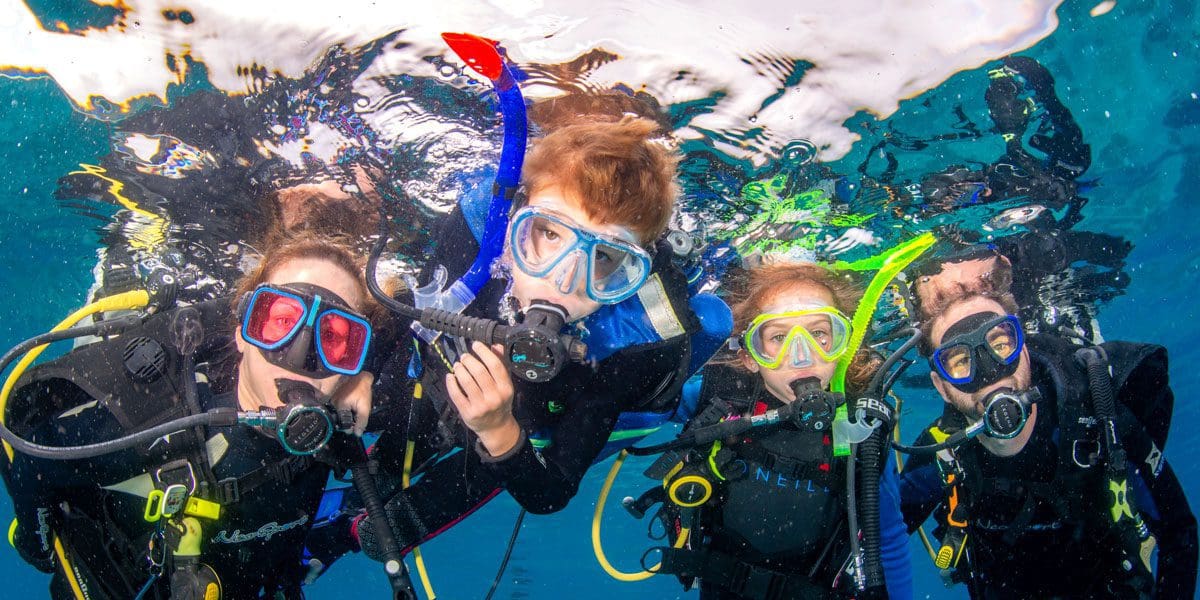
Imagine sharing the magic of the underwater world with your children, exploring vibrant coral reefs, encountering fascinating marine life, and creating memories that will last a lifetime. Scuba diving can be an incredible family activity, fostering a love for the ocean and building bonds through shared experiences. For 25 years, I’ve had the privilege of diving with families around the globe, issuing hundreds of youth certifications each year. My passion is ensuring that these adventures are fun, safe, and enriching. I’ve compiled this list of helpful tips for diving with kids to help parents navigate family scuba diving and make informed decisions that prioritize your children’s well-being. Please reach out with any questions or to share your own experiences.

Planning Your Family Dive Experience: Key Considerations

One of the most common concerns I hear from parents is the feeling of vulnerability when booking independent dive trips with kids. Stories of close calls and stressful dives are, unfortunately, too frequent. To help you avoid such situations better. Choosing the right dive operator is paramount. Look for operators with a proven track record of prioritizing safety, especially when working with children. 

Here are some critical questions: 

  • Are they experienced in teaching and guiding young divers?
  • Do they offer specialized programs for kids, like Seal Team or Junior Diver courses?
  • What is their instructor-to-student ratio for dives involving children? Are you comfortable with those ratios? My Ratio for kids under 12 is one instructor per 2 kids. Special needs is 1:1
  • Do they have appropriately sized gear for children, including smaller tanks, BCD, and mouthpieces?
  • Does that dive operation follow depth mandates for kids?
  • What safety equipment do they carry on their boats (oxygen, first aid, communication devices)?
  • What is their emergency plan, and where is the nearest hyperbaric chamber?
  • Are all instructors and dive masters current, active, and up-to-date on their training?
  • What is their policy regarding children on their dive boats?

Understanding Youth Diving Standards:

Familiarize yourself with the specific depth and supervision requirements for your child’s age and certification level. This information is readily available on their certification card and through reputable dive organizations like PADI. Don’t hesitate to ask your dive instructor or local dive shop for clarification. Key tips on diving with kids:

  • Children 8+ can experience confined water dives (pool) with programs like the PADI Seal Team and Master Seal Team, reaching depths of up to 12 feet only in a controlled pool environment and under the direct supervision of a PADI Pro. This program is not open water dives unless waivers are provided by PADI to go in the ocean. There are other programs, such as SSI Scuba Rangers and PADI Bubble Maker. Ask your dive operator about the standards for these programs.
  • Junior Open Water Divers (10-11 years old) have a maximum depth limit of 40 feet and must dive with a parent or PADI Pro.
  • 12-year-olds can dive to 60 feet, and with a Junior Advanced Open Water certification, they can explore depths up to 70 feet. However, they can only do this with a parent or a PADI Pro.
  • The recreational diving limit of 120 feet is only reached at age 15. (based on training, comfort, and experience.)
  • Children should never dive with other children without the parent or PADI Pro present.

Parental Preparedness:

Your role as a parent diver is crucial. 

  • A confident and competent diver yourself, with up-to-date skills and knowledge of dive safety protocols.
  • Physically fit and able to assist your child in case of an emergency.
  • Pre-Trip Refresher: A pool refresher before your trip is an excellent way for kids to re-familiarize themselves with their gear and basic skills.
  • Open Communication: Talk to your children about what to expect on their dives. Address any fears or anxieties they may have.
  • Buddy System: Emphasize the importance of staying close to their buddy (you or the assigned dive professional) and maintaining visual contact at all times.
  • Respect for Marine Life: Teach your children to observe marine life respectfully and avoid touching or disturbing underwater creatures.
  • Log Your Dives: Keeping a dive log is a fantastic way to track your family’s underwater adventures and celebrate your shared experiences.
  • Have a Wet Notes pad or something to communicate with your child during the dive.

Essential Do’s and Don’ts:

  • Do: Thoroughly research dive operators. Prioritize safety. Know your child’s certification limits. Communicate openly with your children. Ensure properly fitted gear. Stay close to your buddy. Practice safe diving habits (safety stops, etc.). Respect marine life.
  • Do bring a Pro and a local guide with you on your dives
  • Do some research about all the marine life you may encounter on your dive choice
  • Do hydrate and get plenty of rest before a dive
  • Do share your dive plan with your kids
  • Do make sure you plan your dive and dive your plan
  • Do share any of your concerns with your chosen dive operator
  • Do list any medications or conditions on the waiver forms
  • Check with your doctor to ensure any conditions or medications are approved for diving activities.
  • Have fun and share your positive experiences with family and friends
  • Don’t: Make assumptions about safety practices.
  • Don’t: Hesitate to ask questions.
  • Don’t: Exceed your child’s limits.
  • Don’t: Pressure your child to do something they’re uncomfortable with.
  • Don’t: Compromise on gear quality.
  • Don’t: Forget to check gauges and air supply—neglect pre-dive checks.
  • Don’t forget to be ready and fit, both mentally and physically, before taking your child on a dive.

Scuba diving with your family can be an enriching experience. By prioritizing safety, choosing reputable operators, and staying informed, you can create unforgettable adventures that deepen your family bonds and foster a lifelong appreciation for the underwater world. These tips on diving with kids should help make your next KSC adventure more rewarding.

Kids Sea Camp founder, Margo Peyton

Kids Sea Camp magic: It’s not the destination; it’s the journey. Well, maybe not so much!

Kids Scuba, Family Scuba Diving Adventures, Kids Sea Camp, Margo Peyton, Canada divers

Kids Sea Camp Magic is real, thank God!

So you don’t believe in magic? Now sit right down, and you will hear a tale, a tale of a fateful trip. Okay, this is not about seven castaways and their misadventures but about our family of four: Rod, Carol, our son Will (14), our daughter Lily (10), and our trip to the other side of the planet to go scuba diving with Kids Sea Camp on one of many trips.

I celebrated my 50th birthday that year, and we wanted to celebrate with something big. Carol and I had learned about Kids Sea Camp, owned and operated by Margo Peyton from South Carolina, from a Scuba Diving Magazine story. We read that parents and their kids could scuba dive together as a family, something we had dreamt about since the kids were born.

Our first trip started with an incredible Kids Sea Camp trip to Belize, and both kids made lifelong friends, as did Carol and me. The MacDonald family then chose Bonaire and Costa Rica. Every trip had Kids Sea Camp magic. We found like-minded families who became lifelong friends, our kids learned about the ocean and made connections with other kids worldwide, and we bonded as a family.

Every detail was taken care of, as Margo and Tom or their magic dive team members traveled with us. There were many unforgettable moments like horseback riding, blow-karting, special presenters, and incredible slide shows that captured it all.

Here’s the magic story

Margo gave us her cell phone number. It’s nothing special; she does that with every client. She even puts it in the trip welcome letter. Why is that so important? Well, let me tell you this story of magic!

I called Margo on a Sunday afternoon; yes, she did pick up the phone and happily discussed trip options. Lily, our youngest, wanted to get PADI certified. As we were mulling ideas, Margo reminded me of the offer that she had made the year before. “Rod,” she said, “remember last year when Will hurt his foot on the beach running in the sand and missed a few days of diving?”

“Yes,” I replied. “Well,” she said, “remember I promised to comp him for next year’s diving, should you come back.” I had forgotten this gesture until Margo was kind enough to remind me.

Thankfully, a few doctors were on that trip, and Will dove for a couple of days with one fin. Margo towed him around and became his buddy; she was so impressed by his tenacity in keeping up with the diving that she promised to cover the cost of diving on his next trip. She was good to her word!

“Why don’t you come with us to Yap and Palau? His diving is on me for both weeks.”

The magic of Micronesia, here we come!

Well, that cinched it. It was the trip of a lifetime for my 50th birthday. Lily gets certified in paradise, and Will dives for free.

There was only one moment of sober second thought afterward, which was when we looked at our travel itinerary. Toronto to Los Angeles to Honolulu to Guam to Yap, then to Palau, then back. Oh well, what could go wrong, right? You only ever ask that question if you purchase trip insurance, which, by the way, Margo repeatedly asks everyone to do. “Remember that point.”

Four months later, after much anticipation, the big day of our departure was here. We couldn’t wait!

It was the night before our departure. Our tickets had long since been purchased. We had just spent the last several days winding down our business. Our bags were packed, and like all scuba divers, we had meticulously weighed each, ensuring they were under 50 pounds. Luggage magic is real, also.

We had taken our kids out of school a week before the summer break, as both insisted that nothing happens in the last week anyway. Okay, let’s go with that.

What day is it?

It was 10:00 P.M. on Thursday, before our 9:15 A.M. departure the following day. Carol and I were sitting on our bed amongst the luggage, reviewing last-minute details. “You got the passports?” I asked Carol.

“Yes,” she replied.

I went downstairs to grab the file marked “Kids Sea Camp,” which held all the paperwork and details that Margo’s team had provided us months ago. There’s a lot, and not a question is unanswered if you take the time to read it all. (That’s right, there is another point! Take the time to read it all.) I decided to give the tickets a quick perusal, but something seemed a bit puzzling.

“Carol,” I said, “wait for it. What day is it today?”

“It’s the 20th,” she answers calmly.

“No, it’s not,” I nervously reply. “It’s the 19th, right, isn’t it?”

“No, I’m sure it’s the 20th. It’s my brother’s birthday tomorrow,” she replied, still calm.

Panic versus Kids Sea Camp magic

At that moment, I think, “Houston, we have a problem.” How could I have made such an enormous mistake? As I hope many of you can relate, I’m hoping for some sympathy here. In our oh-so-busy lives, where we run around constantly trying to achieve “work-life balance,” I somehow locked in my mind that we were leaving Friday morning, not Thursday. I was so positive that there was no need to double-check this vital detail.

Everything around me slowed to a crawl; if that makes sense, my mind started to speed up. I had already deduced in seconds that we were totally and utterly screwed, but things were still moving slowly around me. We were flying to the other side of the planet, with no fewer than four connections, to a country called Yap, which has only two flights arriving each week.

Someone asked me afterward how it felt at that precise moment. The best way I can describe it is: you show up for your wedding at 11:00 A.M. on Sunday in your tuxedo. You walk into the church, and you ask the janitor, “Where is everyone?” With an incredulous look, the janitor smiles and replies, “Don’t you know your wedding was yesterday, son?”

Welcome to the Twilight Zone

It’s a total “Twilight Zone” moment, where that spinning vortex thingy makes you dizzy. I instantly break into a sweat, feel totally sick to my stomach, and say, “Carol, I don’t think we are going on our trip.”

Carol looks at me and says, “What?”

“Carol, our plane to LA left twelve hours ago! We cannot be in LA tomorrow morning at 8:45 A.M. when our flight leaves for Honolulu with Margo and the other Kids Sea Campers.”

Carol looks at me and replies loudly, “OH … WE’RE GOING ALRIGHT!”

Now, I am one of the most fortunate guys I know because, at that very moment, Carol could have, oh, I don’t know, had an absolute crazy fit, but no, she just knew that somehow, the MacDonald family was going to make it to our much-anticipated destination. Not to break her optimistic spirit, I decided the best course of action was to go along with this delusion to delay any possible inevitable but justified release of tension that would most certainly come my way.

So — S.O.L.

The next thing I know, I am sitting in front of my computer on Expedia, Travelocity, or “I don’t know,” as I can’t remember much about that moment. But I can now tell you from experience that if you book with a third-party vendor and something like this happens, you are S.O.L.

So I’m looking at a new possible travel destination (the Moon), knowing I have just about as much chance of getting there as I do of getting to Yap. I tried calling Air Canada to purchase new flights, at that point, a minimum of $8,000 per person and two-plus days of travel one way. No sympathy from any airline, and all told me to contact the third-party vendor from whom I purchased. My heart is not in it. Carol is sitting beside me, as is our son, who now knows about the dilemma.

His first comment is, “Does this mean I must go to school tomorrow?”

“No, William, you don’t have to go to school tomorrow,” I replied. Then I started thinking that our whole family would be hiding out in the house for the next two weeks, with the curtains drawn, so no one would ever find out about my massive blunder. Of course, this also means we’ll have to Photoshop each of our faces onto images we downloaded from the internet of Yap and Palau’s magic sunsets.

Margo saves the trip

The phone rings. I pick up my cell, and it’s Margo Peyton from Kids Sea Camp. It is just before midnight.

“Hi Rod,” says Margo, “How are you guys doing?”

I had left a message on her voicemail around 11:00 P.M. to let her know what happened and to ask her not to look for the MacDonald’s in Los Angeles the following morning, where we were supposed to meet them. “Oh, we’ve had better moments,” I cheerily replied.

Well, without skipping a beat, Margo says the following. “Rod, this is what you are going to do. Since you left me a message, I have been on the phone with my air travel consolidator, Lennie. She is in Guam.

“Guam?” I reply.

With all the confidence of an NFL quarterback, she replies, “Yes, Guam. That’s why I answered the phone.” Are you ready to write this down?”

As I jotted down our new, unbelievable travel plans, I wondered, Who is this person on the other end of the phone? I knew Margo ran this great little company with a loyal following of families, some of whom had traveled with her for 14+ years. She has thousands of youth diver certifications in the Scuba Diving Hall of Fame. But I didn’t know she was also a magical tactical travel guru. It was as if she had a mobile travel console and could reroute planes to ensure her clients didn’t miss their Kids Sea Camp destiny. (Margo had worked as an airline reservations agent for 15 years, and it showed!)

The new itinerary she booked was as follows: we would now fly from Toronto to Denver, then to Japan, then to Guam (where we would meet up with Margo and our fellow campers), and then on to Yap. Margo had already arranged with her Guam contact to change all our other flights with United—at no extra charge or penalty. No extra charge. Why hadn’t I thought of that? Before calling me at midnight, Margo had already entirely rerouted us from another city the next day at no charge. If that isn’t a reason to book with a travel agent rather than directly or through a third-party app, I don’t know what is.

Real Kids Sea Camp Magic

We found ourselves at Toronto International Airport the following day, having not slept a wink. We arrived two hours and 45 minutes before our flight. Not so fast! Remember, they say you must be at the airport three hours before departure. The gate staff sternly informed us that the door would have been closed if we’d arrived 15 seconds later. And as we all know, once that door is closed, it’s closed! I did not tell Margo.

We were sitting on the plane, completely exhausted, and the trip hadn’t started yet. Carol said, “Do you think our luggage will make it?”

At that point, I’d inflicted enough stress on my wife, so I answered, “Yes, I’m sure it will be fine.”

Carol wasn’t buying it, but she just closed her eyes, as did I. Our travel from Toronto to Denver to Japan was uneventful, and we even got to fly on a brand-new Dreamliner. This was a great experience, as the kids watched unlimited movies, allowing Carol and me to grab some rest and much-needed sleep.

We arrived safely in the land of the rising sun and got the unexpected bonus of a “Japan” stamp in our passports—bonus! While waiting for our flight to Guam, I texted Margo to let her know the MacDonald’s had made it this far. I figured Margo’s awareness might be helpful if there were any issues with our tight connection in Guam. She responded, “Make sure when you arrive in Guam, to go through the transit line—you have a tight connection.” Remember that little detail.

Magic Margo Meets Us in Guam

We arrived in Guam and immediately faced another long line at customs. Again, we looked at our watches every 15 seconds, as if that could bend time. It couldn’t. Margo called multiple times, wondering where we were. We missed the transit line! Margo called security and had us escorted through. We were again auditioning for a Hertz commercial, running through the airport.

Tom Peyton was already on the plane with the group; the flight attendants were trying to close the door. It was almost too late. Margo refused to board and told Tom to go ahead; she’d meet him later in Palau. Tom wouldn’t hear of it. He pleaded with the crew to keep the door open.

We ran down the corridor until we saw Margo. We slowed down to catch our breath. “NO!” she yelled. “Keep running! They’re closing the door!” We took another breath and ran. I couldn’t believe we might make it. We reached the door, and guess who was holding it open? Tom, waiting for his wife Margo—that’s right, Magic Margo.

We all made it. Tom hugged his wife, and we thanked him for waiting and holding the plane. Tom said, with endearing sarcasm, “I wasn’t holding it for you; I wasn’t letting this flight leave without my wife!”

Mission Impossible becomes magic

As we boarded, applause broke out, and off we went. We didn’t know any other Kids Sea Camp families on the flight. However, as we hurried to our seats, we could tell who they were because they gave us high-fives and hugs. Margo, of course, had told everyone about the Canadian family who, against all odds, had done the impossible and “won their own amazing race.” She’d asked them all to beg the crew to hold the flight.

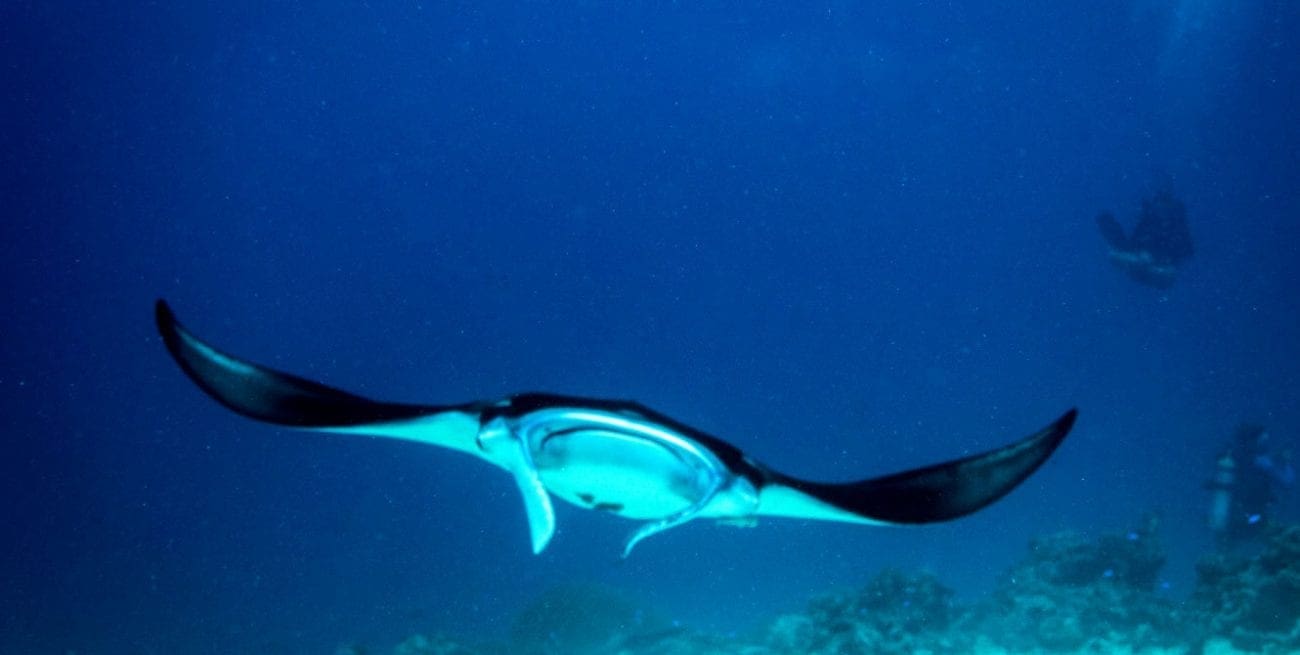
Based on our next two weeks in Yap and Palau with Kids Sea Camp, Margo and her team, the MacDonald family, won the million-dollar prize. When we were diving with the celestial manta rays and then touring the Rock Islands, we realized just how close we’d come to missing the trip of a lifetime.

Somehow, it was even more amazing, more humbling, and, dare I say, a bit sweeter. The lesson here is that Margo answers her phone. She’s a real person who cares not only about what happens at Kids Sea Camps but also about getting to and from them. She works hard to make sure everyone is treated like family.

There are many ways to book trips and save a dime or even a dollar. But none of them will have your back when something goes wrong. A storm shows up. A flight is canceled. Or, like me, you just forget what day you’re leaving. Third-party online booking systems don’t assist beyond the sale. But Margo, Tom, and the Kids Sea Camp team travel with you.

So they’re personally invested in the best possible outcomes. The best way to say thank you is to book directly with Kids Sea Camp. This small business makes dreams a reality for many families and thousands of kids, and the MacDonald family will support it.

From the MacDonald family—Carol, William, Lily, and me—we’d like to thank Margo and Tom (Margo’s husband), from the bottom of our hearts.

P.S.: Kids Sea Camp company has never had a diving accident in 26 years of running Kids Sea Camps. It has the best safety rating for children and diving in the dive industry, with over 8,100 youth diving certifications. That’s not a one-person job. The people they choose to partner with are some of the best in the world for family-friendly instructors and resorts. And by the way, in case you were wondering, our luggage made it too—dive gear and all. Kids’ Sea Camp magic is real!

25 Years of Diving into Family Adventures

Kids and diving, kids sea camp, Family dive vacations

A 25-year celebration marks a significant milestone for me

Margo Peyton. My journey began 25 years ago as a single mom working as a dive travel agent. I yearned to share my love of the ocean with my two children. My passion was rooted in my childhood in Provincetown, MA., surrounded by the wonders of the sea—seals, whales, dolphins, sharks, turtles, and giant bluefin tuna. I grew up immersed in its rhythms. I wanted that same connection for my kids.

With a degree in travel and tourism, a lifelong love of the ocean, and a father who was a scuba diver, I embarked on a global adventure in the 1980s. I explored incredible marine environments, diving in spectacular locations. But when I became a mom, I discovered a void: there were no adventures designed for kids, no dive programs, and no family-friendly resorts. How could this be? My challenge was clear.

I set out to create what didn’t exist.

KSC in the news, Margo Peyton, Tom PeytonOne by one, I forged partnerships with family-owned and family-run resorts and liveaboards willing to cater to families: Curaçao’s ​-Ocean Encounters, Bonaire’s ​-Buddy Dive, ​Roatan with AKR, Mayan Divers, Turquoise Bay, Kimpton, Grand Cayman’s ​-DiveTech, Little Cayman​ & Cayman Brac’s ​-Reef Divers, ​Utila with Troy Bodden, St. Lucia’s ​-Anse Chastanet, Palau’s ​-Sam’s Tours, Yap’s, Manta Ray Bay, Galapagos with Explorer Ventures, Belize’s ​-Blackbird Caye, ​The Philippines with ​-Sea Explorers, Indonesia with Murex Dive Resorts, Wakatobi and The Arenui. ​St. Eustatius- Golden Rock, Fiji, Castaway Island, JMC, and many others in Costa Rica, the Maldives, St. Vincent, and Dominica. I sought safer choices, family-friendly crews, delicious food, comfortable rooms, and meticulous attention to detail.

Scubapro stepped up to sponsor smaller dive gear, and Sealife sponsored underwater cameras. PADI created exceptional youth-friendly programs like SASY, SEAL Team, and Junior Diver certifications. Around the world, we grew, and like-minded families bonded, forming a thriving dive tribe. I created a legacy of unforgettable memories for my children, giving them a global perspective beyond their wildest dreams.

A living classroom

Kids Sea Camp has become a living classroom for families, often spanning three generations on any given trip. Where once there were parents like me, now grandparents join their adult children and grandchildren to share the magic of the underwater world. For 25 years, I’ve connected not only my kids to the world but families of the world.

My life has been miraculous for a little girl who grew up in a time when women rarely owned companies or traveled extensively with children, let alone negotiated international contracts and partnerships. I am grateful to all the resort owners, dive operators, equipment manufacturers, and publications that believed in and supported my vision for family growth within the dive industry.

When we work together, trust one another, and unite around shared dreams and goals, we can create something truly amazing. Kids Sea Camp is a testament to that collaborative spirit. It’s a story of shared passion, unwavering dedication, and the profound impact of diving in to connect families.

Building lasting connections

This journey has been about more than just underwater adventures; it’s about building lasting connections, fostering environmental stewardship, and empowering families to explore the world together. It’s about creating a community where shared experiences forge unbreakable bonds and where the love of the ocean unites us all.​  Because of Kids Sea Camp, my family has grown.  I met and married Tom Peyton almost 2 decades ago, and as a family, we have built bonds and lasting friendships with our operators, clients, and suppliers worldwide. Tom has contributed to expanding Kids Sea Camp trips by adding sporting events, culinary classes, and special-needs options. Now, he has developed empty-nest trips for all the parents and grandparents who have enjoyed traveling with us. I’ve expanded Family Dive Adventures to accommodate all the many individual family dive vacations to the many destinations we offer.

We are still growing

For our 25th celebration, we are looking forward to the future with excitement and anticipation. In 2026, we’ll reach another incredible milestone: the first-ever World Kids Sea Camp event in the Philippines! Participants from six countries will converge for a single, unforgettable experience, truly connecting the dots through diving.

This event represents the culmination of a dream, a celebration of the global dive family we’ve built together. It’s a testament to the power of shared passion and the enduring magic of Kids Sea Camp. Join us as we continue to dive into family adventures for generations to come! Here’s to the next 25 years of Kids Sea Camp!


25 year Press Release

Peyton family, Kids Sea Camp, diving with Kids, diving with family

Kids Sea Camp Celebrates 25 Years of Transforming Family Diving

Columbia, SC – January 23, 2025

Kids Sea Camp, the premier provider of family-friendly dive vacations, is celebrating its 25th anniversary this year. Founded in 2000 by Margo Peyton, Kids Sea Camp has become the leader in ocean education and family dive vacations. Margo has traveled the world searching for the most family-friendly PADI 5-star resorts and operators with whom she partners for her custom-created diving events, offered in 13 countries and spanning 29 trips. These trips bring together like-minded families from around the globe to experience scuba diving, dive training, local culture, and family-friendly accommodations and activities.

Bonaire and the Philippines

With over 8,100 PADI certifications for youth divers and countless incredible adventures. Kids Sea Camp is celebrating its 25th anniversary with special events. The festivities will kick off at Buddy Dive Resort in Bonaire in August. During trips to the Philippines with Sea Explorers Dauin and Amun ini and in Belize at Blackbird Cay we will continue to celebrate.

Each event will feature a multi-night stay, diving, PADI dive training courses, Treasure hunts, three meals daily, live music and entertainment, special presenters, activities, and swag. Kids Sea Camp also invites families to join them for a series of educational workshops and presentations on marine conservation, underwater photography, and dive safety.

“We are so excited to celebrate our 25th anniversary with our incredible community of divers,” said Tom Peyton, Vice President of Kids Sea Camp. “It’s been a long journey since our first trip in 2000. We are proud to be a leader in providing families with unique and unforgettable dive experiences.”

To learn more about Kids Sea Camp and its 25th anniversary events, please visit https://familydivers.com/kids-sea-camp-event-calendar/.

About Kids Sea Camp

Kids Sea Camp is a leading provider of family-friendly dive vacations. Kids Sea Camp offers a variety of programs for divers of all ages and experience levels. The company is committed to providing its customers with safe, fun, and educational dive experiences.

Media Contact

Tom Peyton
Vice President, Kids Sea Camp

The Kids Sea Camp gallery has over 200,000 aqua-based images


A Hall of Fame moment in time

Kids Scuba, Family Scuba Diving Adventures, Kids Sea Camp, Margo Peyton, Hall of Fame, empty nester travelers, kids and dive training

A Cayman Islands Reunion: Witnessing a Legacy Unfold

My recent trip to Grand Cayman marked a poignant return to a familiar island. While I’ve visited countless times over the past 40 years, this journey carried a different weight. Many of the dive pioneers who shaped the industry were gone. And the Cobalt Coast, which once hosted countless Kids Sea Camp families, had closed its doors. Yet, a sense of anticipation hung in the air. I celebrate my dear friend, Margo Peyton, as she was inducted into the International Scuba Diving Hall of Fame. She is the founder of Kids Sea Camp and Family Divers

Cobalt Coast reunion

After a nostalgic lunch at The Cracked Conch, Margo and I decided to revisit Cobalt Coast Resort and Dive Tech. Cobalt it the place filled with memories of my daughter’s dive journey – from her certification to becoming a PADI Divemaster and eventually helping run Kids Sea Camp weeks. A wave of nostalgia washed over us as we entered the dive shop. Ever the storyteller, Margo engaged the young man behind the counter, Kameron.  She shares her tales of the countless families she brought to this very spot.

Meeting Kameron

Kameron listened with a smile, then revealed a surprising connection. As a young local Caymanian, he had spent many of his childhood days on that same dock, often shooed away by the resort staff when guests were present. Margo emotionally stated that she never sent the local children away. She recounted how she would walk down the dock at the end of each Kids Sea Camp group trip and call over the local kids. She would then hand out the extra masks, fins, and snorkels. Kameron’s smile widened as he declared, “I was one of those kids!” He explained how that simple act of kindness ignited his passion for diving. Later, leading him to become a PADI instructor and ultimately work with the very same dive operator today.

The Kids Sea Camp’s impact

In that instant, the power of Margo’s influence became crystal clear. Her award-winning formula for inspiring the next generation of divers had ripple effects far beyond our imagination. Seemingly scripted for a movie, Kameron took the stage the following night as an MC and Local Emerging Honoree at the International Scuba Diving Hall of Fame induction ceremony. 

Overcome with emotion, Margo shared this incredible story during her acceptance speech. Her words resonated deeply with the audience. Caymanians, remembering her connection to their island where she had lived, worked, and raised her son, beamed with pride. Industry veterans, familiar with her impressive track record of certifying over 8,100 young divers and hosting hundreds of Kids Sea Camp weeks worldwide, applauded her dedication. Those of us who have witnessed her journey, the recognition – including the PADI Lifetime Achievement Award, the 2018 DEMA Hall of Fame Reaching Out Award, and her membership in the Women Divers Hall of Fame since 2009 – felt like a fitting tribute to her passion and success.

A shared passion

But that unscripted moment on stage, that unexpected reunion between two individuals connected by a shared passion sparked years ago on a simple dock, truly captivated us all. Kids Sea Camp’s motto, “Give them a week, they will remember forever,” took on new meaning. It was a powerful reminder that sometimes a single moment, a gesture of kindness, can leave an indelible mark on a child’s life.

For 25 years, Margo has been connecting families to one another and to the underwater world. Witnessing this culmination of her efforts in the Cayman Islands, surrounded by friends and colleagues, brought me back to the beginning of our own journey. The bond we formed 25 years ago that led to this extraordinary moment.

By Carolyn Pascal