Top 10 wreck dives safe to explore with kids

wrecks, Kids Sea Camp, scuba and kids, wreck diving

Favorite wreck dives to dive with kids at Kids Sea Camp

One type of diving that consistently sparks their curiosity and excitement is wreck diving. As a PADI instructor and scuba mom, I’ve enjoyed exploring countless underwater wonders with my kids. The allure of mystery, the thrill of discovery, and the chance to explore history firsthand make wreck diving an unforgettable family adventure.

Be prepared to dive a wreck

While wreck diving might seem intimidating at first, there are many safe and accessible wrecks worldwide that are perfect for introducing kids to this fascinating aspect of scuba diving. Respecting your children’s dive limitations, profile mandates, and comfort levels is crucial. Remember, trained and experienced wreck divers should only attempt to penetrate wrecks.

Here are the top five

They range from 35′ to 90′ in depth, are relatively easy to navigate, and are situated on sandy bottoms or near shallow reefs near the shore.

1. Grand Cayman Kittiwake (Grand Cayman): This 251-foot former submarine rescue vessel rests in calm, clear water. The ship’s wheel and guns make for fantastic photo ops!

  • Operator: Divetech
  • Depth: 60ft max, deck at 25ft
  • Suitable for: Ages 12+
  • Highlights: Snorkeling and diving, abundant marine life (groupers, eagle rays, turtles, garden eels, stingrays).

2. La Machaca (Bonaire): This small fishing vessel is just 90 feet from shore and teems with life. Ideal for beginners aged 10+, this shallow wreck is bursting with corals, sponges, fish, and turtles.

  • Operator: Kids Sea Camp ย Buddy Dive Resort
  • Depth: 30ft
  • Suitable for: Ages 10+
  • Highlights: Ideal for first-time wreck divers, teeming with marine life (brain corals, sponges, grouper, tarpon, eels, turtles, schooling fish).

3. Jake’s Seaplane (Palau): This WWII reconnaissance plane sits in 30 feet of water. Kids 10+ will love posing for photos with this fascinating piece of history.

  • Operator: Sam’s Tours
  • Depth: 30ft
  • Suitable for: Ages 10+
  • Highlights: Fun for photo ops, perfect for afternoon or dusk dives.

4. Captain Keith Tibbetts (Cayman Brac): A 330-foot Russian frigate transformed into an artificial reef. Explore this coral-encrusted home to groupers, scorpionfish, and eels

  • Operator: Cayman Brac Beach Resort with Reef Divers
  • Depth: 30-100ft
  • Suitable for: Ages 12+
  • Highlights: Coral-crusted Russian frigate, abundant marine life (groupers, scorpionfish, moray eels), easy to navigate.

5. Lesleen M (St. Lucia): This picturesque 165-foot cargo vessel in 60 feet of water is a haven for marine life. Kids 12+ can marvel at the colorful corals and sponges while spotting tuna, turtles, and lobster.

  • Operator: Kids Sea Camp, Anse Chastane,t and Scuba St. Lucia
  • Depth: 60ft
  • Suitable for: Ages 12+
  • Highlights: This picturesque wreck is teeming with marine life (fish, tuna, turtles, lobster, macro life, colorful sponges, and soft corals).

The 6/7 is a kid thing

6. Vicky B (St. Lucia): A massive 286-foot cargo ship perfect for advanced divers 15+. Explore the open hull and encounter turtles, rays, and a variety of fish.

  • Operator: Anse Chastanet and Scuba St. Lucia
  • Depth: 70ft
  • Suitable for: Ages 15+ with Advanced Open Water certification
  • Highlights: Immense wreck with a large open hull and forklift, perfect for experienced divers.

7. Roatan Odyssey:ย Mayan Divers and Subway provide guided dives and training for families here. The Odyssey is indeed A deeper wreck at 110 feet under the surface off Roatan’s shore. At 300 feet long, 50 feet wide, and 85 feet tall, this freighter is Roatan’s largest wreck dive and one of the largest in the Caribbean. I was intentionally sunk for divers in 2002.

This wreck is for kids age 15 or older, preferably with advanced open water certification, with a maximum depth of 120′.ย  I like to keep them between 70′ and 80′, considering this wreck is 85ft tall, so there is so much to see far above the bottom.ย 

It’s a spectacular wreck to dive into and shoot. I prefer to circle outside and enjoy the many big grouper, reef sharks, rays, and schooling fish for approximately 10 to 15 minutes. Then, I head to the shallow reef for another 30 minutes to enjoy the midnight Parotfish and more interactions with the black grouper. The kids have found a frogfish and a seahorse on this wreck two years in a row.

  • Operator: Mayan Divers or Subway
  • Depth: 110ft
  • Suitable for: Ages 15+ with Advanced Open Water certification
  • Highlights: Roatan’s largest wreck, abundant marine life (grouper, reef sharks, rays, schooling fish).

The best of the wrecks

8. El Aguila (Roatan): This 110-foot freighter was purchased and is owned by AKR and was sunk in 1997 to create an artificial reef. Hurricane Mitch tore her apart, and she currently rests in 3 separate pieces between 60′ and 104′.ย  She has a plethora of macro life around her top deck. I have found baby boxfish, seahorses, frogfish, juvenile trumpet fish, and eels. The bow is a perfect place to pose for family photos and see the large grouper.

These two wrecks are recommended for families with kids aged 15+ and for AOW-certified divers. Being more mindful of depth, time, and currents is essential. I’ve been taking families diving on these two wrecks for the past 7 years with Mayan Princess and Turquoise Bay. The big turtles, rays, grouper, and schooling fish are so much fun to experience with kids on days with perfect conditions and expert guides. Penetration is only for trained and experienced wreck divers.

  • Operator: Kids Sea Camp, Subway Divers, and Mayan Divers
  • Depth: 60-104ft
  • Suitable for: Ages 15+ with Advanced Open Water certification
  • Highlights: Three separate sections to explore abundant macro life (baby boxfish, seahorses, frogfish, juvenile trumpetfish, eels).

9. Hilma Hookerย (Bonaire): The Hilma Hooker is a very famous wreck. This wreck was once a cargo ship, used for drug smuggling, and it was sunk just a 5 min swim offshore.ย The Hooker sits at a max depth of 80โ€™ on her side. Her hull rises to just above 60 ft at her shallowest point. She is 236 ft long and fully intact. She sank during her passage from Holland in 1984. Local dive operators made the wreck safe for recreational divers.

The water around the hooker is generally crystal clear and easy to navigate. Kids age 12+ with a Jr. Advanced or Advanced diver certification can easily dive into this wreck, staying between 60โ€™ and 70’ft. They can enjoy schools with large tarpon, Barracuda, eagle rays, turtles, and green moray eels. There are several species of shrimps and seahorses around her hull. ย  Kids aged 15 or older can explore their exterior more thoroughly. Penetration is only for trained and experienced wreck divers.

  • Operator: Buddy Dive Operation
  • Depth: 80ft max, hull rises to 60ft
  • Suitable for: Ages 12+ with Jr. Advanced or Advanced Open Water certification
  • Highlights: The famous drug-smuggling cargo ship and abundant marine life (tarpon, barracuda, eagle rays, turtles, and green moray eels).

10. Belize: Blackbird Caye:ย The Witconcrete Wreck:ย Once a sugar transport ship built around 1942, it is now Belize’s first artificial reef. The Wit is one of the largest wreck dives in the Caribbean. She was sunk on an Oasis dive site just 1 minute east of the Blackbird Caye Resort in the Turneffe Atoll Marine Reserve. The Wit is 375โ€™ long, 56′ wide, and 38′ high; the minimum depth is 50′. The Wit was moved from the US Virgin Islands after 35 years. She was transferred to Belize and moved in May of 2021.ย 

  • Operator: Blackbird Caye Resort
  • Depth: 50ft minimum
  • Suitable for: Ages 12+ with Jr. Advanced or Advanced Open Water certification
  • Highlights: It is one of the largest wreck dives in the Caribbean and offers abundant marine life (fish, turtles, sharks).

Important Note:

Wreck penetration should only be attempted by trained and experienced certified wreck divers. I hope this list inspires your family’s next underwater adventure! Each dive operator, including Kids Sea Camp, offers the PADI Wreck Diver specialty course for those 15 and older, a fantastic way to learn safe and responsible wreck diving techniques.

Remember to always check conditions like current and visibility before diving, and teach your kids about the wreck’s history and marine life. With proper planning and guidance, wreck diving can be a safe and enriching experience for the whole family.

Additional Tips for Wreck Diving with Kids

  • Choose a suitable wreck: Before diving with your kids, consider the depth, complexity, and marine life of the wreck.
  • Prepare your kids: Dive with a trained professional when diving wrecks. To be better prepared, take the PADI wreck diving course with your kids ages 15 or older. This course will teach you about wreck diving safety and etiquette.ย 
  • Dive with a reputable operator: Choose one with experience diving with kids and a strong safety record.ย 
  • Have fun! Wreck diving is a fantastic adventure that can create lasting memories for the whole family.

By Margo Peytonย (See link)

Tips for planning your family dive vacation.

St. Lucia, Kids Sea Camp, family vacations, kids and diving

What to bring, what to pack, where to go, and how to plan:

Planning a dive trip can be a lot of work, so having a family travel expert like Kids Sea Camp handle it makes the process fun and incredibly rewarding. Here are a few tips to help you plan a successful family dive trip:

  1. Start by planning early.ย The earlier you start planning, the more time you’ll have to research destinations, book flights, and accommodation, and get everyone’s dive gear needs together.
  2. Choose the right destination. When choosing a dive destination, consider factors such as the type of diving you want to do, the time of year, and your budget.
  3. Book your flights and accommodation early. The earlier you book, the more likely you are to get the best deal and the most direct flights.
  4. Get everyone’s gear together. Ensure you have a list of what is needed and what you have. If you’re going to rent dive gear, planning early ensures sizes and needs are met. Dive gear is a very personal item, and kids should at least have a wetsuit, mask, fins, and snorkel. Kids Sea Camp is #1 in outfitting kids with scuba gear needs.
  5. To ensure everyone’s safety and comfort, talk to your dive professional about dietary needs, special needs, concerns, and expectations. The more we know, the better we can meet your needs.
  6. Be flexible.ย Things don’t always go according to plan, so be prepared to make changes if necessary.

Here are some additional tips that you may find helpful

  • Do your research. Before you book anything, take some time to research your destination. Read online reviews, talk to other divers, visit our website, and look at the Dive training and services offered, client comments, and the photo gallery.ย 
  • Get travel and dive insurance.ย This is always a good idea, but it’s especially important for dive trips. Travel insurance can cover you in a medical emergency, lost luggage, or other unexpected events.ย 
  • Pack light.ย Bring what you need and consider lighter bags, and more travel-friendly dive gear, such as the SCUBAPRO Lighthawk BCD or the Rebel, which are specifically made for compact and lightweight design.
  • Be prepared for the unexpected.ย Things don’t always go according to plan, so be ready for the unexpected. Bring 1 day’s worth of items in your carry-on in case of baggage delay.ย  Pack snacks and stay hydrated during travel days.ย  Have a second copy of your trip documents and passports in a separateย carry-on.ย 
  • Have fun! Dive trips are a great way to see the world and connect with like-minded families. So relax, enjoy yourself, and allow us to create memories that will last a lifetime.

Additional Tips for Planning a Family Dive Vacation

When planning a family dive vacation, there are a few additional things to keep in mind:

  • Consider your family members’ ages and abilities. Not all dive sites are appropriate for all ages and abilities. Be sure to choose a destination suitable for everyone in your group. Give us a call and talk to any of our dive instructor team to answer your questions.
  • Not everyone is a certified diver. Before you book your trip, make sure everyone in your group has the proper training and certification. Kids aged 5-7 can do our SASY program, and Kids aged 8 and 9 can participate in Seal Team. Kids as young as 10 can become PADI-certified divers.ย 
  • Be aware of the risks involved in diving. Diving can be dangerous if safety protocols are not followed. Be sure to educate yourself about the kids’ depth limits and restrictions. Talk to your family doctor about any conditions or concerns before scuba diving.ย 
  • Call Kids Sea Camp and Family Dive Adventures today to start planning your next great family adventure vacation. We look forward to serving you: 25 years and over 8000 youth scuba certifications. We are #1 in the dive industry regarding kids, diving, and family dive vacations.
  • With some planning, you can easily organize a successful family dive vacation that everyone will enjoy.

By Margo Peyton (see link)

Creating a Coral Restoration Project

Coral Rescue, Bonaire, Kids sea Camp

Some ideas for creating a coral restoration project this summer include:

  1. Identify a suitable site for coral restoration. The site should have good water quality, access to sunlight, and a variety of coral species.
  2. Collect coral fragments from healthy reefs. Divers can do this by using specialized equipment.
  3. Establish a coral nursery. The nursery should be located in a safe place where the coral fragments can grow and develop.
  4. Outplant the coral fragments on the reef. This should be done at the right time of year and in the right way to ensure the coral’s survival.
  5. Monitor the coral fragments and provide care as needed. This may include removing algae, predators, and other threats.

The current health of coral reefs worldwide is poor. Overfishing, pollution, and climate change are all major threats to coral reefs. As a result, many coral reefs are bleaching or in decline. Coral restoration is an important way to help protect coral reefs and the marine life that depends on them.

Example plan to get your coral rescue off the ground

  1. Identify the stakeholders. The first step is to identify all of the stakeholders who would be interested in or benefit from a coral restoration project.ย 
  2. Conduct research. Once you have identified the stakeholders, conduct research to understand the current state of coral reefs.ย 
  3. Develop a plan. Including a clear goal, a timeline, a budget, and a list of actions and how and when they will be carried out and monitored.
  4. Secure funding. You will need to secure funding to implement it. This funding can come from a variety of sources, such as government grants, private donations, corporate sponsorships, and social media.
  5. Implement the plan. Once you have secured funding, you can begin implementing the plan. This will involve carrying out the activities outlined in your proposed plan.
  6. Monitor the results. Monitoring the results of your coral restoration project to ensure that it is effective.
  7. Educate the public. It is also important to educate the public about the importance of coral reefs and the need for coral restoration.ย 

The current health of coral reefs worldwide is poor and in decline. Overfishing, Plastics and pollution, steroids and hormones entering marine environments through septic systems and farms, oil spills, storm damage, and climate change are all factors impacting the world’s coral reefs. Everyone can do something. Even if we choose one thing, anyone can make a difference.

For more information on monitoring the health of reefs around the world, International Coral Reefย Initiative.ย The International Coral Reef Initiative (ICRI) is a global partnership of nations and organizations that strives to preserve coral reefs and related ecosystems worldwide.

Diving and traveling with your kids

Seal training, kids and diving, kids sea camp, St. Lucia, Family Dive Adventures, Scuba Diving, Kids Sea Camp, Kids and scuba

The advice you should know when diving and traveling with kidsย 

I have spent the last 3 decades of my life diving and traveling with families worldwide. I created a company called Kids Sea Camp that takes families with kids aged 4-18 on mainly off-the-beaten-path vacations to experience and learn more about the underwater world. My business is personal, and I pride myself and my team on the level of friendliness, safety, and service we provide to each family. As I’ve been diving, traveling, and teaching kids and adults, I have picked up some good advice and tips along the way. I strive with each family to create memories that will last a lifetime, and that is my tagline because thatโ€™s what Iโ€™m told Kids Sea Camp does well.ย ย 

There is never a day when I don’t learn from the moms and dads who dive or learn to dive with Kids Sea Camp. I have enriched my knowledge and life from the children I meet. On each trip, I challenge myself and the fantastic dive pros I have the privilege of working with worldwide. I’m a humble person by nature, and I’m honored to be given the incredible faith and trust that parents and grandparents place in Kids Sea Camp.ย  I take tremendous pride in ensuring a fun-filled, safe day of learning in the ocean with their kids.

My greatest moments are turning frightened and anxious mothers’ faces into calm, confident smiles and seeing three generations of divers enjoying diving together as a family. Taking special needs kids out of the only world they have ever known and showing them the magical zero-gravity world of water for the first time. I take very seriously the lives I am entrusted with for the week and for the knowledge, skills, and education they take away with them to become the next generation of global thinkers and doers.ย  Each year, families ask me great questions, so I thought it would be the perfect opportunity to share some of my wisdom about vacation planning.

What is your top destination choice for SASY and Seal Team kids?

I created Kids Sea Camp in the Cayman Islands because my son Robbie was born there. It’s a place I love, hold close to my heart, and know well because I lived there for many years. The calm seas, clear water, and climate are perfect for the little ones. I have been taking Kids Sae Camp to The Cayman’s 15 years this year. The islands have stunning white-sand beaches; there are multiple flights daily from the US. It’s not expensive to get too. The islands offer biking, snorkeling, skateboarding, fishing, hiking, windsurfing, museums, art galleries, and a plethora of food and spirits to enjoy.

I chose the Cayman Islands for their ease of diving and abundant marine life. SASY and Seal Team kids can dive into the ocean and enjoy learning about marine life in a confined space. Cayman Brac Reef Beach Resort has a 140,000-gallon pool sitting right on the ocean for the little ones to do their aqua missions. The hotel rooms are all one-bedroom, so I feel the double rooms are perfect for a family with one child. The resort also has four rooms that can connect to house larger families.

I would have to say Buddy Dive in Bonaire is the best for SASY and Seal Team. They do these programs every week of the year, and their team is well-trained. They have the best jump-off-the-dock marine life for the kids, and I would say they have hands-down the best dive team for the little ones. (See our KSC Calendar)

What is your favorite destination for large families?

Buddy Dive, Bonaire, offers 1-, 2-, and 3-bedroom villas and is an excellent value for large families. The air is the most considerable expense; you can get a good deal if you book earlier. Bonaire is easy diving and caters to divers of all levels. If youโ€™re willing to travel, my second choice would be the Philippines. Pura Vida Homes Resort in Dauin, Dumaguete, is spectacular! They also have one, two, and three-bedroom villas. And for your diving dollar, they offer the best, easiest, and most reasonably priced diving in the world.

What destination do you feel is best for families with older kids?

Galapagos would be my first thought. I’ve been taking kids to the Galapagos for nearly 14 years. Kids Sea Camp is the only company to do so because I charter the dive yachts with an additional crew to make it perfect for families. We dive from pangas so the kids and adults roll off the side, but it’s a big animal interaction, big turtles, wild dolphins, giant mantas, marine iguanas, and tons of sea lions.

We always travel in June or July, peak Whale Shark season. Honestly, this region is one of the last diving frontiers, and I feel like it’s a trip of a lifetime every time I go. If you want to share the rare and off-the-beaten-path with your children, take them to the Galapagos.

What is your top choice for families with non-diversย 

St. Lucia at Anse Chastanet is my number one! We offer spa treatments, jungle biking, volcano hiking, paddle boarding, sailing, snorkeling, chocolate culinary classes, cupcake making, shopping, and local sugar plantation walks, as well as a jazzy sunset cruise. We spend lots of time together as a family and have many fun activities for non-divers to meet and become friends.ย ย 

Second would be Palau. Palau offers kayaking among the Rock Islands, World War I and II history tours, museums, shopping, a spa, and beautiful beaches.ย 

Is Kids Sea Camp accessible to people with special needs?

For the past six years, we have successfully taken special needs adults and kids diving around the world, meeting or exceeding their expectations. I have a team of dive instructors who are experienced in areas such as high-functioning Autism, deafness, handicap, ADD, ADHD, and even elderly divers who need a little more hand-holding and some Valet Diving Service to make everyday diving details easier and less stressful.ย ย 

Kids Sea Camp can provide private one-on-one instructors or dive masters for people who need more. We meet those needs for the most part, with partner tanks and BC’s for smaller adults and kids. Our destinations can accommodate dive platforms and wheelchairs. We can and do help people get in and out of the water. If families give me enough notice and tell me exactly what we need to have in place, we meet those needs for the most part. If I canโ€™t, then I will say so and recommend another destination.

The most crucial factor is that the doctor treating the special needs participant has authorized that person to participate in scuba diving activities. I am not a doctor and cannot say if someone can or cannot dive. But, will go above and beyond to put in place what someone who can dive needs to do. I require at least 6 months’ notice and a few good in-depth conversations about the needs.

What is the most critical advice you give parents and grandparents of new divers?

Know your kids’ depth limits and profile restrictions. If you are not a PADIย pro or another dive pro, and you are not an avid, up-to-date diver, make sure to always request a dive master or instructor when you dive with your kids. Many parents have enough on their plates taking care of themselves in the water, and when you add kids to that, it can become very stressful. Kids move around faster, and you can’t just talk or yell at them underwater.

So parents and Grandparents should make sure they have had a refresher course and know their signals and skills well so that they can assist young divers when needed. I also want to remind parents that your kids watch you and learn from you when you dive with them. So lead by example. Ensure your gear is streamlined, check your gauges early and often, and ascend and descend slowly.

Plan your dive with your kids, and dive your plan with them.

Always let someone else know you are going diving, and make sure you have a slate to write on. Things happen, currents come up, and you need to be able to communicate with each other. It’s fun for families to develop their own signs and signals. Kids should not assume that parents know the same signs or signals. Go over those before your dive. Make sure you do a weight check before diving and know the type of dive you’ll be doing. Make sure you are not forcing your child to dive. If he or she is scared or does not want to go, discuss what’s going on and make it ok not to dive. The worst thing you can do is force a child or adult to dive when they do not feel safe or well.ย ย 

Be a good dive buddy

Don’t try to impress your child or show off, I promise they will try to do what you do. Enjoy your time in the water and the zero-gravity as kids do. Remember, diving should not be like the military; you kids want to have fun! They enjoy playing with zero gravity, doing somersaults, and being upside down. Make some of that, okay, and teach them when it’s okay to have fun and when it’s not.ย ย 

I say this in capitals because if I had a dollar every time a child told me their parent loaded them with an antihistamine before a dive, I could go to a nice restaurant for dinner. That can be very dangerous to do. It can cause reverse blocks and also cause panic and anxiety, depending on what you gave them. The most common is dehydration. Diving is very dehydrating, so adding a decongestant before a dive can make it 10 times worse.

By Margo Peyton, PADI MSDT Instructor & owner of Kids Sea Camp

How to become a Dive Master on a KSC week

Dive training, kids and diving, Kids Sea Camp, training

Kids Sea Camp Dive Master courses and non-paid Internships.

Yes, Kids Sea Camp offers divemaster and non-paying internships at our Kid Sea Camp trips. The DM course is one of the most comprehensive in the dive industry. Because at Kids Sea Camp, we have SASY, SEAL, DSDs, Open Water, AOW, and Rescue courses running simultaneously during our weeks. Unlike most dive shops, whose DM programs are 3 to 6 months, ours can be done in 14 days. For example, young adults ages 18+ with a min of 40 dives at the start of the course and a minimum of 60 logged dives by the end of the course are required to enroll and complete this program. We offer these divemaster program courses in Bonaire, St. Lucia, Dominica, Roatan, the Philippines, and Cayman Brac. Those are the destinations where we can spend two weeks together and run the full DM course. (See our KSC Calendar)

Become a Divemaster with us

If you are interested in the Divemaster courses, you would be rooming with other students in that program in either double or triple accommodations. You can request a single as well; that is an option, however, single supplements from the resort or room will apply. During those two weeks, you would be participating in and completing the PADI Dive Master program. You would also be gaining as much experience as possible in the water with certified divers. Once you have completed your Dive Master course and are registered and insured as a PADI DM, we then provide opportunities for new Dive Masters to pair with a KSC dive team instructor to shadow, learn, and gain real-world experience.

Kids Sea Camp requires a DM to pay for their trip since during that trip they will be under the direct supervision of a PADI Instructor or experienced divemaster, learning to work with special needs, assisting instructors with other students, being trained to navigate and lead in a variety of conditions, from open ocean boat dives, shore dives, and con-ed dives. We train our divemasters in both travel guide and divemaster roles, since they will also be learning how to provide and host top-side and in-water activities.

Once a PADI DM has completed 3 weeks of KSC internship with me, I will open the opportunity to join a Kids Sea Camp trip, with all travel expenses paid by the company, if all qualifications have been met. Once the candidate becomes an instructor, we then pay expenses for travel, diving, and meals. And we pay the instructor $500 per week to be a part of our exclusive Kids Sea Camp dive team.

Our Divemasters

There are a few Divemasters we currently work with, such as Max Lavinsky, Jacob Shaffer, Kylie Carrington, Kendal Williams, and Holly Wakely, who are working toward their PADI instructor certifications with us. Our dive team members are treated like guests when they travel with us, as they are staying in guest accommodations and enjoying all aspects of the KSC package, including excursions, meals, etc.

We have high expectations for professionalism and leadership skills. These skills must be demonstrated to meet the requirements for becoming a KSC dive team member. Once an instructor has been with us for a few years and is comfortable and well-trained, we will offer them the opportunity to run a trip on their own. At that point, you become a part of the lead team, like Woody Tinsley, Fraser Purdon, Olivia Rapisand, Josh Comay, Conrad Rucker, and Sven Blanc. And you are paid each week, and all expenses are covered. When available, we can offer discounts or comps to family members.

Professionalism is a constant training in our program. Our dive team is traveling with guests 24-7, so drinking, drugs, inappropriate behavior, inappropriate dress, flirting, and using non-kid-friendly language are not allowed. Kids Sea Camp dive masters refrain from discussing faith, politics, or sexual content. We constantly train our team on customer service scenarios and on water safety as a dive team. Remember, at Kids Sea Camp, we depend on each other, and building trust and friendship is the key.

What the PADI Pro training and internships can offer

  • Divemaster training and certification: Two weeks course is $700+ trip cost
  • Certified divemaster 3-week internship, including dive and adventure travel guide training (discounted trip costs – dbl or triple share room)
  • Instructor development course: Becoming a PADI instructor course, training, and materials from $1900+ trip costs.
  • KSC Instructor volunteer travel guide training and internship (no cost, instructor expenses paid by KSC)

Kind Regards, Margo and the KSC dive team

Oh, the places we will go. . . diving. . . with Kids Sea Camp.

St. lucia, Family vacations, diving, Family Dive Adventures, Scuba Diving

By David Head

Big diving news from our household.ย Jake gained his Junior Open Water Certification two weekends ago.ย We knew Jake had an amazing time at Kids Sea Camp inย St Lucia with Callistus Jackson and Keither Prospere, participating instructors for Kids Sea Camp PADI Seal Team, but when birthday gifts were on the line, would he choose certification training or the latest video game?

Kids Scuba, Family Scuba Diving Adventures, Kids Sea Camp, Margo PeytonEven in the unpredictable times we are living through, he chose, thanks to Kids Sea Camp, to pursue a PADI diving certification. Birthday gifts in the form of gift cards to our local dive shop, Undersea Divers in Danvers, MA, came in from friends and family. Being in early May, we were unsure when the shop could offer certification classes again, but we had hope. Come July, classes started back up, and Jake signed up for mid-August pool and ocean dives. The week before the pool sessions, Jake tackled the PADI e-learning head-on, most of it refreshed from his Seal Teamwork the prior year.
Wonderful Dive Training

Ke’s dive instructor from Undersea Divers was Larry Bettencourt, who was also my pool instructor the year before (I was also fortunate enough to do my ocean checkout dives with Kids Sea Camp in St. Lucia, with Errol Lebrun), so I knew I was in capable hands. Every time Jake suited up, there was a certain glow, and he seemed to wear a perpetual smile. I’m shocked his jaw didn’t hurt afterward. Then again, I don’t blame him for me being poolside thinking, “It’s only the pool… but I’d love to suit up too.”

After the successful pool dives, the ocean dives were the following weekend. Even with a 5:30 A.M. wake-up, Jake’s smile would not waver. The dives took place at Back Beach in Rockport, MA, in low tide, calm seas, and “warm” water (warmth is relative in New England). All participants completed their dives, with many proud parents in attendance (five participants were no older than their mid-teens). As Jake exited the water, beaming with pride as a newly certified Junior Open Water Diver, I placed a towel on his shoulders and gave him a huge hug. All I could think was that age-old Dr. Seuss classic, “Oh the Places You’ll Go. . . Diving”.

Please feel free to share with the crew at Scuba St. Lucia (I assume you have personal work email addresses for some of them). We hope they and everyone in the Kids Sea Camp family are doing well. We shall meet underwater soon enough.

Also, Liam is preparing to take his diving certification in two years. Thank you for the Kids Sea Camp birthday postcard; it made him smile. I look forward to diving with you in the future.

Top tips for travel safety and being ready for emergencies.

Solitude, Palau, Kids and scuba diving, Family Diving vacations, Family Dive Adventures, Scuba Diving, Kids Sea Camp, Kids and scuba

Top 10 safety tips when booking a liveaboard dive trip.

Ask the tough questions when searching for your next liveaboard trip. Make sure you are qualified for the type of diving you plan to do. You should be fit and mentally prepared for liveaboard diving. Do not assume there is a single world book of mandates and laws. It is your responsibility to be a competent diver, so here are the safety tips when taking a dive trip. Why choose Kids Sea Camp?

Ask about dive gear needs, weights, types of boats, conditions, etc. Ask if the time of year you want to go is best for that destination. Make sure you are comfortable with the number of guests on board compared to the staff. I personally do not dive on liveaboards with more than 16 passengers; I do not prefer shared bathrooms; and I do not ever go on boats that don’t offer professional, active, rescue-trained, and up-to-date divemasters or instructors in the water with divers.ย 

I am very strict on my ratios when it comes to family and kids; my minimum is 1 DM to 5 certified divers in the water. It’s important that you feel comfortable with the conditions the liveaboard will be diving in, and that you know what they are or can be. Request a fire drill, make sure systems and alarms are working.ย 

Request and demand to see both sides of the emergency exits

Have the staff show you how they open by demonstrating, so you can make sure it’s not blocked or painted shut, and that it opens easily and works properly. Know where the life jackets are and know where the exits to your cabins are. Do your research on the operator you are considering to determine its reputation. Scuba board, Under Current, DAN, and Under Current are just a few good resources to look up.ย  Make sure you book with an experienced, trustworthy agent. I am available to my clients 24/7.ย  My cell is on my card, and believe it or not, I have made myself available to clients in trouble on trips that have not even been booked through me.ย 

Woody Tinsley: When you’re on a liveaboard, I joined a group a few years ago and got the Nautilis lifeline, and it’s on me with every boat dive, and I keep it clipped to my safety sausage, which, if I had time to grab an emergency, would be one of the only things I grab. But the lifeline broadcasts your GPS location internationally on an emergency frequency to every boat. Anyway, NOAA put it on, and it was really eye-opening. Boat drills consistently do abandon ship drills, but nobody ever talks about what you should do in the water afterward. https://shop-nautiluslifeline-com.3dcartstores.com/

Safety tips to help you be ready to travel.

  1. How many passengers and cabins are accommodated on your boats?
  2. How many crew are on the boat, and are they all rescue-trained and trained in fire drills?
  3. Do you have an emergency contingency plan in place, and may I have a copy?
  4. Are your boats inspected and up to date with all required licenses and inspections?
  5. Do you have a sprinkler system and a fire detection system on this boat?
  6. Do you allow charging devices in individual cabins?
  7. Do you have fire extinguishers and alarms in all cabins and rooms?
  8. Do you have a mandatory security night watch aboard your boats?
  9. Also, where is the emergency contact list for guests?
  10. What are your ratios of divers in the water to staff, and are the dive staff professional-certified, dive masters & instructors?

10 safety tips for an emergency when traveling

  1. Remove any second-tier verification codes from your email account.
  2. Create your own safety deposit box or emergency folder in the cloud. Put copies of your passports, dive cards, DAN insurance, or other documents, a copy of your airline itinerary, and the emergency contacts for you personally, as well as for the airline, and the liveaboard, resort, or agent you are working with.ย  We all live in a push-button world, and with smartphones, remembering the numbers of our family and business is a thing of the past. If you lose your phone and computer, you lose it all.
  3. Keep a small emergency dry bag with you at all times. Keep it on your nightstand at night and keep it in your dry bag on your dive boat. Keep it with you at all times. Inside.
  4. Your cell phone, your passport or copy of your passport, a copy of your airline ticket, a note with your most important numbers, a small amount of money, and 1 credit card.
  5. At night, make sure to have in your dry grab bag 1 pair of underwear, a shirt, shorts, and life-saving meds you can’t go without. This should not be large. You do not know the conditions you may be in. 5. Send a link to your emergency folder to your emergency contact at home, not traveling with you.
  6. Ensure your dive gear and camera equipment.
  7. Make sure you have DAN Dive insurance or USI (CFAR insurance). Rescue flights and chamber rides can cost tens to hundreds of thousands in a remote location to air vac you out.
  8. Make sure that the people you are traveling with have access to your emergency information.
  9. Make sure the organization you are traveling with has strong online reviews, and take the time to read them.
  10. Pay it forward. Share it with others and post on Scuba Board, The Dive Magazine websites, and your multimedia. Let other divers learn from your experience

Let’s make diving safer for divers by making more informed and educated divers

  • Check what travel insurance you have and what you need.
  • Have a list of items that you pack, even better, lay them out in the “Tetris Challenge” style. The email that picture to contact and yourself or save on the cloud.
  • Make copies of the paperwork and email them to a close friend and yourself, or store them in the cloud.
  • Have an “emergency contact form.”
  • Accordingly, know at least one phone number.

The Right Honourable Lord Woodrow F. Tinsley III D.o.D. HcLaird of Glencoe and LochaberCount of Hougun ManorBoston Sea RoversOwner of The Sharkiteuthis Diving Co., East Hartford Police #289


By Margo Peyton, Owner of Kids Sea Camp Inc., Family Dive Adventure,s PADI Instructor 57474

Top 5 best family dive adventures with younger divers ages 4-16

Top 5 dives for family, The Philippines, kids Sea Camp, kids and diving

MARGO PEYTON’S: Top 5 best family dive adventures with young children, plus many more.

1. Bonaire:ย This island is at the top of my kid-friendly list because of many of the condo properties, such asย Buddy Dive, Capt Donโ€™s, and Bel Mar. They are perfect for larger families, offering 1-, 2-, and 3-bedroom villas. Buddy Dive, in particular, offers the Buddy Dive Academy, with PADI programs such as SASY for kids age 5-7, PADI Seal Team for kids age 8 & 9, and Jr. Open Water, Jr. Advanced, and even Jr. Rescue.

Their staff is well-trained with oodles of experience with kids. Not to mention, Bonaire is one of the calmest, clearest, and easiest places to dive in the world. Parents and their certified youngsters can jump right off Buddy Dive’s dock and enjoy a nice, easy dive. Since kids aged 10 and 11 have a 40-foot max depth, it’s often hard to find places where the sandy bottom does all the work at 40 ft.

Here, parents can relax and enjoy their kids diving with tarpon, turtles, schools of colorful tropical fish, and, of course, the coral nursery trees. Bonaire also has lots to do topside for families, including one of my favorites, Blow Karting on the world’s largest salt track! Bonaire caters to every level of diver and is one of our more affordable programs.

2. St. Lucia: I just love bringing families to this island. Itโ€™s world-famous for honeymooners, but now that the honeymooners have children, they can return to celebrate with the whole family. Some of the best diving is below the famous Pitons, and there are some great wrecks for teen divers to explore. Itโ€™s crazy cool to dive some of those volcanic formations and pinnacles under the sea. Kids especially love Superman’s Flight, one of the best drift dives on the island. Anse Chastanet is perfect for both diving and non-diving families. They offer paddleboarding, kayaking, sunrise and sunset yoga, volcano hiking, jungle biking, and, of course, scuba diving.

Did I mention chocolate tasting and farm-to-table culinary classes with cupcake decorating? How about live music and jazzy sunset cruises? And if thatโ€™s not enough, every May and June, you may be lucky enough to catch the sea turtles nesting on the Anse Mamin Beach. I have also been fortunate to catch the sea turtlesโ€™ hatch in late July and August. We released 98 baby turtles 2 years ago, and it was amazing! During the Kids Sea Camp weeks at Anse Chastanet, kids can learn to dive, do SASY or Seal Team, and explore the protected marine sanctuary.

American, Delta, and United Airlines all offer daily nonstop flights from the US, making it one of the easiest places to reach. There are 1- and 2-bedroom Piton-view rooms, as well as beach-level rooms for families. Dive St. Lucia is very family-friendly. All dives are guided, and the ratio for kids is 1 instructor or Dive Master to every 2 kids. It does not get any safer than diving with Dive St. Lucia.

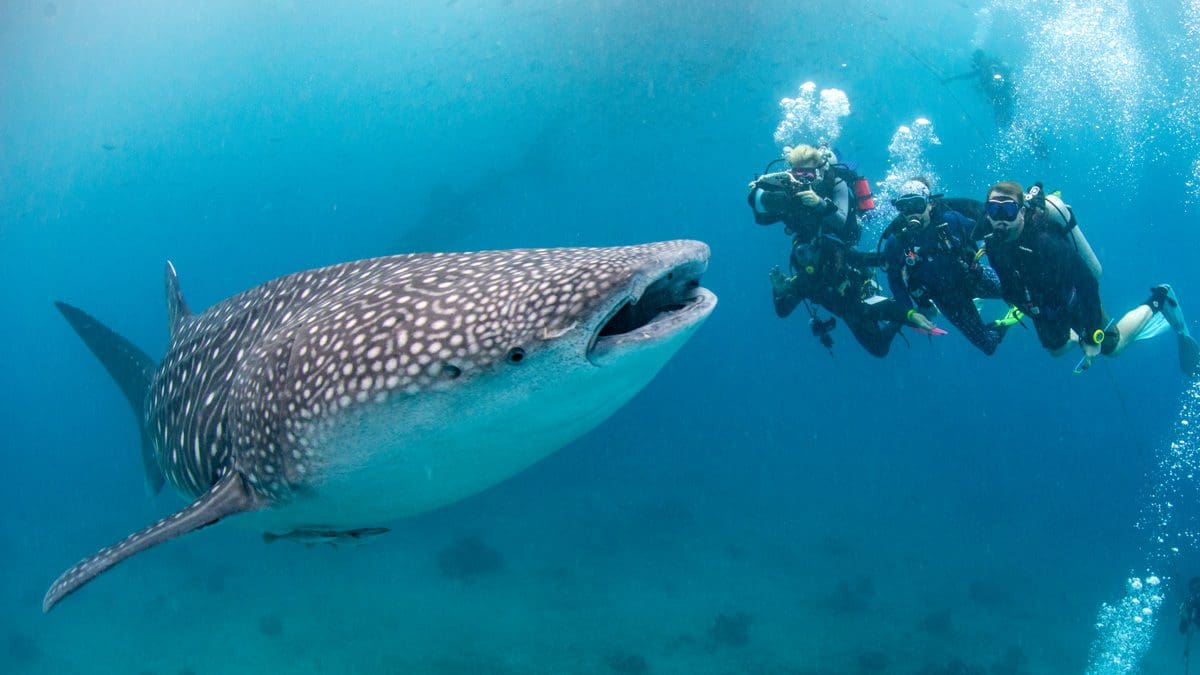
3. The Philippines is alsoย highย up on my list with Sea Explorers, and I would just tell you that taking kids to dive with Whale Sharks in Oslob, turtles at Apo Island, and to experience the largest to the smallest marine animals on one trip is truly life-changing. Pura Vida Homes is perfect for families. We sell out for Kids Sea Camp every year. Traveling in a private guided group is the way to go here, with an experienced dive team including Margo, Tom, and Bigs.

Top 5, Palau, kids and diving, family dive vacations4. Palau: Yes, I know it seems a long way to go, but Palau is definitely a Wow! Kids love JellyFish Lake; it’s the only time they don’t have to be afraid because the jellyfish don’t sting. It’s a rare opportunity to see the 8th wonder of the world! Palau is also one of the few places in the world where kids can safely learn about and dive with sharks, manta rays, and other big marine life. Many of the dive sites are in shallow water, easy for all to enjoy.

5. Fiji: To me, Fiji is all about family. It is all about love and children, music and dance, food and friendship. Itโ€™s a place where culture becomes an integral part of the trip.ย  Kids have so many opportunities to interact with the local villages and local children. It’s a very humbling experience and for sure an educational vacation. I believe there is one resort that stands out forย its Luxury 5-star service and diving:ย Jean-Michelย Cousteau’s resort. The name kinda says it all. 1- and 2-bedroom villas are perfect for families, with the Point Bure for families of 5. There is shore diving and spectacular reef and shark dives. JMC has a full-service, kid-friendly dive team. They can cater to any diet and are also special-needs-friendly. I have had great experiences at Castaway Island and Beqa Lagoon as well, but I would for sure say JMC is absolute perfection for kids.

With beautiful over-water cabanas and a private lagoon to snorkel or paddle board, itโ€™s perfect for families that want peace & tranquility. Mayan Princess offers 1 and 2-bedroom oceanfront villas with full Kitchens. The dive sites are 5-10 minutes away, and the boats are large and spacious. Both locations offer excellent in-ocean training areas for Seal Team & SASY. All-inclusive resorts are an easy way to budget your trip and get the most for your money!

PLUS FIVE

I know you only asked for 5, but since kids and diving are my life, I’m going to give you a few bits more. For liveaboards and kids, you can’t beat the Rocio Del Mar Team in the Sea of Cortez and Socorro. They are like papas in the water with kids and families, and really have an outstanding safety record. We offer a full-boat charter, so itโ€™s all about the kids. Dancing with sea lions and giant manta is an amazing liveaboard experience for kids and parents alike.

ย Roatan: The Bay Islands continue to be one of the dive worldโ€™s hidden treasures. The marine park has blossomed, and since its inception, there has been a huge comeback of turtles, large schools of fish, grouper, and lobster. There are so many shallow sites and beautiful beaches to explore. My two favorite properties for families are Turquoise Bay Beach Resort and Mayan Princess, both all-inclusive, owned and operated by local families.ย The staff is super kid-friendly at both resorts and dive operations, with Mayan Diversย andย Subway Divers offering lots of smaller tanks and kids’ gear.ย Turquoise Bay offers free horseback riding every day and has just completed a total resort renovation.

I did not talk about the beautiful Cayman Islands, where my own son was born and where my kids learned to dive, because everyone already knows how awesome they are. They’re easy to get to, lots to do, and a great choice for so many reasons.

ย All of the above are featured Kids Sea Camp destinations. That does not mean that’s all there is out there; it just means those are the ones I feel are best suited for our younger divers, SASY and Seals.

Taking your kids on dive adventures around the world is giving them a living classroom to learn in. It’s giving them a global view of the world and all its possibilities. It’s taking their dreams and making them a reality, a priceless family bonding adventure.

Kids Sea Camp has contributed to over 8,100 youth certifications and taken over 350 families a year diving. We have a perfect safety record, with zero accidents. Please join our Kids Sea Camp family at one of these locations this year. Cherish the opportunity to dive with your kids while they are still young. It’s one of the most beautiful, forever memories you can give them.

Margo Peyton, Owner, Kids Sea Camp & Family Dive Adventures
PADI Instructor 57474

What is the difference between BPI and Air2 on a BCD?

BCD, Air 2, Scuba equipment

How do I know which BCD is right for me?

Going hoseless or a full-on regulator system, in some cases, the kids or your buddy run out of air. Best for divers who have a regulator with a first stage, the second stage (primary), and the octopus. The octopus is a backup to handoff. In cases, the kids or your buddy run out or are low on air. I recommend this setup for parents diving with kids, or for a Buddy you know is not efficient with air consumption. I also recommend this BCD setup if you are a rescue diver or if you’re a PADI dive pro. For two reasons, really, because it should have a bright yellow hose, easily recognizable to someone needing it, or in a bit of panic, more noticeable, so they do not have to search too hard or accidentally grab your primary.

The Air 2 is the best for easy diving

Also, the octopus is a longer hose, so you do not have that person you’re helping on top of you. The Air2 is great for recreational divers who have no one else to worry about and feel the likelihood of needing it is nil.ย  I say this because Air2 is a substitute in the event of an out-of-air situation for your primary. So with an Air2. You do not need an additional, long, cumbersome hose (octopus) on your scuba gear. You can streamline and enjoy the first and second stages only on your reg. The Air2 is a regulator attached to the very short hose that has to be bent and curved up into your mouth for you to use, and your primary would then be handed off to the person in need. It’s heavier and less comfortable in your mouth when assisting someone.

The Air2 I feel is best for streamlined ease of diving and can be complemented with the addition of an air integrated computer system, such as the ScubaPro G2 quick release, G2, or Aladinย wristย computers that include a small transmitter that attaches to your first stage, eliminating the need for hoses, depth, and air gauges, and even include a digital compass. So you are then practically hoseless, lightweight, and streamlined.

A Hoseless BCD is freeing

I do use the hoseless setup when Tom and I have the rare opportunity to go diving and not be responsible for anyone but each other. It’s very freeing. Having said that, being the avid diver that I am, I have a tendency to be on the more cautious side. Even with that setup, I have a redundant air gauge attached. Tom and I have both experienced short interruptions in the transmitter signal during our dives. Someone’s strobes can cause it, and some cameras with Wi-Fi can, like SeaLife cameras and Ikelite video lights.

Also getting close to other divers with similar devices. I will say, this only lasts an instant and can be resolved by moving a few feet away from the interference. The light and camera interference I have found to be resolved by switching the hands I hold them in and moving the issue-causing device a little further away from the receiver. For example, if your receiver is worn on your left side with the computer on your left wrist, the camera or strobe causing the issue can be held in the right hand.

So make your BCD decision based on your needs, your buddy’s needs, your preferred level of comfort, and your budget. Gauges and BPI are the least expensive options.

I have used Scubapro for 35 years and stand by it for kids and adults. Scubapro recreational BCs generally only need to be serviced once every two years.

My favorite BCDs

My favorite BCDs are the Hydro-BPI, GO-BCD-air 2 for comfort and back support, and the Lighthawk for traveling light.ย All have integrated weight options;ย  for younger kids, the Rebel or the Glide X. All Pros, the Hydro Pro comes with two harnesses for pockets or streamlined for simple use with no pockets.

President of Kids Sea Camp & Family Dive Adventures, Margo Peyton, PADI MSDT Elite Instructor, 57474

Best practices and etiquette for underwater photographers

Underwater photography, diving and photos, kids sea camp

Underwater Photographers’ proper practices when shooting

By Josh Comay and Margo Peyton: (Professional Dive Travel Photographers)

After years of speaking to frustrated guests, underwater photographers, and divers, we felt compelled to put helpful etiquette tips together for photographers. I have been diving for 30 years, and I asked my fellow photographer, Josh Comay, to assist me and share his tips as well. I will share this with families that travel with Kids Sea Camp and Family Dive Adventures going forward, and I hope you will share it too. If you have any helpful advice to add, please let me know, and I will add it to this best-practices list. (Learn to edit with Erin Quigley)

Josh and I are very conscious and courteous photographers, and we are very aware that on my dive trips, we are serving guests. So we stay out of the way, stay patient, and try our best to make lasting memories for everyone on the dive trip, giving them all free memories to last a lifetime. Many of these points are great points for diving in general. So please read, enjoy, and when you feel the need, pass it forward. (Learn to shoot with Alex Mustard)

Best 10 practices for underwater photographers

  1. Do not touch/harass/move any wildlife: This is always at the top of an etiquette list for good reason. I can’t tell you how many times I’ve seen people “escort” wildlife into a better position for their photo ops. (Josh)
  2. Diving with other underwater photographers: when a photographer finds something interesting, they should take their shots without chasing the subject or harming it. A pro should take only 3 shots or fewer using flash or strobe! (NO more than 3 shots with lights) If you want to know why, put your face in front of your camera with the lights on and shoot away. See how long it takes you to see again! If you can use natural light, then do so. Shooting upwards instead of down is helpful, along with making sure the natural light source is at your back and on your subject. Without lights, shoot away, but remember to share your subject with others. (Margo)
  3. Master your buoyancy: Be sure to spend at least some of your underwater time practicing perfect buoyancy without a camera – it will do wonders for when you are armed. (Josh)
  4. Watch your fins: Your buoyancy should be maintained not only while taking your photos, but also when you leave, and you should be aware of where your fins are. Don’t be that person who destroys the subject and its environment, or kicks the next diver on your way out. Look around before you move and move cautiously. Do not shove another photographer out of the way or intrude on their shot. Move on to something else if they are not sharing, and send them this if it continues. (Margo)
  5. Give people space. Don’t crowd other divers, whether they are shooters or not. If you need to wait for your turn, do it down current so you don’t introduce particulate into the frame. (Josh)
  6. Big animals: If you are on a big-animal dive and everyone is being positioned so each person can have a view and a shot, stay in your position. When the lead says stay put, then stay put. If something big shows up towards the end of the dive, remember that everyone has the same amount of time remaining as you do. Be courteous to each other and remember these points. (Margo)
  7. Drop the flutter: Flutter kick near sand, and muck can ruin the scene for everyone. Learning and using the frog kick is essential so you don’t silt out other divers and their shots. (Josh)
  8. Where are your weights? Placement of weights is also very helpful if you have a bigger rig that pulls you forward, and places weights in the back of your BCD. Or even use ankle weights or camera floats. Remember, you still have to be neutrally buoyant if you need to put your camera down or hand it off. Your camera should not be your weight. (Margo)
  9. Pay it forward. Let the next diver in line know what you were shooting, and wait for their positive identification. There’s nothing more annoying than waiting your turn only to have the previous diver swim off without showing you where the Pygmy is hiding. (Josh)
  10. Space on the boat is precious: Don’t leave camera equipment strewn about. If you are lucky enough to have an area designated for cameras on board, tuck your strobes and arms compactly and store your equipment with consideration for other shooters’ rigs. (Josh)

The next best 10

  1. Share the shot: Settle in and take a few shots, but be respectful of others who may also be waiting. If you arrive just ahead of non-shooters, consider showing them the subject first; after they swim off, you can take your time shooting. (Josh)
  2. Set expectations: Some people like to limit a dive to just 2 or 3 subjects. Some people like quickly shooting a shot or two of every possible species they encounter. Consider having an open conversation with the other underwater photographers aboard to discuss your style and expectations. Not everyone may always agree, but if you don’t bring it up, you’ll never know. (Josh)
  3. Macro or wide-angle? Discuss the next day’s dive sites with the boat crew the day before, or even early that morning. There is nothing like showing up with your 60mm macro lens only to find out you’re diving with whale sharks today. (Margo)
  4. Mind your bubbles, too. It’s frustrating, to say the least, to be at 40 ft, for example, working on a shot, only to have a diver go under you and ruin the shot with their bubbles. (Margo)
  5. Don’t forget your buddy. Having a camera does not exempt you from being a good buddy. Even during the most intense shooting, be sure to keep a close eye on your buddy, just as you would normally. (Josh)
  6. Work as a team: It’s best for Buddy teams to have one shooter and one spotter. This is ideal as one can keep an eye on the other. I have witnessed a buddy photographer who does not pay attention to gauges and forgets to look at air, depth, and time. Running out of air is not OK. Going into DECO is not ok. Be a good buddy and pay attention. (Margo)
  7. Manage your depth, time, and profiles: Plan your dive and dive your plan! The deepest part of your dive is at the start, and you should continue shallower as the dive goes on. Not up and down or the other way around. (Margo)
  8. Respect all fellow divers: Camera-carrying divers don’t have special privileges, nor do non-shooting divers. Similarly, whether shooting a simple point-and-click or the latest ultra-DSLR rig, everyone should be afforded the same opportunities to explore the amazing underwater world. (Josh)
  9. On the boat, before you leave: Make sure the crew has a solo rinse bucket for cameras only, with no soaps. Make sure that it’s announced to all divers and the camera bin is pointed out. Ask whether the camera bucket is filled with salt or fresh water. It should be fresh water. If it’s a crowded photo dive, rinse your camera, then remove it from the bin and place it on the camera table, or request a crate for larger rigs. (Margo)
  10. You should never: Throw, drop, or toss a camera in the camera bucket, and certainly do not place it on top of someone else’s! Those that have a small point-and-shoot with a rubberized housing, like SeaLife cameras, are more rugged but can easily damage a large, fragile rig. Be courteous to the more fragile setups. If you have a larger setup, then don’t hog the camera bin. Fold your lights to save space, place your rig on the table, or request a crate. Don’t clutter camera tables with anything but cameras. That’s what it is for. (Margo)

The last eight best

  1. Getting on and off the boats: Get ready, point your camera toward the dive helper on the table or in the bin, and get in the water. Allow them to hand the camera to the photographer before others jump in. When exiting, hand up your rig and then get out. People behind a photographer should be patient and wait for the camera handoff either way.
  2. Let the crew know your plan: Make sure you discuss with them whether you’re going deeper, staying longer, or staying deep or shallow. (Margo)
  3. Everyone has a right to enjoy the dive: When shooting divers, treat them as observers, like you would a fish. Do not continue asking him or her to constantly pose. Don’t interrupt a class to take photos. A safety stop is a great time to get a pose or two. Before entering the water, discuss with the other divers that you would like to take their picture and ask if it’s okay. (Margo)
  4. Many divers just don’t know any better and are completely unaware. It’s important to advise divers traveling with you on what is considered courteous. (Margo)
  5. Say what you mean, but don’t say it mean: If you experience someone who is ruining your dives, and you or others have nicely said something and issues still continue, talk to the crew or the captain. It is their job to create a harmonious dive for all. (Margo)
  6. Get your own boat. If you like to hog the marine life and shots, if you do not want to share, and feel it’s all about you, then charter your own private boat and crew. (Margo)
  7. Help others be better: divers and photographers. We did not get to be without someone coaching us. (Margo)
  8. Bubbles only: Take only pictures, leave only bubbles. (Margo) (See our amazing gallery)