
Destination: Galapagos
Tiburon Explorer Liveaboard
Dates
Introduction
The Galapagos Empty Nesters Vacation
Welcome to the adult week of the Nester Nesters Travelers; The Tiburon Explorer liveaboard in the Galapagos Islands. This unique family dive adventure is designed for divers of all skill levels. We have planned a milder, more family-friendly diving schedule and itinerary, suited for recreational diving families. Kids Sea Camp has taken families with children to this majestic world heritage site for almost 20 years. We are the only organization that runs a combination of diving and land adventures in the Galapagos.
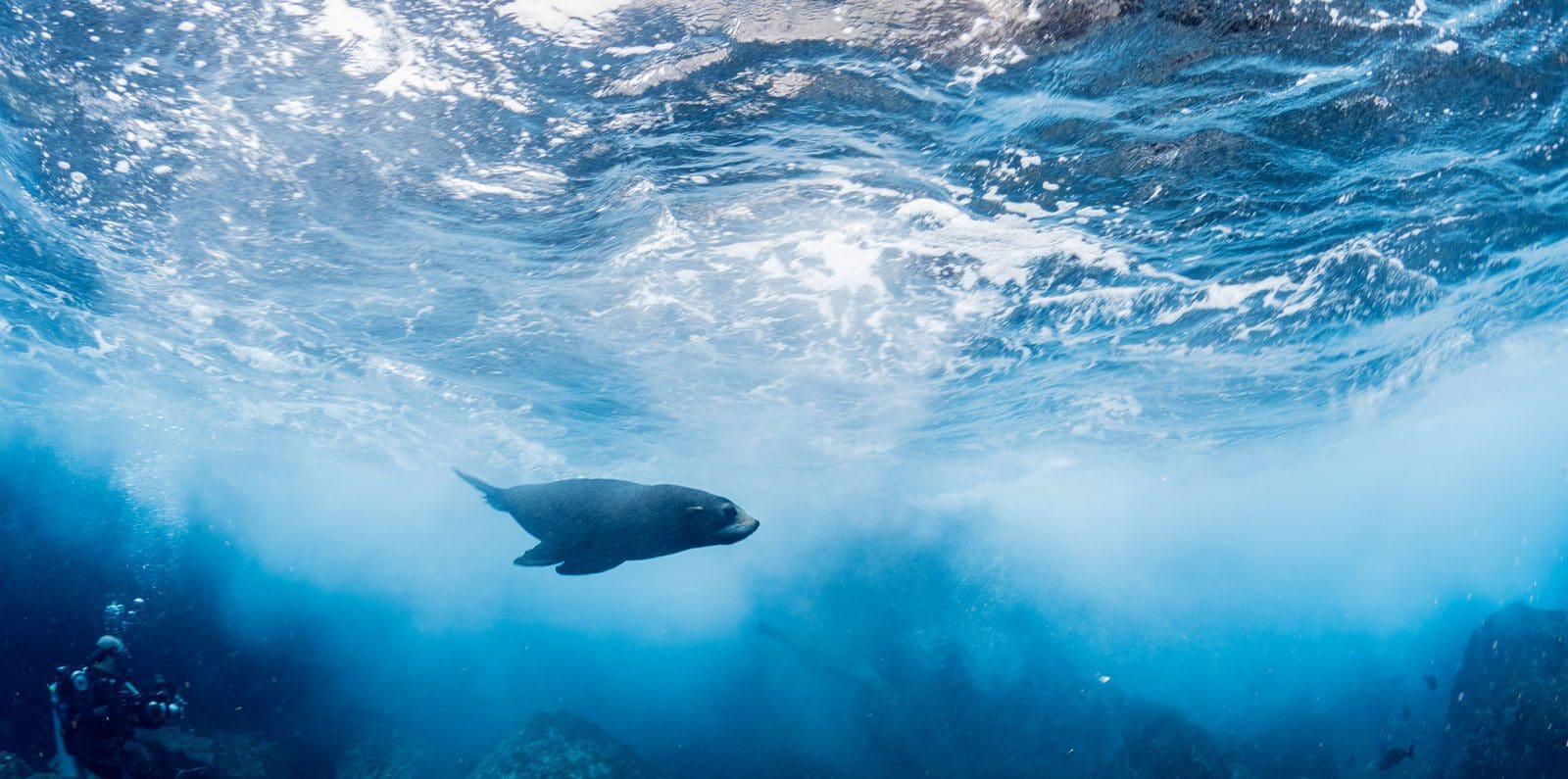
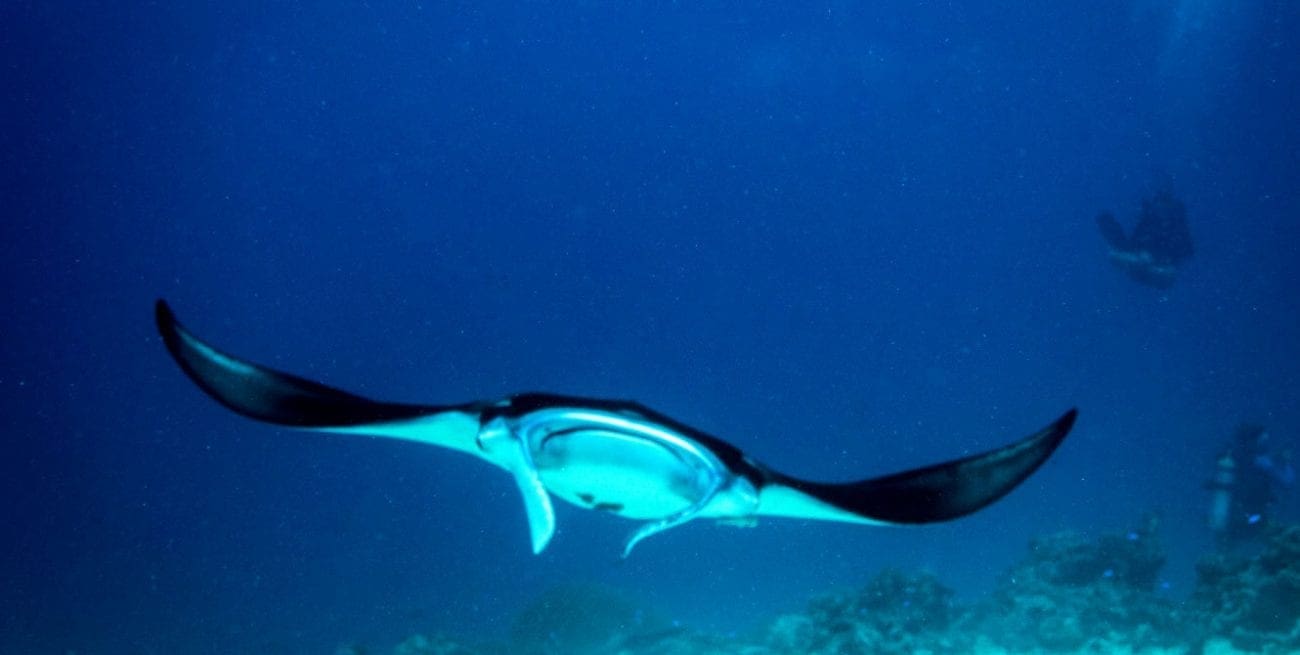
In the Galapagos, you can expect to encounter many species of sharks, rays, whale sharks, giant oceanic mantas, wild dolphins, sea lions, marine iguanas, and significant tornadoes of schooling fish. The vessel offers the most family-friendly dive team in Ecuador. A private Galapagos park guide will accompany you on all dives. Families will dive from 2 pangas set up for family dives. Marine presentations and slide shows featuring the day’s aquatic life will be provided weekly.
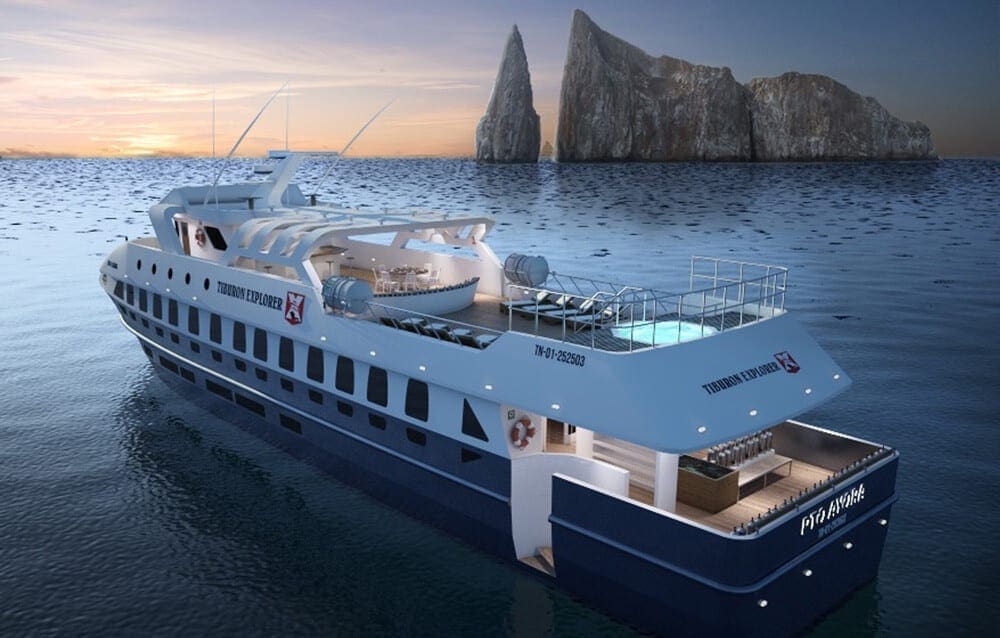
 The elegant & spacious 16-passenger M/V Tiburon Explorer Galapagos diving liveaboard features nine air-conditioned staterooms on the main and lower decks, each with a private bathroom and an ocean view. All nine cabins have twin beds and can be converted to queen beds for couples. The yacht features a partially covered sun deck with a Jacuzzi, ample seating, and a salon with a dining area, bar, and entertainment area.
The Tiburon Explorer diving liveaboard features a spacious dive deck that includes a bathroom, a large camera table with a charging station, individual storage areas, rinse bins for cameras, and another for gear. Diving operations are conducted from two large pangas (tenders), which are quickly boarded from the dive deck.
Bucket list trip of a lifetime! The Galapagos is a great place to dive all year round! If you can’t make the July trip, call us at 1.803.419.2556 about booking this “Bucket List” adventure.
Galapagos Information
- Galapagos entry information
- Galapagos/Ecuador Travel Protocols
- Explorer Ventures information
The Northern Galapagos Islands family dive adventure trip to Darwin and Wolf is rated #1 for diving, education, adventure, and diversity
This dive trip is genuinely for the intrepid traveler. Empty Nester Travelers have privately chartered the luxury 16-passenger Tiburon Explorer liveaboard and 11 Crew Members, including dive instructors and private park guides.
Reasons to go
- Learn about and experience the Galapagos Islands’ staggering array of marine life, nearly 20 percent of which is found nowhere else on Earth.
- Experience the ocean surrounding the Galapagos Islands with your kids, diving with sea turtles, sharks, sea lions, and over 500 fish species, out of which 25% are endemic.
- Sailing through these majestic Islands of the Galápagos, located 1,000 kilometers (600 miles) west of the mainland of Ecuador, is considered the crown jewel of scuba diving worldwide.
- Visit the Charles Darwin Institute. This archipelago was made famous by Charles Darwin’s publication The Origin of Species in 1859. The Galapagos is now a UNESCO World Heritage Site and is considered one of the Seven Wonders of the World.
- Only 14 permits a year are issued to dive in the Galapagos Islands, and you are one of the very few that will ever have the opportunity to dive and explore these islands above and below at a time of year, which is considered the peak whale shark season.
Please call us today at 1-803-419-2556. We will assist you with trip preparations for Ecuador and gear needs for your family, hotel stays, pre- and post-cruise tours, and information. We are experts in family travel and look forward to meeting your expectations and needs.
Finding Whale Sharks
The Galapagos Islands are located at the confluence of three great oceanic currents: the cold South Equatorial Current (source is the Humboldt Current), the warm Panama Current, and the cold, deep Cromwell Current. Every July, the tradewinds freshen, and the South Equatorial Current lowers land and water temperatures, providing a perfect environment for whale sharks.
Whale sharks are filter feeders, extracting plankton from the water, and often small fish. They are migratory and travel the oceans on regular routes to feed. The islands of the Galapagos provide numerous areas of natural upwelling during Whale Shark season – and the plankton loves this. And Whale Sharks love plankton!
Our underwater guides are the best sources for finding whale sharks. They know how to watch the wind, current, and water temperatures to determine the best spots to see whale sharks. While this is often at an underwater point facing the upwelling (but sometimes not the current – the upwelling and current may be different) it is often close to the reef.
Rates & Prices
Here are the rates for our weeks in the Galapagos on the Tiburon Explorer. We have chartered the ship from July 4 to 11th and from July 11 to 18th, 2026, and from July 8th-15th and July 15th-22nd, 2028.
Package Includes
Once you are on the yacht, it’s all covered!
Main deck Staterooms (1-6): Twins or queen beds, dresser, closet, and private ensuite bathroom with shower. Lower deck suites (7-9): large port windows, twin or queen beds, lounge area with sofa bed, and private ensuite bathroom with shower.
Price for the July 5th to 12th trip is $7,395* (an 80% increase for a single occ.) All pricing is in US Dollars, per person, double occupancy.
Not included and payable in the Galapagos: Galapagos National Park Fee (Cash only $200 per person), Chamber Support Fee ($35 35per person), Tourist card ($20 20per person), and fuel tax($150 150Per person). Domestic round-trip Airfare to the Galapagos Islands from GYE or UIO. Approximately $500 round-trip. Additional land tour options are available before/after the cruise. Guaranteed Single Occupancy is billed an additional 80% of the retail stateroom/suite price. *Fuel tax included as of July 2021.
Package includes
- Seven nights/8 days aboard the vessel
- Three meals daily, plus between-dive snacks
- 2-4 dives daily – a total of 18-19 dives
- Use of tanks, weights, and belts
- All domestic alcoholic and non-alcoholic beverages
- Airport transfers between the GPS and the boat for same-day arrivals and departures
- 1 afternoon guided land tour to see the lava tubes and the Galapagos Tortoise, departure 2 pm from the boat, Day 7.
- 1 afternoon guided land tour to see nesting Boobies, Sealions, Frigate birds, and other flora and fauna.
- 1 afternoon unguided in Galapagos’ main town, Santa Cruise, to shop and enjoy a few hours, along with dinner on your own.
- Daily briefings and presentations
- Closing ceremony and presentation
- Boutique time to shop on board
- 2 afternoon Panga excursions for photographers to see whales, dolphins, sea birds, and other Galapagos animals.
- Use of a hot tub on the top deck
- coffee and cappuccino maker
- Trip slide show and photos to share and keep
- 1 Galapagos guide in the water with each eight divers
- 2 private pangas to dive from
- Wifi
- Laundry washer and dryer
Packages do not include
- Hotel accommodations pre- or post-trip
- Flights to/from Galapagos
- International flights to UIO or GYE
- Last evening’s dinner
- Rental, instruction, nitrox, and retail charges
- Crew gratuities
- Trip cancellation & dive accident insurance(mandentory)
- Diver insurance DAN
- Premium alcoholic beverages
- Hyperbaric chamber fee
Schedule
Sample Itinerary: please note changes can be made due to weather
Saturday: Baltra (1 check-out Dive at Punta Carrion)
Guests fly to the Galapagos Islands from Mainland Ecuador in the late morning. The dive guides will meet the guests at the airport between 11:30 am and 12 pm and escort them to the Galapagos liveaboard, Tiburon Explorer. Guests will board the vessel, have lunch, and listen to the briefings. After the briefings, the guests will do a check-out dive at Punta Carrion. After dinner, the vessel will depart to the next scheduled destination.
Sunday: Baltra North (2 Dives)
6:30 and 9:30 dives
Sightings include rays and schools of fish.
Afternoon North Seymour land visit. Walk the path around North Seymour Island to see the large colonies of Blue Footed Boobies and Frigate Birds. Sighting of Sea Lions and Marine Iguanas is also common.
Depart for Wolf Island (long transit)
Monday: Wolf Island (4 Dives)
6:30, 10:30. 2:00 and 4:30 dives. Possible night dive.
Sightings often include hammerheads, the whale shark (in season), eagle rays, sea lions, Galapagos sharks, and silky sharks.
Tuesday: Darwin Island (4 Dives)
6:30, 10:30, 2:00 and 4:30 dives
Sightings often include hammerheads, whale sharks (in season), eagle rays, Galapagos, and silky sharks.
Transit to Wolf Island
Wednesday: Wolf Island (3-4 Dives)
6:30, 10:30, 2:00 and 4:30 dives
Sightings often include hammerheads, whale sharks (in season), eagle rays, Galapagos, and silky sharks.
Transit to Cabo Douglas (12 hours)
Thursday: Cabo Douglas (1-2 Dives)
Sightings include marine iguanas.
Transit to Punta Vicente Roca
Punta Vicente Roca (1-2 Dives)
Sightings often include mola mola, turtles, and macrolife
Transit to Cousins Rock (10 hours)
Friday: Cousins Rock (2 Dives)
6:30 and 9:30 dives
This is great macro diving, with an excellent chance of seeing sea horses, sea lions, and eagle rays. Lunch will be served while transiting to Santa Cruz (3 hours). Travel by bus to the Santa Cruz Highlands to visit the giant tortoises in their natural habitat. Transfer to the town of Puerto Ayora. Dinner on your own in Puerto Ayora. Return to the Tiburon Explorer at 8:30 p.m.
Saturday: Baltra
Depart the vessel by 9 am. Transfer to the airport.
Accommodations
Sleep in luxury on the open ocean
After an exciting and awesome day of diving in the Galapagos, you might be a little tired. The Tiburon Explorer has just the cabins to refresh and recharge to dive again the next day.
Master Stateroom cabins: 1-4 are located on the Dolphin deck (deck plans) and have two twin beds (that can be joined together), private facilities, window view, mirrored cabinet, wardrobe, bathrobes, hairdryer, biodegradable toiletries, fresh towels daily, air conditioning and volume controls.
Deluxe Stateroom cabins: 5-8 are located on the Iguana deck (deck plans) and have two twin beds, private facilities, a Portlight view, a mirrored cabinet, a wardrobe, bathrobes, hairdryer, biodegradable toiletries, fresh towels daily, air conditioning, and volume controls.
Rates include
- Cabin accommodation
- All meals, snacks, beverages (including beer and wine with dinner)
- Air or nitrox-filled tanks
- Weights, weight belt
- Up to 4 dives per day on 5.5 days for 7-night cruises
- 8.5 days of diving on 10-night cruises
- 3 land excursions, service of naturalist guides and dive masters
- Transfers in the Islands between airport and dock from flights arriving before 1:00 pm
The Tiburon Explorer specifications
- Length overall: 125ft (38 meters)
- Beam: 24.6 ft (7.5 meters)
- Maximum Speed: 12 knots
- Accommodations: 16 passengers in 9 air-conditioned staterooms on main and lower decks, all with private bathrooms and showers. All nine staterooms have twin beds and the staterooms can be converted to queen beds for couples. Up to 9 crew and 2 guides in the Cruise Director Cabin.
- Safety Equipment: Life rafts (2), life rings/strobes, life vests/strobes, emergency position locator, flares, oxygen, and first aid equipment
- Air Systems: 2 electric Bauer compressors with a nitrox membrane, producing 32% nitrox
- Tenders: Rigid hull inflatables (2), used for passenger transport and diver pickup
- Accessories: Diving Equipment
Diving / Diving Site(s)
Diving in the Galapagos
The Diving
The Galapagos is a rustic and raw destination. We travel out to Darwin and Wolf, the farthest Northern Islands of the Galapagos, to dive with the larger and rarer pelagics. In order to do that, we are on a luxury Liveaboard Yacht. I would not recommend this trip for anyone under the age of 10, and I genuinely prefer ages 12 and up.
Having said that, we have been taking families with kids as young as 8 to the Galapagos for 14 years. Those kids that I have made acceptions for were very mature and excellent swimmers and snorkelers, so they enjoyed playing with sea lions and snorkeling with turtles and marine iguanas and had no issues with being on a boat in relation to seasickness. I take kids who are certified divers at ages 10 and 11, and it is pretty easy for me to do. However, at that age, their maximum depth is 40ft. So it’s perfect for the wild dolphins, iguanas, sea lions, and turtles, However, to truly experience diving in the Galapagos, the 70 ft limit of kids age 12+ is more desirable for a more memorable experience.
The Galapagos Islands feature about 30 available dive areas, and this is why Galapagos is definitively the best location for Ecuador scuba diving adventures.
Northern Galápagos Islands dive adventure: The best and most abundant marine life is around the archipelago’s northern islands, especially Wolf Island and Darwin Island. Live-Aboard Only can access these islands.
Education and Learning
The waters around the small, remote islands of Darwin and Wolf contain the largest biomass of sharks on the planet. You will learn about the most important species for the survival of our oceans. Sharks are found here like no other place on earth. Many come here, migrating from around the world to reproduce. This makes them vulnerable to commercial shark fin poachers and long-line fishermen. Although the numbers decreased yearly due to worldwide shark finning, diving in the Galapagos still yields massive schools of Hammerheads, rays, and other marine life. You will see and experience what may not be around for other generations to come. Upon arriving in the Galapagos, each person pays a $100 park fee in cash. This goes to support, protect, and care for this remarkable preserve.
At Wolf Island, divers are rewarded with many reef fish, including schools of angelfish, after the long twelve-hour trip from Santa Cruz. The sea depth ranges from 12 to 20 meters. The area known as El Derrumbe is reputed to be the best place in the Galápagos to see hammerhead sharks. The caves around the island offer opportunities to observe white-tipped reef sharks, hawkfish, sea turtles, and pufferfish.
Darwin Island is just two hours north of Wolf Island. The shelves drop from 15 to 22 meters. Various sea life lives here, including moray eel, surgeonfish, serranid, carangid species, and triggerfish.
Courses Offered
- PADI Underwater Naturalist: Learn critical differences between the terrestrial and aquatic worlds, major aquatic life groupings, interactions, and information that dispels myths and responsible interactions with marine life. Click here for more info.
- PADI Digitial Underwater Photographer: Learn how to choose the right underwater camera system for you, the PADI SEA (Shoot, Examine, Adjust) method for getting great shots quickly, principles for good composition of underwater images, practical techniques to take great photos with your digital camera. Click here for more info.
Sample Itinerary
Saturday: Baltra (1 Check Out Dive at Punta Carrion) Guests fly to the Galapagos Islands from Mainland Ecuador, arriving in the late morning. The dive guides will meet the guests at the airport between 11:30 am and 12 pm and escort them to the Galapagos liveaboard, Tiburon Explorer. Guests will board the vessel, have lunch, and listen to the briefings. After the briefings, the guests will do a checkout dive at Punta Carrion. After dinner, the vessel will depart to the next scheduled destination.
Sunday: Baltra North (2 Dives) 6:30 and 9:30 dives. Sightings include rays and schools of fish—afternoon North Seymour land visit. Walk the path around North Seymour Island to see the large colonies of Blue Footed Boobies and Frigate Birds. Sighting of Sea Lions and Marine Iguanas is common. Depart for Wolf Island (long transit)
Monday: Wolf Island (4 Dives) 6:30, 10:30. 2:00 and 4:30 dives. Possible night dive. Sightings often include hammerheads, whale shark (in season), eagle rays, sea lions, Galapagos, and silky sharks.
Tuesday: Darwin Island (4 Dives) 6:30, 10:30, 2:00 and 4:30 dives. Sightings often include hammerheads, whale sharks (in season), eagle rays, Galapagos, and silky sharks. Transit to Wolf Island
Wednesday: Wolf Island (3-4 Dives) 6:30, 10:30, 2:00, and 4:30 dives. Sightings often include hammerheads, whale sharks (in season), eagle rays, Galapagos, and silky sharks. Transit to Cabo Douglas (12 hours)
Thursday: Cabo Douglas (1-2 Dives) Sightings include marine iguanas. Transit to Punta Vicente Roca. Punta Vicente Roca (1-2 Dives) Sightings often include mola-mola, turtles, and macro life. Transit to Cousins Rock (10 hours)
Friday: Cousins Rock (2 Dives) 6:30 and 9:30 dives. This is great macro diving, with an excellent chance of seeing sea horses, sea lions, and eagle rays. Lunch will be served while transiting to Santa Cruz (3 hours). Travel by bus to the Santa Cruz Highlands to visit the giant tortoises in their natural habitat. Transfer to the town of Puerto Ayora. Dinner on your own in Puerto Ayora. Return to the Tiburon Explorer at 8:30 p.m.
Saturday: Baltra, Depart the vessel by 9 a.m. Transfer to the airport.
Dining / Restaurant(s)
Food aboard the Tiburon Explorer
- The Tiburon Explorer, lunch and evening meals usually consist of salad, potatoes, rice, chicken, beef, pork, and fish. Breakfast is the usual fare of eggs, cereal, toast, and fresh fruit. If you have any dietary restrictions or requests, please indicate so on your KSC application form.
- Please note that specific brands of soft drinks, dressings, and foods are often unavailable on the islands, and it can be very difficult for a remote liveaboard to find low-fat or soy products and other items common elsewhere. While the Tiburon Explorer will do its best to accommodate your requests, please be realistic and consider bringing some of your own items if the lack thereof may constitute a health risk or seriously compromise the enjoyment of your vacation.
Activities
It’s all about diving!
There really isn’t anything else to do on the Galapagos Sky but dive. Yeah, we will take some afternoon walks on some of the islands, but is a liveaboard. This is a “Bucket List” adventure, let’s go diving! So here’s more diving information for the trip.
Gear on The Tiburon Explorer (See video of what you could see!)
We highly recommend that divers bring their own gear. Advanced diving conditions that are common in Galapagos truly call for divers to be on their own, known, and properly fitting gear. Keep in mind Limited Sizes & Quantities are available. Please note that The Tiburon Explorer doesn’t rent or sell gloves, torches/underwater lights, or dive knives. The vessel provides tanks, weights, and weight belts for your use. If you prefer to rent the rest of your equipment from us, we have all of the equipment that you will need. Please indicate on your application form what equipment (and size) you will require. Otherwise, the following items are the diver’s responsibility:
- Certification Card
- Diving Log Book (strongly encouraged)
- Mask *
- Snorkel
- Fins/Booties *
- Buoyancy Control Device (required) *
- Regulator w/alternate air source, submersible pressure, and depth gauges (required)*
- Dive computer (required) *
- Dive light
- Wet suit: 5 mm to 7 mm *
- Hooded vest or hood
- Gloves
- Repair kit w/ spare parts
- Safety flag *
- DiveAlert air horn for regulator *
- Nautilus Lifeline *
* Available for rent onboard. Rental/Course Pricing (PDF) Most of our guests bring their own complete set of dive gear. This is the ideal situation; however, due to weight limits or additional travel plans, some of our guests choose to rent gear. We strongly recommend bringing your own mask, gloves, booties, fins, hood or hooded vest, and computer. A personal wetsuit is also a good idea if you have space. Diving in Galapagos can be challenging, and it is important that you are comfortable. Gloves are suggested as the rocks can be sharp and can damage hands.
Know Before You Go
Bucket lists diving takes some time. Getting to the Galapagos
First a note about having a current Passport: Passports with a minimum of 6 months remaining before the expiration date are required for all arriving foreign nationals. If in doubt about visas, contact the Ecuadorian Consulate for specific requirements from your country. Transfers between the airport (Baltra/GPS) and vessel for same-day arrivals & departures are included. If you are arriving early and staying on Santa Cruz Island or arriving from another island, please meet the Tiburon Explorer representative at the airport arrivals area at 11:30 am. Departure from the Baltra airport to Tiburon Explorer is at 12 noon.
If you miss any of your flights and are not able to make it to Ecuador or the Galapagos on schedule, please contact Galasam, our Ecuadorian partner, at 011-593-99703-1382 or 011-593-99529-7471. Notify them of your updated arrival time and where you may be reached in the meantime. The vessel will leave port on Saturday at approximately 2:00 pm. Retrieving lost luggage after the vessel departs on charter is impossible. It can be retrieved when the vessel returns to port at the end of the charter. The vessel arrives at its final destination port on Saturday morning. The Friday evening meal is on the island and is not included in the price of the trip. Transportation is organized and included for transfer to the airport. The departure tax from Quito and Guayaquil is now included in international flight prices.
Please note: Flight times, prices, and the Galapagos airport of arrival are all subject to change with little or no notification, and flights often run late. We strongly encourage our guests to plan on arriving at least one and preferably two days prior to their flight to the Galapagos Islands, to ensure that their luggage is with them or to make up for any travel delays.
We also recommend that guests plan on an extra night in Quito or Guayaquil before departing Ecuador. The earliest time a guest can reliably expect to connect to another flight is 5 pm on the last Saturday of the trip from Guayaquil or 7 pm from Quito. Ticket holders have required to check in a minimum of three hours prior to flight time for all international departures, even when connecting from an Aerogal or Tame flight. If you are booking your own domestic flights, the Tiburon Explorer departs from Baltra (GPS), not San Cristobal (SCY). Passengers flying into San Cristobal must arrange their own transportation to Baltra.
Quito Hotels
- Hotel Mercure Alameda Quito
- Casa Jimenita
- Wyndham Quito Airport
Guayaquil Hotels
- Wyndham Guayaquil
- Hotel Macaw
San Cristobal Hotel
- Galapagos Eco-Friendly
Santa Cruz Hotels
- Galapagos Suites Hotel
- Hotel Pelican Bay
- La Isla Hotel
Tiburon Explorer Liveaboard
Introduction
The Galapagos Dive Vacation
In the Galapagos, you can expect to encounter many species of sharks, rays, whale sharks, giant oceanic mantas, wild dolphins, sea lions, marine iguanas, and significant tornadoes of schooling fish. The vessel offers the most family-friendly dive team in Ecuador. A private Galapagos park guide will accompany you on all dives. Families will dive from 2 pangas set up for families to dive together. Marine presentations and slide shows featuring the day’s aquatic life will be provided weekly.
The elegant & spacious 16-passenger M/V Tiburon Explorer Galapagos diving liveaboard features nine air-conditioned staterooms on the main and lower decks, each with a private bathroom and an ocean view. All nine cabins have twin beds and can be converted to queen beds for couples. The yacht features a partially covered sun deck with a Jacuzzi, ample seating, and a salon area that includes a dining area, a bar, and an entertainment area.
The Tiburon Explorer
Galapagos diving liveaboard features a spacious dive deck that includes a
bathroom, a large camera table with a charging station, individual storage areas, rinse bins for cameras, and another for gear. Diving operations are conducted from two large pangas (tenders), which are quickly boarded from the dive deck.
The Galapagos is a great place to dive all year round! If you can’t make the July trip, call us at 1.803.419.2556 about booking this “Bucket List” adventure.
Galapagos Information
- Galapagos entry information
- Galapagos/Ecuador Travel Protocols
- Explorer Ventures information
The Northern Galapagos Islands family dive adventure trip to Darwin and Wolf is rated #1 for diving, education, adventure, and diversity
This dive trip is genuinely for the intrepid traveler. If you want to honestly share a memory to last a lifetime, join Kids Sea Camp for our 15th Family Dive Adventure week to the Galapagos Islands. We have privately chartered the luxury 16-passenger Tiburon Explorer liveaboard and 11 Crew Members, including dive instructors and private park guides.
Reasons to go
- You will learn about and experience the Galapagos Islands’ staggering array of marine life, nearly 20 percent of which is found nowhere else on Earth.
- You will learn about and experience the ocean surrounding the Galapagos Islands with your kids, diving with sea turtles, sharks, sea lions, and over 500 fish species, out of which 25% are endemic.
- You will sail through these majestic Islands of the Galápagos, located 1,000 kilometers (600 miles) west of the mainland of Ecuador, and are considered the crown jewel of scuba diving worldwide.
- You will visit the Charles Darwin Institute. This archipelago was made famous by Charles Darwin’s publication The Origin of Species in 1859. The Galapagos is now a UNESCO World Heritage Site and is considered one of the Seven Wonders of the World.
- Only 14 permits a year are issued to dive in the Galapagos Islands, and you are one of the very few that will ever have the opportunity to dive and explore these islands above and below at a time of year, which is considered the peak whale shark season.
Please call us today at 1-803-419-2556. We will assist you with trip preparations for Ecuador and gear needs for your family, hotel stays, pre and post-cruise tours, and information. We are experts in family travel and look forward to meeting your expectations and needs.
Finding Whale Sharks
The Galapagos Islands are located at the confluence of three great oceanic currents: the cold South Equatorial Current (source is the Humboldt Current), the warm Panama Current, and the cold, deep Cromwell Current. Every July, the tradewinds freshen, and the South Equatorial Current lowers land and water temperatures, providing a perfect environment for whale sharks.
Whale sharks are filter feeders, extracting plankton from the water, and often small fish. They are migratory and travel the oceans on regular routes to feed. The islands of the Galapagos provide numerous areas of natural upwelling during Whale Shark season – and the plankton loves this. And Whale Sharks love plankton!
Our underwater guides are the best sources for finding whale sharks. They know how to watch the wind, current, and water temperatures to determine the best spots to see whale sharks. While this is often at an underwater point facing the upwelling (but sometimes not the current – the upwelling and current may be different) it is often close to the reef.
Package Includes
Once you are on the yacht, it’s all covered!
Main deck Staterooms (1-6): Twins or queen beds, dresser, closet, and private ensuite bathroom with shower. Lower deck suites (7-9): large port windows, twin or queen beds, lounge area with sofa bed, and private ensuite bathroom with shower.
Price for the July 5th to 12th Kids Sea Camp: $7,395* (80% increase for single occ.) All pricing is in US Dollars, per person, double occupancy.
Not included and payable in the Galapagos: Galapagos National Park Fee (Cash only $200 per person), Chamber Support Fee ($35 35per person), Tourist card ($20 20per person), and fuel tax($150 150Per person). Domestic round-trip Airfare to the Galapagos Islands from GYE or UIO. Approximately $500 round-trip. Additional land tour options are available before/after the cruise. Guaranteed Single Occupancy is billed an additional 80% of the retail stateroom/suite price. *Fuel tax included as of July 2021.
Package includes
- Seven nights/8 days aboard the vessel
- Three meals daily, plus between-dive snacks
- 2-4 dives daily – a total of 18-19 dives
- Use of tanks, weights, and belts
- All domestic alcoholic and non-alcoholic beverages
- Airport transfers between the GPS and the boat for same-day arrivals and departures
- 1 afternoon guided land tour to see the lava tubes and the Galapagos Tortoise, departure 2 pm from the boat, Day 7.
- 1 afternoon guided land tour to see nesting Boobies, Sealions, Frigate birds, and other flora and fauna.
- 1 afternoon unguided in Galapagos’ main town, Santa Cruise, to shop and enjoy a few hours, along with dinner on your own.
- Daily briefings and presentations
- Closing ceremony and presentation
- Boutique time to shop on board
- 2 afternoon Panga excursions for photographers to see whales, dolphins, sea birds, and other Galapagos animals.
- Use of ahot tub on the top deck
- coffee and cappuccino maker
- Trip slide show and photos to share and keep
- 1 Galapagos guide in the water with each eight divers
- 2 private pangas to dive from
- Wifi
- Laundry washer and dryer
Packages do not include
- Hotel accommodations pre- or post-trip
- Flights to/from Galapagos
- International flights to UIO or GYE
- Last evening’s dinner
- Rental, instruction, nitrox, and retail charges
- Crew gratuities
- Trip cancellation & dive accident insurance(mandentory)
- Diver insurance DAN
- Premium alcoholic beverages
- Hyperbaric chamber fee
Accommodations
Sleep in luxury on the open ocean
After an exciting and awesome day of diving in the Galapagos, you might be a little tired. The Tiburon Explorer has just the cabins to refresh and recharge to dive again the next day.
Master Stateroom cabins: 1-4 are located on the Dolphin deck (deck plans) and have two twin beds (that can be joined together), private facilities, window view, mirrored cabinet, wardrobe, bathrobes, hairdryer, biodegradable toiletries, fresh towels daily, air conditioning and volume controls.
Deluxe Stateroom cabins: 5-8 are located on the Iguana deck (deck plans) and have two twin beds, private facilities, a Portlight view, a mirrored cabinet, a wardrobe, bathrobes, hairdryer, biodegradable toiletries, fresh towels daily, air conditioning, and volume controls.
Rates include
- Cabin accommodation
- All meals, snacks, beverages (including beer and wine with dinner)
- Air or nitrox-filled tanks
- Weights, weight belt
- Up to 4 dives per day on 5.5 days for 7-night cruises
- 8.5 days of diving on 10-night cruises
- 3 land excursions, service of naturalist guides and dive masters
- Transfers in the Islands between airport and dock from flights arriving before 1:00 pm
The Tiburon Explorer specifications
- Length overall: 125ft (38 meters)
- Beam: 24.6 ft (7.5 meters)
- Maximum Speed: 12 knots
- Accommodations: 16 passengers in 9 air-conditioned staterooms on main and lower decks, all with private bathrooms and showers. All nine staterooms have twin beds and the staterooms can be converted to queen beds for couples. Up to 9 crew and 2 guides in the Cruise Director Cabin.
- Safety Equipment: Life rafts (2), life rings/strobes, life vests/strobes, emergency position locator, flares, oxygen, and first aid equipment
- Air Systems: 2 electric Bauer compressors with a nitrox membrane, producing 32% nitrox
- Tenders: Rigid hull inflatables (2), used for passenger transport and diver pickup
- Accessories: Diving Equipment
Diving / Diving Site(s)
Diving in the Galapagos
The Diving
The Galapagos is a rustic and raw destination. We travel out to Darwin and Wolf, the farthest Northern Islands of the Galapagos, to dive with the larger and rarer pelagics. In order to do that, we are on a luxury Liveaboard Yacht. I would not recommend this trip for anyone under the age of 10, and I genuinely prefer ages 12 and up.
Having said that, we have been taking families with kids as young as 8 to the Galapagos for 14 years. Those kids that I have made acceptions for were very mature and excellent swimmers and snorkelers, so they enjoyed playing with sea lions and snorkeling with turtles and marine iguanas and had no issues with being on a boat in relation to seasickness. I take kids who are certified divers at ages 10 and 11, and it is pretty easy for me to do. However, at that age, their maximum depth is 40ft. So it’s perfect for the wild dolphins, iguanas, sea lions, and turtles, However, to truly experience diving in the Galapagos, the 70 ft limit of kids age 12+ is more desirable for a more memorable experience.
The Galapagos Islands feature about 30 available dive areas, and this is why Galapagos is definitively the best location for Ecuador scuba diving adventures.
Northern Galápagos Islands dive adventure: The best and most abundant marine life is around the archipelago’s northern islands, especially Wolf Island and Darwin Island. Live-Aboard Only can access these islands.
Education and Learning
The waters around the small, remote islands of Darwin and Wolf contain the largest biomass of sharks on the planet. You will learn about the most important species for the survival of our oceans. Sharks are found here like no other place on earth. Many come here, migrating from around the world to reproduce. This makes them vulnerable to commercial shark fin poachers and long-line fishermen. Although the numbers decreased yearly due to worldwide shark finning, diving in the Galapagos still yields massive schools of Hammerheads, rays, and other marine life. You will see and experience what may not be around for other generations to come. Upon arriving in the Galapagos, each person pays a $100 park fee in cash. This goes to support, protect, and care for this remarkable preserve.
At Wolf Island, divers are rewarded with many reef fish, including schools of angelfish, after the long twelve-hour trip from Santa Cruz. The sea depth ranges from 12 to 20 meters. The area known as El Derrumbe is reputed to be the best place in the Galápagos to see hammerhead sharks. The caves around the island offer opportunities to observe white-tipped reef sharks, hawkfish, sea turtles, and pufferfish.
Darwin Island is just two hours north of Wolf Island. The shelves drop from 15 to 22 meters. Various sea life lives here, including moray eel, surgeonfish, serranid, carangid species, and triggerfish.
Courses Offered
- PADI Underwater Naturalist: Learn critical differences between the terrestrial and aquatic worlds, major aquatic life groupings, interactions, and information that dispels myths and responsible interactions with marine life. Click here for more info.
- PADI Digitial Underwater Photographer: Learn how to choose the right underwater camera system for you, the PADI SEA (Shoot, Examine, Adjust) method for getting great shots quickly, principles for good composition of underwater images, practical techniques to take great photos with your digital camera. Click here for more info.
Sample Itinerary
Saturday: Baltra (1 Check Out Dive at Punta Carrion) Guests fly to the Galapagos Islands from Mainland Ecuador, arriving in the late morning. The dive guides will meet the guests at the airport between 11:30 am and 12 pm and escort them to the Galapagos liveaboard, Tiburon Explorer. Guests will board the vessel, have lunch, and listen to the briefings. After the briefings, the guests will do a checkout dive at Punta Carrion. After dinner, the vessel will depart to the next scheduled destination.
Sunday: Baltra North (2 Dives) 6:30 and 9:30 dives. Sightings include rays and schools of fish—afternoon North Seymour land visit. Walk the path around North Seymour Island to see the large colonies of Blue Footed Boobies and Frigate Birds. Sighting of Sea Lions and Marine Iguanas is common. Depart for Wolf Island (long transit)
Monday: Wolf Island (4 Dives) 6:30, 10:30. 2:00 and 4:30 dives. Possible night dive. Sightings often include hammerheads, whale shark (in season), eagle rays, sea lions, Galapagos, and silky sharks.
Tuesday: Darwin Island (4 Dives) 6:30, 10:30, 2:00 and 4:30 dives. Sightings often include hammerheads, whale sharks (in season), eagle rays, Galapagos, and silky sharks. Transit to Wolf Island
Wednesday: Wolf Island (3-4 Dives) 6:30, 10:30, 2:00, and 4:30 dives. Sightings often include hammerheads, whale sharks (in season), eagle rays, Galapagos, and silky sharks. Transit to Cabo Douglas (12 hours)
Thursday: Cabo Douglas (1-2 Dives) Sightings include marine iguanas. Transit to Punta Vicente Roca. Punta Vicente Roca (1-2 Dives) Sightings often include mola-mola, turtles, and macro life. Transit to Cousins Rock (10 hours)
Friday: Cousins Rock (2 Dives) 6:30 and 9:30 dives. This is great macro diving, with an excellent chance of seeing sea horses, sea lions, and eagle rays. Lunch will be served while transiting to Santa Cruz (3 hours). Travel by bus to the Santa Cruz Highlands to visit the giant tortoises in their natural habitat. Transfer to the town of Puerto Ayora. Dinner on your own in Puerto Ayora. Return to the Tiburon Explorer at 8:30 p.m.
Saturday: Baltra, Depart the vessel by 9 a.m. Transfer to the airport.
Dining / Restaurant(s)
Food aboard the Tiburon Explorer
- The Tiburon Explorer, lunch and evening meals usually consist of salad, potatoes, rice, chicken, beef, pork, and fish. Breakfast is the usual fare of eggs, cereal, toast, and fresh fruit. If you have any dietary restrictions or requests, please indicate.
- Please note that specific brands of soft drinks, dressings, and foods are often unavailable on the islands, and it can be very difficult for a remote liveaboard to find low-fat or soy products and other items common elsewhere. While the Tiburon Explorer will do its best to accommodate your requests, please be realistic and consider bringing some of your own items if the lack thereof may constitute a health risk or seriously compromise the enjoyment of your vacation.
Activities
It’s all about diving!
There really isn’t anything else to do on the Galapagos Sky but dive. Yeah, we will take some afternoon walks on some of the islands, but is a liveaboard. This is a “Bucket List” adventure, let’s go diving! So here’s more diving information for the trip.
Gear on The Tiburon Explorer (See video of what you could see!)
We highly recommend that divers bring their own gear. Advanced diving conditions that are common in Galapagos truly call for divers to be on their own, known, and properly fitting gear. Keep in mind Limited Sizes & Quantities are available. Please note that The Tiburon Explorer doesn’t rent or sell gloves, torches/underwater lights, or dive knives. The vessel provides tanks, weights, and weight belts for your use. If you prefer to rent the rest of your equipment from us, we have all of the equipment that you will need. Please indicate on your application form what equipment (and size) you will require. Otherwise, the following items are the diver’s responsibility:
- Certification Card
- Diving Log Book (strongly encouraged)
- Mask *
- Snorkel
- Fins/Booties *
- Buoyancy Control Device (required) *
- Regulator w/alternate air source, submersible pressure, and depth gauges (required)*
- Dive computer (required) *
- Dive light
- Wet suit: 5 mm to 7 mm *
- Hooded vest or hood
- Gloves
- Repair kit w/ spare parts
- Safety flag *
- DiveAlert air horn for regulator *
- Nautilus Lifeline *
* Available for rent onboard. Rental/Course Pricing (PDF) Most of our guests bring their own complete set of dive gear. This is the ideal situation; however, due to weight limits or additional travel plans, some of our guests choose to rent gear. We strongly recommend bringing your own mask, gloves, booties, fins, hood or hooded vest, and computer. A personal wetsuit is also a good idea if you have space. Diving in Galapagos can be challenging, and it is important that you are comfortable. Gloves are suggested as the rocks can be sharp and can damage hands.
Know Before You Go
Bucket lists diving takes some time. Getting to the Galapagos
First a note about having a current Passport: Passports with a minimum of 6 months remaining before the expiration date are required for all arriving foreign nationals. If in doubt about visas, contact the Ecuadorian Consulate for specific requirements from your country. Transfers between the airport (Baltra/GPS) and vessel for same-day arrivals & departures are included. If you are arriving early and staying on Santa Cruz Island or arriving from another island, please meet the Tiburon Explorer representative at the airport arrivals area at 11:30 am. Departure from the Baltra airport to Tiburon Explorer is at 12 noon.
If you miss any of your flights and are not able to make it to Ecuador or the Galapagos on schedule, please contact Galasam, our Ecuadorian partner, at 011-593-99703-1382 or 011-593-99529-7471. Notify them of your updated arrival time and where you may be reached in the meantime. The vessel will leave port on Saturday at approximately 2:00 pm. Retrieving lost luggage after the vessel departs on charter is impossible. It can be retrieved when the vessel returns to port at the end of the charter. The vessel arrives at its final destination port on Saturday morning. The Friday evening meal is on the island and is not included in the price of the trip. Transportation is organized and included for transfer to the airport. The departure tax from Quito and Guayaquil is now included in international flight prices.
Please note: Flight times, prices, and the Galapagos airport of arrival are all subject to change with little or no notification, and flights often run late. We strongly encourage our guests to plan on arriving at least one and preferably two days prior to their flight to the Galapagos Islands, to ensure that their luggage is with them or to make up for any travel delays.
We also recommend that guests plan on an extra night in Quito or Guayaquil before departing Ecuador. The earliest time a guest can reliably expect to connect to another flight is 5 pm on the last Saturday of the trip from Guayaquil or 7 pm from Quito. Ticket holders have required to check in a minimum of three hours prior to flight time for all international departures, even when connecting from an Aerogal or Tame flight. If you are booking your own domestic flights, the Tiburon Explorer departs from Baltra (GPS), not San Cristobal (SCY). Passengers flying into San Cristobal must arrange their own transportation to Baltra.
Quito Hotels
- Hotel Mercure Alameda Quito
- Casa Jimenita
- Wyndham Quito Airport
Guayaquil Hotels
- Wyndham Guayaquil
- Hotel Macaw
San Cristobal Hotel
- Galapagos Eco-Friendly
Santa Cruz Hotels
- Galapagos Suites Hotel
- Hotel Pelican Bay
- La Isla Hotel
Tiburon Explorer Liveaboard
Dates
Introduction
The Galapagos Kids Sea Camp Family Dive Vacation
Kids Sea Camp has created a family-friendly dive vacation on The Tiburon Explorer liveaboard in the Galapagos Islands. This unique, one-of-a-kind family dive adventure is specially designed for divers of all skill levels. We have planned a milder, more family-friendly diving schedule and itinerary, suited for recreational diving families. Kids Sea Camp has taken families with children to this majestic world heritage site for almost 20 years. We are the only organization that runs a combination of diving and land adventures with kids in the Galapagos.
Galapagos, Kids Sea Camp, Liveaboard, family vacationsIn the Galapagos, you can expect to encounter many species of sharks, rays, whale sharks, giant oceanic mantas, wild dolphins, sea lions, marine iguanas, and significant tornadoes of schooling fish. The vessel offers the most family-friendly dive team in Ecuador. A private Galapagos park guide will accompany you on all dives. Families will dive from 2 pangas set up for families to dive together. Marine presentations and slide shows featuring the day’s aquatic life will be provided on a weekly basis.
The elegant & spacious 16-passenger M/V Tiburon Explorer Galapagos diving liveaboard features nine air-conditioned staterooms on the main and lower decks, each with a private bathroom and an ocean view. All nine cabins have twin beds and can be converted to queen beds for couples. The yacht features a partially covered sun deck with a Jacuzzi, ample seating, and a salon area that includes a dining area, a bar, and an entertainment area.
The Tiburon Explorer Galapagos diving liveaboard features a spacious dive deck that includes a bathroom, a large camera table with a charging station, individual storage areas, rinse bins for cameras, and another for gear. Diving operations are conducted from two large pangas (tenders), which are quickly boarded from the dive deck.
The Galapagos is a great place to dive all year round! If you can’t make the July trip, call us at 1.803.419.2556 about booking this “Bucket List” adventure.
Galapagos Information
- Galapagos entry information
- Galapagos/Ecuador Travel Protocols
- Explorer Ventures information
The Northern Galapagos Islands family dive adventure trip to Darwin and Wolf is rated #1 for diving, education, adventure, and diversity
This dive trip is genuinely for the intrepid traveler. If you want to honestly share a memory to last a lifetime, join Kids Sea Camp for our 15th Family Dive Adventure week to the Galapagos Islands. We have privately chartered the luxury 16-passenger Tiburon Explorer liveaboard and 11 Crew Members, including dive instructors and private park guides.
Reasons to go
- You will learn about and experience the Galapagos Islands’ staggering array of marine life, nearly 20 percent of which is found nowhere else on Earth.
- You will learn about and experience the ocean surrounding the Galapagos Islands with your kids, diving with sea turtles, sharks, sea lions, and over 500 fish species, out of which 25% are endemic.
- You will sail through these majestic Islands of the Galápagos, located 1,000 kilometers (600 miles) west of the mainland of Ecuador, and are considered the crown jewel of scuba diving worldwide.
- You will visit the Charles Darwin Institute. This archipelago was made famous by Charles Darwin’s publication The Origin of Species in 1859. The Galapagos is now a UNESCO World Heritage Site and is considered one of the Seven Wonders of the World.
- Only 14 permits a year are issued to dive in the Galapagos Islands, and you are one of the very few that will ever have the opportunity to dive and explore these islands above and below at a time of year, which is considered the peak whale shark season.
Please call us today at 1-803-419-2556. We will assist you with trip preparations for Ecuador and gear needs for your family, hotel stays, pre and post-cruise tours, and information. We are experts in family travel and look forward to meeting your expectations and needs.
Finding Whale Sharks
The Galapagos Islands are located at the confluence of three great oceanic currents: the cold South Equatorial Current (source is the Humboldt Current), the warm Panama Current, and the cold, deep Cromwell Current. Every July, the tradewinds freshen, and the South Equatorial Current lowers land and water temperatures, providing a perfect environment for whale sharks.
Whale sharks are filter feeders, extracting plankton from the water, and often small fish. They are migratory and travel the oceans on regular routes to feed. The islands of the Galapagos provide numerous areas of natural upwelling during Whale Shark season – and the plankton loves this. And Whale Sharks love plankton!
Our underwater guides are the best sources for finding whale sharks. They know how to watch the wind, current, and water temperatures to determine the best spots to see whale sharks. While this is often at an underwater point facing the upwelling (but sometimes not the current – the upwelling and current may be different) it is often close to the reef.
Rates & Prices
Here are the rates for the 2028 KSC week in the Galapagos on the Tiburon Explorer. We have chartered the ship from July 8th-15th and July 15th-22nd, 2028.
Package Includes
Once you are on the yacht, it’s all covered!
Main deck Staterooms (1-6): Twins or queen beds, dresser, closet, and private ensuite bathroom with shower. Lower deck suites (7-9): large port windows, twin or queen beds, lounge area with sofa bed, and private ensuite bathroom with shower.
Price for the July 5th to 12th Kids Sea Camp: $7,395* (80% increase for single occ.) All pricing is in US Dollars, per person, double occupancy.
Not included and payable in the Galapagos: Galapagos National Park Fee (Cash only $200 per person), Chamber Support Fee ($35 35per person), Tourist card ($20 20per person), and fuel tax($150 150Per person). Domestic round-trip Airfare to the Galapagos Islands from GYE or UIO. Approximately $500 round-trip. Additional land tour options are available before/after the cruise. Guaranteed Single Occupancy is billed an additional 80% of the retail stateroom/suite price. *Fuel tax included as of July 2021.
Package includes
- Seven nights/8 days aboard the vessel
- Three meals daily, plus between-dive snacks
- 2-4 dives daily – a total of 18-19 dives
- Use of tanks, weights, and belts
- All domestic alcoholic and non-alcoholic beverages
- Airport transfers between the GPS and the boat for same-day arrivals and departures
- 1 afternoon guided land tour to see the lava tubes and the Galapagos Tortoise, departure 2 pm from the boat, Day 7.
- 1 afternoon guided land tour to see nesting Boobies, Sealions, Frigate birds, and other flora and fauna.
- 1 afternoon unguided in Galapagos’ main town, Santa Cruise, to shop and enjoy a few hours, along with dinner on your own.
- Daily briefings and presentations
- Closing ceremony and presentation
- Boutique time to shop on board
- 2 afternoon Panga excursions for photographers to see whales, dolphins, sea birds, and other Galapagos animals.
- Use of ahot tub on the top deck
- coffee and cappuccino maker
- Trip slide show and photos to share and keep
- 1 Galapagos guide in the water with each eight divers
- 2 private pangas to dive from
- Wifi
- Laundry washer and dryer
Packages do not include
- Hotel accommodations pre- or post-trip
- Flights to/from Galapagos
- International flights to UIO or GYE
- Last evening’s dinner
- Rental, instruction, nitrox, and retail charges
- Crew gratuities
- Trip cancellation & dive accident insurance(mandentory)
- Diver insurance DAN
- Premium alcoholic beverages
- Hyperbaric chamber fee
Schedule
Sample Itinerary: please note changes can be made due to weather
Saturday: Baltra (1 check-out Dive at Punta Carrion)
Guests fly to the Galapagos Islands from Mainland Ecuador in the late morning. The dive guides will meet the guests at the airport between 11:30 am and 12 pm and escort them to the Galapagos liveaboard, Tiburon Explorer. Guests will board the vessel, have lunch, and listen to the briefings. After the briefings, the guests will do a check-out dive at Punta Carrion. After dinner, the vessel will depart to the next scheduled destination.
Sunday: Baltra North (2 Dives)
6:30 and 9:30 dives
Sightings include rays and schools of fish.
Afternoon North Seymour land visit. Walk the path around North Seymour Island to see the large colonies of Blue Footed Boobies and Frigate Birds. Sighting of Sea Lions and Marine Iguanas is also common.
Depart for Wolf Island (long transit)
Monday: Wolf Island (4 Dives)
6:30, 10:30. 2:00 and 4:30 dives. Possible night dive.
Sightings often include hammerheads, the whale shark (in season), eagle rays, sea lions, Galapagos sharks, and silky sharks.
Tuesday: Darwin Island (4 Dives)
6:30, 10:30, 2:00 and 4:30 dives
Sightings often include hammerheads, whale sharks (in season), eagle rays, Galapagos, and silky sharks.
Transit to Wolf Island
Wednesday: Wolf Island (3-4 Dives)
6:30, 10:30, 2:00 and 4:30 dives
Sightings often include hammerheads, whale sharks (in season), eagle rays, Galapagos, and silky sharks.
Transit to Cabo Douglas (12 hours)
Thursday: Cabo Douglas (1-2 Dives)
Sightings include marine iguanas.
Transit to Punta Vicente Roca
Punta Vicente Roca (1-2 Dives)
Sightings often include mola mola, turtles, and macrolife
Transit to Cousins Rock (10 hours)
Friday: Cousins Rock (2 Dives)
6:30 and 9:30 dives
This is great macro diving, with an excellent chance of seeing sea horses, sea lions, and eagle rays. Lunch will be served while transiting to Santa Cruz (3 hours). Travel by bus to the Santa Cruz Highlands to visit the giant tortoises in their natural habitat. Transfer to the town of Puerto Ayora. Dinner on your own in Puerto Ayora. Return to the Tiburon Explorer at 8:30 p.m.
Saturday: Baltra
Depart the vessel by 9 am. Transfer to the airport.
Accommodations
Sleep in luxury on the open ocean
After an exciting and awesome day of diving in the Galapagos, you might be a little tired. The Tiburon Explorer has just the cabins to refresh and recharge to dive again the next day.
Master Stateroom cabins: 1-4 are located on the Dolphin deck (deck plans) and have two twin beds (that can be joined together), private facilities, window view, mirrored cabinet, wardrobe, bathrobes, hairdryer, biodegradable toiletries, fresh towels daily, air conditioning and volume controls.
Deluxe Stateroom cabins: 5-8 are located on the Iguana deck (deck plans) and have two twin beds, private facilities, a Portlight view, a mirrored cabinet, a wardrobe, bathrobes, hairdryer, biodegradable toiletries, fresh towels daily, air conditioning, and volume controls.
Rates include
- Cabin accommodation
- All meals, snacks, beverages (including beer and wine with dinner)
- Air or nitrox-filled tanks
- Weights, weight belt
- Up to 4 dives per day on 5.5 days for 7-night cruises
- 8.5 days of diving on 10-night cruises
- 3 land excursions, service of naturalist guides and dive masters
- Transfers in the Islands between airport and dock from flights arriving before 1:00 pm
The Tiburon Explorer specifications
- Length overall: 125ft (38 meters)
- Beam: 24.6 ft (7.5 meters)
- Maximum Speed: 12 knots
- Accommodations: 16 passengers in 9 air-conditioned staterooms on main and lower decks, all with private bathrooms and showers. All nine staterooms have twin beds and the staterooms can be converted to queen beds for couples. Up to 9 crew and 2 guides in the Cruise Director Cabin.
- Safety Equipment: Life rafts (2), life rings/strobes, life vests/strobes, emergency position locator, flares, oxygen, and first aid equipment
- Air Systems: 2 electric Bauer compressors with a nitrox membrane, producing 32% nitrox
- Tenders: Rigid hull inflatables (2), used for passenger transport and diver pickup
- Accessories: Diving Equipment
Diving / Diving Site(s)
Diving in the Galapagos
The Diving
The Galapagos is a rustic and raw destination. We travel out to Darwin and Wolf, the farthest Northern Islands of the Galapagos, to dive with the larger and rarer pelagics. In order to do that, we are on a luxury Liveaboard Yacht. I would not recommend this trip for anyone under the age of 10, and I genuinely prefer ages 12 and up.
Having said that, we have been taking families with kids as young as 8 to the Galapagos for 14 years. Those kids that I have made acceptions for were very mature and excellent swimmers and snorkelers, so they enjoyed playing with sea lions and snorkeling with turtles and marine iguanas and had no issues with being on a boat in relation to seasickness. I take kids who are certified divers at ages 10 and 11, and it is pretty easy for me to do. However, at that age, their maximum depth is 40ft. So it’s perfect for the wild dolphins, iguanas, sea lions, and turtles, However, to truly experience diving in the Galapagos, the 70 ft limit of kids age 12+ is more desirable for a more memorable experience.
The Galapagos Islands feature about 30 available dive areas, and this is why Galapagos is definitively the best location for Ecuador scuba diving adventures.
Northern Galápagos Islands dive adventure: The best and most abundant marine life is around the archipelago’s northern islands, especially Wolf Island and Darwin Island. Live-Aboard Only can access these islands.
Education and Learning
The waters around the small, remote islands of Darwin and Wolf contain the largest biomass of sharks on the planet. You will learn about the most important species for the survival of our oceans. Sharks are found here like no other place on earth. Many come here, migrating from around the world to reproduce. This makes them vulnerable to commercial shark fin poachers and long-line fishermen. Although the numbers decreased yearly due to worldwide shark finning, diving in the Galapagos still yields massive schools of Hammerheads, rays, and other marine life. You will see and experience what may not be around for other generations to come. Upon arriving in the Galapagos, each person pays a $100 park fee in cash. This goes to support, protect, and care for this remarkable preserve.
At Wolf Island, divers are rewarded with many reef fish, including schools of angelfish, after the long twelve-hour trip from Santa Cruz. The sea depth ranges from 12 to 20 meters. The area known as El Derrumbe is reputed to be the best place in the Galápagos to see hammerhead sharks. The caves around the island offer opportunities to observe white-tipped reef sharks, hawkfish, sea turtles, and pufferfish.
Darwin Island is just two hours north of Wolf Island. The shelves drop from 15 to 22 meters. Various sea life lives here, including moray eel, surgeonfish, serranid, carangid species, and triggerfish.
Courses Offered
- PADI Underwater Naturalist: Learn critical differences between the terrestrial and aquatic worlds, major aquatic life groupings, interactions, and information that dispels myths and responsible interactions with marine life. Click here for more info.
- PADI Digitial Underwater Photographer: Learn how to choose the right underwater camera system for you, the PADI SEA (Shoot, Examine, Adjust) method for getting great shots quickly, principles for good composition of underwater images, practical techniques to take great photos with your digital camera. Click here for more info.
Sample Itinerary
Saturday: Baltra (1 Check Out Dive at Punta Carrion) Guests fly to the Galapagos Islands from Mainland Ecuador, arriving in the late morning. The dive guides will meet the guests at the airport between 11:30 am and 12 pm and escort them to the Galapagos liveaboard, Tiburon Explorer. Guests will board the vessel, have lunch, and listen to the briefings. After the briefings, the guests will do a checkout dive at Punta Carrion. After dinner, the vessel will depart to the next scheduled destination.
Sunday: Baltra North (2 Dives) 6:30 and 9:30 dives. Sightings include rays and schools of fish—afternoon North Seymour land visit. Walk the path around North Seymour Island to see the large colonies of Blue Footed Boobies and Frigate Birds. Sighting of Sea Lions and Marine Iguanas is common. Depart for Wolf Island (long transit)
Monday: Wolf Island (4 Dives) 6:30, 10:30. 2:00 and 4:30 dives. Possible night dive. Sightings often include hammerheads, whale shark (in season), eagle rays, sea lions, Galapagos, and silky sharks.
Tuesday: Darwin Island (4 Dives) 6:30, 10:30, 2:00 and 4:30 dives. Sightings often include hammerheads, whale sharks (in season), eagle rays, Galapagos, and silky sharks. Transit to Wolf Island
Wednesday: Wolf Island (3-4 Dives) 6:30, 10:30, 2:00, and 4:30 dives. Sightings often include hammerheads, whale sharks (in season), eagle rays, Galapagos, and silky sharks. Transit to Cabo Douglas (12 hours)
Thursday: Cabo Douglas (1-2 Dives) Sightings include marine iguanas. Transit to Punta Vicente Roca. Punta Vicente Roca (1-2 Dives) Sightings often include mola-mola, turtles, and macro life. Transit to Cousins Rock (10 hours)
Friday: Cousins Rock (2 Dives) 6:30 and 9:30 dives. This is great macro diving, with an excellent chance of seeing sea horses, sea lions, and eagle rays. Lunch will be served while transiting to Santa Cruz (3 hours). Travel by bus to the Santa Cruz Highlands to visit the giant tortoises in their natural habitat. Transfer to the town of Puerto Ayora. Dinner on your own in Puerto Ayora. Return to the Tiburon Explorer at 8:30 p.m.
Saturday: Baltra, Depart the vessel by 9 a.m. Transfer to the airport.
Dining / Restaurant(s)
Food aboard the Tiburon Explorer
- The Tiburon Explorer, lunch and evening meals usually consist of salad, potatoes, rice, chicken, beef, pork, and fish. Breakfast is the usual fare of eggs, cereal, toast, and fresh fruit. If you have any dietary restrictions or requests, please indicate so on your KSC application form.
- Please note that specific brands of soft drinks, dressings, and foods are often unavailable on the islands, and it can be very difficult for a remote liveaboard to find low-fat or soy products and other items common elsewhere. While the Tiburon Explorer will do its best to accommodate your requests, please be realistic and consider bringing some of your own items if the lack thereof may constitute a health risk or seriously compromise the enjoyment of your vacation.
Activities
It’s all about diving!
There really isn’t anything else to do on the Galapagos Sky but dive. Yeah, we will take some afternoon walks on some of the islands, but is a liveaboard. This is a “Bucket List” adventure, let’s go diving! So here’s more diving information for the trip.
Gear on The Tiburon Explorer (See video of what you could see!)
We highly recommend that divers bring their own gear. Advanced diving conditions that are common in Galapagos truly call for divers to be on their own, known, and properly fitting gear. Keep in mind Limited Sizes & Quantities are available. Please note that The Tiburon Explorer doesn’t rent or sell gloves, torches/underwater lights, or dive knives. The vessel provides tanks, weights, and weight belts for your use. If you prefer to rent the rest of your equipment from us, we have all of the equipment that you will need. Please indicate on your application form what equipment (and size) you will require. Otherwise, the following items are the diver’s responsibility:
- Certification Card
- Diving Log Book (strongly encouraged)
- Mask *
- Snorkel
- Fins/Booties *
- Buoyancy Control Device (required) *
- Regulator w/alternate air source, submersible pressure, and depth gauges (required)*
- Dive computer (required) *
- Dive light
- Wet suit: 5 mm to 7 mm *
- Hooded vest or hood
- Gloves
- Repair kit w/ spare parts
- Safety flag *
- DiveAlert air horn for regulator *
- Nautilus Lifeline *
* Available for rent onboard. Rental/Course Pricing (PDF) Most of our guests bring their own complete set of dive gear. This is the ideal situation; however, due to weight limits or additional travel plans, some of our guests choose to rent gear. We strongly recommend bringing your own mask, gloves, booties, fins, hood or hooded vest, and computer. A personal wetsuit is also a good idea if you have space. Diving in Galapagos can be challenging, and it is important that you are comfortable. Gloves are suggested as the rocks can be sharp and can damage hands.
Know Before You Go
Bucket lists diving takes some time. Getting to the Galapagos
First a note about having a current Passport: Passports with a minimum of 6 months remaining before the expiration date are required for all arriving foreign nationals. If in doubt about visas, contact the Ecuadorian Consulate for specific requirements from your country. Transfers between the airport (Baltra/GPS) and vessel for same-day arrivals & departures are included. If you are arriving early and staying on Santa Cruz Island or arriving from another island, please meet the Tiburon Explorer representative at the airport arrivals area at 11:30 am. Departure from the Baltra airport to Tiburon Explorer is at 12 noon.
If you miss any of your flights and are not able to make it to Ecuador or the Galapagos on schedule, please contact Galasam, our Ecuadorian partner, at 011-593-99703-1382 or 011-593-99529-7471. Notify them of your updated arrival time and where you may be reached in the meantime. The vessel will leave port on Saturday at approximately 2:00 pm. Retrieving lost luggage after the vessel departs on charter is impossible. It can be retrieved when the vessel returns to port at the end of the charter. The vessel arrives at its final destination port on Saturday morning. The Friday evening meal is on the island and is not included in the price of the trip. Transportation is organized and included for transfer to the airport. The departure tax from Quito and Guayaquil is now included in international flight prices.
Please note: Flight times, prices, and the Galapagos airport of arrival are all subject to change with little or no notification, and flights often run late. We strongly encourage our guests to plan on arriving at least one and preferably two days prior to their flight to the Galapagos Islands, to ensure that their luggage is with them or to make up for any travel delays.
We also recommend that guests plan on an extra night in Quito or Guayaquil before departing Ecuador. The earliest time a guest can reliably expect to connect to another flight is 5 pm on the last Saturday of the trip from Guayaquil or 7 pm from Quito. Ticket holders have required to check in a minimum of three hours prior to flight time for all international departures, even when connecting from an Aerogal or Tame flight. If you are booking your own domestic flights, the Tiburon Explorer departs from Baltra (GPS), not San Cristobal (SCY). Passengers flying into San Cristobal must arrange their own transportation to Baltra.
Quito Hotels
- Hotel Mercure Alameda Quito
- Casa Jimenita
- Wyndham Quito Airport
Guayaquil Hotels
- Wyndham Guayaquil
- Hotel Macaw
San Cristobal Hotel
- Galapagos Eco-Friendly
Santa Cruz Hotels
- Galapagos Suites Hotel
- Hotel Pelican Bay
- La Isla Hotel
Diving with kids on Liveaboards
Liveaboards offer one of the best ways to dive
Liveaboard travel is an excellent way for any diver to see the best dive sites a destination has to offer. It allows divers easy access to long-range dive sites and more secluded or remote areas that cannot be reached by a day boat. Some might say Liveaboards are for the dive-hards in our industry, those with the “eat/sleep/dive” mentality. For avid adult divers, it’s undoubtedly been the way to go. I myself have enjoyed those five-dive-a-day, dive-hard experiences on liveaboards around the world for 36 years. There have been rough crossings, big currents, stormy days, and plenty of advanced open-water dives with big animals.
What are the considerations for kids?
There are a few ways to go about this in order to ensure success.
1. Safety first: check the credentials of the fleet and boat you’re booking with. Check to confirm they are up to date with all safety requirements and mandates. Ask whether they allow kids and what their experience level with kids is. Make sure your kids will have their own DM and get acquainted with the layout and safety equipment aboard. Ask for an emergency contingency plan. Kids need attentive guides who turn around often and stay no more than a breath away.
2. Book your liveaboard trip into a family week where other kids and recreational diving families with similar profiles are on board. Ensure the entire liveaboard itinerary is geared toward a safer, more conservative profile and dive site choices. Less current, better viz, calmer dive sites can be chosen. Insist on your itinerary being dedicated to ease of diving for all levels.
3. Charter the full yacht. There are then no dive hard guests to cater to who prefer not to have kids on their trip. No worries about noise, menu items, or issues with dive site choices. It’s all about kids and you. I book full-boat charters for KSC, and I book them for 3 or 4 families who love to travel together. I don’t recommend more than 20 divers on a liveaboard yacht and prefer 100 ft or more with 8-10 cabins and private bathrooms.
All aboard
The key to taking my kids on liveaboards happily is having other kids on board. They bond, they laugh, they have sleepovers in each other’s rooms, and they camp out on the top deck in the hammocks and chairs under the stars. They enjoy sharing photos and making slide shows, and depending on the captain and location, they like helping cook and jumping off the sides of the boat when anchored.
Destinations
Choosing which liveaboard vessel for a trip with our kids is very important. Start easy with a Caribbean liveaboard in a calm, clear destination. My favorites are with the Explorer Venture Fleet. I also feel the Cayman Islands is another easy learning spot. They make great testing grounds because they are close to land, easy to access with daily flights, and have a variety of pins set up at the better dive sites around those islands. I have also taken younger divers with a bit more land experience to both the Sea of Cortez and Socorro aboard the Rocio Del Mar. Both are very family-friendly operators.
The Galapagos
The Galapagos is known for its advanced diving. And most liveaboards won’t take kids on regular trips. They have other advanced adult guests to cater to, and kids won’t fit into that equation. So, a full-boat charter is the answer here. I add up to 2 experienced guides in the water on each panga, and I confirm that kids have a minimum of 10 dives and are Jr., Advanced Open Water-rated, or higher. It’s important that they are excited and want to go on the liveaboard.
If your child has good buoyancy and follows directions well, then, as long as a liveaboard is something they want to do, it can be a great experience for the entire family. With a Kids Sea Camp family liveaboard trip, parents can go and do some more advanced diving while kids are looked after by trained kid-friendly PADI dive pros who will dive with them, age-appropriately, at shallower depths. I also provide strict ratios for kids in the water with instructors. 1:4 with kids 14 or under and 1:5 with age 15+. If there are special conditions or requests, then I will provide a 1:1 when needed.
Individual tips
If you are considering an individual trip, your kids should be age 12+ and Jr. Advanced certified. With that PADI rating, the max depth is 70ft. Again, I always say be more conservative and only dive to your comfort and experience level within your recommended profile. Never allow kids to dive with other kids, and always request a dive pro to dive with you and your kids if you are not one yourself.
Comfortable, stress-free diving on liveaboards: I turn 54 this year. I have over 6,000 dives, and like many parents and even grandparents my age, I like luxury diving. I want a big soft bed and great food, and I don’t want to worry about changing tanks or lugging gear. So I am predisposed to take families who travel with me on luxury liveaboards because I find them more relaxed. Valet diving: gear rinsed, dried, and bagged for you. I don’t see my luggage from the moment I get off the plane until it arrives in my cabin.
Luxury on the water
The Pelagian with Wakatobi and the Arenui, to name a few of my favorites, will do just that. Some liveaboards I work with include Citizen Science programs on board for the kids, including plankton collection, shark tagging, plastic studies, and documenting whales. I can organize this type of trip with any of my group trips and on individual trips with Rocio Del Mar
The bottom line: ask good questions, get great answers, or keep looking.
- How many guests are on board?
- How many cabins?
- How many guides are in the water diving?
- How many shore excursions?
- How long are the crossings?
- How many beds per cabin?
- Is there a night watch?
- What is the emergency protocol?
- Do you have kids’ dive gear?
- Do you have kid-friendly experienced dive instructors on board?
- Can I dive at shallower depths with my kids?
- What is the age limitation for your liveaboards?
- What forms of communication are available onboard?
- Are there smoke detectors in all rooms?
- Are the layout and ship specs available to view?
- Are there menu variations for kids, GF, or vegetarians available?
- Is it possible to have my own private guide?
- What level of certification is required?
- Are there smaller scuba tanks available?
- Are dives conducted from a panga or main boat?
By Margo Peyton, See full version in Diver Magazine
Mother leads her family to the sea

The treasure of Kids Sea Camp
I have always loved the sea, would read about it, dream about it, and aspire to live beside it one day.
“I can see the sea!!” shouts seven-year-old me from behind the car. It was the highlight of my year. Growing up in inner-city London, UK, our summer trip to Margate, on the coast, was a much-anticipated event. All three children in the back seat competed to be the first to see the sea! I always won!
Meeting Dave
 When I met my unique, excellent, and fabulous husband, we didn’t share many common interests. We were far too competitive to take up each other’s hobbies. So we resolved to start something new together. Our honeymoon was in the Yucatan Peninsula of Mexico, and we decided to learn to scuba dive. Imagine our shock when we were presented with books and exams on our honeymoon! (Way before e-learning!). We learned together. And both of us became utterly mesmerized by the underwater world, the beauty, the color, the action of the reef, and the peace in our hearts. The strands of love woven together to create our family tapestry had begun to take shape. Scuba diving was one of those strands.
Dave and I traveled the world on every vacation to dive. We also took up diving in the cold and murky waters of the UK. Loving to be at one with the sea in all its forms: cold, warm, crystal clear, murky green. We loved the camaraderie of diving. The discussions about our underwater adventures. The concern from all of us is for protecting the environment. And the lack of concern for what we might look like as we came out of the ocean, with hair everywhere and snot pouring out of our noses! Diving is a great leveler!
Finding Kids Sea Camp
Fast forward a few years, and we live in Eswatini, a landlocked country in Southern Africa, with two small children. We continued diving. It became more complicated trying to find places where childcare was available to cover the diving parents . I was delighted when a friend from America visited and brought “Scuba Diving” magazine, which Dave and I devoured from front to back. I was drawn to an advert for “Kids Sea Camp,” which sounded like the perfect vacation for our little family! My children, Holly and Zebedee, were only 1 and 2 at the time, but I cut out the advert and saved it, and it came with us halfway across the world as we set up our new home in Bermuda. (See our event calendar)
When Holly turned four, I saw the advert and asked about Kids’ Sea Camp trips. So began our journey into diving as a family and in strengthening that strand of the rope of love that binds us together. I hoped my children would love the ocean as we did, and hopefully even scuba diving, but I had yet to learn how much they would love it!
Our first Kids Sea Camp
We went to Curacao on our first Kids Sea Camp family dive vacation, and after that, there was no question of seeking out other vacations since we had found the winning deal! Kids’ Sea Camp family vacations are amazing! It is an actual holiday for parents, who get to spend time with other like-minded parents who share similar values, a love for the ocean and the environment, and a desire to share this with their children.
The parent boats are a haven of hilarity and fun, which can be enjoyed knowing that your children are having their absolute blast doing PADI SASY, PADI SEAL, or diving on the kids’ boat with the incredibly highly experienced Kids Sea Camp dive team that not only supervised our kids but mentored them, taught them, and became like family to them. From Margo and Tom to Woody, Olivia, and many others, they have inspired, encouraged, and nurtured our kids to love diving and travel.
The kids loved KSC
Watching Holly and Zebedee, then 4 and 5, being taught all sorts of childhood fun by the older children brought me so much joy. They would be carefully watched as they jumped off the dock, ran around the beach, and did crazy stuff like learning new high-five maneuvers from teenagers! It was heartwarming to see “the village raising the child,” and the other children vacationing with us were so kind and loving. It just made for an amazing couple of weeks for all of us!
We were hooked!
Children see things differently from adults and learn alongside other children, furthering their dive education while having so much fun and framing diving with a new perspective. Diving becomes the child’s hobby and the parents’ since they control their decisions, diving, and responses. The children come off the boat full of excitement at what they have seen, what they have done, and what they have achieved. KSC kids share their experiences, forming friendships that can continue throughout the year. The children vacation together and have a great time. They switch the tables around in restaurants so they can eat together, and their world is shared through each other’s eyes, not just the parents’.
The kids connect
Meanwhile, the parents love watching their children connect, enjoying crab racing, shell collecting, sunsets, basketball, hammocks, and hilarity while they sit at the bar and chat through the day, laughing, joking, and sharing some of the challenges of parenthood. Some of my best friends, with whom I have shared the most from my heart, are friends from Kids Sea Camp. I have learned so much from such fascinating people and the challenges they have overcome. I would love to spend the whole year with them, but if it is just a couple of weeks, I will aim to repeat it every year!!
Kids Sea Camp has been much more than a dive vacation to our family. It’s been a place to meet interesting new people and a place to meet old friends with whom we had spent previous Kids Sea Camp weeks. It is a place for children to come together, be kids again, and learn valuable skills while enjoying the fun of new and old friendships. Kids Sea Camp is a space where you feel physically and emotionally safe. It’s great to see old faces you trust, who you know will look after your children, underwater and above the water. It’s a space where you can connect with friends and feel safe to share your anxieties or concerns, as well as your high points and celebrations. Kids Sea Camp is a place to learn from other parents and gain different perspectives on how to approach things.
Oodles of fun
 These are the reasons we have gone back to Kids Sea Camp time and time again. The key to a vacation is fun, and Kids Sea Camp has oodles of it. The key to fun is building relationships, and there are plenty of opportunities at Kids Sea Camp.
The side benefits of traveling the world, experiencing other cultures, and occasionally being uncomfortable are, of course, all there as well. Still, they are not limited to Kids Sea Camp and are just a function of traveling with children. However, Kids Sea Camp can make it all stress-free, easy, and safer.
When we returned from Palau on Continental, most of our group was on this same flight. The children started playing together, playing cards, coloring, sharing stories from the week, and keeping one another entertained. We had so many comments from others on the flight about how much of a joy it was to watch them. And asked, “Are you all a big family?” The air stewardesses came and handed out ice cream from first class to everyone! These moments are unique, but at Kids Sea Camp, Tom and Margo Peyton create them in abundance.
Loving KSC is easy
There are not enough positive words to express my love for everything Kids Sea Camp has provided for our family. My children, Zebedee and Holly, both live by the ocean in Australia. Holly became a Divemaster and an instructor through Kids Sea Camp. She is now a PADI Course Director at 21, with over 2000 dives. Holly is working full-time as a dive instructor in Queensland, Australia, whilst also studying at university. She and her partner have set up their own dive company. Learning from and working with Margo and Tom Peyton at Kids Sea Camp was invaluable. They provided a wealth of experience and generously shared their home, hearts, and time. We are so very grateful for the direction provided. Zebedee also loves to dive, but you are more likely to find him out on a surf break in the early mornings than donning scuba gear. (See our Catalog)
Happy 26th Birthday, Kids Sea Camp! A quarter of a century well spent shaping a future generation of ocean enthusiasts and environmental protectors. Thank You!!
By Cathy Wakely
Margo Peyton’s Journey to becoming a diving pioneer
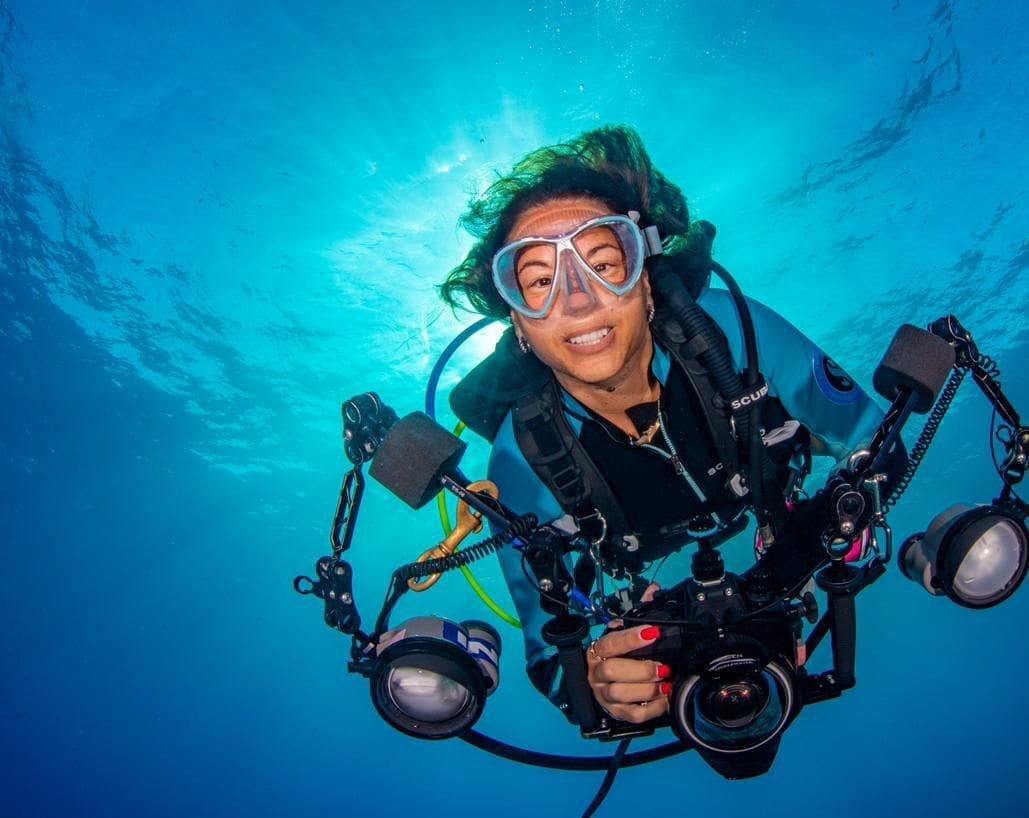
Her father started it all
Margo Peyton grew up in Cape Cod, Massachusetts, a coastal haven with one of the most diverse marine environments in the US. Her father, Eddie Salvador, was a diver from the 1950s who poured his own lead weights and used an old Deco regulator with a J-valve and a homemade horse-collar BCD—back when gauges weren’t commonplace. Margo recalls her dad telling her that when breathing became labored, it was time to pull the wire on the J-valve and ascend to the surface using the 300 psi reserve in his tank. “What about your safety stop, Dad?” she’d ask. “There was no knowledge of that sort of thing back then,” he’d reply.
Kids Sea Camp is celebrating its 25th anniversary of providing unique, off-the-beaten-path diving experiences for families worldwide. This year marks a truly unforgettable milestone: Margo Peyton, the heart and soul of Kids Sea Camp, was inducted into the International Scuba Divers Hall of Fame on September 28, 2024. This prestigious honor recognizes Margo’s 36 years of diving, traveling, and advocating for our underwater world.
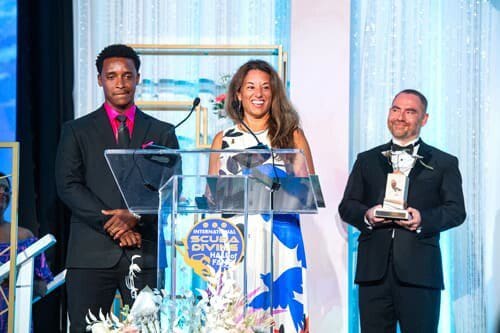
He tried to deter her passion for diving, fearing the many things that could go wrong in the 1980s when she began. Nevertheless, he bought her a Deco regulator with a J-valve in 1988, along with an SPG and octopus, which were becoming popular at the time. Margo loved the ocean and learning about marine animals. She spent every summer as a child on the boat with her dad and brother, who hunted for giant bluefin tuna and fished for bluefish, bass, and cod. Encountering massive pods of bluefin tuna, dolphins, orcas, and humpback whales was the norm for Margo.
She learned to love and respect the sea, becoming familiar with basking sharks, great whites, mako sharks, and blue sharks, among others. Her dad instilled in her an adventurous spirit, while her mom nurtured her compassionate heart for saving and protecting animals. Margo worked at the Provincetown Sea Aquarium, where she cared for rescued sea lions, loggerhead turtles, and even a pair of orphaned coyote pups. The aquarium became a second home, and it was there that Margo’s passion for animal rescue blossomed. Over the years, this has included seagulls, kittens, puppies, snakes, pigeons, horses, whales, crabs, rays, octopuses, turtles, and countless others.
Sink or swim
When Margo was just a young child, her father threw her overboard into a school of wild dolphins to teach her how to swim. His philosophy was “sink or swim.” Margo has been a pioneer in the dive industry, encouraging everyone to embrace the family market. Her efforts have resulted in over 8,000 children becoming certified divers without a single diving accident. Her tenacity, courage, strength, and passion for her own kids and the ocean have always been her driving force.
Margo’s dedication to safety alone would merit her prestigious awards. However, her true impact lies in the countless individuals who started as junior divers and have become PADI professionals. Margo’s passion for the “living classroom” she created has resonated with like-minded families around the globe. Her love for diving has shown thousands of couples that having children doesn’t have to mean the end of their diving days. In fact, it’s just the beginning of creating amazing family memories.
Margo’s mission
The concept of bringing together like-minded families who love the ocean, adventure, and travel was unprecedented in the dive industry. Margo had to prove to dive operators in a male-dominated industry that kids had value and that educating and training them was essential. She had to convince major equipment manufacturers that making kids’ dive gear—tiny tanks and wetsuits—was not only financially beneficial but also crucial for the future of diving. She saw a need and was on a mission to fulfill it.
I have personally witnessed Margo’s hard work throughout her 35-year career, whether in the office, at a trade show, or on the island. Margo takes on multiple roles during a typical week at Kids Sea Camp: underwater photographer, artist, MC, mediator, mentor, activities director, hotel consultant, dive team organizer, advisor, events planner, celebration coordinator, presenter, and even shuttle bus driver. As a PADI professional, she often oversees kids and adults in the water.
Daily check-ins
During lunch, Margo takes the time to follow up on daily events, such as cupcake decorating, go-karting, Seal Team demonstration dives, graduation dives, birthday cakes, poetry contests, and treasure-hunt prizes. Her favorite time is spent with the kids, discussing their day, their dreams, and their diving adventures, making sure they are having fun. Margo Peyton spends most of her days in the ocean, photographing the Seal Team or SASY program. In the evenings, she ensures everyone is happy with their day in the ocean and at the beach. During dinner, she loves to walk around and listen to families sharing stories about their day.
For Margo, one indicator of a job well done is the absence of cell phones at the dinner table, with unplugged kids happily chatting and adults enjoying each other’s company. She ends each day dedicating herself to sorting through the day’s images until nearly midnight. The images ensure that all families have a visual record of the incredible day’s events. Treasure hunts, horseback riding, sunset sailing—it’s all captured for the end-of-week slideshow.
Margo’s passion
Margo’s passion, courage, and determination to establish a kid- and family-friendly dive company in a male-dominated industry are remarkable. She didn’t achieve this alone; numerous courageous and visionary women. As well as the wise men, who also played crucial roles in bringing the company to life 25 years ago. Their contributions are integral to Margo’s journey. The support has been instrumental in her success. This is a celebration of their collective efforts and the progress they have made in the industry.
Today, Kids Sea Camp is a beacon of excellence in dive safety, old-fashioned family fun, and personalized service. Margo’s moment is a tribute to all the vendors and families who believed in her vision. The beauty of her moment continues to be built upon all the moments that families have shared with Margo.
By Tom Peyton, husband and KSC Vice President
Scuba diving was definitely not on my list.

Kids Sea Camp mom learns to dive at age 61 and logs 90 dives in 6 countries in two years
By Betsy Meade
Scuba Diving, no way! My husband, Doug, and I recently retired after raising our four children. We both enjoy traveling, so we started to think about what the next stage of our lives together should look like. Doug is an active sportsperson who loves adventure, biking, and scuba diving. My travel habits favor sightseeing, beaches, and relaxing. I am willing to try new things, but scuba diving was not on my list.
I am not fond of swimming in the ocean at all. As a child, I was content to sit in the sun and play in the sand. As an adult, I occasionally ventured out into the waves, but I feared all the “creatures” I suspected would be waiting to torment me. On several trips, I attempted to snorkel but never quite got the hang of blowing water out of the snorkel and keeping water out of my mask. As an adult, I was still not interested in encountering any sea life. Scuba diving was not on my list of things to do.
Doug, on the other hand, has been scuba diving for over fifteen years. I spent many vacations happily sitting on beaches, while he scuba-dived during the day. He returned with great stories and pictures of his dives, and I was entertained by learning about his time underwater. Doug enjoyed diving but had mixed emotions, always leaving our family and me behind while on vacation. He often suggested that we get certified and join him, but I didn’t think the kids could do that. I certainly had no interest. So we remained content sitting on the beach until now.
I believed I could not enjoy scuba diving for many reasons; I am claustrophobic, and being underwater would scare me. My fear of not having immediate access to fresh air, and could not wrap my head around the idea that all I needed would be provided in a small metal capsule on my back. I was not a strong swimmer, so I thought currents and waves could be a problem, and the most significant piece of the pie was that I am afraid of sharks, fish, eels, or anything else that moves, stings, or bites.
My mentor, Margo Peyton
Margo Peyton, my neighbor and close friend, is the founder and owner of Kids Sea Camp. Mrs. Peyton would talk to me with so much passion, understanding, and determination about diving. Her beautiful pictures helped me debunk all my fears with her knowledge and experience. And she explained that having well-fitting, comfortable dive gear can make a huge difference in comfort, confidence, and the overall diving experience. She gave me a soft Scubapro mask called a Synergy TrueFit, sized just right for my small face.
Even the mask strap was necessary. She added a sports band that ensured the mask was easy to slip on, remove, and adjust—even underwater. She provided me with a smaller mouthpiece that was more comfortable. Then she outfitted me with comfortable, longer fins that prevented leg cramps and let me move through the water with scuba gear. I had no idea what a difference a fin could make. I was provided a comfy two-piece wetsuit that was easy to get in and out of, stylish, kept me warm, and protected me from stings and sunburn. The BCD was the key to my ultimate comfort. The fit was perfect and easy to use, and it supported my back as needed in the water. Having dependable, comfortable equipment I learned to use gave me so much confidence while I was scuba diving.
Facing my scuba fears
I booked my PADI Open Water class for July 2023 in Roatan, Honduras. I was still terrified of marine life when I arrived in Roatan. The night before my first class, I had tried to convince myself that scuba diving was not for me; all my troublesome thoughts, concerns, and excuses came rushing back. I didn’t want to disappoint Doug or Margo, so I got into the pool. It was my first class. Margo personally hand-picked my dive instructor to fit my needs and fears. I had the most patient, kind, and just wonderful instructor, Kiley Thueson, she was perfect for me.
Some skills were more challenging than others, but Kiley was patient, and I completed the requirements of my confined-water dives. I was excited but extremely nervous for my first open-water dive, as I would see fish. I took a giant stride into the ocean.
There was so much to think about—equalizing my ears, not holding my breath, monitoring my air, the dreaded mask removal skill, and swimming with fish. As I descended, the beauty of the corals and the blue hues of the ocean water amazed and calmed me. I was not afraid of those fish! They also seemed entirely uninterested in me.
Upon completing my first day of scuba diving, I was so proud of myself and started looking forward to the next day. However, after dinner, doubt and fear crept in again. I had to keep reminding myself, “I can do this!” Each day, I again forced myself to return to my class, determined to succeed and overcome more of my fears.
It took three days to become a PADI-certified open-water scuba diver at age 61. I was proud of myself for pushing through and enjoyed diving with Kiley and Doug for the rest of the trip. I enjoyed diving so much that five months later, we called Family Dive Adventures and went back to Roatan, this time to complete my Advanced Open Water certification with another Kids Sea Camp Instructor whom Margo hand-picked, Peter Kockisch. He is from Germany and worked with me on buoyancy, weight placement, fish identification, boat diving, navigation, and a deep dive.
Doug, my diving buddy
Then Doug and I went to St. Eustatius, and after that, we felt prepared for Indonesia. So we went to Lembeh Resort in Indonesia and then to Komodo aboard the Arenui with Margo and Tom. Again, we had private guides and learned so much. We did our first muck dives in Lembeh. Doug and I had to practice keeping our fins up, not stirring up the bottom, and destroying all visibility. And there certainly was a lot to see! We both started taking photos and having fun. In Komodo, we saw dragons on land and had private dives with whale sharks, manta rays, eagle rays, and even some reef sharks. Going on a few night dives required me to overcome a few more fears. Again, with proper equipment and planning, these were fun, too.
How’s that for overcoming fears? I am so very proud of myself. Doug and I are really enjoying this big blue new world we are exploring together. After Komodo, we went to Anse Chastanet in St. Lucia, dove wrecks, and learned to drift dive. Next, we are taking our daughter to Belize with Family Dive Adventures this spring to Blackbird Caye. I’m very excited for our daughter and looking forward to more new experiences, and I now love scuba diving.
Structure and attention to detail—particularly safety—are most important on Margo and Tom’s trips. This was a huge part of my success. Being part of that group and realizing that the instruction specifically addressed many of my concerns played a considerable role in building my comfort, confidence, and enjoyment of diving. Margo uses the same philosophy with her children’s programs.
Becoming certified scuba divers has changed our lives in so many ways. Doug and I explore the underwater world together as buddies. We have fun, travel, and meet new people.
Constantly blowing bubbles — now.
Experiencing this new world with my eyes was much better than looking at Doug’s pictures and listening to his stories. In the past year, I logged 90 dives in 6 countries and experienced a wide variety of sea life, including endless types of corals, sponges, and critters.
I am obsessed with diving now. With every dive, I am becoming a better, more confident diver. With each trip and each new experience, I learn more and overcome more fears. Having Doug as my dive buddy gives me more confidence because he always has my back.
Our calendars for 2025 and 2026 are already filling up with more Kids Sea Camp / Family Dive Adventure trips. We are off to Belize with Tom and Margo in the spring and then getting excited to be back on the Arenui with their Forgotten Islands Trip. While we regret missing out on 15 years of diving together, the last year has been so much fun, and we plan to continue to create new memories on future trips with Margo and Tom. In addition, we look forward to introducing our children and grandchildren to scuba diving with Kids Sea Camp.
I am so grateful to Margo for encouraging me to step out of my comfort zone and try something new. I never thought that at age 61, I could learn to scuba dive or that I would enjoy it so much.